
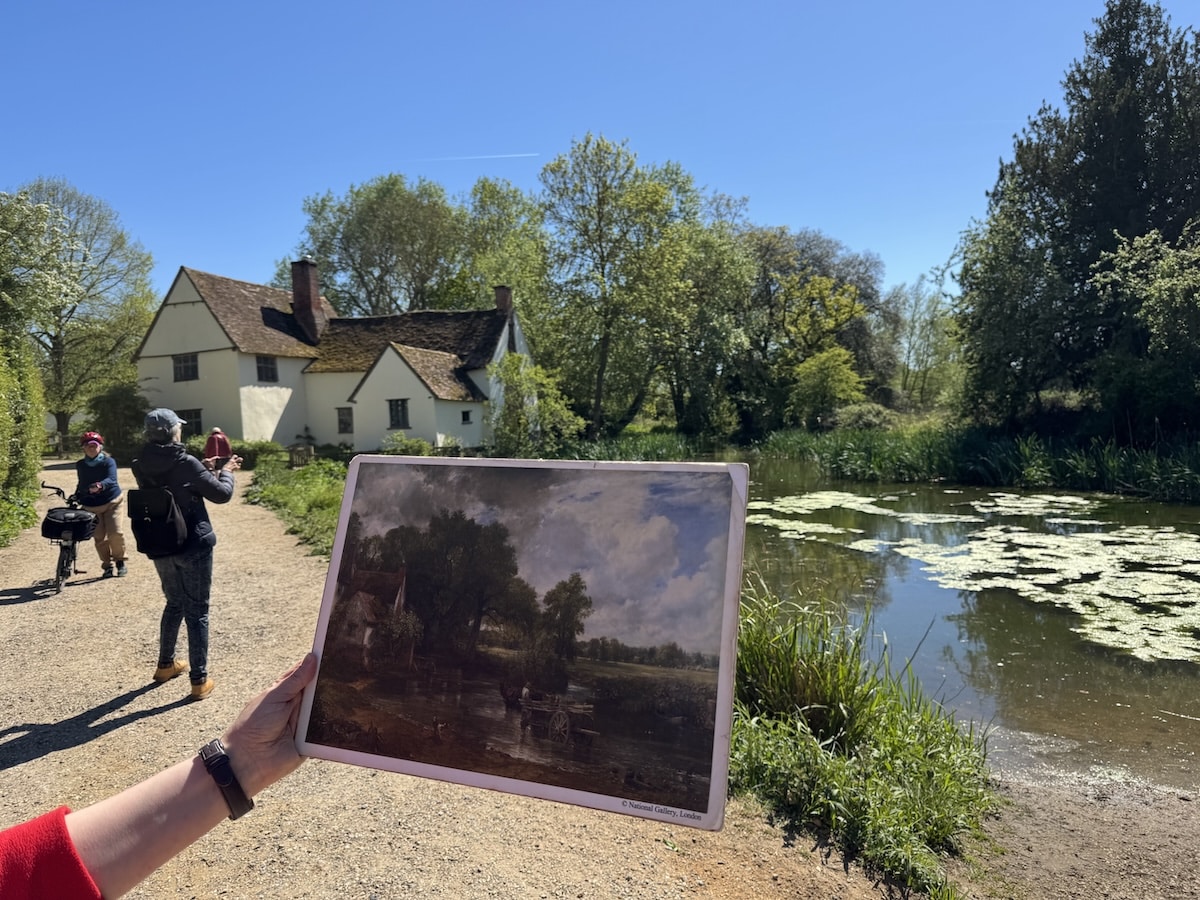
Having lived in the Hampstead area for most of my life, the ghost of John Constable (1776-1837), one of the most important British painters, has long been a part of my psyche. Constable lived in Lower Terrace, Heath Street, and finally in Well Walk and is buried in the graveyard of St John-at-Hampstead in Church Row. The sky over the Heath is the one he painted repeatedly, including in his large-scale and best-known painting The Hay Wain (1821). So a trip to his birth county, Suffolk, has been long overdue and entirely appropriate as 2026 marks the 250th anniversary of his birth.
A small group set out on a memorable trip to explore the Suffolk-Essex border, an area now known as ‘Constable Country’. The weather couldn’t have been better. We saw the area in all its glory. The adult Constable notoriously only spent the Summer months in the area.
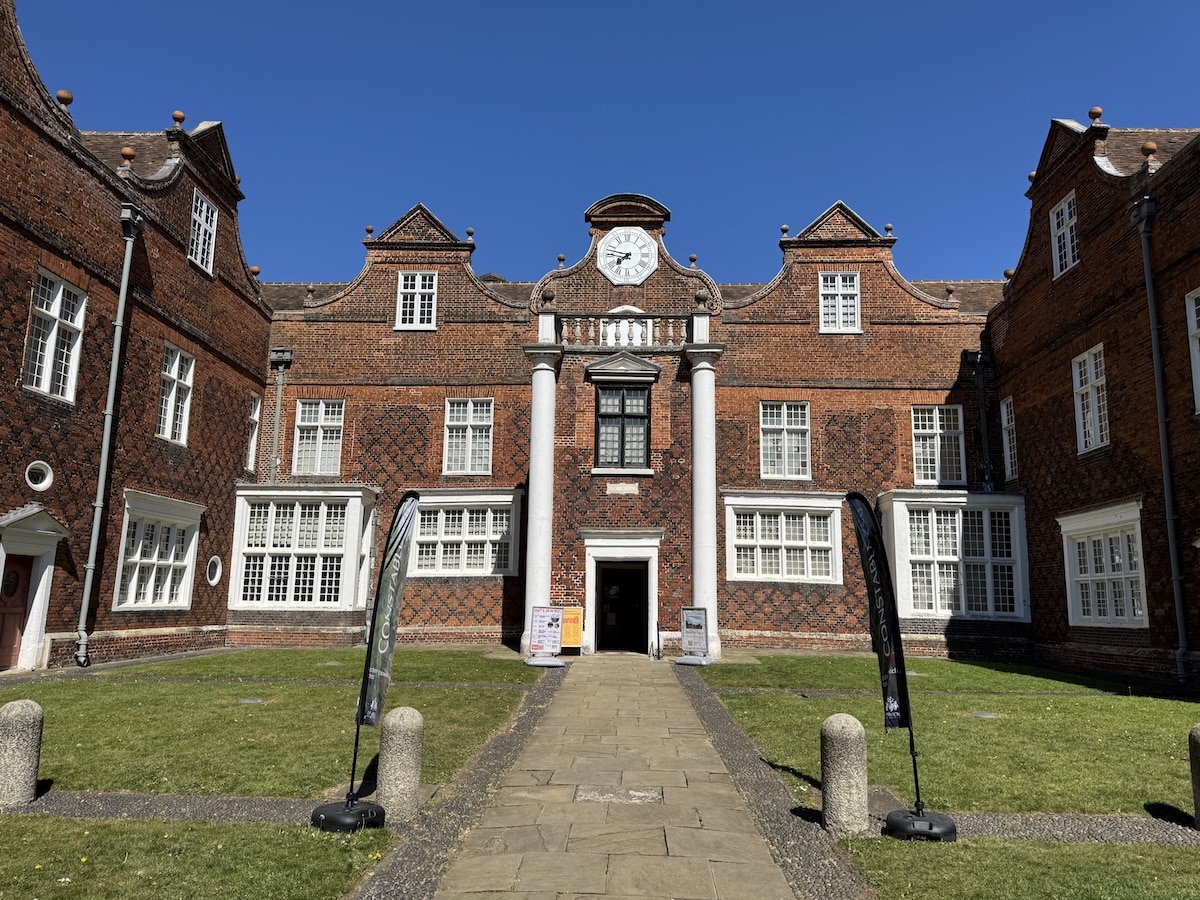
Christchurch Mansion, Ipswich
First stop was a visit to the beautiful Tudor Christchurch Mansion in Ipswich, which is run by Colchester and Ipswich Museums. To commemorate Constable’s life and work, Colchester + Ipswich Museums (CIMS) are presenting Constable 250, at the centre of which will be three landmark exhibitions, featuring major loans from across the UK. The first, Constable: A Cast of Characters, runs from 28 March until 14 June 2026 and introduces visitors to the people who inspired and supported the artist. It also features work by the sculptor Sasha Constable (b. 1970), who is a direct descendant of the artist. The second exhibition, opening in July, will be Constable: Walking the Landscape, featuring historic loans such as The Hay Wain and Dedham Vale. The third and final exhibition, Constable to Contemporary, juxtaposes Constable’s ongoing artistic and cultural relevancy with contemporary responses to his art, much of it created during the year. We were fortunate to be accompanied by the very knowledgeable and enthusiastic Emma Roodhouse, Collections & Learning Curator (Art) at Colchester + Ipswich Museums and the author of Creating Constable, who curated the programme.
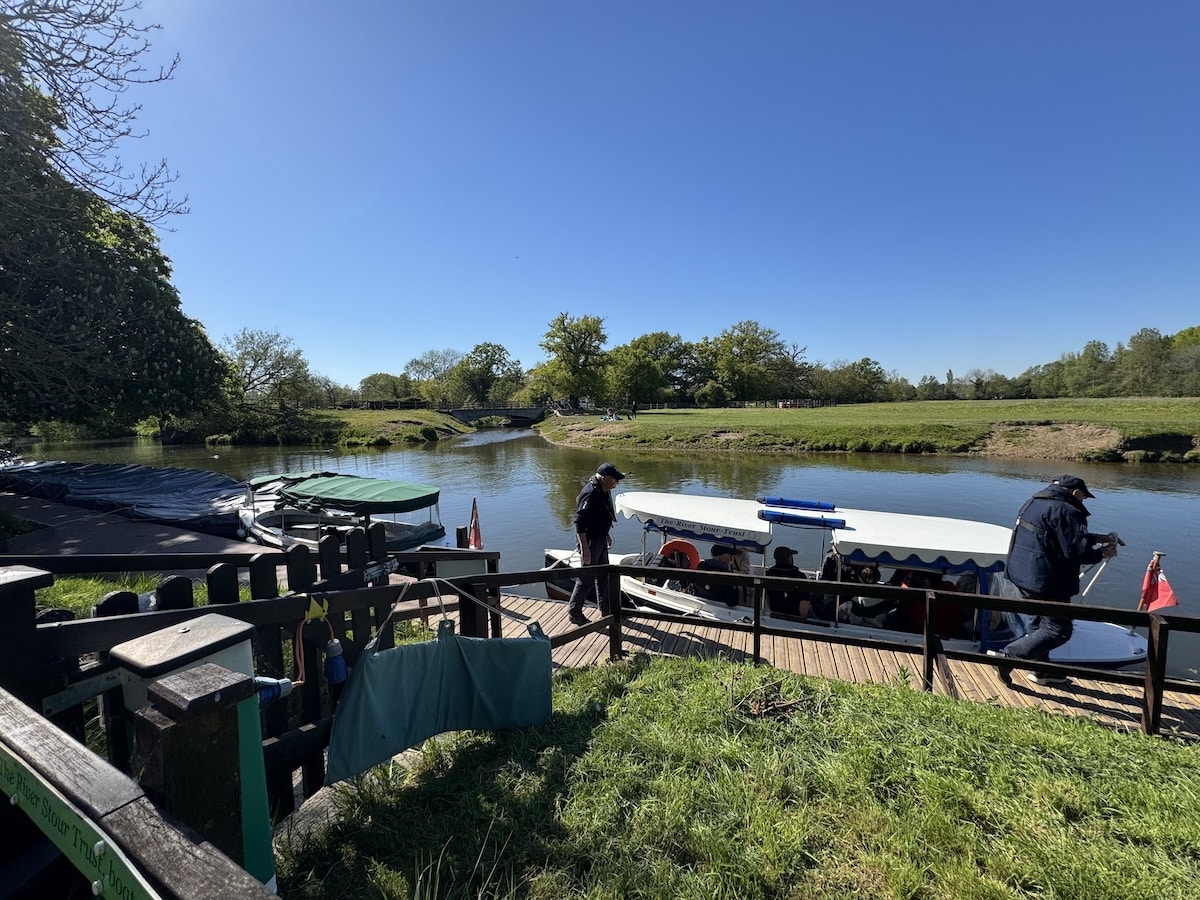
Boat Trip, River Stour
The next stop was to the National Trust-run area around Flatford, Dedham and East Bergholt along the River Stour. We took a boat ride from Flatford to Dedham on an eight-seater Edwardian-style electric boat run by the River Stour Trust. Stour is pronounced differently depending on which side of the county line you are on. Those in Suffolk pronounce it ‘stoor’, emphasising the double ‘o’, while those in Essex prefer the emphasis on ‘our’. The area was important to Constable as his father owned Flatford and Dedham water mills, and a windmill in East Bergholt. He was a prosperous corn merchant. Constable moved to London in 1799 to attend the Royal Academy Schools and, from then on, made a habit of spending his summers back in Suffolk. At Flatford, you can see the almost unchanged scenery that Constable painted in The Hay Wain (1821). Willy Lott’s House, depicted in the painting, is almost unchanged. You can also see where The Leaping Horse (1825), The White Horse (1819), Flatford Mill (1817), Boys Fishing (1813), among others, were painted. Constable sketched these sites en plein air and used the sketches to develop large-scale paintings in his studio in London, adding the clouds and skies seen on Hampstead Heath.
The National Trust will be running events throughout the year as part of the Constable 250 celebrations, including walks, guided tours, exhibitions and art workshops. There is also a very nice tearoom at Flatford.
The villages of Dedham, Essex and East Bergholt, Suffolk, are very picturesque, with thatched cottages, Tudor-beamed houses, as well as Georgian houses. We had dinner and spent the night at The Crown Inn in Stoke-by-Nayland, run by The Chestnut Group, which boasts a restaurant, a garden terrace and rooms spread across two locations, including lodges, a folly, and the nearby Angel Inn.
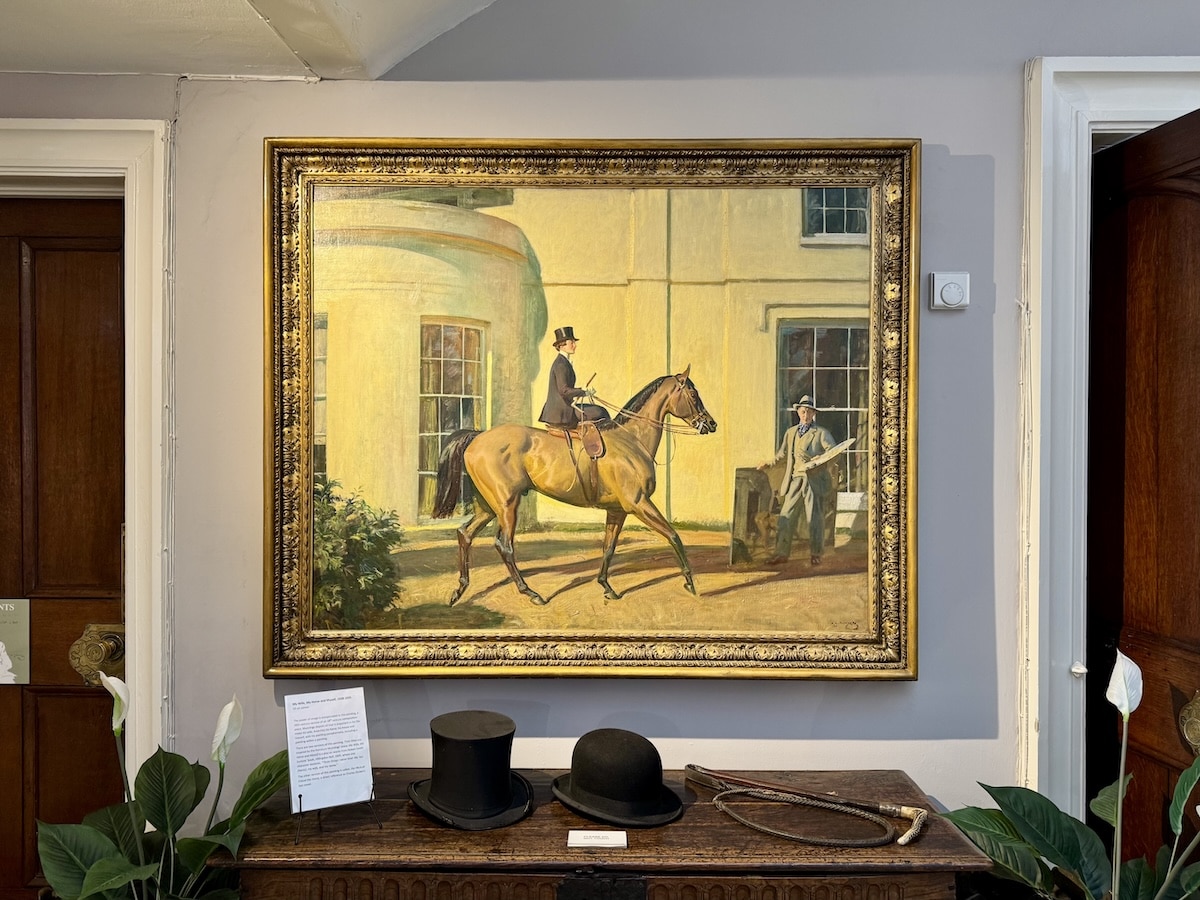
Sir Alfred Munnings, My Wife, My Horse and Myself 1928-35
The next morning after a hearty breakfast at the hotel, we set off to Castle House, the former home of another famous painter associated with the area, Sir Alfred Munnings (1878-1959), which is now a museum. The Munnings Art Museum is celebrating its 65th year of the house being open to the public. Munnings is mostly known for his paintings of horses, as well as being a former President of the Royal Academy (1944-1949) and an outspoken critic of Modernism. The connection with Constable is that his second wife, Violet, firmly believed that he was the reincarnation of Constable. A display upstairs shows the influence of Constable on Munnings, with exquisite sky studies and what is believed to be a Constable sketchbook, gifted by Violet to Munnings in the 1950’s. Violet was a formidable character who founded the museum. Not only a passionate horsewoman, she was also devoted to her dogs. Her favourite dog, the Pekingese Black Knight, accompanied her everywhere, even to formal dinners and grand receptions. When the dog died, he was stuffed and is now on display in a tribute to Violet and the museum’s history. The Georgian house set in beautiful grounds is a hidden gem with an excellent tearoom.
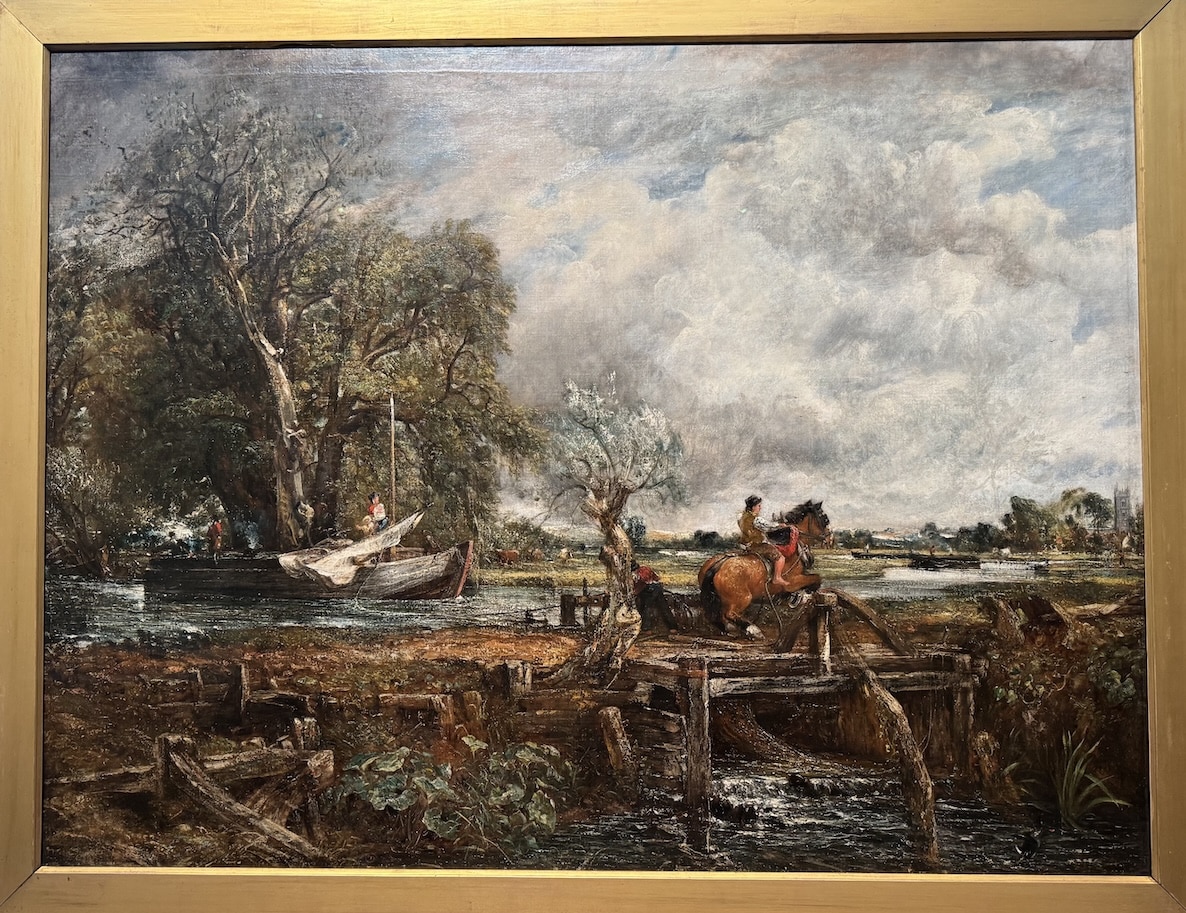
John Constable (1776-1837), the Leaping Horse 1825
Lunch followed at the Chesnut Group-owned Red Lion pub in East Bergholt before the final stop of Gainsborough’s House in Sudbury. Gainsborough’s House is the National Centre for Thomas Gainsborough. It combines Gainsborough’s birthplace, a Grade I-listed house and garden, with exhibition galleries. It looks after the largest single concentration of Gainsborough’s works in the world and presents his life and art alongside exhibitions of historic, modern and contemporary art. For Constable 250, the main exhibition at Gainsborough’s House explores the emergence of landscape painting in Britain, led by three of its greatest exponents: Thomas Gainsborough (1727-88), JMW Turner (1775-1851) and John Constable (1776-1837) and includes other landscape painters of the time including Alexander Cozens 1717-86), Francis Towne (1738-1816) and Thomas Girtin (1775-1802). It also has several works by their European forerunners, such as Antonio Joli (1700-77) and Claude-Joseph Vernet (1714-89). The centrepiece is Constable’s The Leaping Horse (1819-25), one of his six-footers, on loan from the Royal Academy in Suffolk for the very first time.
To show how John Constable’s art continues to resonate with contemporary artists, Gainsborough’s House presents two exhibitions by David Dawson (b 1960) and Kate Giles. Dawson was a model and assistant to Lucien Freud. The artist creates en plein air works in Montgomeryshire, Mid Wales, painting outdoors throughout the seasons. He then refines these pieces in his London studio before completing them in Wales, taking several years for each artwork. Suffolk-born and Norfolk-residing artist Kate Giles (b. 1962), creates expressive artwork inspired by her native landscape, particularly drawing upon the legacy of Constable. Her use of varying paint densities contrasts and interacts to depict seasonal landscapes filled with twisted trees and chaotic clouds.
The journey through Constable Country not only deepened my appreciation for the artist’s work but also celebrated the breathtaking beauty that inspired his timeless masterpieces.
More information on Constable 250 and visiting Constable Country
Christchurch Mansion, Ipswich Visit Here
Constable 250 will continue with a series of community events and learning programmes organised by Colchester + Ipswich Museums Service and made possible with the National Lottery Heritage Fund. Visit Here
National Trust Flatford Visit Here
River Stour Trust, Dedham Visit Here
Munnings Art Museum, Dedham Visit Here
Gainsborough’s House, Sudbury Visit Here
The Crown and The Red Lion, Chestnut Group Visit Here