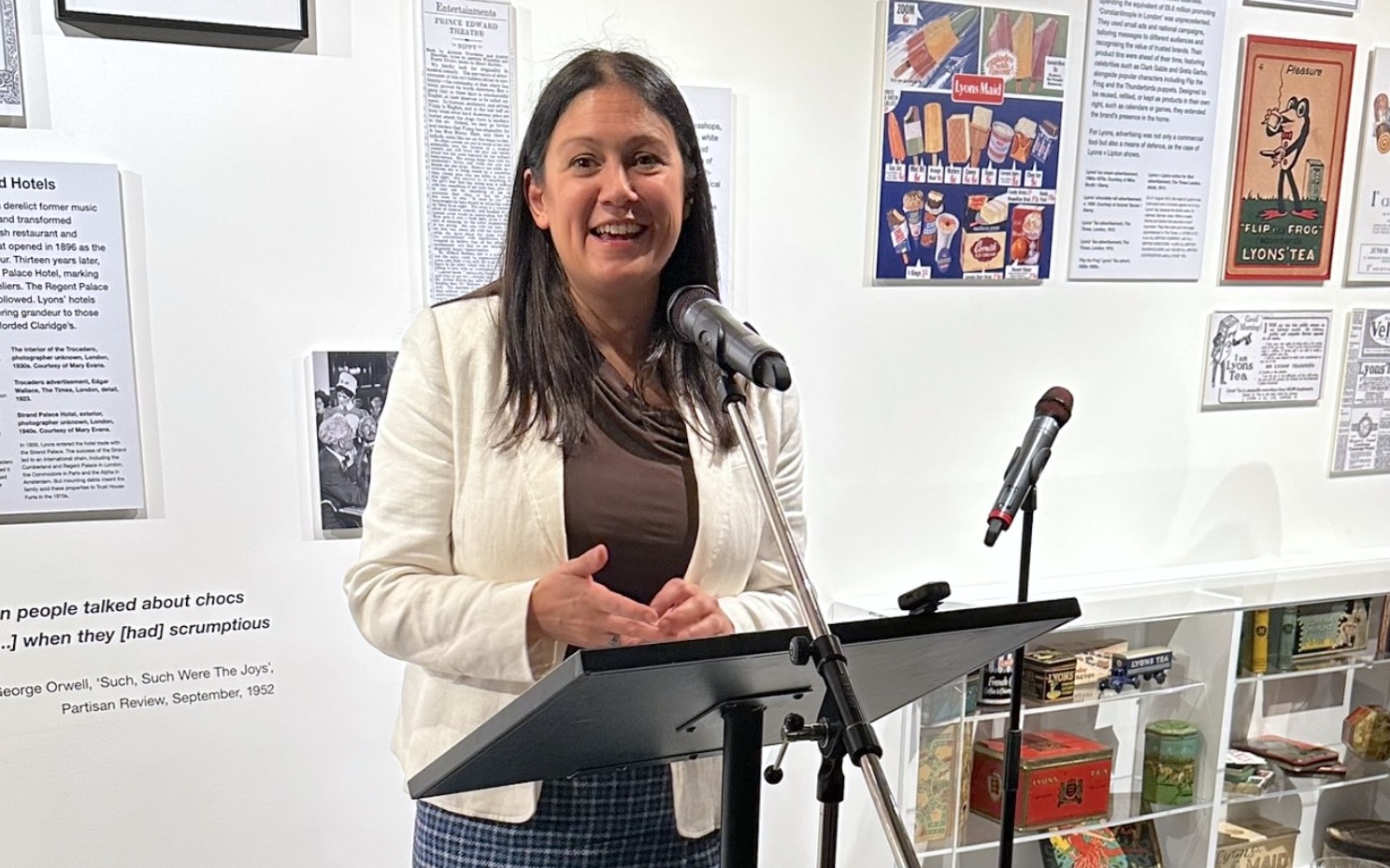
London’s Jewish Museum has been evolving for decades. Originally founded in 1932 at Woburn House in Bloomsbury, the collection moved to a Georgian townhouse in Camden Town in 2010 and abruptly closed in 2023. A new permanent home is now planned for 2030. In the meantime, the museum has taken over a two-room exhibition space at JW3 in North London (across from the Camden Arts Centre), which opens this week as both a public programme and a testing ground for what comes next. The Secretary of State for Culture, Media and Sport, Lisa Nandy, announced a £1m grant to help the Jewish Museum “continue to tell its story.” The museum is looking to raise £100m to relocate to a new purpose-built premises by 2030.
Between 2019 and 2024, the institution experienced sustained financial and organisational difficulties. It has since stabilised, retained its National Portfolio Organisation status with Arts Council England, and appointed a new CEO, Charles Ross, who describes the current moment as “a reset and a new beginning.” That phrase sounds a bit like corporate optimism, but the programme being launched here suggests something more considered.
The space is called Two Rooms, which is accurate if not especially poetic. Each room carries a different exhibition. The first is Legacy: The Story of the Jewish Family who Founded J. Lyons (Lyons Corner House) and Fed Britain, developed from Thomas Harding’s book about his own family history. J. Lyons and Co. is one of those British institutions that so thoroughly shaped everyday life that it became invisible. The Tea Houses, the Corner Shops, Lyons ice cream, the Wimpy hamburger chain, the Trocadero, the Strand Palace Hotel. Less well known is that the company built LEO, one of the world’s earliest commercial computers. The family behind all of this were German-Jewish immigrants who arrived in Britain in the nineteenth century, fleeing persecution, made their initial money in tobacco, and went on to construct, as the exhibition calls it, with some justification, the most British of companies.
The exhibition also addresses accusations of being enemy aliens during the First World War, and confrontation with Mosley’s Blackshirts in the 1930s. The antisemitism the family navigated is treated as part of the history rather than a footnote.
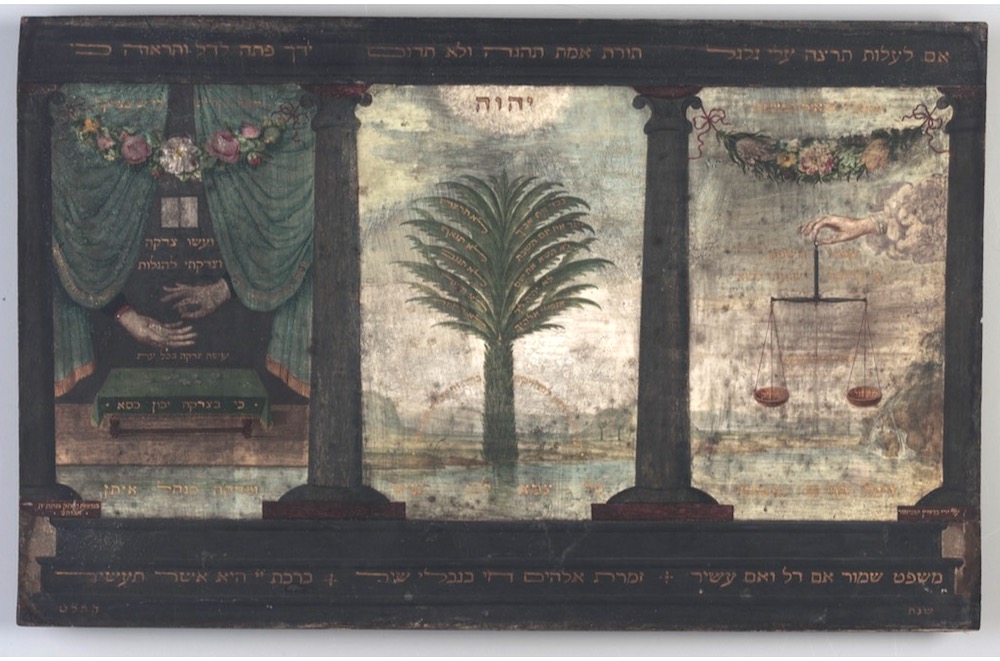
Benjamin Senior Godines, Triptych, one of a set of three, tempera paint on
panel, 1679.
The second room holds Tree of Life: Stories from Jewish Museum London’s Collection, drawn from a permanent collection of 35,000 objects spanning Judaica, documentary photography, everyday artefacts and archival material. The earliest object dates to the 1650s, just before Jews were readmitted to Britain. The most recent is from 2023. Curator Nina Pearlman has described the challenge of working across that scale to create something small and coherent as “an opportunity to think afresh,” and the thematic frame she has chosen, the Tree of Life as a lens for questions of identity, belonging and visibility, holds the selection together without forcing it into a single argument. One object worth noting: a triptych in tempera on panel from 1679 by Benjamin Senior Godines, made for the patron Isaac Aboab and rooted in the vanitas tradition, its three panels depicting charity performed in secret, the Ten Commandments borne on a palm tree, and scales of justice. It is a striking object and an early indication of how the Jewish artistic tradition was in dialogue with European visual culture long before that dialogue became legible to mainstream art history.
A third exhibition is in the planning stages: a focus on the graphic designer Abram Games and his contribution to the Festival of Britain, timed to mark the event’s 75th anniversary. Games is one of the more significant British designers of the twentieth century and a figure of some underexamination. That exhibition will be worth watching.
Museum leaders have been direct about the broader context in which all of this is happening. Rising antisemitism and ongoing public debates about identity, heritage and belonging in Britain are not background noise for an institution like this. They are the conditions under which it operates. Board chair Nick Viner’s comment that the British Jewish community is “an integral part of the story of immigration and cultural identity in Britain, not a world apart” is as much a statement of position as it is of history, and the programme being built here reflects that.
Top Photo © Artlyst 2026
Two Rooms Curated by the Jewish Museum London opens at JW3 from 18 June 2026