
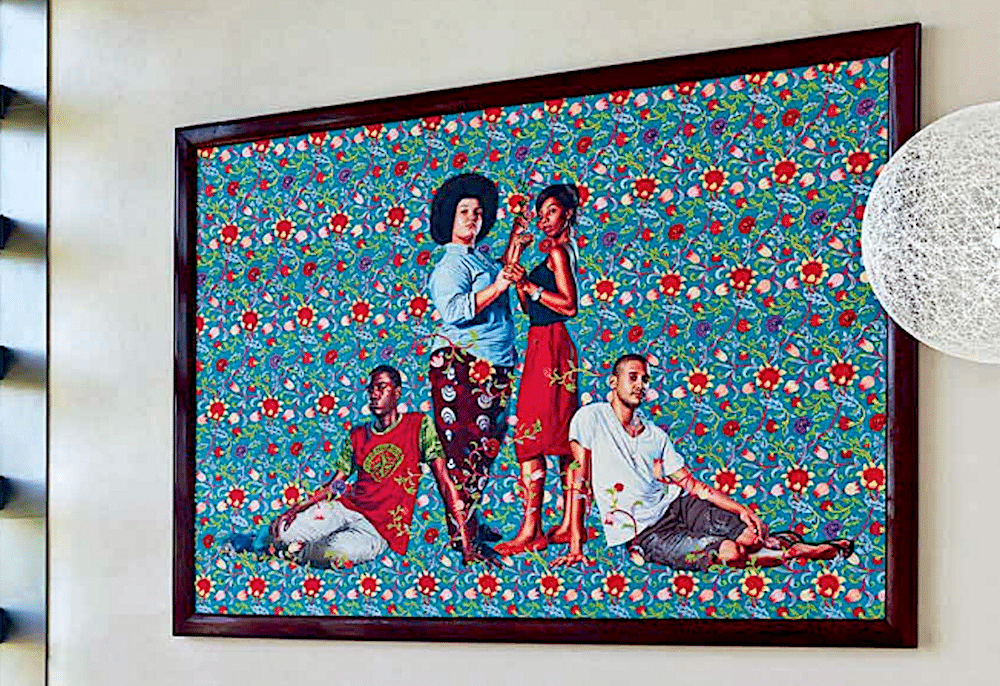
The United States State Department has removed a painting by Kehinde Wiley from the American Embassy in the Dominican Republic, with officials describing it as “very woke” and “aesthetically terrifying.’
The administrators have indicated that they intend to sell the work if legally permitted. The painting, titled Young Artists After Siamesas 1960, was commissioned by the federal government in 2013 and paid for with public funds. It depicts four Dominican models against a floral backdrop and was the result of two years of research by Wiley into the work of Dominican artists Celeste Wossy Gil and Gilberto Hernández Ortega. The artist worked with art students in the country to complete the composition.
The NY Times reported that before its removal last week, embassy staff covered the painting with a tarp printed with an image of the American flag. Erin Scavino, director of the State Department’s Art in Embassies programme, criticised the work in a recent podcast and drew attention to Wiley’s connection to Barack Obama, for whose official portrait the artist was selected.
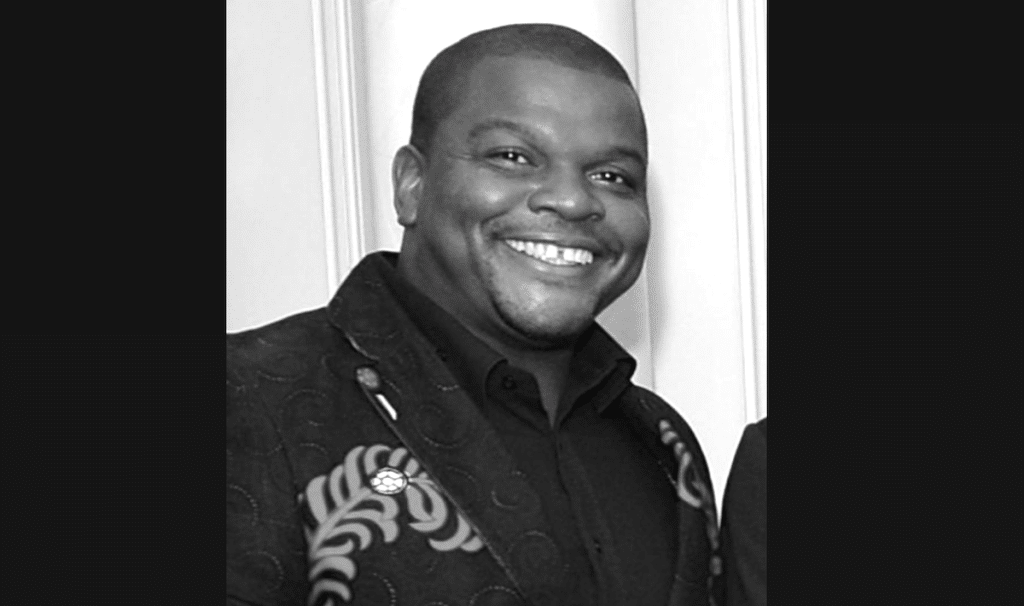
Photo Courtesy U.S. Department of State
Leah Campos, the Trump-appointed U.S. ambassador to the Dominican Republic, marked the removal on social media with a video set to the rock song “We’re Not Gonna Take It,” describing the painting as an example of “globalist and woke ideologies.” Watch video here
The State Department’s formal statement did not address the painting’s content directly. Instead, it cited comments Wiley made in 2023 about his Judith and Holofernes painting, in which he described it as playing on the “kill whitey thing,” and referenced sexual assault allegations the artist has denied. “The work of an individual with such violent and racist words and depictions has no place in the America First State Department,” the spokesperson said.
Virginia Shore, who commissioned the Wiley painting and directed acquisitions for Art in Embassies between 2000 and 2017, described the characterisation as difficult to understand. “Calling this woke is difficult for me to understand,” she said. “This is a program validated and financially backed under Bush. There is a science of building trust and empathy across borders.” She also noted that selling embassy artworks has no precedent in the programme’s history.
Wiley received the State Department’s own Medal of Arts in 2015 in recognition of his contributions to cultural diplomacy through the visual arts, a detail that sits somewhat awkwardly alongside the current administration’s decision. His work is held in the permanent collections of major institutions including the Metropolitan Museum of Art, the National Portrait Gallery in Washington, the Los Angeles County Museum of Art, the Brooklyn Museum, the Walker Art Centre, the Virginia Museum of Fine Arts and the V&A East, among many others.
The Art in Embassies programme was established during the Kennedy administration in 1963 specifically to advance cultural diplomacy, and was significantly strengthened under legislation passed in 1999. Its collections are built on the principle that art in US embassies conveys something of American culture and values to the countries where they are hosted.
Several other interventions have marked Erin Scavino’s tenure as programme director. She claimed to have been instrumental in the departure of an ambassador in Bucharest over what she described as “satanic baby art.” However, the diplomat’s exit was reported as a planned retirement. She bypassed standard curatorial procedures in selecting a friend with no curatorial background to serve as commissioner of the US Pavilion at the Venice Biennale. In July she organised an exhibition in Washington titled Make Art Great Again, featuring nearly seventy versions of the American flag.
Wiley is one of the most prominent painters working today and has built a practice explicitly engaged with the history of Western portraiture. Taking his cue from Reynolds, Gainsborough, Titian, and Ingres, among others, he photographs contemporary Black and Brown men and asks them to assume poses drawn from canonical paintings and sculptures, then renders them at a monumental scale against richly patterned botanical backgrounds. The effect deliberately disrupts the conventions of the grand portrait tradition, inserting figures who have historically been excluded from those compositions into the visual language of power, prestige and heroism.
Young Artists After Siamesas 1960 fits squarely within that practice, and also within the stated mission of Art in Embassies. Wiley spent two years working with local artists and students in the Dominican Republic to understand and respond to the country’s own painting tradition before completing the work. By any normal measure of what cultural diplomacy looks like, it is precisely what the programme was designed to commission.
The Embassy’s permanent collection catalogue states:
American painter Kehinde Wiley has found tremendous success in the contemporary art world through his incisive portraits of ordinary people, using the heroic language of historic portraiture. More specifically, Wiley depicts dark-skinned subjects in the vaunted portrait styles historically reserved for elite white subjects. As he has put it, his work deals with “class struggle at the level of sign.” His colourful, appealing paintings realign historic struggles and establish a new baseline, reimagining long-held conventions. In his work at the Santo Domingo embassy, Young Artists After Siamesas 1960, Wiley collaborated with students from the Facultad de Artes and the Altos de Chavon School of Design in nearby La Romana. The painting depicts four local art students in poses that borrow from two famous works of Dominican art, Desnudo Feminine (1940) by Celeste Woss y Gil and Siamesas (1960) by Gilberto Hernández Ortega. The resulting work masterfully weaves together disparate historical and cultural elements into a cohesive image that speaks of history while also suggesting the potential of modernised conventions and ways of seeing. Wiley’s work celebrates the artistic traditions of Dominican artists and suggests great optimism for their future
The permanent exhibition at the U.S. Embassy in Santo Domingo, Dominican Republic, features works by prominent Dominican and American artists. The exhibition is connected by the theme of the relationship and interconnection between the two cultures, exploring everything from the Dominican experience in the United States and the American experience of the Caribbean tourism industry, to the many American voices influenced by Dominican culture and vice versa.
The exhibition encompasses a range of media and subjects, including installations, paintings, collages and mixed-media sculpture. It also draws on a wealth of visual references that evoke Dominican history and culture.
Many of the works, including the vivid landscapes of Raúl Recio and the photographs of native birds by Todd Forsgren, reflect the diversity of flora and fauna that make up the Dominican landscape. Other artists, including prominent American artists Kehinde Wiley and Cheryl Pope, revisit traditional Dominican artistic practices through inventive reinterpretations.
The works in the exhibition not only celebrate Dominican art and culture, but also the deep-rooted and diverse connections between Dominican and American cultures. By focusing attention on these connections, the exhibition highlights the unique diplomatic relationship between the two countries and encourages continued dialogue.
In doing so, it honours the longstanding ties between the United States and the Dominican Republic while fostering greater recognition and understanding of their relationship.
The State Department is now examining whether the work can legally be sold—a smaller Wiley painting sold at Phillips in 2024 for nearly $845,000. Neither Wiley nor his gallerist Sean Kelly responded to requests for comment.
Top Photo: Courtesy United States Embassy, Santo Domingo