Manifesta 16 Ruhr opens on 21 June 2026 across Duisburg, Essen, Bochum and Gelsenkirchen, and runs until 4 October. It is free to attend. All twelve venues are open without charge, alongside a programme of events, workshops, walks and family activities. That fact is worth stating early because it shapes what kind of biennial this is trying to be.
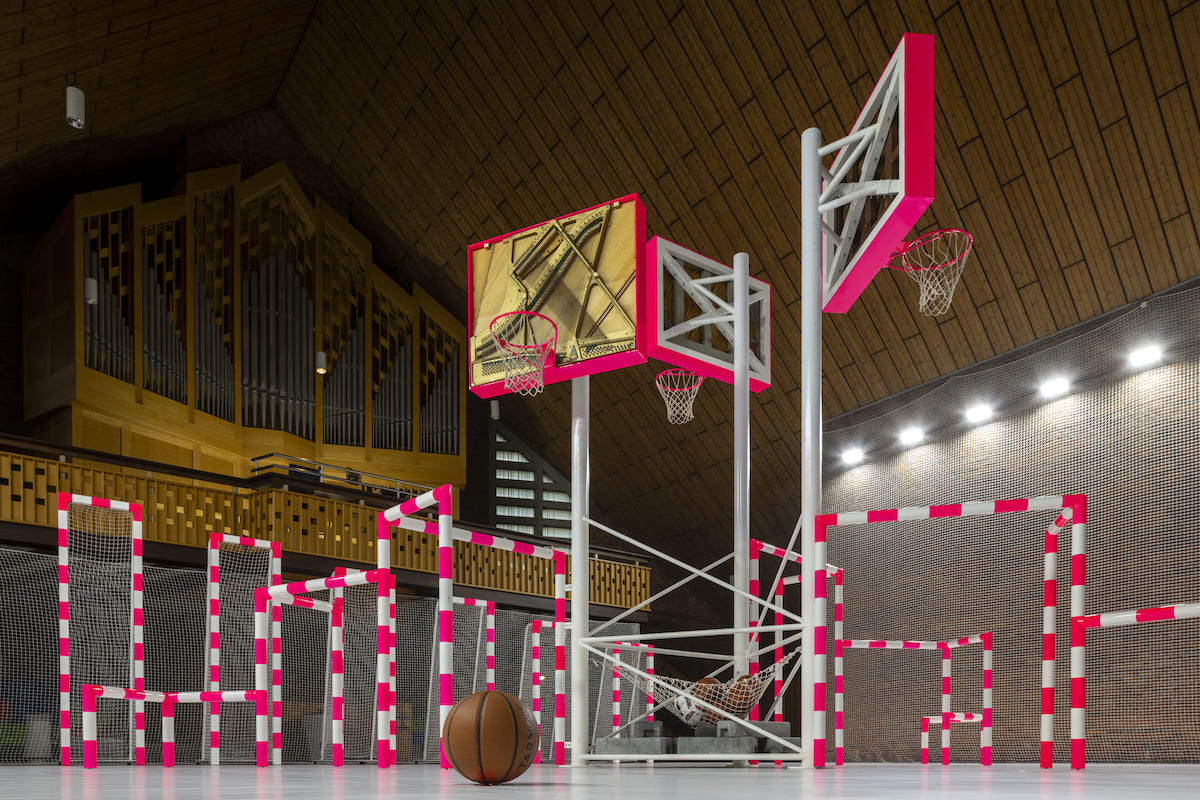
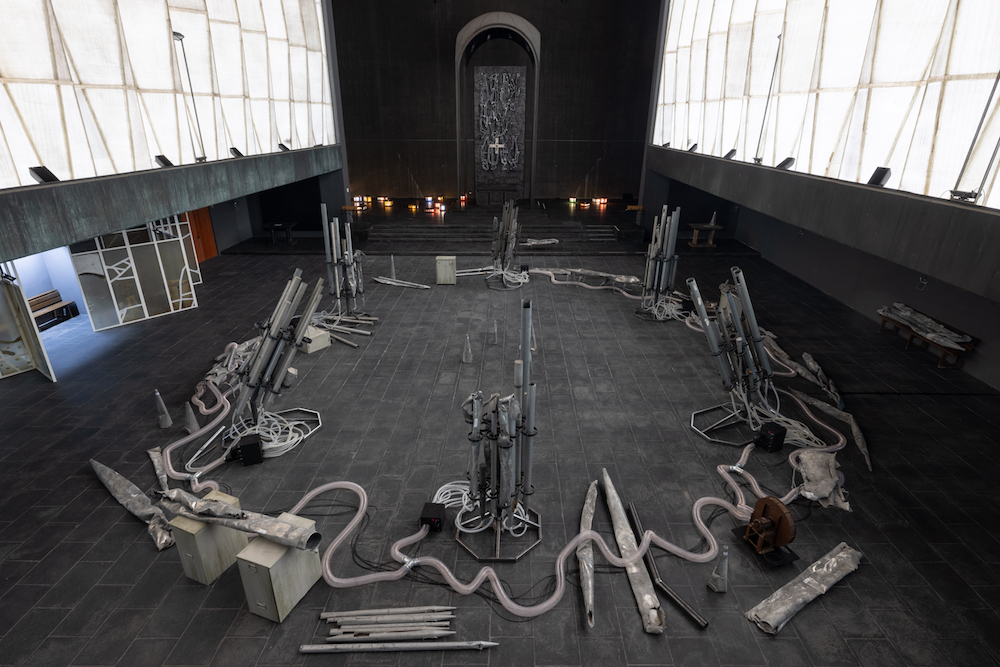
The twelve venues are all former or underused church buildings. The working title of the programme is This is not a church, which is both a provocation and a fairly precise description of the project’s intentions. Rather than treating these buildings as architectural heritage to be preserved in amber, Manifesta 16 Ruhr asks what they might become: exhibition spaces, music halls, gardens, art schools, textile workshops, civic meeting points. The proposition is that empty churches, of which there will be more than 20,000 across Germany over the coming decade as congregations shrink and buildings fall vacant, represent an infrastructure problem that is also a spatial opportunity. The biennial is presenting twelve working answers to that question.
The Ruhr Area is well chosen for this. It is a polycentric post-industrial region that has been reinventing itself continuously for decades, shaped by migration histories, economic restructuring and changing community demographics. Participants from more than 25 countries are represented in the programme, with Germany, Poland and Turkey among the most strongly represented, reflecting the area’s actual population rather than a curatorial gesture toward diversity. There are 107 participants in total and 67 newly commissioned works, which is a significant proportion of new production for a biennial of this scale.
The programme was co-developed by eight Creative Mediators working in an unusual structure: Josep Bohigas and Gürsoy Doğtaş alongside three intergenerational tandems, one British pairing of Michael Kurtz and Henry Meyric Hughes, one German pairing of René Block and Leonie Herweg, and one Polish pairing of Krzystof Kosciuczuk and Anda Rottenberg. The tandem model is deliberate, pairing older and younger practitioners across national contexts, and it reflects Manifesta 16 Ruhr’s interest in intergenerational dialogue in response to the social fragmentation and polarisation the biennial explicitly addresses. Whether the model produces genuinely different curatorial thinking or functions mainly as an institutional statement will become clearer once the work is seen in situ.
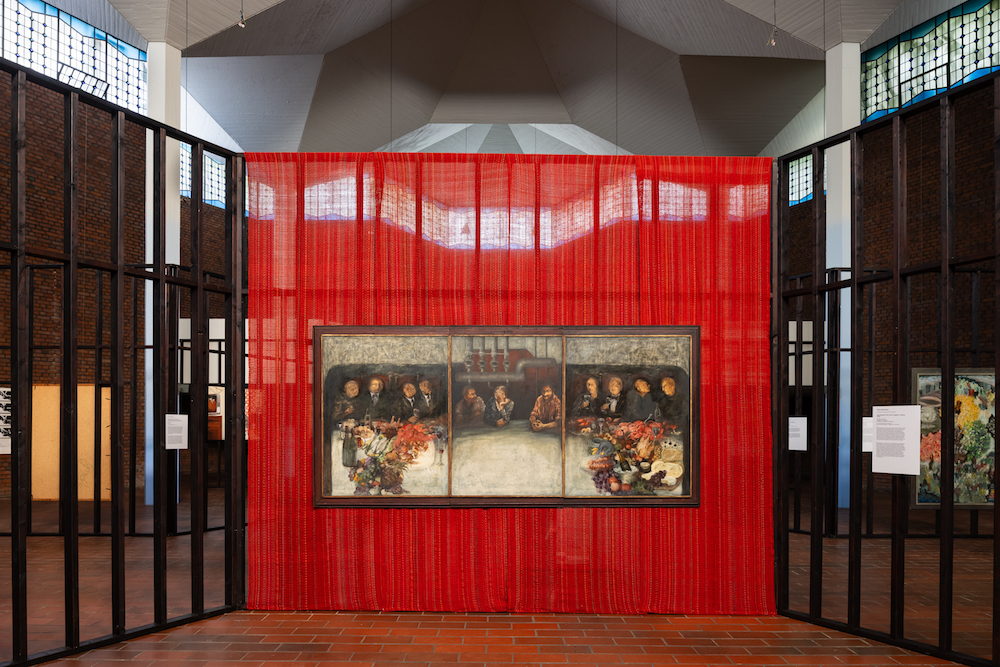
Manifesta 16
The research underpinning the programme, developed through Manifesta’s pre-biennial Urban Vision and Citizen Consultations process, involved sustained engagement with local communities before a single artwork was commissioned. That process shapes how the projects are framed: each former church is situated in a text that places the artistic intervention within its specific building and neighbourhood context, which at least attempts to resist the biennial tendency to impose international art onto local space without friction.
Manifesta 16 Ruhr is also a milestone edition in a specific institutional sense. It is the final biennial led by Hedwig Fijen, Manifesta’s founding director, who has shaped the European Nomadic Biennial across more than three decades since its founding in the aftermath of the Cold War. It is also the biennial’s 30th anniversary year. The official opening takes place on 20 June at Zeche Zollverein, the UNESCO World Heritage coal-mining complex in Essen, which is its own statement about the relationship between industrial legacy and cultural reinvention.
Manifesta 16 Ruhr, Duisburg, Essen, Bochum and Gelsenkirchen, 21 June to 4 October 2026. Free admission.