The Metropolitan Museum of Art and the Neue Galerie New York have announced they will merge in 2028, bringing one of the world’s most concentrated collections of early twentieth-century Austrian and German modernism under the Met’s institutional umbrella while retaining the Neue Galerie’s distinct character and its much-loved Fifth Avenue home.
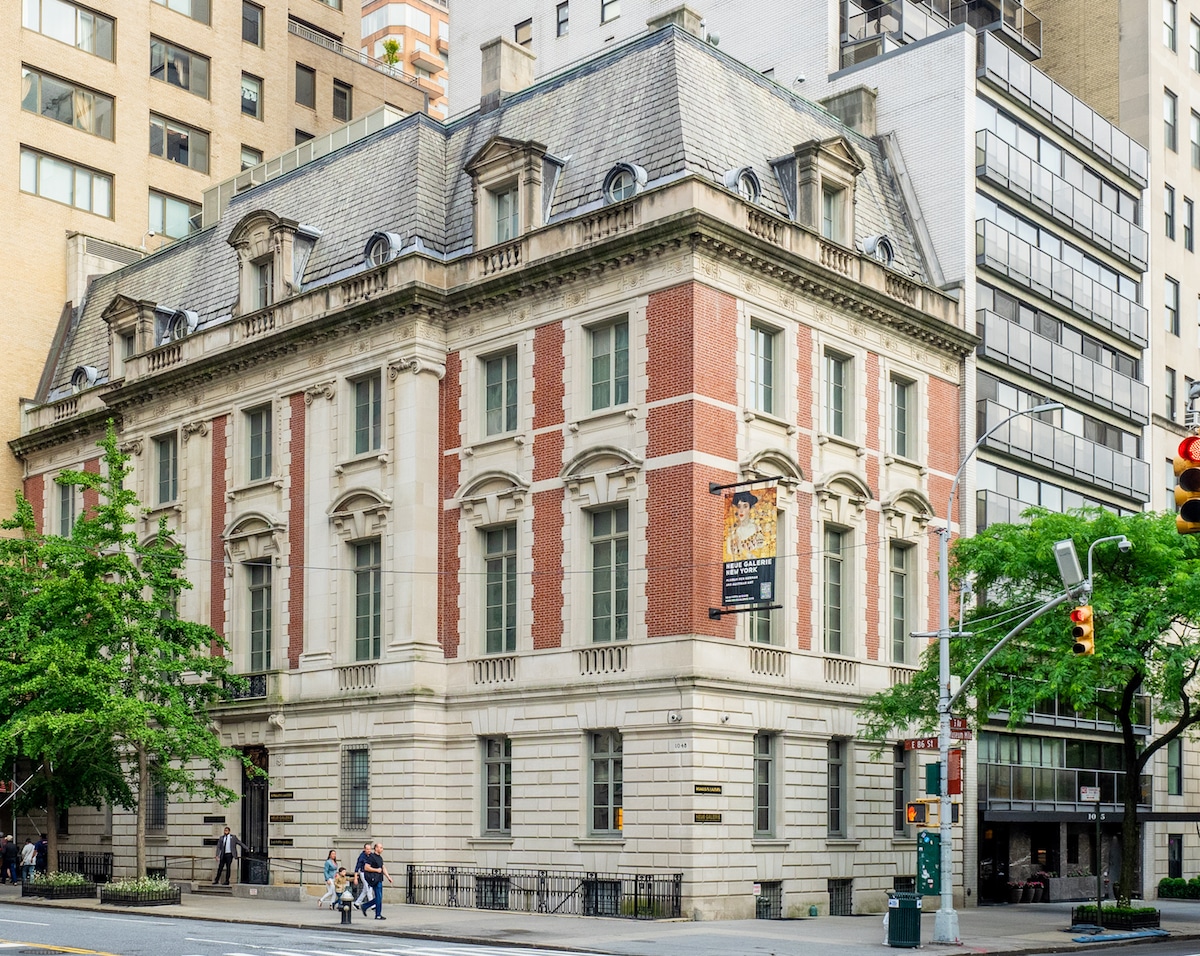
The combined institution will operate as The Met Ronald S. Lauder Neue Galerie, timed to coincide with the Neue Galerie’s twenty-fifth anniversary. The building on Fifth Avenue, the historic William Starr Miller House, a six-storey Beaux-Arts mansion designed by Carrère and Hastings and built in 1914, will remain the home of the collection. Café Sabarsky, the Viennese restaurant that has become one of the more civilised places to eat in Manhattan, will continue to operate, as will the institution’s design shop and bookstore.
The Neue Galerie was founded in 2001 by Ronald S. Lauder and the late Serge Sabarsky, opening just weeks after the September 11 attacks in a moment that, as Lauder has recalled, gave New York something like a sense of renewal at an extraordinarily difficult time. Sabarsky died in 1996 before the museum opened, and Lauder carried their shared vision through to completion alone, shaping the institution into what became the only museum in the United States devoted exclusively to Austrian and German art and design from the early twentieth century. Its holdings include major works by Gustav Klimt, Egon Schiele, Oskar Kokoschka, Ernst Ludwig Kirchner, Max Beckmann, Gabriele Münter and Josef Hoffmann, alongside significant holdings of Wiener Werkstätte design and decorative arts.
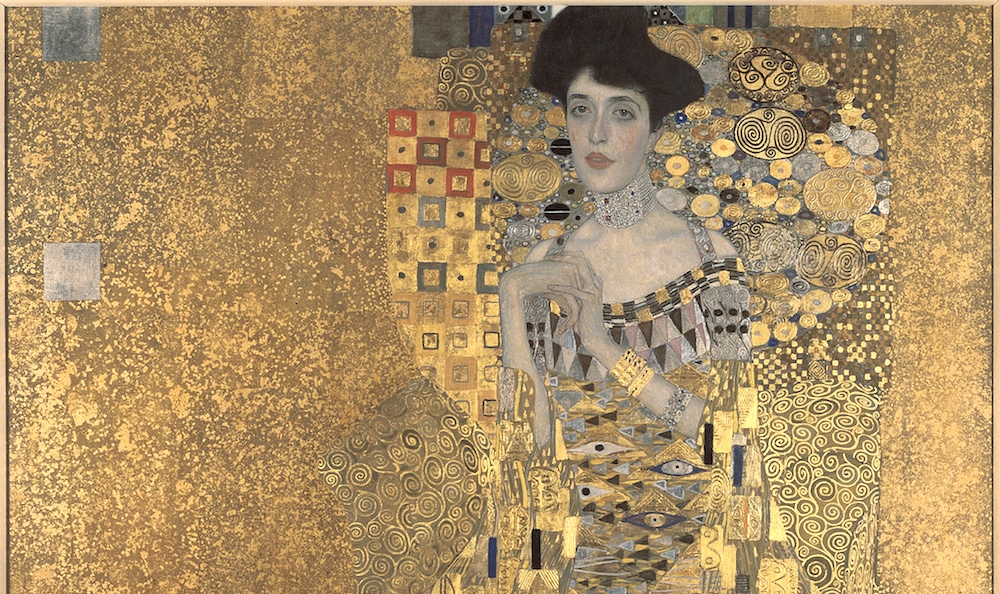
Gustav Klimt Detail 1907 Adele Bloch-Bauer Neue Galerie New York
The collection’s most famous single work is Klimt’s Portrait of Adele Bloch-Bauer I, the painting that became widely known as the Woman in Gold following the protracted legal battle over its restitution from Austria and its subsequent 2006 sale for $135 million. That work and the story surrounding it brought the Neue Galerie a level of public attention that extended well beyond the usual art-world audience, and it has remained one of the most-visited paintings in New York ever since.
As part of the merger announcement, Lauder and his daughter Aerin Lauder Zinterhofer revealed plans to donate a significant group of works from their personal collection to the combined institution. The promised gifts include Klimt’s Die Tänzerin, Kirchner’s Die Russische Tänzerin Mela and Beckmann’s Galleria Umberto, with further promised works including Klimt’s The Black Feather Hat and pieces by Otto Dix, George Grosz and Franz Marc. The family will also establish a substantial endowment to fund the long-term care of the Neue Galerie and support its integration into the Met’s operations. Additional financial backing has come from Met trustees and supporters, with a lead gift from Marina Kellen French.
Lauder said the merger would permanently preserve and strengthen the Neue Galerie’s legacy. “For the past twenty-five years, the Neue Galerie’s exhibitions, permanent collection, design and book shops, and Café Sabarsky have created an experience that transports visitors to another time, early twentieth-century Vienna and Weimar Germany,” he said, adding that he was confident the Met was well placed to steward that legacy into the future. He singled out Met director Max Hollein for particular credit, describing his leadership and understanding of the collection’s historical importance.
Hollein, who himself came to the Met from the Städel Museum in Frankfurt and has his own deep familiarity with German-language modernism, called Lauder “a collector like none other” and described the Neue Galerie as “itself a work of art.” The merger gives the Met its third location, joining the main Fifth Avenue building and the Cloisters in Upper Manhattan, and extends the institution’s reach into a collecting area where it has not previously had a dedicated presence.
The agreement also establishes a Special Advisory Board jointly overseen by both institutions, with Lauder serving as its inaugural chair. His connection to the Met predates the Neue Galerie by decades. He recalls first attending a dinner at the museum as a child in the late 1950s, and that experience shaped a lifelong commitment to collecting and to institutional philanthropy. His promised gift of 91 works of European arms and armour, announced in 2020, has already led to the renaming of the Met’s arms and armour galleries in his honour.
The Neue Galerie will close on 27 May 2026 for building renovations and is expected to reopen in autumn 2026 with an exhibition marking its twenty-fifth anniversary. The renovation is intended to secure the long-term condition of the historic building ahead of the 2028 merger.
The announcement comes at a moment of considerable expansion for the Met overall. The museum is midway through a $1.5 billion capital campaign that includes the recently opened Michael C. Rockefeller Wing, the new Condé M. Nast Galleries, which opened earlier this month with an inaugural exhibition on costume art, forthcoming new galleries for Ancient West Asian and Cypriot art, and the Tang Wing for Modern and Contemporary Art, due to open in 2030.
Aerin Lauder Zinterhofer, who serves as a Met trustee and is a member of the founding family, said that seeing the Neue Galerie join the Met was “incredibly meaningful,” ensuring that the works would continue to be preserved, studied, and shared with the widest possible audience.
For New York, the merger consolidates an already remarkable concentration of art historical resources on and around Fifth Avenue, and it gives one of the city’s most particular and atmospheric museums a secure future within one of its greatest institutions.
Top Photo Courtesy Neue Galerie