

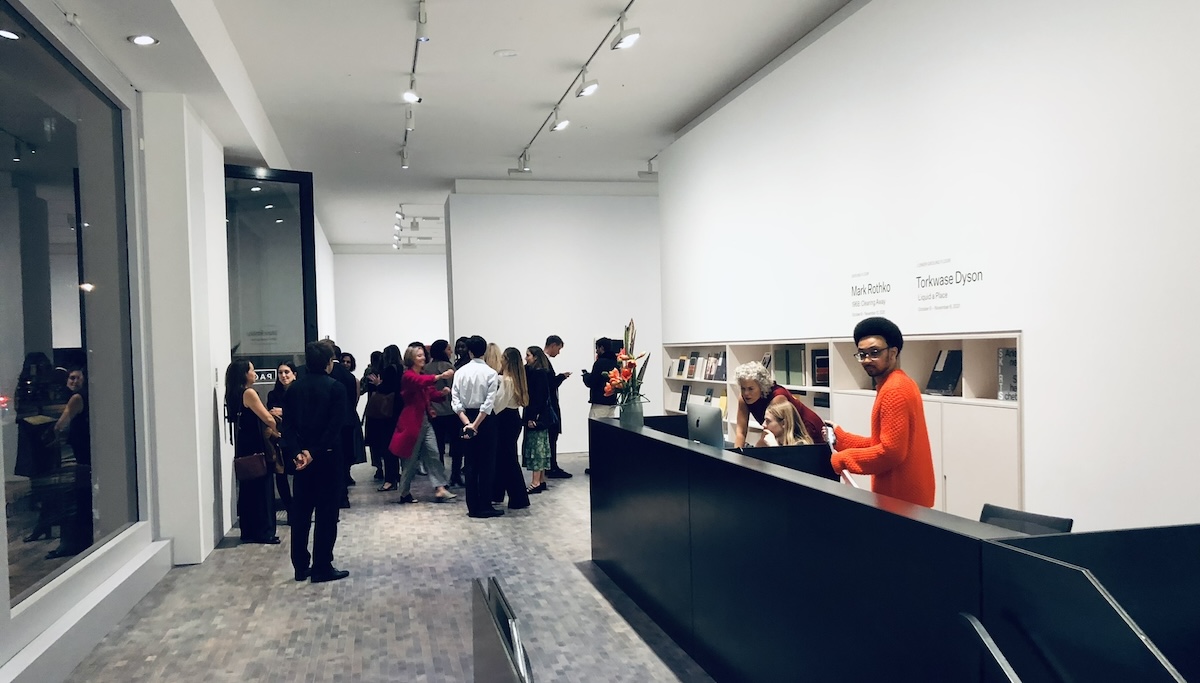
Pace has put its Hanover Square lease up for sale. It quietly went on the market in June following an internal restructuring. Around 50 artists left the roster worldwide, and sales fell by about 20 per cent. Both sets of accounts say the aim is to concentrate resources, serve artists and collectors better and return to efficient, profitable trading. They also note a smaller property footprint, which means fewer exhibitions and lighter overheads.
Part of Pace’s woes stem from the construction and renovation costs of the Pace Gallery’s global flagship in West 25th Street, Chelsea, New York.
Marc Glimcher, CEO and son of the founder of Pace, said, “The gallery model is broken; the current commercial art world has become too big, too corporate, too impersonal, and Pace is doing something about it. Glimcher is on the lookout for a smaller London space nearby in 2027. In New York, some floors of the headquarters are available to sublease.
Pace Gallery Limited incurred a $5.4 million loss in 2025. Companies House published the accounts on October 26. The filing has come just days after the gallery posted its 2024 figures, ten months overdue. Those showed a $1.9 million loss. Earlier this year, Pace parted with several staff members in an effort to stabilise its finances.
A Pace spokesperson told Artlyst, “It is important to understand that the London entity serves as the parent company for all of Pace’s operations outside the US and Tokyo. It is underwritten by the US entity, with the filing reflecting the financial support provided by the US business for its international operations. The figures should be understood in the context of this broader corporate structure and the consolidated nature of the group’s international operations.” The Tokyo space is not part of it. Turnover for 2025 reached $65.9 million. That is 2.6 per cent lower than in 2024 and 37 per cent lower than in 2023, when sales stood at $104.9 million. Before tax, the company lost $5.5 million.
A sector-wide contraction in both the global and U.K. art trade is problematic. The 2024 filing used almost the same language. The balance sheet has weakened. Net liabilities in 2024 were $2.9 million, a swing from net assets of $2.5 million. The company owed $9.9 million to its American parent, Pace Gallery LLC, up from $9.4 million. A wider measure puts total debt owed to the parent at $21.3 million, up from $19.2 million previously.
A spokesperson has told Artlyst, “The proposed debt-for-equity conversion is part of a broader global financial management strategy, which reflects a capital structure decision within the Pace group and should not be interpreted as a loss or a liquidity issue for the UK business. As part of the ongoing management of our global operations, we periodically review how our subsidiaries are financed to ensure that their balance sheets appropriately reflect the long-term nature of the capital invested in those businesses. In this case, the parent company has determined that a portion of its investment in the UK operation is more appropriately reflected as equity rather than intercompany debt. The proposed transaction is intended to strengthen the UK company’s balance sheet and align its capital structure with the business’s long-term needs.
Pace says it has a fix. By the end of 2026, the company intends to turn what it is owed into shares. The 2024 accounts carried the same promise. A spokesperson insisted this should not be taken as a sign of loss or a cash problem in London. The parent has decided that part of its stake should be recorded on the books as equity rather than intercompany debt. The move, the spokesperson said, should strengthen the balance sheet and align with the business’s long-term needs.
This is not the first gallery at 5 Hanover Sq to have problems. Blain Southern, which preceded Pace, rapidly expanded into massive space in New York before declaring bankruptcy and shuttering in both cities. Could the premises be cursed?