
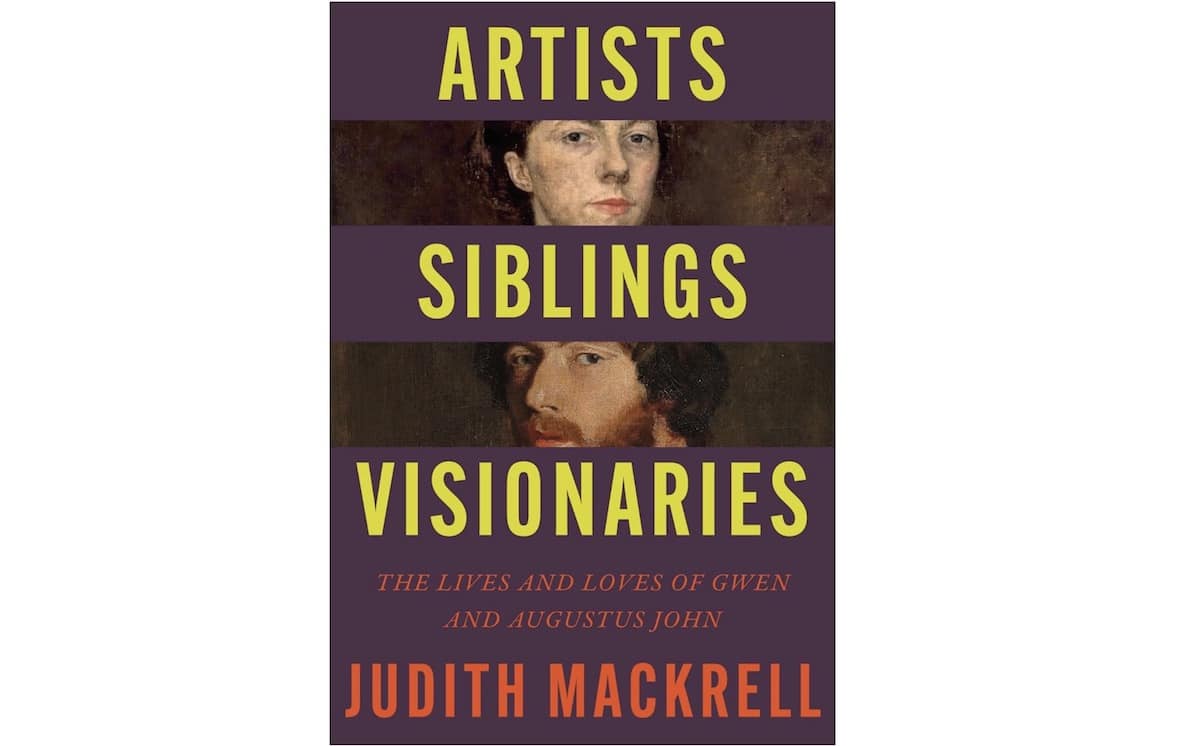
Judith Mackrell’s latest book is an insight into two of the greatest British painters of the Edwardian period. Artists, Siblings, Visionaries is not a double biography of Gwen and Augustus John—it’s a forensic examination of how art history gets written, and why some names get etched in our psyche while others fade into oblivion.
Augustus John took London by storm. With a sketchpad and devil-may-care attitude, he captured the era’s giants—Churchill’s bulldog glare, Yeats’ poetic gaze—all while living a life worthy of gossip columns. The man could draw like an angel, but partied like a demon. Mackrell strips away the myth to reveal the artist beneath his brilliant draftsmanship, often undermined by his appetite for chaos.
Gwen John painted differently. Her canvases speak in whispers—solitary women in dim rooms, light falling just so. While Augustus held court in London salons, Gwen sat alone in Parisian garrets, first as Rodin’s lover, later as her own woman. That she became the first female Slade student to win the figure-painting scholarship matters; that she spent decades in obscurity matters more. Today, when you stand before her Convalescent at Tate Britain, you wonder how anyone ever overlooked her.
What makes Mackrell’s account exceptional is her refusal to pit siblings against siblings. Augustus’s bravado masked deep insecurities; Gwen’s quietude concealed fierce passions. Their art diverged—his bold and public, hers intimate and introspective—but both grappled with the same demons: how to create, love, and be remembered.
The book’s real question lingers after the last page: why do we celebrate some artists in their time, and others only long after? Augustus died famous; Gwen died nearly forgotten. Now the scales tip the other way. Mackrell doesn’t judge—she shows. And what she shows will make you rethink every museum wall you’ve ever walked past. Essential. —PCR
2026 Women’s Prize For Non-Fiction Shortlist – The Prize celebrates excellent, original and accessible narrative non-fiction written by female thought-leaders, changemakers and experts, and is sponsored by Findmypast and supported by the Charlotte Aitken Trust, who gift the £30,000 prize fund and Charlotte sculpture for the winner.
This year’s Chair of Judges, Thangam Debbonaire, CEO of UK Opera Association, cultural strategist and politician, is joined by Roma Agrawal, engineer, author and broadcaster, Nicola Elliott, founder of NEOM Wellbeing, Nina Stibbe, novelist and memoirist, and Nicola Williams, Crown Court judge and thriller author. Further information about the judging panel can be found here.
The winner of the 2026 Women’s Prize for Non-Fiction will be revealed on Thursday 11 June 2026 at the Women’s Prize Trust’s summer party in Bedford Square Gardens, London (along with the winner of its sister prize, the 2026 Women’s Prize for Fiction).
More information about the charitable mission of the Women’s Prize Trust can be found Here


