
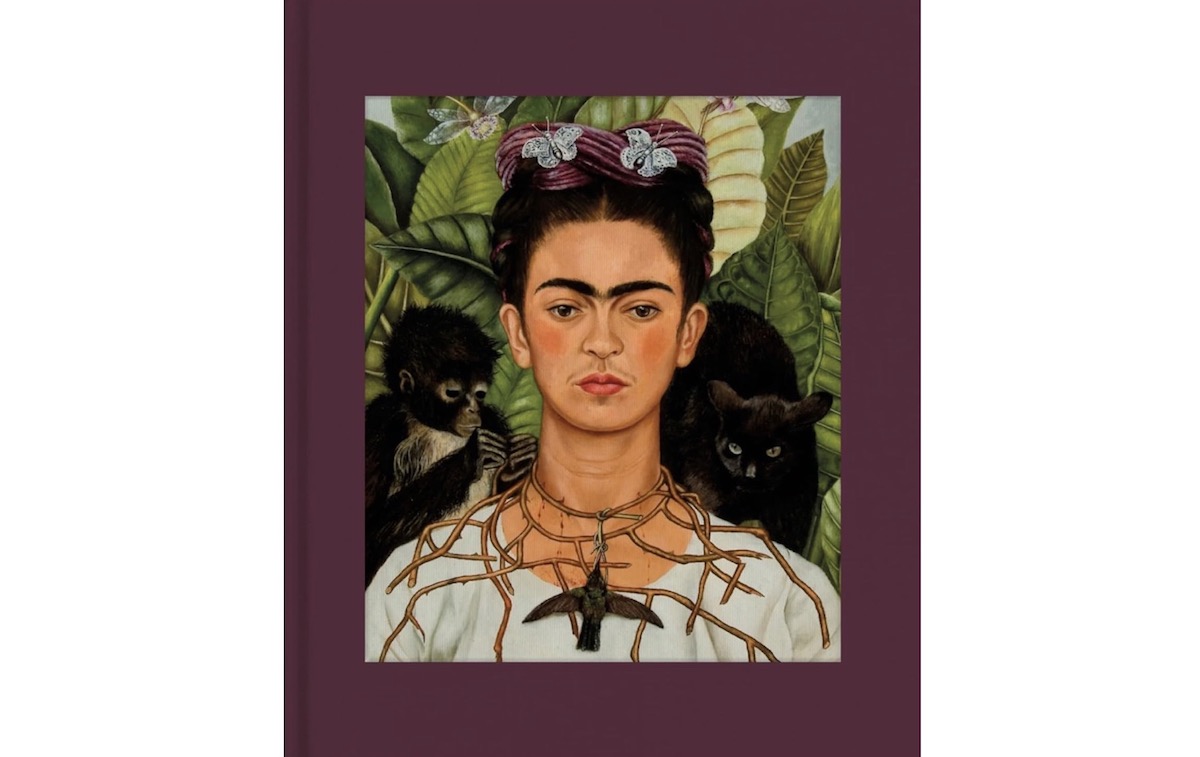
Frida: The Making of an Icon has already passed through Houston before landing at Tate Modern, where it runs from June 2026 into January 2027. Published in association with the Museum of Fine Arts, Houston, it is a substantial volume organised around seven thematic sections, featuring essays by researchers, scholars, and curators, as well as conversations with contemporary artists Magali Lara and Mónica Mayer. It is also, the publishers claim, the first major examination of how Kahlo became a global icon rather than simply a celebrated painter. That distinction is what the whole enterprise rests on, and it mostly holds.
Kahlo lived from 1907 to 1954. In that time, she made a body of work that was intensely autobiographical, formally distinctive and largely ignored by the mainstream international art world during her lifetime. The transformation of that legacy into what the catalogue calls Fridamania, a global commercial and cultural phenomenon encompassing everything from fine art collecting to tote bags, is the subject the book is genuinely interested in. It traces the process from her self-constructed image through to contemporary artists who continue to reimagine and debate her story.
The exhibition brings together more than thirty of Kahlo’s works, introducing what the curators describe as her many selves: the wife, the intellectual, the modern artist, the political activist. Alongside the paintings are personal objects, garments, jewellery, photographs, and memorabilia, materials that blur the line between artistic production and self-presentation, a line the catalogue handles well. Kahlo understood her own image as a medium, and the book takes that seriously without reducing the paintings to costume.
What surrounds the Kahlos is considerable. More than 200 works by contemporaries and artists working from the 1970s onward are included, alongside more than 200 commercial objects that depict her image and persona in various commercial iterations. The section on Fridamania is the most culturally revealing part of the catalogue, tracing how an artist who struggled for recognition in her own lifetime became one of the most reproduced human faces in the world. The analysis is honest about the tensions in that process, and about how fandom can both amplify and flatten a complex figure.
The essays are uneven, as essays in large exhibition catalogues often are. The strongest address Kahlo’s gender fluidity and political activism, contexts that explain why successive generations of artists and communities have claimed her with such particular intensity.
The conversations with Lara and Mayer ground the more theoretical sections in the specific, which helps. Both artists speak about Kahlo with the kind of ambivalence that serious engagement tends to produce, admiration without deference.
The catalogue is at its best when it resists the pull of celebration and holds the complexity of Kahlo’s legacy in view. An artist this famous is always at risk of disappearing behind her own image. This book does not entirely prevent that from happening. Still, it tries harder than most to keep the actual work in focus while honestly accounting for everything that has accumulated around it.
Published in association with the Museum of Fine Arts, Houston
Exhibition Schedule:
The Museum of Fine Arts, Houston
(January–May 2026)
Tate Modern, London
(June 2026–January 2027)