
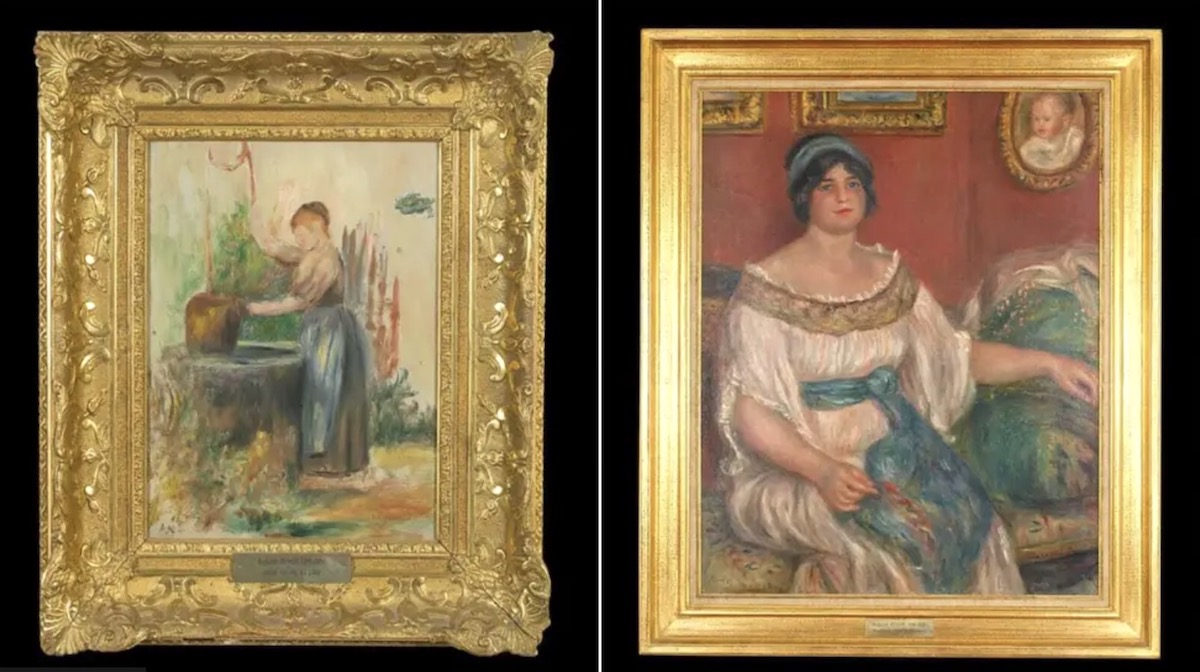
At least five people have been arrested in France in connection with the theft of two Renoir paintings last month, according to local media. The two suspected burglars are reported to be among them. Nice-Matin, which broke the story, puts the number at six, and other French outlets have followed that figure. Local prosecutors have declined to confirm, so the details should be treated with some caution. It has now been confirmed that the two missing paintings have been returned.
The paintings were taken from the Renoir Museum in Cagnes-sur-Mer, a suburb of Nice. Two are still unaccounted for: the Portrait of Madame Colonna Romano from 1910 and Jeune fille au puits from 1886. A further two works were dropped by the thieves as they hurried out, and were left behind.
The method was crude but effective. At dawn on 8 September the suspects cut through a fence to reach the tree-lined grounds, broke a window to get into the building, and then used an electric saw on the frame mountings. Nice-Matin reports that those held may belong to an organised criminal gang, which would fit with the planning the break-in seems to have involved.
The museum is a modest place with a particular weight. It holds twelve works by Renoir and opened in 1960 in the house where he spent his last years, before he died in 1919. Alongside the paintings are things that belonged to him, among them his easel and wheelchair, as well as photographs and personal letters. Taking pictures from a house the artist lived in is a different matter from emptying a public gallery, and the loss is felt accordingly.
The theft is the latest in a run of serious incidents across Europe that have put museum security under scrutiny. In August, paintings by Renoir, Paul Cézanne and Henri Matisse were stolen from a museum in Italy in a raid that lasted only three minutes. Those works were later recovered. The most conspicuous case came in October last year, when France’s crown jewels were taken from the Louvre in daylight. The thieves, dressed as construction workers, entered the Apollo Gallery on the first floor. At the same time, the museum was open, used an angle grinder on the display cases and left with jewels worth €88m (£78m) that had belonged to nineteenth-century queens and empresses. The Louvre was later criticised for under-investing in security.