
The Fitzrovia Chapel is the only remaining building of the former Middlesex Hospital, where in 1987 Princess Diana opened the Broderip and Charles Bell Wards, the first in the United Kingdom dedicated to the treatment and care of patients with HIV and AIDS. That history is present in every stone of the building, and it gives Danielle van Zedelhoff’s portraits of long-term HIV survivors a weight and resonance that no white cube gallery could provide.
The exhibition, which runs from 9 to 12 June, is a collaboration between the Fitzrovia Chapel and the National HIV Story Trust, a charity established to preserve the real-life histories of the HIV and AIDS pandemic of the 1980s and 90s. The Trust holds an archive of filmed interviews with survivors, families, partners and medical professionals, and it was during the filming of the first 100 of those interviews that the 16 portraits in Survivors were commissioned. Excerpts from those interviews will feature in the exhibition alongside van Zedelhoff’s photographs, grounding the images in the voices of the people they depict.
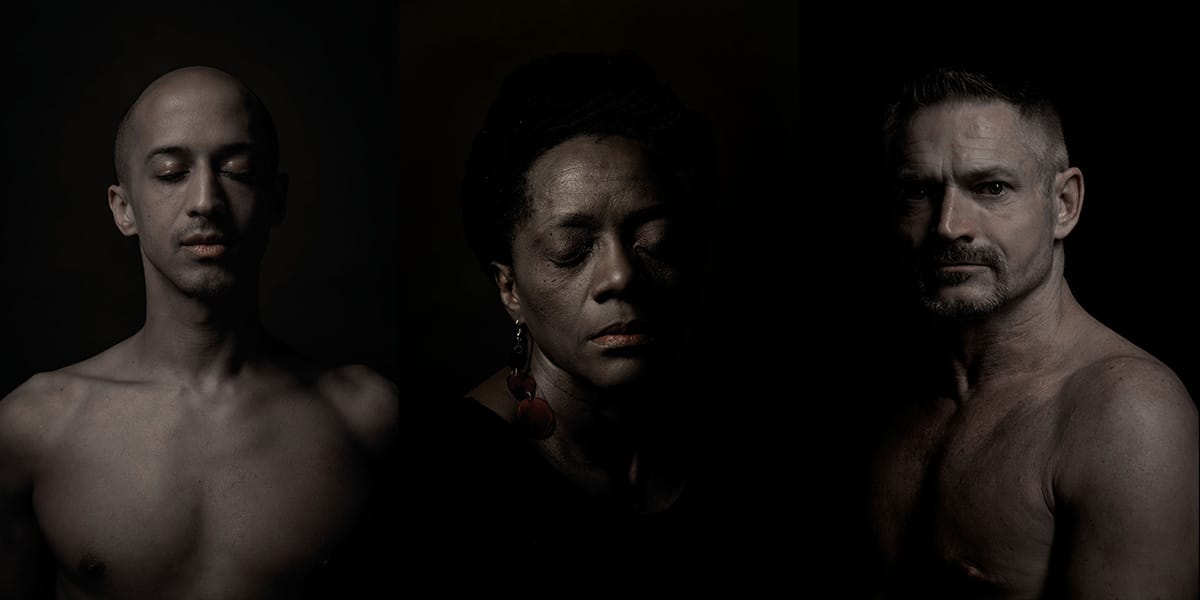
Van Zedelhoff, born in Amsterdam in 1963, is a fine-art portrait photographer whose work is immediately recognisable for its emotional directness and command of chiaroscuro. This technique recalls the tonal drama of seventeenth-century Old Master painting. That formal language is not decorative here. The deep contrasts of light and shadow that define her visual approach serve the subject with particular aptness, drawing attention to what she has described as the landscape of skin and the inner life it both conceals and reveals. “These survivors are witnesses to our history,” she has written. “I have tried to capture a reflection of their strength, of the fragility of beauty in their imperfection: the connections between the landscape of skin and their inner selves.” It is a statement of intent that the photographs honour without strain.
The 16 subjects are individuals who have lived with HIV for decades, in many cases since the years when a diagnosis carried an almost certain death sentence. Their survival is not incidental to the work but constitutes its entire subject. Van Zedelhoff photographs them with a formality that confers dignity without suppressing vulnerability, and the results are images that hold complexity rather than resolve it. These are not pictures of triumph, exactly, nor simply of suffering. They occupy the difficult space in between, where most of these lives have been lived.
Paul Coleman, Co-Founder and Chair of the National HIV Story Trust, has discussed how the portraits contribute to the broader archival project. “The immense challenges of an HIV diagnosis are well-known, but within often painful stories are also deep wells of hope, resilience and strength. Danielle’s portraits capture the dichotomy between these themes and remind us that at the heart of HIV are human beings and the complex, interwoven tensions between adversity and fortitude.” That framing accurately reflects what the photographs achieve. They resist reducing their subjects to symbols of either tragedy or survival, insisting instead on the full human particularity of each individual depicted.
The Fitzrovia Chapel has developed a sustained curatorial relationship with this history over recent years. Previous exhibitions have included photographic and film displays about the Middlesex Hospital wards, a presentation of work connected to Leigh Bowery, who died of AIDS at the Middlesex in 1994, and a special showing of the Terry Higgins Memorial Quilt in 2024. Each has used the chapel’s intimate, Byzantine-inspired interior to foster reflection rather than spectacle. Survivors continues that tradition and benefits from it.
The exhibition is part of the National HIV Story Trust’s HIVstory project, made possible through funding from the National Lottery Heritage Fund. The Trust’s archive represents an act of cultural preservation whose importance is difficult to overstate. The generation most directly affected by the crisis of the 1980s and 90s is ageing, and the institutional memory of that period, its losses, its solidarities, its particular textures of fear and love and community, requires active effort to maintain. The filmed interviews the Trust holds, and the portraits that accompanied their making, are part of that effort.
Van Zedelhoff has exhibited in major museums and galleries across Europe, the Middle East, and the United States. Survivors is among her most focused and affecting bodies of work, strengthened by the clarity of its collaborative purpose and the seriousness with which both photographer and institution have approached their shared subject.
Admission is free.
Read This Personal Account Of The AIDS Crisis Here
Survivors: The Art of Defiance is at the Fitzrovia Chapel, 2 Pearson Square, London W1T 3BF, from 9 to 12 June 2026. Open Tuesday to Thursday, 11 am to 6 pm, and Friday, 11 am to 4 pm. fitzroviachapel.org