Louise Giovanelli
https://grimmgallery.com/artists/73-louise-giovanelli/
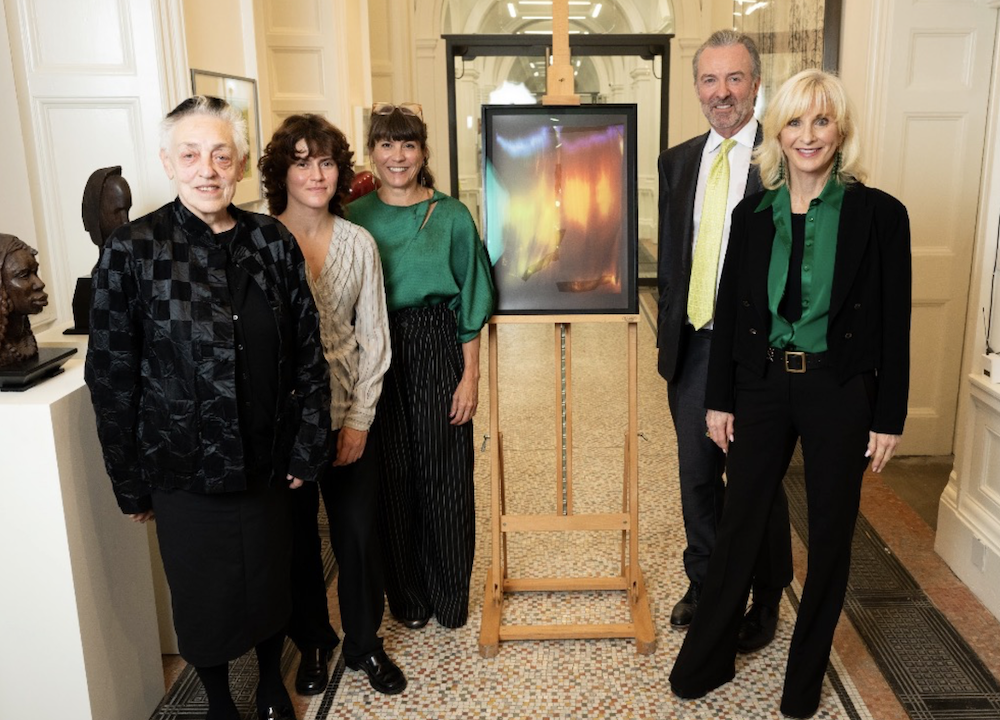
There were glimmers everywhere in London last week, their principal source being artists. Louise Giovanelli is a painter who captures the light in ways rarely seen. Drawing on historical painting techniques and religious iconography, her lucent, shimmering works speak to the contemporary magpie. The horny sheen of gold polyester, wet lips cast in the burgundy hue of an empty wine glass, the glossy perfection of salon-styled hair, and the strange allure of closed, sparkly curtains that promise something will be revealed speak to our hunger for beauty whilst questioning how images acquire power over us. Behind these paintings is a generosity of spirit that is manifest in Giovanelli’s commitment to supporting the next generation of painters through the co-founding of the Apollo Painting School in Manchester, where she lives, her recent commission for the Government Art Collection’s TenTen initiative, and her nomination of Paul Robas for the Frieze Artist-to-Artist section. In this, a brightness translates to a form of optimism, found through making fine art – watch out for her solo show https://www.whitecube.com/gallery-exhibitions/louise-giovanelli-masons-yard-2026
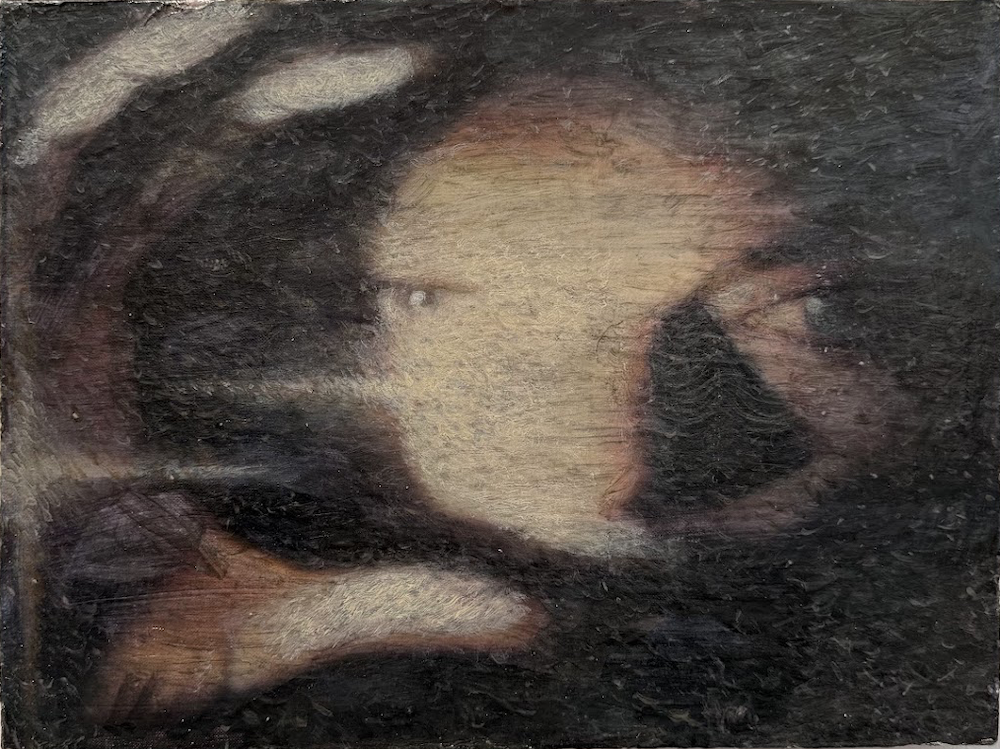
Paul Robas
https://www.aliceamati.com/artists/paul-robas
Paul Robas’s small-scale paintings reward close attention. Showing with Alice Amati in the Artist-to-Artist section at Frieze, this painter is admired by his peers as much as by collectors. Central to his process is a fascination with the reproduced image. Drawing from digitally manipulated and found photographs, he translates them into paintings using ink, oil, and encaustic, building up surfaces that hover between the photographic and the ghostly. The resulting works explore the instability of memory: how a face, a fragment or an atmosphere can survive while its original context slips away. They also serve as a reminder – we remember what we want to – indeed this painter is unforgettable.
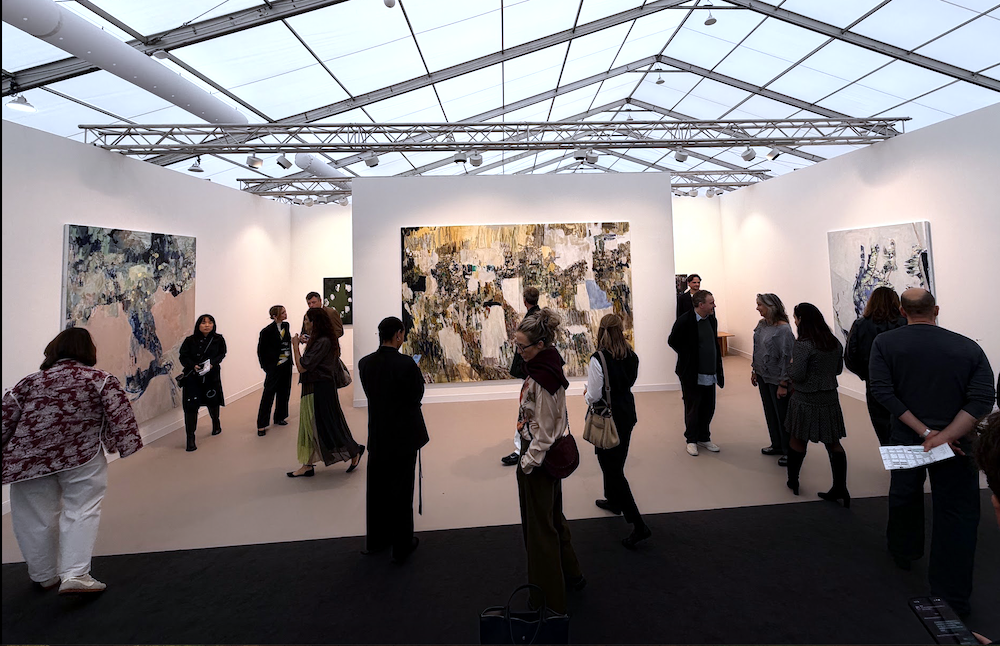
Francesca Mollett
https://www.modernart.net/en/artists/francesca-mollett
Francesca Mollett’s large-scale, exuberant canvas celebrates the many ways we experience light, space, and the material world through the language of abstraction. Working principally with oil, acrylic and charcoal on calico, she builds up layers intuitively, with colour and surface being active rather than merely descriptive. Her paintings suggest, rather than represent, inviting the viewer into a dialogue about what they might be. Some see shifting weather patterns, or natural, geographical forms, but what distinguishes her work is the rigour of compositional thought. The works feel open yet coherent, eliciting powerful emotional responses. Showing with Stuart Shave Modern Art, her solo booth at Frieze was one of this year’s standout presentations.
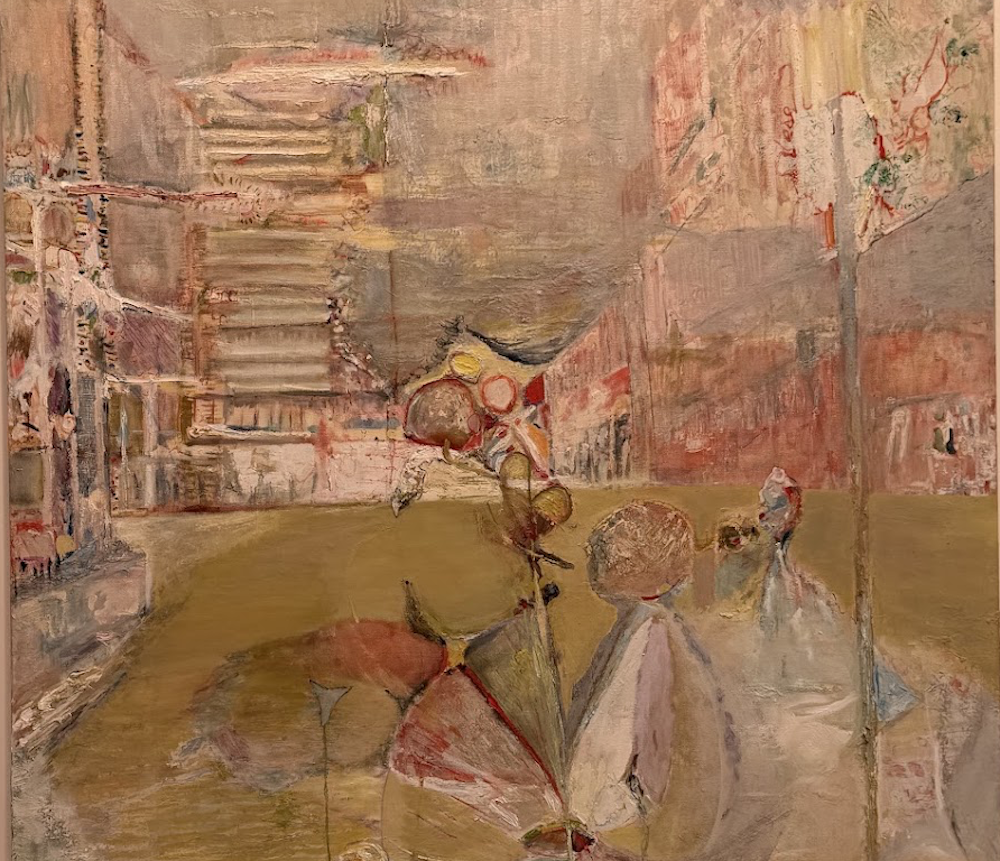
Gabriella Boyd
https://grimmgallery.com/artists/136-gabriella-boyd/
GRIMM Gallery really stole the show for me this year, with a selection of works that would form an ideal core collection, amongst them Gabriella Boyd. A soft, desaturated palette belies a sophisticated and psychologically charged realm where bodies, architectural forms and objects seem to be captured at the point of vanishing. Like memory, her compositions are difficult to hold but haunting. Drawing on found imagery (photographs, drawings) and feelings experienced during social encounters, her works blend internal worlds with objective reality, capturing that strangeness. Seen alongside Giovanelli and other painters at GRIMM, Boyd demonstrates how contemporary figurative painting can communicate states of mind without relying on conventional narrative – and by extension frees us from those shackles.
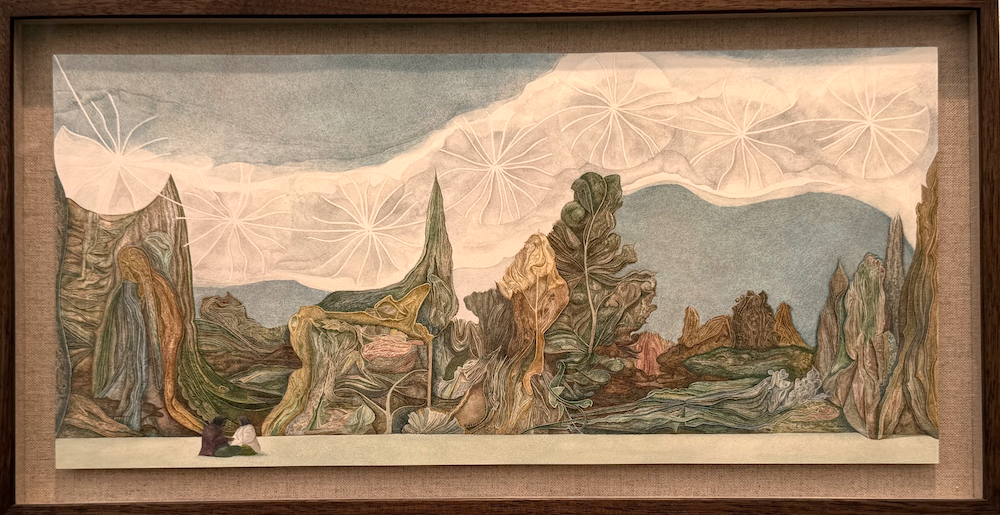
Gareth Cadwallader
https://joshlilleygallery.com/artists/gareth-cadwallader
A small but elegant work by Gareth Cadwallader caught my eye. Meticulously controlled, with a precise handling of paint, it was the clouds – striated with geometric lines – in this small landscape that stayed with me. Though familiar, this scene was uncanny, almost architectural in its essence, like a blueprint for another world in which clouds are not free-floating but programmed. Surreal and dreamlike, Cadwaller blurs the lines between figuration and abstraction: the subject remains legible, yet the painting’s spatial logic resists any resolution. His work seems to invite us to look beyond what is depicted and consider how composition, colour and the act of painting itself can produce a sense of unease or possibility. Further, he might be asking us to consider which worlds we are building now and how to take more care of our present reality.
Ken Nwadiogbu
https://kristinhjellegjerde.com/artists/363-ken-nwadiogbu/overview/
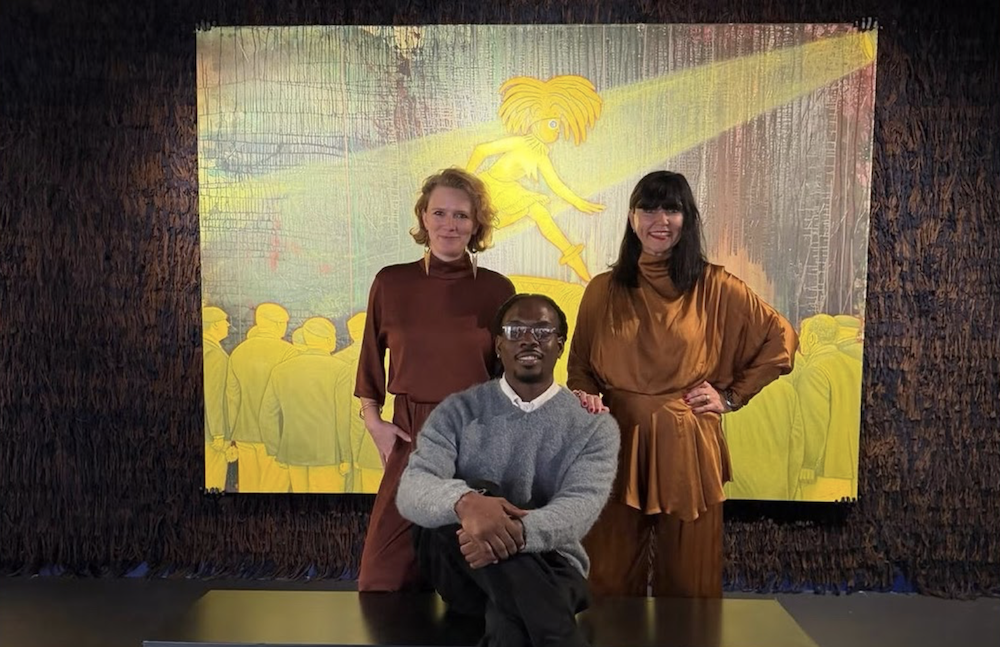
Ken Nwadiogbu is an artist everyone should have on their radar, not only for his vivid use of colour that depicts figures from the continent in unique ways, in particular yellow as a metaphor for blackness, but also for his ability to move easily between media and incorporate new elements when a series requires it. Trained as a civil engineer before studying painting at the Royal College of Art, he has evolved his practice from hyper-realistic portraiture into a multidisciplinary investigation of identity, migration and visibility. Moving seamlessly between painting, sculpture, installation, and video, he brings an analytical sensibility to his work, underscored by a solid, structurally sound foundation. Moving from Lagos to London gave the artist a lived experience of identity shaped by society and thwarted by preconceptions. Yet we find an individual’s strength in his works. Most compelling in his work is the combination of intellectual enquiry and visual experimentation, which is evident in his clarity of speech on complex issues. His recognition through the Degussa Young Generation Art Award in 2026 marks a pivotal moment in his career, and we look forward to his solo show with Kristin Hjellegjerde Gallery.
Pelle Swedlund
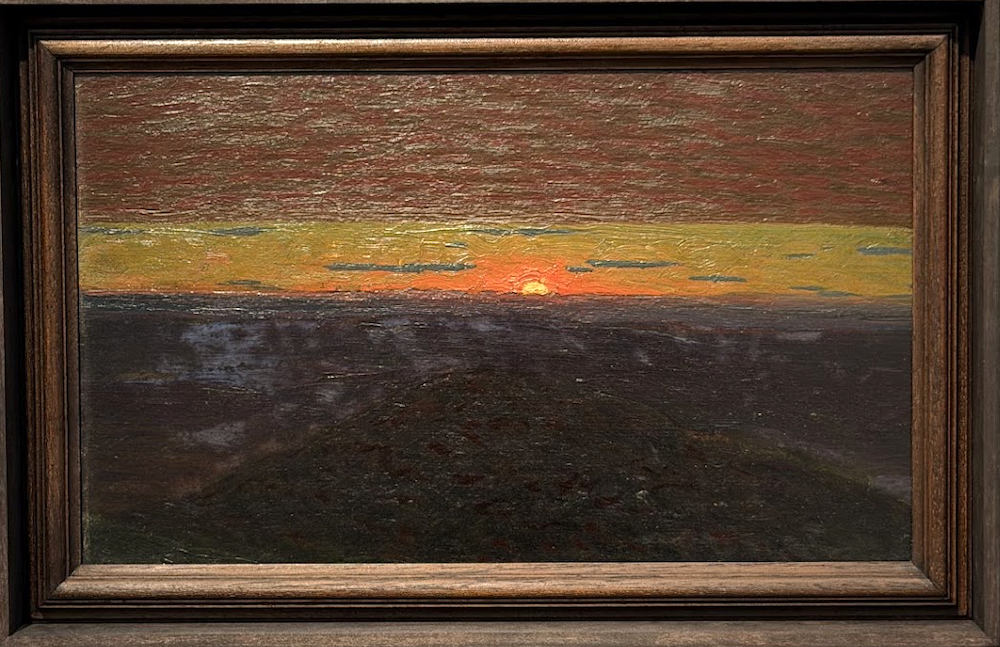
Frieze Masters offers viewers multiple rediscoveries, with our highlight being Pelle Swedlund. A painter whose work belongs to the evocative, introspective world of European Symbolism, he evokes intimate sunsets and wistful lake scenes – swans floating through the gloaming – that are unforgettable. Born in Sweden in 1865, Swedlund developed a style of painting that was less concerned with the faithful transcription of appearances and more attuned to the mood and psychological charge of a scene. Symbolism was a movement that sought to express things beyond the literal, allowing landscape, shadow and tone to suggest states of consciousness and give expression to that which cannot easily be named. Seen today, this sensibility feels particularly relevant to contemporary painting’s renewed interest in ambiguity and interiority – but also allows for a kind of slippage with the past. As Mattias Vendelmans shows, this booth was a reminder that we need not always look to contemporary art for fresh ways of seeing, but rather continue to explore painted histories.
Eleanor Lakelin
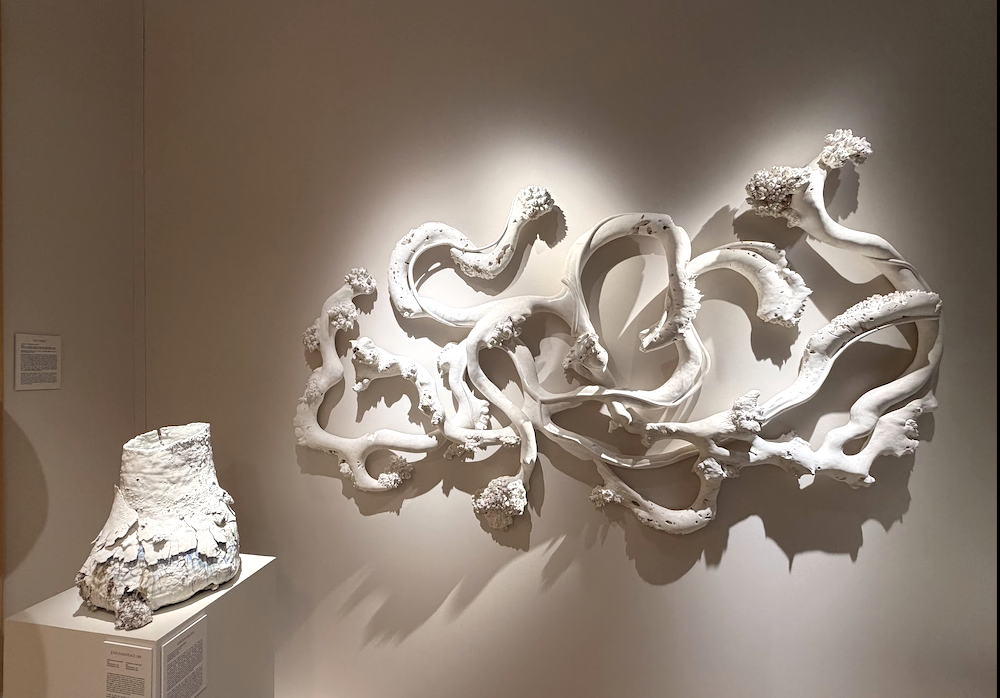
Always a standout at PAD, Eleanor Lakelin’s majestic work was discovered this year at the Sarah Myerscough Gallery. Her undulating wall-mounted sculptures reveal the extraordinary complexity held within natural materials we otherwise take for granted (think of the throwaway timber at a fair). Working with British trees felled due to decay, she transforms wood into precious objects whilst preserving the marks of growth, erosion, and structural change inherent in the process. Through carving, turning and textural treatments, she draws attention to the tension between the organic life of a tree and the value we attribute to finished objects. However, her work is far from straightforward, balancing between the familiar and the strange; her sculptures evoke time, metamorphosis and the fragile boundary between the living and the dead. Her works ask important questions about preservation, hierarchy of materials and our attitudes to natural resources.
Seyni Awa Camara
https://www.gallevery.com/exhibitions/seyni-awa-camara-etc-1-54-art-fair
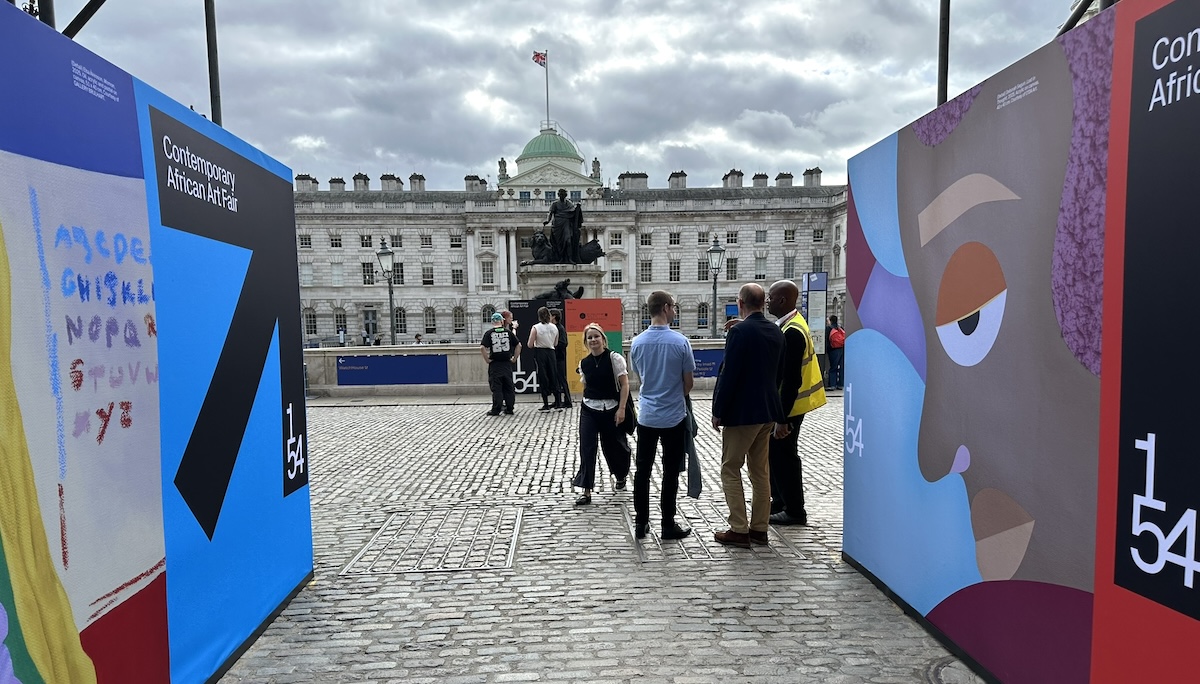
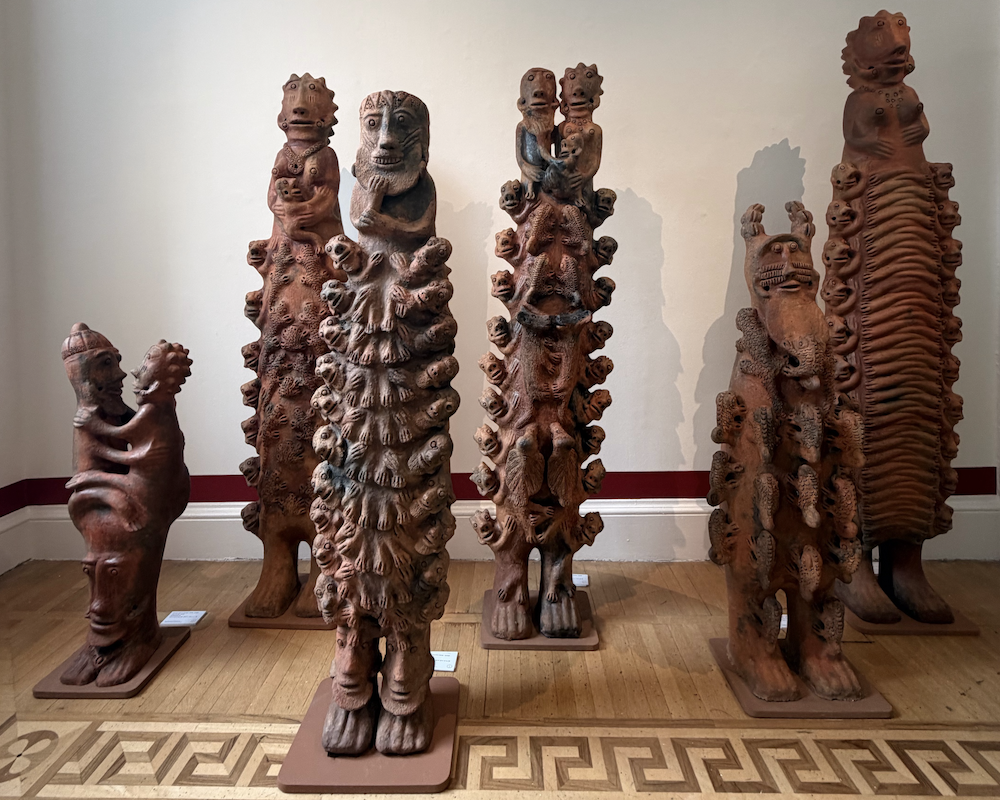
The 1-54 Contemporary African Art Fair featured a memorial solo exhibition dedicated to the late Senegalese sculptor Seyni Awa Camara (1945–2026) at Somerset House in London. Taught pottery by her mother, Seyni Awa Camara created a mythical forest of totemic figures in unglazed clay, with multiple heads, limbs and hybrid bodies that hover magically between memory and the unseen spiritual world. Working in Bignona, Senegal, she developed a highly sophisticated visual lexicon that moved well beyond the utilitarian traditions of ceramics. Her upright sculptures touch on themes of maternity, procreation and animism and seem to highlight the strangeness of female archetypes. First given international recognition through the landmark exhibition Magiciens de la Terre in Paris, 1989, her work resists easy categorisation within Western art-historical frameworks. As shown by the Gallery of Everything, encountering her work was a reminder of the importance of seeing artists whose visual worlds challenge conventional divisions among contemporary art, tradition, and spiritual realms.
Geraldine Swayne
https://www.instagram.com/geraldineswayne/
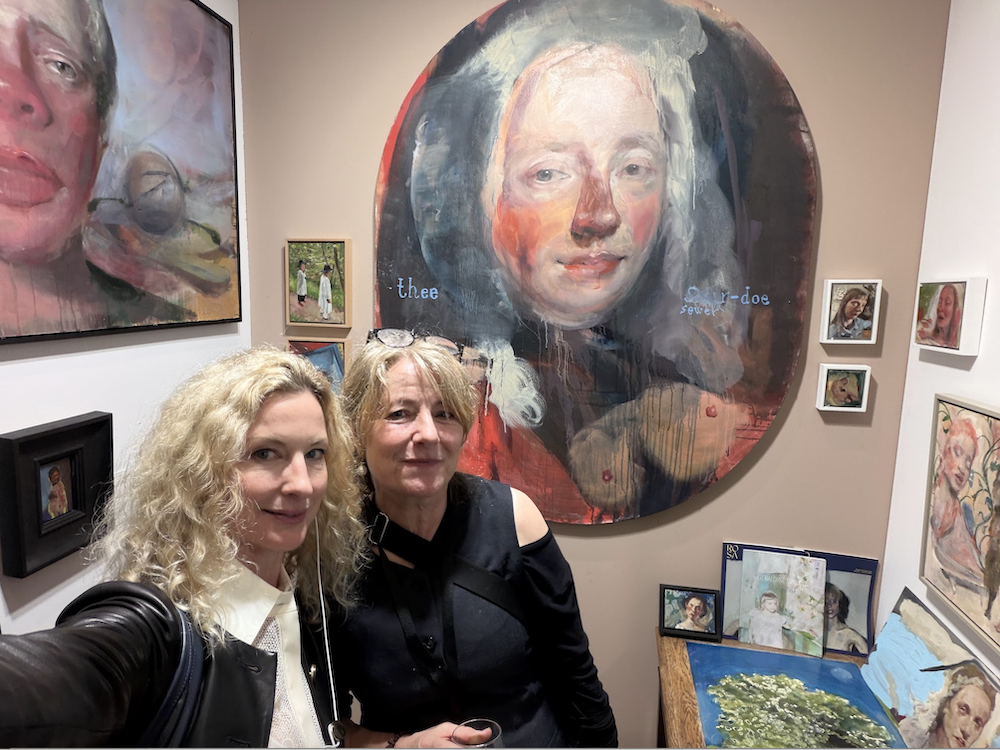
Geraldine Swayne is a polymath, and her inclusion in this year’s Fair Play Art Fair is fitting for an artist whose career has consistently crossed boundaries between disciplines and conventional art categories. One could even say she is an expert in slippage; working with enamel on copper and aluminium, as well as on large canvases, her fluid, instinctive handling of paint gives ordinary gestures and anonymous figures an uncanny intensity. Drawing on found photographs, intimate portraits, and unlikely source material – seen in the process of filmmaking or playing in a band – her paintings seem to capture fragments of a wider narrative that remain beyond our grasp. Seductive and psychologically ambiguous, like the improvised music in her band Faust, her work reflects an ongoing interest in the generative relationship between image, sound and performance – and it hits home.
Read More