The art market has a habit of staring upwards. Eight-figure evening sales, record-breaking lots, the theatre of the auction room at its most performative, these are the stories that get written, the numbers that get quoted, the moments that define public perception of how the market works. This new report looks at the other side of the coin, and what it finds is significantly different.
The first comprehensive study dedicated exclusively to the sub-$50,000 art market has landed, and its central argument is straightforward: this is where the market actually lives. Not the exception. Transaction volume at this level dwarfs everything above it, the collector base is growing rather than contracting, and the fundamentals are more resilient than the headlines about gallery closures and market slowdowns would suggest.
Not all of this work is ‘fine art’ in the conventional sense. You won’t find most of it at Frieze or Art Basel. A significant proportion sits in decorative territory, Animal Paintings, Street Art, the kind of work that hangs in restaurants and coffee bars and sells reliably without being noticed by critical conversationalists. But that’s only part of the picture. A serious collector with the right knowledge and patience can acquire works on paper, prints, or smaller canvases by genuinely significant contemporary artists within the $10,000 to $50,000 range. That’s not a consolation prize. That’s access to the real market. Worth noting too that fine art prints and editions have surged over the last decade, quietly expanding what’s available at this level and drawing in collectors who might previously have felt priced out entirely.
Six in ten art market experts are positive about the segment’s prospects in 2026, up sharply from 44% in 2025. Sixty-nine per cent of galleries expect sales to grow this year. Very few are bracing for a decline. In a climate defined by geopolitical uncertainty, rising costs and fractured consumer confidence, those numbers are striking. This is not a market waiting for a rescue consignment. It runs on continuity.
The Buyers Are Changing
The collector base in the sub-$50,000 tier is not just holding steady, it is actively renewing itself. 43% of galleries report more new buyers than 5 years ago. 44% are seeing a younger demographic entering the market for the first time. These are not marginal shifts. For a market whose long-term health depends on continuous renewal, they represent a structural issue.
The motivations of younger buyers differ from those of previous buyers, and that difference matters. For Millennials and Gen Z, supporting artists is not a soft sentiment — it is a primary driver. 57% of Millennial collectors and 55% of Gen Z collectors cite artist patronage as their main motivation for buying, compared with 37% of Boomers. Investment value trails far behind at 19% overall. The older model — buy well, hold, resell — feels less dominant in this part of the market. There is a sense of participation rather than speculation. Being part of an artist’s trajectory rather than extracting value from it.
That shift in motivation has implications for how galleries operate and how they talk about what they sell. Price transparency, direct relationships with artists, the sense that a purchase means something beyond its market value — these matter more to this generation of buyers than they did to the one before.
The Fair Still Rules
For all the noise about digital platforms reshaping how art is discovered and sold, the physical world is doing the heavy lifting. Eighty-six per cent of collectors still discover art at fairs—sixty-nine per cent through galleries. Social media registers at 36%, online platforms at 32%. Younger collectors are more digitally active — 42% of both Gen Z and Millennials have purchased through online platforms, compared to 32% overall — but even for them, in-person experience remains central to the process.
Art fairs account for roughly 44% of gallery revenue, and 85% of galleries cite them as their most important sales channel. This is not just about transactions. Fairs are staging grounds for relationships. The hesitation in front of a work, the conversation with the gallerist, the decision that gets made not on the day but weeks later — all of that begins with standing in front of the actual object. Trust builds slowly, and where it builds is where sales happen.
That dynamic helps explain why online sales, despite their structural growth, haven’t displaced the fair model. Online auctions now account for over half of transaction volume in the sub-$50,000 bracket — a change accelerated by the pandemic that has now settled in permanently. But the final commitment still often benefits from a physical encounter at some point. The digital widens the funnel. The physical closes the deal.
The Gallery Picture
The commercial reality for galleries operating in this tier is less glamorous than the art fair percentages might suggest. Three staff or fewer is the norm. Many operate from a single space, or none at all. Annual revenues under $250,000 are common. These are lean, often precarious operations, held together by long-standing artist relationships, genuine belief in the work, and an adaptability that larger institutions can’t match.
And yet more than 80% of galleries in this segment report stable or improved sales over the past five years. That is a remarkable number given everything the sector has absorbed — pandemic closures, rising costs, shifting collector habits, and the general turbulence of the period. Lean structures, it turns out, are not a liability. They are how you survive when the conditions change.
The Auction Data
Even at the more public end of the sub-$50,000 market, the picture is instructive. Auction sales in this bracket dipped 19% in value in 2025 but remain well above pre-pandemic levels. Volume tells a clearer story. Lots sold under $5,000 have surged, more than tripling compared to earlier averages. This is where new collectors enter, test themselves, misstep occasionally, and come back. More than 2,400 living artists sold for under $50,000 at auction in 2025, a sharp increase from earlier years. At the top of the market, attention narrows around a small number of names. Here, it spreads.
Women artists have held onto gains made in recent years, maintaining a market share of around a quarter. Still uneven, still well short of parity, but no longer negligible and not slipping backwards.
What It All Means
What emerges from this report commissioned by the Affordable Art Fair and ArtTactic is a picture of a market that looks less like a pyramid and more like a wide, busy plain. Distributed activity, diluted risk, incremental growth rather than explosive peaks. Prices within reach. Buyers engaged and motivated by something other than financial return. Galleries are small but adaptable.
The future of the art market will not be decided at the top. It rarely is. It will be shaped in smaller transactions, repeated often, by a generation that is still finding its footing but already changing the terms on which the whole thing runs.
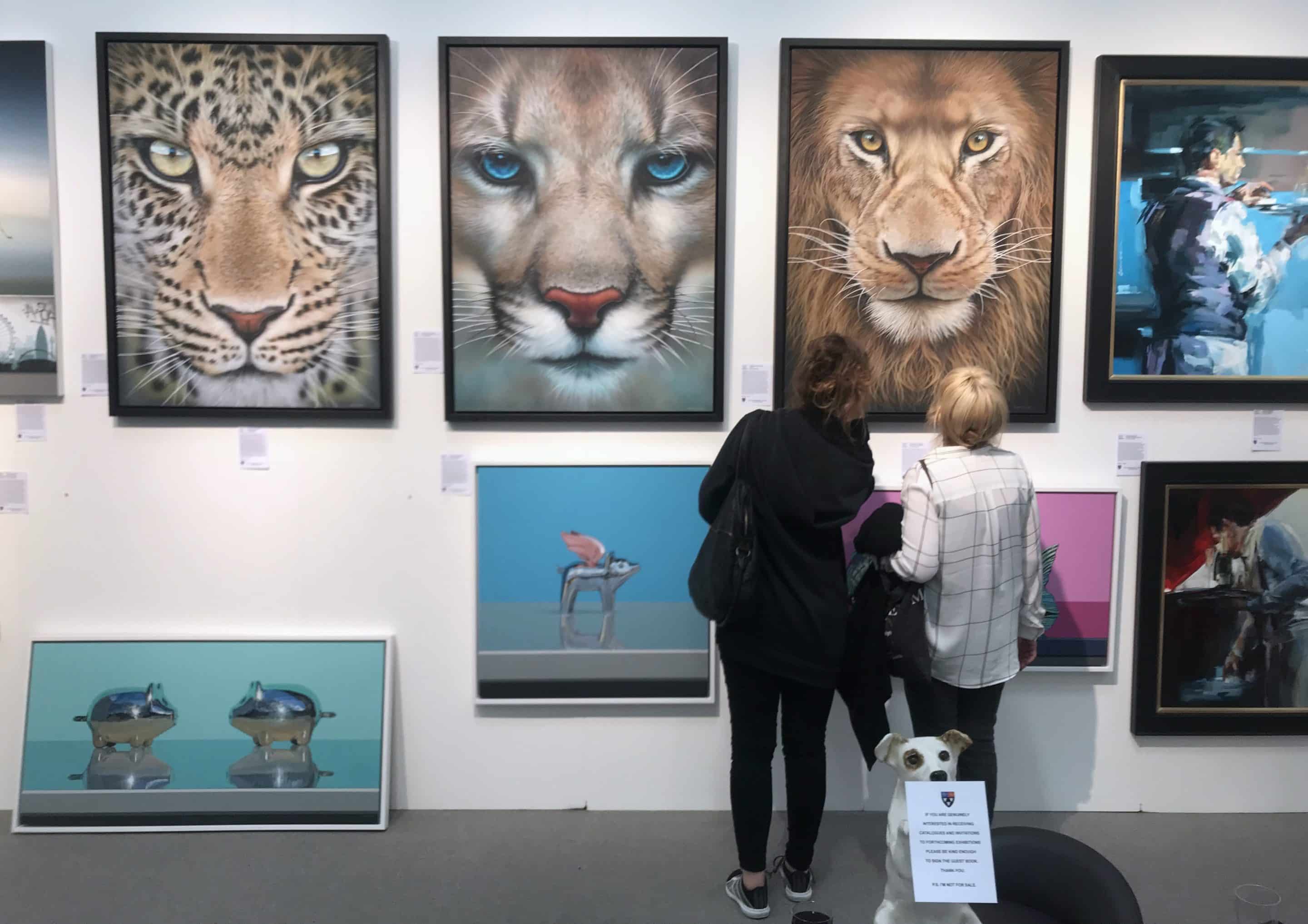
Top Photo: The Affordable Art Fair London © Artlyst
The full report is available Here