Quirky and vaguely unfocused, the 82nd Whitney Biennial features over 56 artists, duos and collectives. Very few actual paintings; lots of installation, video, sound, and sculpture demand an additional visit to explore.
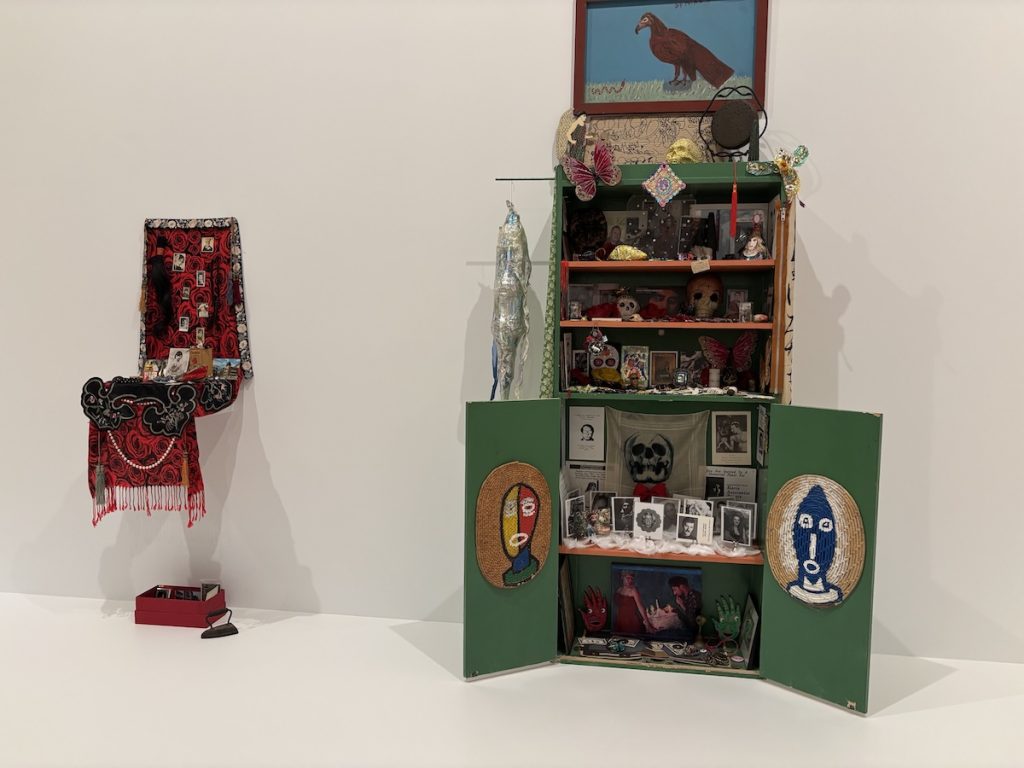
Agosto Machado, Altars
Two floors and various pieces throughout the Museum and rooftop feature multigenerational and cross-cultural creators. Agosto Machado’s “Altars” is a particular and obvious favourite for me. Native New Yorker Agosto is a beloved friend and neighbour, and a stalwart of the underground gay performance world. His work celebrates friends, artists like Peter Hujar and Taboo, stars like Anna Mae Wong and drag legends Rumi Missabu and Marcia P. Johnson. Highly personal, intricate and lovingly made, these Altars salute a truly transgressive and amazing inside look at gay culture.
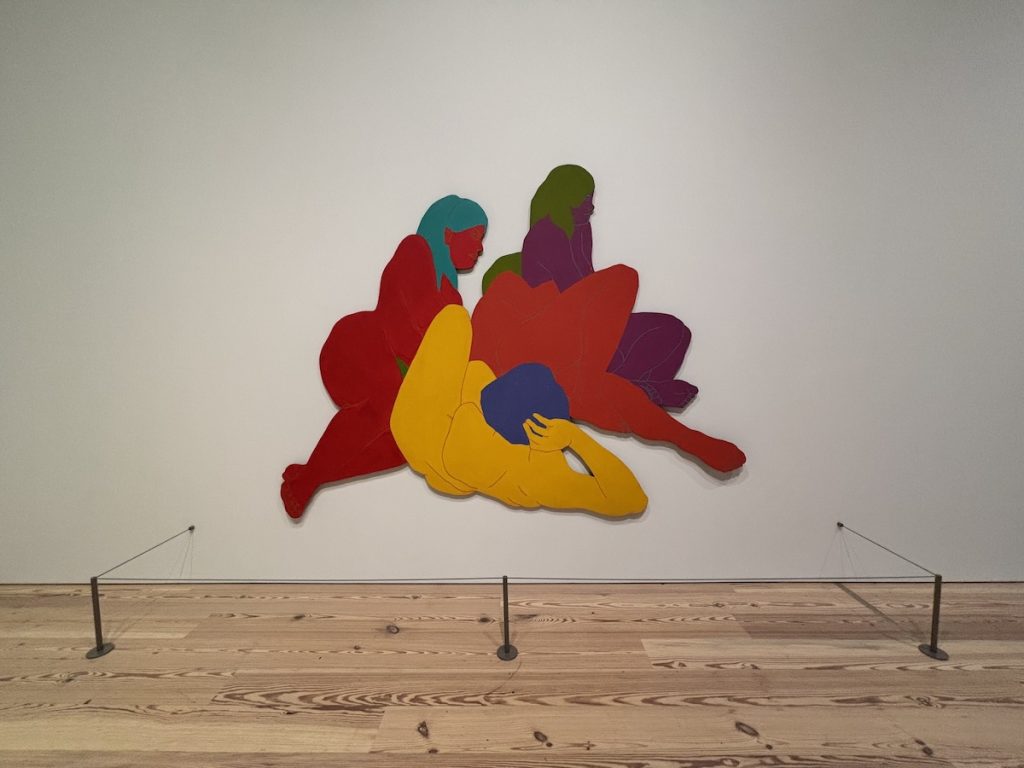
Carmen de Monteflore
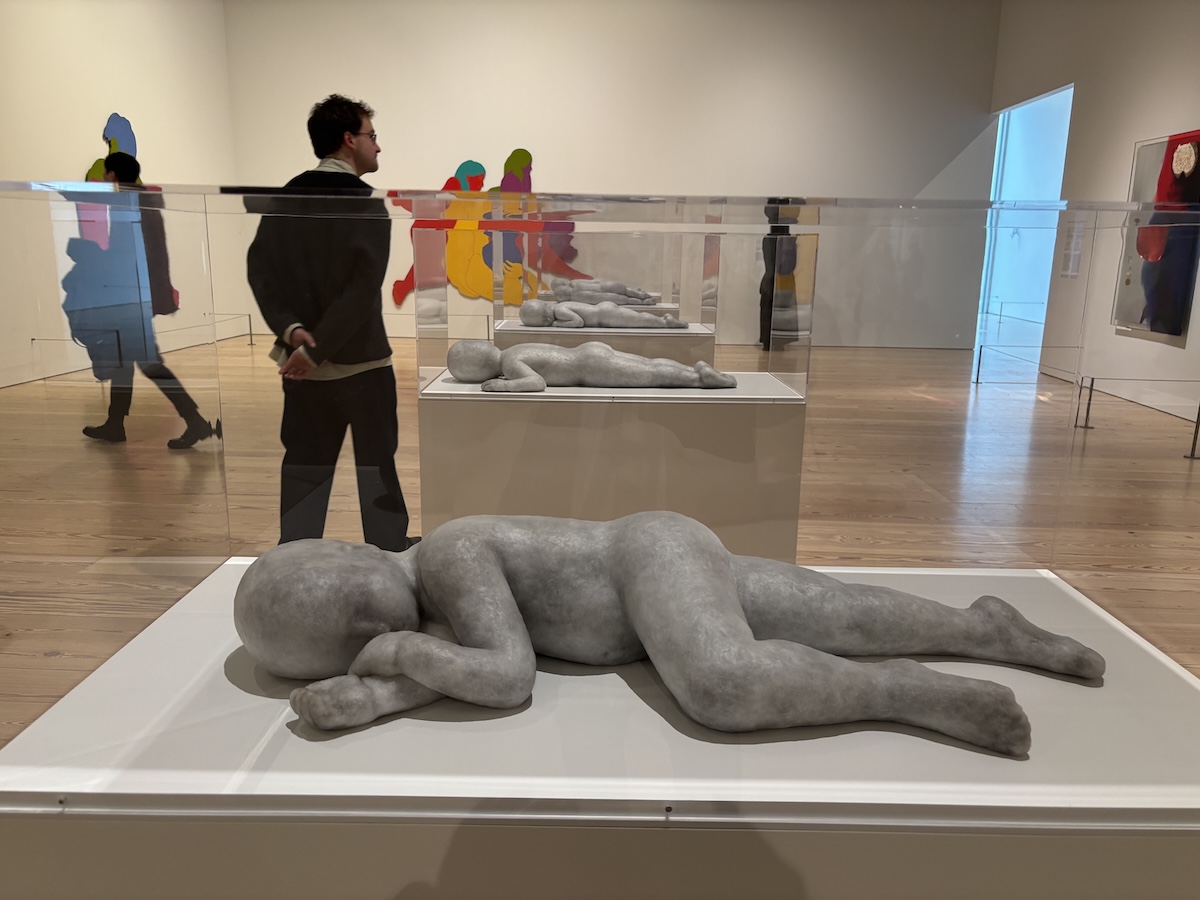
The creative kinship between Carmen de Monteflore and her daughter, Andrea Fraser, animates an entire room. De Monteflore, a nonagarian, shows works created in the sixties, evoking the bold graphic style of that era. Her daughter Andrea Fraser’s hand-modelled wax toddlers, a series of “Untitled” from 2024, are under glass, as the fragile material does not harden. The sleeping cherubs evoke an innocence, creating “allegorical art objects,” perhaps the children of the intertwined shaped-canvas female figures painted in bright colours by de Monteflore.
Domestic textiles emerge as a recurring influence across several works. Intricate hand cuts in Enzo Camacho and Ami Liens’ pieces are collaged with flower blossoms, seashells, onion skins, moss leaves and more traditional materials like beeswax, inks and watercolour.
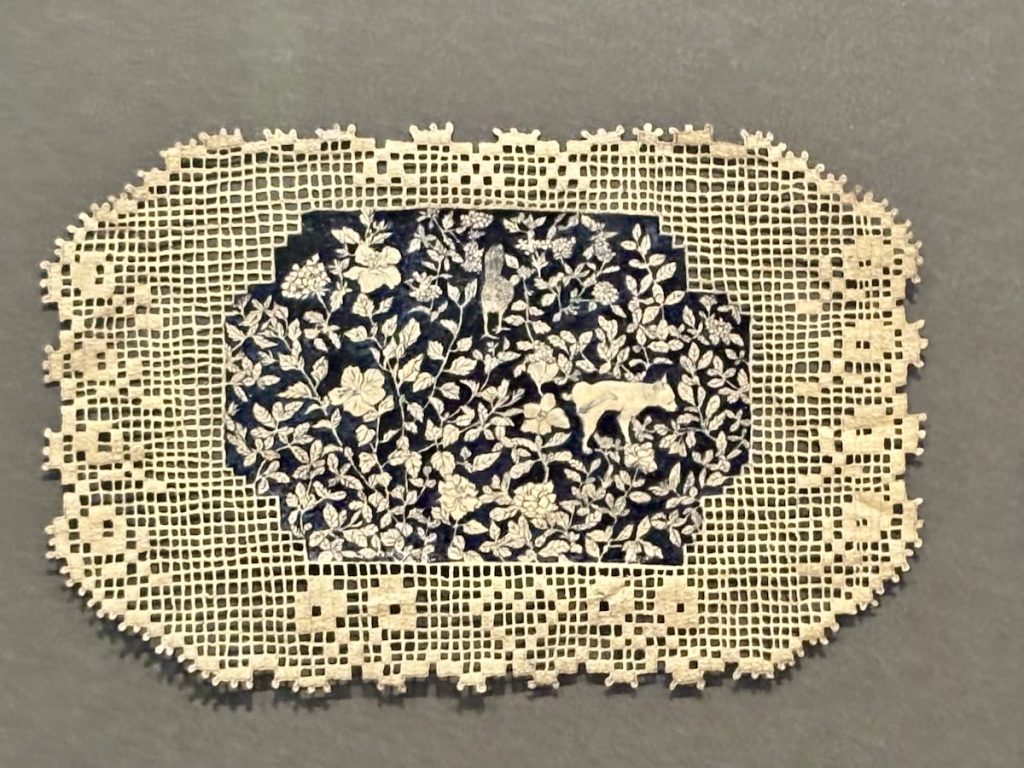
Jasmin Sian
Jasmine Sian’s gorgeous works are deli bag cutouts that replicate ivory tatting. Meticulously hand-cut pieces surround miniature paintings of the natural world. Meditative and magical, tiny gardens, animals and birds are framed by perfect dupes of antique lace doilies.
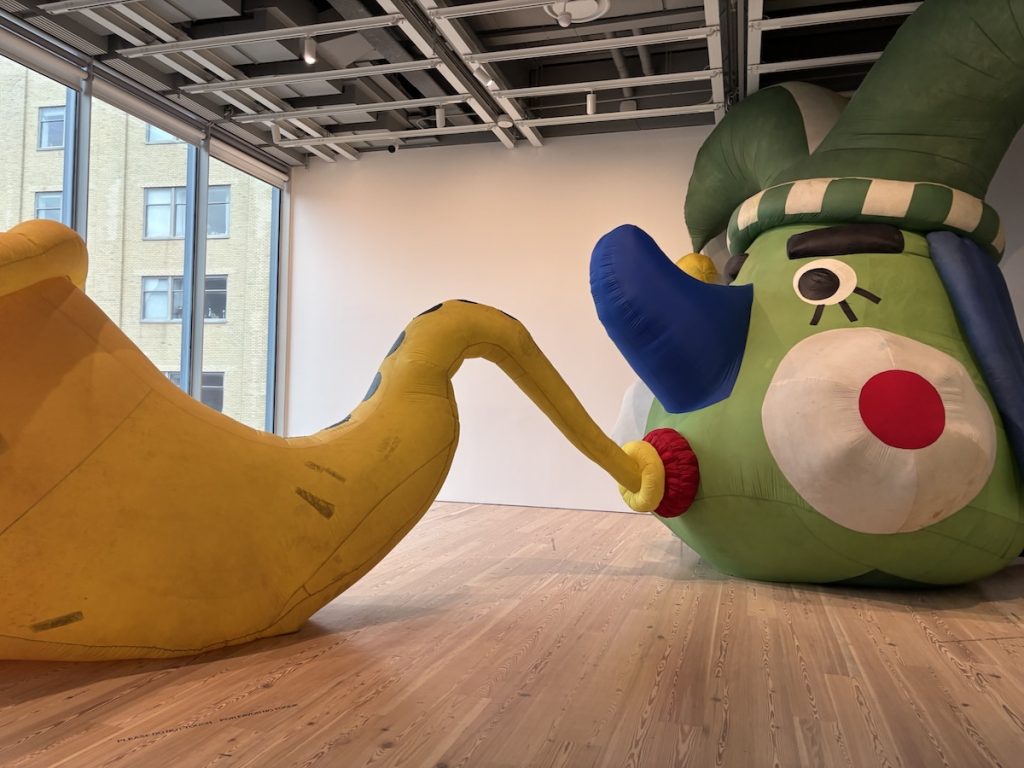
Pat Oleszko, Blowhard 1995
Veteran performance artist and sculptor Pat Oleszko presents “Blowhard” (1995), one of her inflatable sculptures that exemplifies her charming and cartoony humour.
Other highlights for me were Malcolm Peacock’s recreated redwood tree, adorned with 3500 synthetic braids.
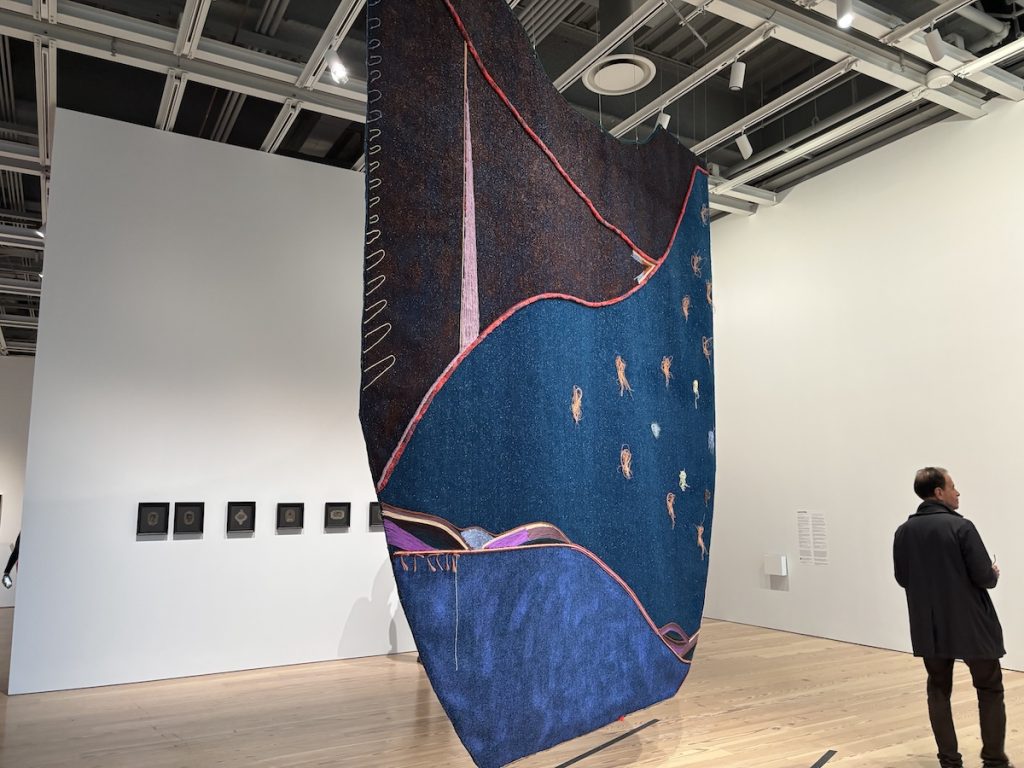
Teresa Baker
Teresa Baker’s commanding pieces incorporate buffalo hide, twigs, and synthetic turf, enrapturing the viewer with scale and abstract power. Kelly Akashi’s rooftop installation, “Monument (Altadena)” 2026, is a site-specific, eerily translucent chimney that replicates the only intact structure left of the artist’s home and studio after the devastating California fires of 2025. Viewed on a grey, drizzly day, the glass-bricked chimney was shrouded in mist. And an enlarged doily appears again, cut from steel and replicating her grandmother’s piece, also lost in the fire. Size and material make “Inheritance (Distressed)” a powerful minimalist sculpture.
This theme-less and sprawling show has been called “post identity.” Perhaps it is best seen as a testing ground for new ideas, and a chance to reframe art created decades ago that still reads as surprisingly relevant. The current American mood of anxiety is well reflected in the myriad visions of the 2026 Biennial.
Words and photos Ilka Scobie ©Artlyst 2026
Whitney Biennial 2026, Whitney Museum of American Art, New York, 8 March – 23 August 2026
Visit Here