
The Yorkshire Sculpture Park will mark its 50th anniversary in 2027 with a programme that brings together some of the biggest names in British and international sculpture alongside a new generation of artists.
The year will unfold across the park’s 500 acres near Wakefield. There will be major exhibitions indoors. There will also be new works scattered through the landscape.
Andy Goldsworthy will create a new installation for the park’s 18th-century chapel. Cornelia Parker will take over the Peter Murray Gallery with a substantial survey of her work. John Chamberlain’s monumental sculptures will occupy The Weston and the surrounding grounds. Henry Moore’s large bronze works will return to the Yorkshire landscape.
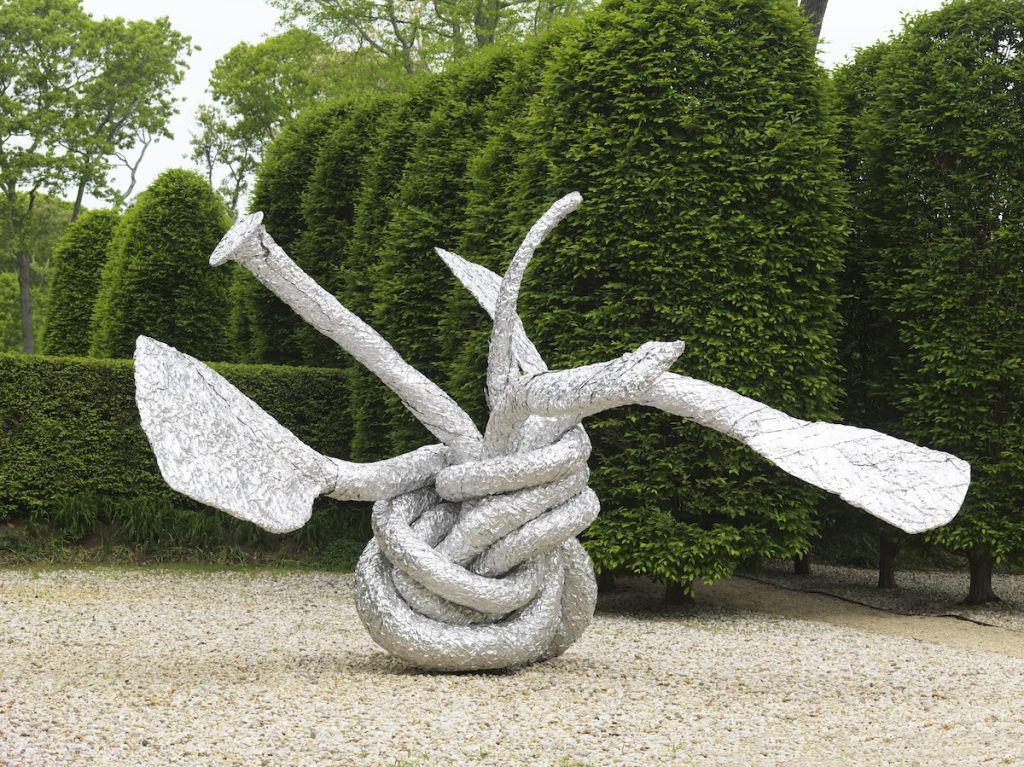
John Chamberlain, FROSTYDICKFANTASY, 2008. Photo courtesy Gagosian Gallery, © Fairweather & Fairweather LTD Artists Rights Society (ARS), New York
The anniversary exhibition will bring together 50 UK-based artists, all born in YSP’s lifetime. It opens in May 2027 and is intended as a snapshot of sculpture now, rather than a conventional history of the institution.
Since opening in 1977, Yorkshire Sculpture Park has built its identity around the meeting of contemporary art and the landscape. It has worked with more than 1,000 artists from over 40 countries and established itself as one of the most prominent sculpture parks in Europe.
The anniversary programme will be the first major programme presented by Joe Hill, who became YSP’s director and chief executive in April 2026. Hill previously led Towner Eastbourne and served on the jury for the 2026 Turner Prize.
His work arrives at a moment when the institution is looking both backwards and forwards. “I’m incredibly excited by the programme,” Hill said. The anniversary, he added, would celebrate YSP’s history while setting the direction for its next chapter.
Goldsworthy’s commission may prove one of the most intimate projects of the year. For the chapel, the artist will paint the windows with earth. The material will come from graveyards in Dumfries and Galloway, connecting the work with his wider Gravestones project in Scotland.
Light will become part of the piece. As the weather changes, so will the appearance of the chapel. Sunlight, darkness and the movement of the day will alter the work. Goldsworthy has had a long relationship with YSP. He first visited in 1983 and later undertook a residency there in 1987. His permanent works at the park include Peter’s Fold, Outclosure, Hanging Trees and Shadow Stone Fold.
Parker’s exhibition takes a very different route. Opening in November, it will explore the artist’s long examination of British identity, national symbols and the objects that quietly carry political meaning.
Her work often begins with destruction. Objects are crushed, exploded, burned, shot or eroded, then transformed into something unexpectedly restrained.
At the centre of the exhibition will be Magna Carta (An Embroidery) from 2015. The 13-metre work reproduces the Wikipedia entry for the Magna Carta. More than 200 people helped stitch it, including prisoners, lawyers and civil liberties campaigners.
Another major work, Island, turns a second-hand greenhouse into a meditation on British history. Its structure rests on encaustic tiles salvaged from the Houses of Parliament. Chalk from the White Cliffs of Dover has been used across its surface.
The exhibition will also look at class, heritage and the symbols embedded in everyday British life. Yorkshire itself enters the picture, from the region’s connection to the Magna Carta to the brass instruments associated with colliery bands.
Across the park, American sculptor John Chamberlain will bring a harder industrial energy. The exhibition marks the centenary of Chamberlain’s birth. His reputation rests largely on sculptures made from crushed and twisted car parts, works that turned industrial metal into something forceful and strangely lyrical.
The YSP presentation will include large foil sculptures made late in his career. Chamberlain developed these works by first manipulating small pieces of household aluminium foil before enlarging the forms. Their surfaces catch the light and shift with the surrounding landscape. The colours are vivid. The shapes are playful. They have a sense of movement even when standing still.
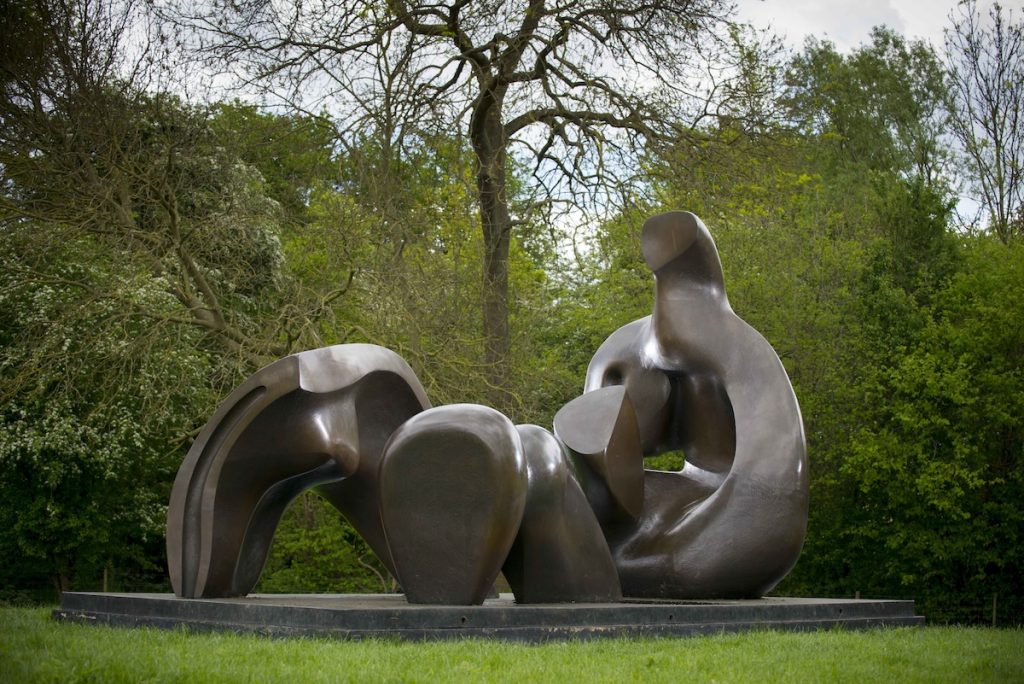
Three Piece Reclining Figure: Draped 1975 LH 655 cast 0 bronze Perry Green Photo: Jonty Wilde
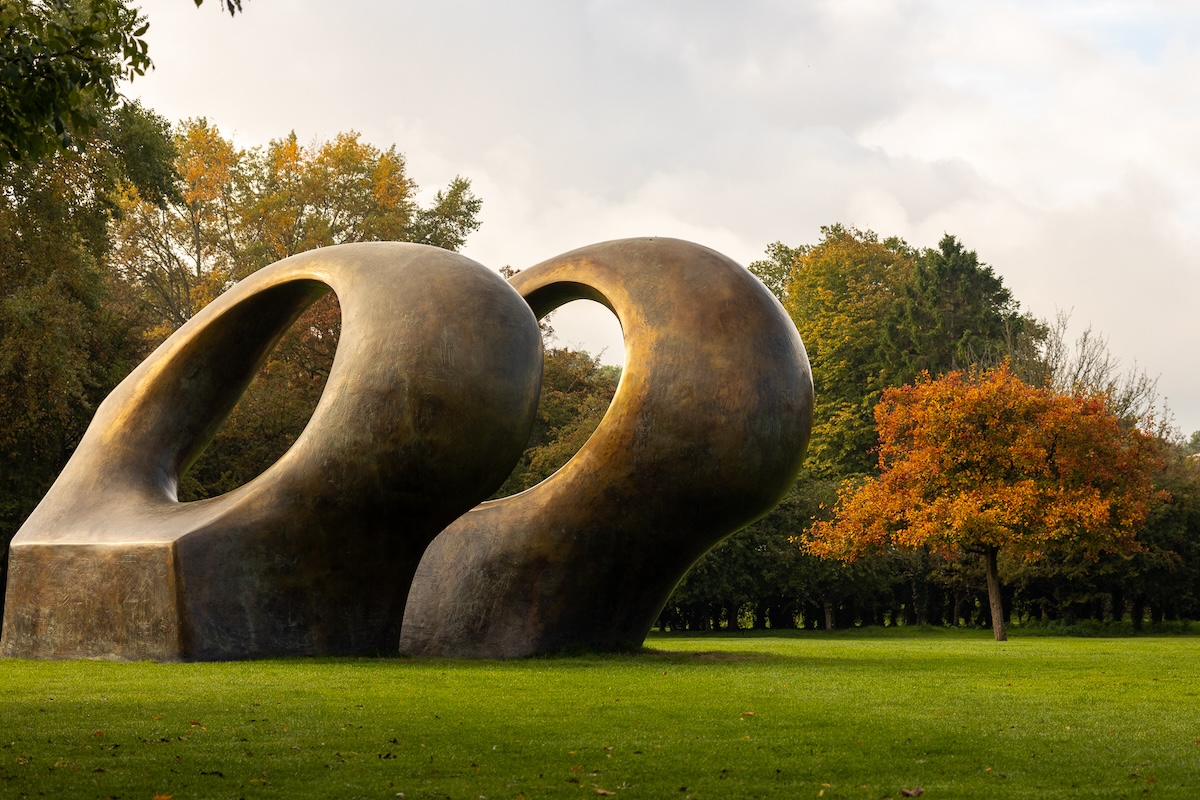
Henry Moore will also have a major presence. From June, three monumental bronzes will be installed in the former Deer Park. They include Double Oval, Three-Piece Reclining Figure: Draped, and Figure in a Shelter. The works are being loaned by the Henry Moore Foundation.
Moore grew up in nearby Castleford and became one of the founding patrons of YSP after his first visit in 1979. The new presentation continues a relationship between the park and the Henry Moore Foundation that has lasted for decades.
Fifty, opening in May, will bring together artists including Rana Begum, Jesse Darling, Anthea Hamilton, Marguerite Humeau, Rachel Maclean, Thomas J Price, Heather Phillipson and Osman Yousefzada.
The exhibition is intended to reflect how radically sculpture has changed since YSP opened. The artists work across materials, scale and ideas. Some have shown at the park before. Others will be making their first appearance there.
Throughout 2027, teachers, teaching assistants and trainee teachers across the UK will receive free annual admission. The initiative connects directly to YSP’s origins at Bretton Hall College, once a teacher-training and arts institution.
The park will also present a new project around the National Arts Education Archive. The collection documents 150 years of arts education and will be reimagined through an exhibition and interactive space developed with schools, teachers, artists and community groups.
Oxford-based artist Saroj Patel will suspend hundreds of colourful saris between the trees for Dancers in the Wind. The 20-metre walkway will incorporate temple bells and respond to wind and shifting light. The work draws on Navratri, the Hindu festival associated with dance, colour and communal celebration. There is a sense, throughout the programme, of YSP using its anniversary to take stock without becoming nostalgic.
Its history is everywhere. So is its future. The park expects to welcome around 380,000 visitors during the year. Its 50th anniversary arrives as a statement of growth. YSP was created in 1977 to make sculpture accessible beyond the traditional gallery. Half a century later, its ambition remains remarkably similar.
Top Photo: Henry Moore, Double Oval, 1966. Courtesy Henry Moore Foundation. Photo © Rob Hill