Free museum entry is one of those policies that, once you have it, becomes almost impossible to imagine giving up. Twenty-five years ago this December, the UK’s national museums threw open their doors and stopped charging for admission to their permanent collections. The results were transformative in ways that even the policy’s supporters probably didn’t fully anticipate. Now, with those museums facing mounting financial pressure and various proposals circulating on how to plug the gap, new research from Art Fund makes one thing clear: the public knows what it values, and it doesn’t want to pay at the door.
The research, commissioned ahead of the 25th anniversary of free admission, shows that 72% of Britons want some revenue from a potential tourist levy ringfenced to help keep national museums free. Three-quarters 76% say the government should maintain or increase funding for national museums. These are not marginal numbers. They represent a settled public view about what kind of country this should be and what role its cultural institutions play in it.
The free admission policy came into effect on 1 December 2001, covering DCMS-funded national museums the British Museum, the V&A, the National Gallery, Tate and its galleries in Liverpool and St Ives, the Royal Armouries in Leeds, the National Science and Media Museum in Bradford, and National Museums Liverpool, among others. The effect on visitor numbers was immediate and sustained. Within the first decade, visits to formerly free museums rose by 151%. The Natural History Museum and the V&A saw increases of more than 180%. National Museums Liverpool recorded a 269% rise. These are not rounding errors. These are institutions that were transformed.
Today, four of the five most visited tourist attractions in the UK are national museums. Two in five Britons visit a national museum at least once a year. Research by VisitBritain estimates that free museums and galleries generate £1 billion in tourism revenue annually. The economic case for free entry, in other words, is not separate from the cultural case. It is the same case.
Which makes the current conversation about charging tourists at the door particularly fraught. The principle sounds reasonable enough in the abstract, visitors from overseas contributing to the cost of institutions they’re using, but the practical implementation creates problems that tend to get glossed over in the policy discussion. Charging tourists at the door requires everyone to show ID. That introduces a barrier that doesn’t fall equally. Art Fund’s research finds that only 49% of people who struggle to make ends meet always carry an ID. The policy intended to protect access for UK residents would, in practice, create an additional hurdle for the people least able to navigate it.
A tourist levy is a different instrument entirely. Revenue collected at the point of accommodation or travel, with a portion ringfenced for cultural institutions, achieves the same funding objective without requiring identification checks at museum entrances and without creating a two-tier entry system that would, over time, erode the universality that makes free admission meaningful. The public, it turns out, can see the difference between these two approaches quite clearly.
Jenny Waldman, Director of Art Fund, is direct about where the organisation stands. “Our free national museums are one of the great success stories of UK cultural policy,” she said, “opening up world-class collections to everyone, driving tourism, and enriching millions of lives every year. But they need additional funding amid rising costs and declining grant-in-aid.” The balance of the argument, in her framing, is not between free and paid entry but between different mechanisms for generating the funding museums unquestionably need. “A levy, with some funds ringfenced, is a simpler way to fund the national museums, keeping them free for everyone and ensuring they continue to make the UK such a vibrant tourist destination. Charging tourists at the door risks putting up barriers for everyone.”
Alison Cole, Director of the Cultural Policy Unit, frames it in broader terms. “The free admission policy is one of our country’s unique achievements, and one that cultural leaders across the world widely admire.” She points to what it says about values as much as to what it does for visitor numbers: a society that treats access to culture as a right rather than a privilege is making a statement about who its institutions exist to serve. “It ensures our museums are treated as pillars of education and inspiration for everyone, not just as visitor attractions for those who can afford to pay.”
That last phrase cuts to the heart of what’s at stake. The moment museums become visitor attractions for those who can afford to pay, their relationship to the public changes. It’s not just a price point. It’s a signal about belonging, about who the collection is for, whose history it represents, whose curiosity it exists to serve. The free admission policy was always about more than saving people the cost of a ticket. It was about removing the psychological barrier of an entrance fee, the sense that you needed permission or means or a specific kind of cultural confidence to walk through the door. That is genuinely hard to rebuild once it’s been dismantled.
The 25th anniversary falls in December. The sector will mark it as a moment of celebration and, almost certainly, of advocacy. The financial pressures on national museums are real, with rising costs, declining grant-in-aid, and a funding environment that has been tightening for years. Nobody serious is arguing that those pressures can be ignored. The question is how to address them without undoing the most significant cultural policy achievement of the last quarter century. According to research, the public has a view. It’s worth listening to. Free entry. Tourist levy to support it. Government funding is maintained or increased. That’s the settlement the British public wants. Whether the government delivers it is another question, but at least the terms of the argument are clear.
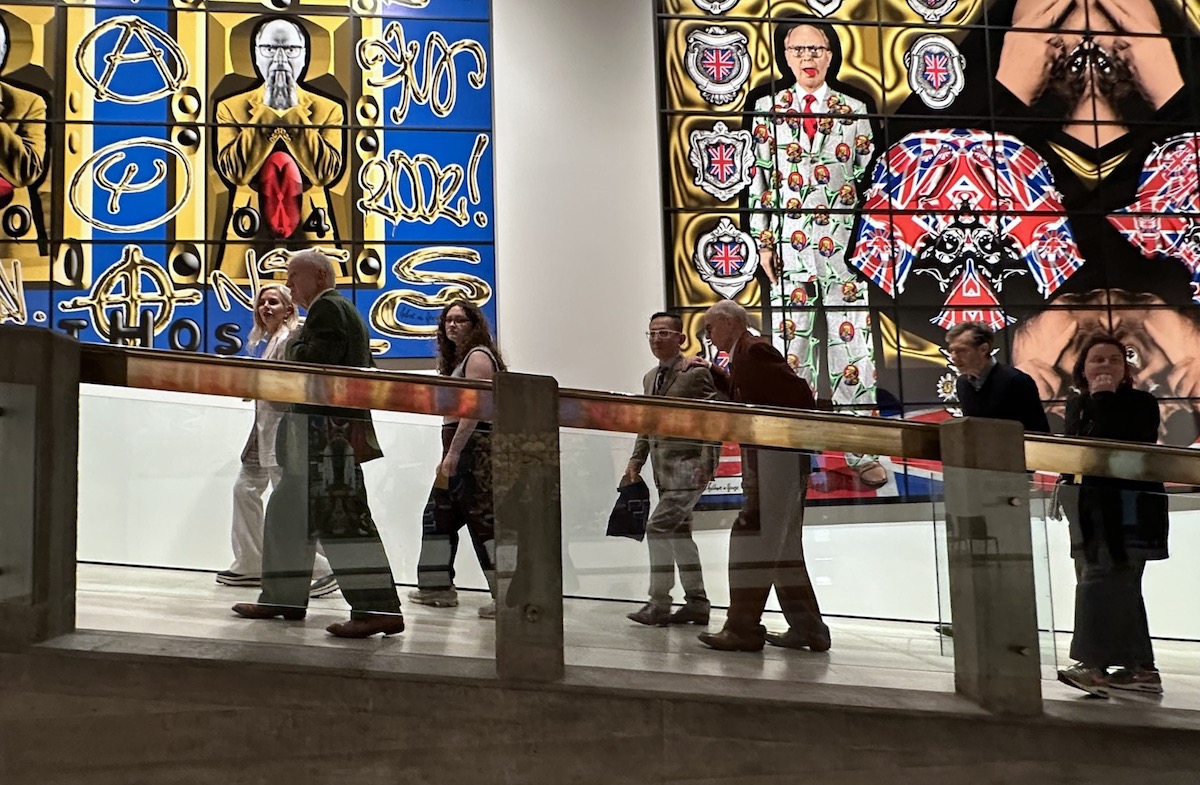
Top Photo © Artlyst 2026
Art Fund’s research is published ahead of the 25th anniversary on 25 December.