A Manhattan federal jury has awarded more than $102 million in damages to Morgan Art Foundation, Robert Indiana’s former business partner, in a verdict that may finally bring to a close one of the most damaging and protracted legal disputes in recent art world history. The jury found art publisher Michael McKenzie guilty of making and selling unauthorised Indiana artworks for millions of dollars, a decision delivered on 23 April that follows eight years of claims, counterclaims and accumulating uncertainty over the integrity of some of the late Pop artist’s most recognised work.
Morgan Art Foundation filed its lawsuit against McKenzie, along with Indiana’s caretaker Jamie Thomas, on 18 May 2018, one day before Indiana died on the island of Vinalhaven off the coast of Maine, where he had lived in increasing seclusion since retreating from New York in 1978. The lawsuit accused both McKenzie and Thomas of exploiting the elderly artist in his final years, a charge that cast an immediate and lasting shadow over Indiana’s late output and raised uncomfortable questions about which works from that period could be considered his authentic.
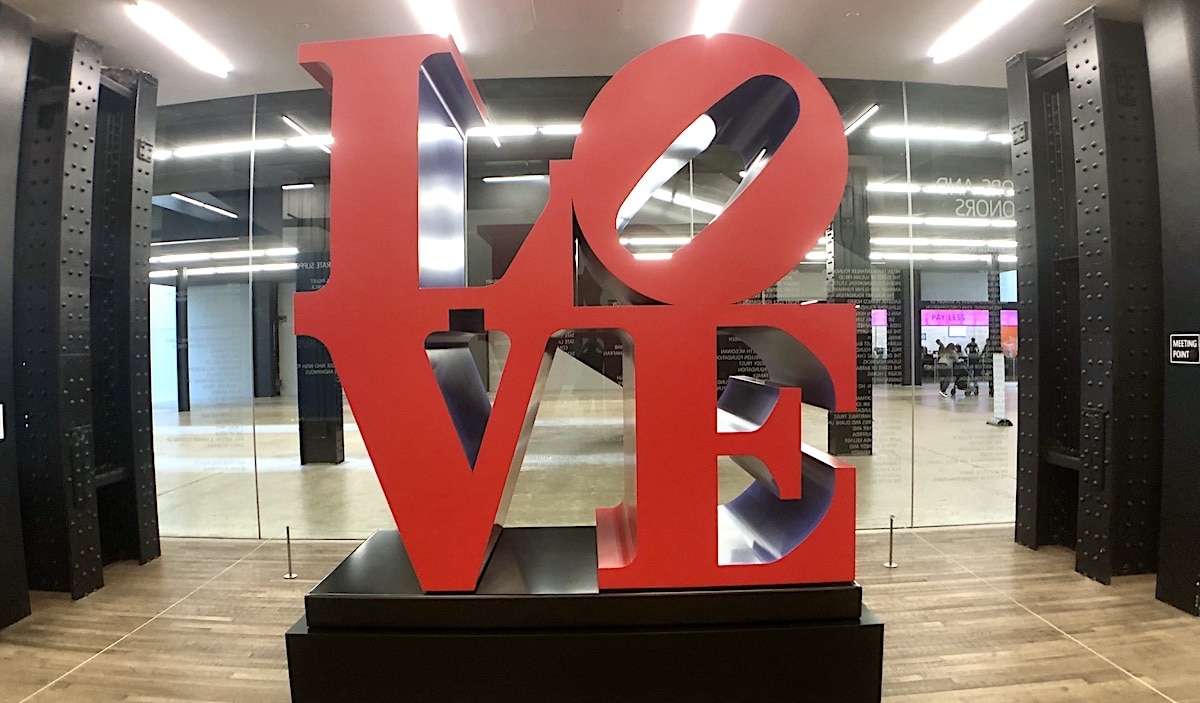
At the centre of the dispute is Indiana’s most celebrated motif. The LOVE image, created as a painting in 1964, in which the letters L and O are stacked above V and E with the O tilted at a characteristic angle, went on to appear on a United States postage stamp and achieve a global recognition that few works of American art have matched. Morgan Art Foundation, a for-profit organisation that formalised its partnership with Indiana in 1999, holds the rights to LOVE and several other works, and the alleged infringement of those rights formed the core of its legal action against McKenzie.
McKenzie’s own relationship with Indiana was not without legitimate foundations. The two had collaborated on HOPE, a version of the iconic format timed to Barack Obama’s 2008 presidential campaign, a project that gave McKenzie’s American Image Art a credible connection to the artist. It was the works that followed, however, that attracted scepticism. Later sculptures attributed to Indiana and sold through McKenzie came under increasing scrutiny regarding the degree of the artist’s actual involvement in their creation. Among the cited examples is BRAT, a sculpture closely resembling LOVE that was commissioned in 2017 by a Wisconsin sausage company, a work whose existence alone speaks to the atmosphere surrounding Indiana’s final years.
Luke Nikas of Quinn Emanuel, Morgan’s attorney, stated that the jury’s decision restores trust to the Robert Indiana market and that the litigation had exposed forgeries while protecting the integrity of the artist’s legacy. Whether McKenzie will accept the verdict or pursue an appeal remains unclear. His lawyer, Nicole Brenecki, confirmed that he is currently deliberating his options.
The broader legal implications have been partially resolved through separate channels. The dispute between Morgan and the Indiana estate, represented after the artist’s death by his attorney James Brannan, was settled in 2021. Brannan had countersued Morgan, alleging underpayment of estate royalties over several years, a claim that added another layer of complexity to proceedings that were already difficult to follow. Morgan has since partnered with Star of Hope, the foundation Indiana established to manage his legacy, and both organisations are working toward realising the artist’s stated wish to convert his former home into a museum dedicated to his work. Olney Gleason gallery in New York is working with Star of Hope, while Pace represents Morgan Art, both pursuing parallel efforts to stabilise and rehabilitate Indiana’s market presence.
That rehabilitation is overdue. Indiana’s auction record has stood at just over four million dollars since 2011, when it was set at Christie’s New York, a figure that reflects both the damage done to his market by years of authenticity disputes and the broader critical ambivalence that surrounded his work from the 1980s onward. Having found international success, Indiana was worn down by sustained critical hostility and withdrew almost entirely from the art world, a decision that left him increasingly isolated and, in his final years, vulnerable to the kind of exploitation that the Morgan lawsuit has now placed on the public record.
Institutional interest in Indiana grew at the turn of the millennium, and his 2013 retrospective at the Whitney Museum of American Art was received with the seriousness his work deserved. Whether last week’s verdict, significant as it is, will be sufficient to restore confidence in the market fully remains to be seen. The damage accumulated over eight years of legal uncertainty does not dissipate overnight. What the jury’s decision does provide, at the very least, is a foundation on which the work of rehabilitation can now more credibly proceed.
Photo: P C Robinson © Artlyst 2026