
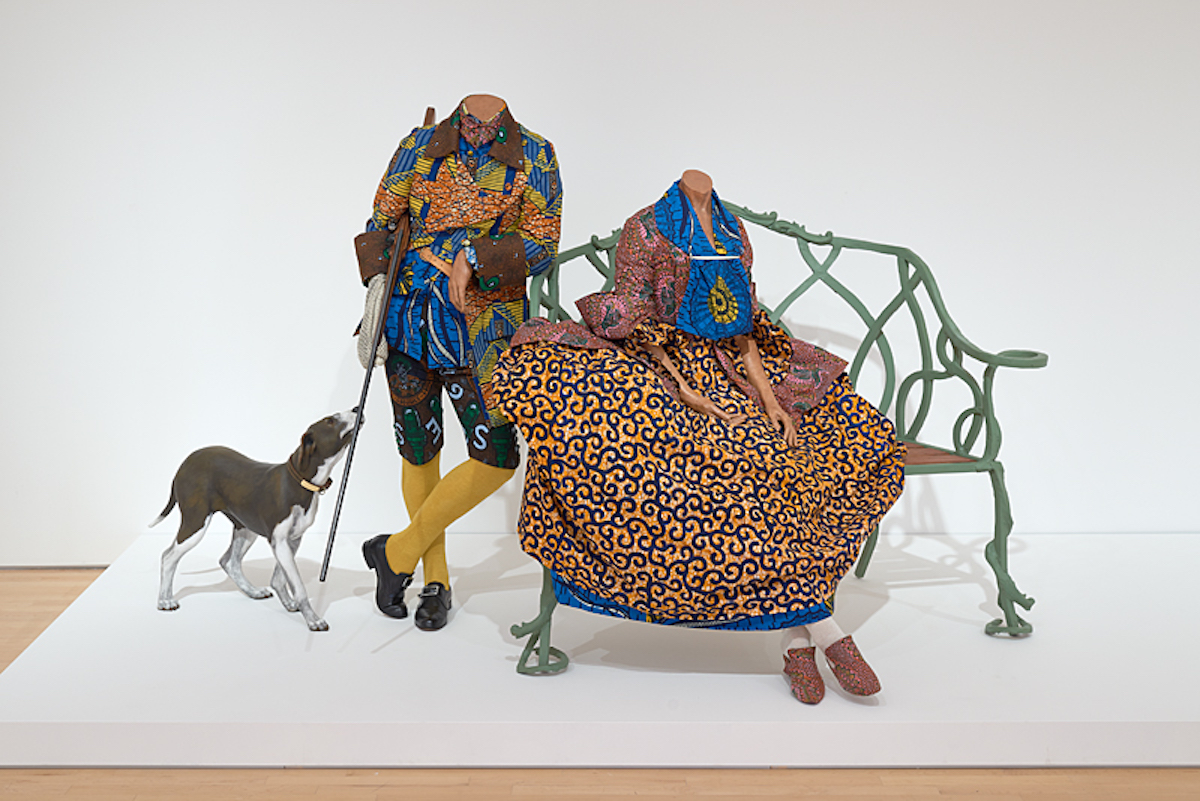
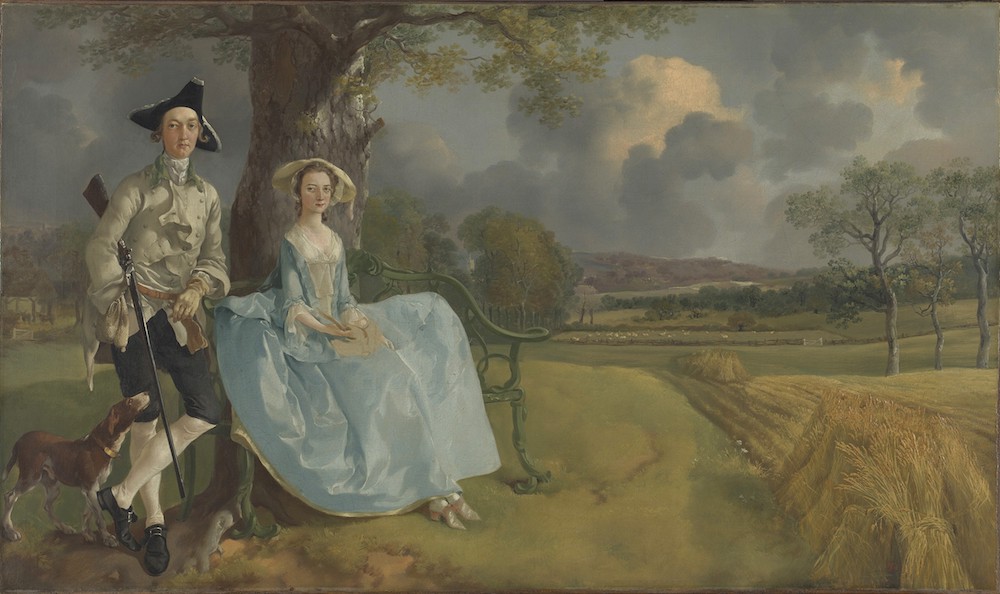
It has taken nearly thirty years. But this October, for the first time since Yinka Shonibare launched his illustrious career, Mr and Mrs Andrews without their Heads (1998) will stand in the same room as the inspirational painting. Thomas Gainsborough’s Mr and Mrs Andrews (about 1750) has been at the National Gallery for over 65 years. The Shonibare sculpture, travelling from the National Gallery of Canada in Ottawa, has never been shown alongside it until now.
The pairing, titled Yinka Shonibare and Thomas Gainsborough: A Conversation, opens in the H J Hyams Room in October 2026. It arrives on the eve of the 300th anniversary of Gainsborough’s birth, which gives the whole thing a commemorative framing that the National Gallery is clearly leaning into. Whether you buy that framing or not, the works themselves have things to say to each other that do not require the anniversary to justify it.
Yinka Shonibare and Thomas Gainsborough: A Conversation at the National Gallery
Shonibare’s sculpture was notably the first historical work by the British-Nigerian artist that he responded to and for which he became known. Life-sized, headless, and dressed in African-print Dutch wax cotton rather than the muted pastels of Gainsborough’s painted originals, the figures do a lot at once. The absent heads are a recurring gesture in Shonibare’s practice. They are playful. They are also unsettling, carrying the specific weight of the French Revolution’s decapitations in 1789 and its aftermath, hovering in the background of the piece.
The fabric matters too, and it always has in Shonibare’s work. Dutch wax cotton, or ankara, is most commonly associated with West African dress, though its origins are Dutch, introduced to the continent by merchants in the 19th century. That layered history of trade, appropriation, and cultural translation is exactly the kind of material Shonibare works with, literally and otherwise.
What the National Gallery is calling a once-in-a-generation loan is no exaggeration. The chance to read the sculpture against the painting in person, to see what Shonibare took, what he refused, and what he made of the rest, does not come around often. The Gainsborough depicts its subjects in possession of their land, their composure, their place in an English social order that took all of that for granted. Shonibare’s version removes the heads and changes the cloth. The land, conspicuously, stays.
Yinka Shonibare says: ‘I first came across Gainsborough’s Mr and Mrs Andrews at art college, and I never expected my work to be shown alongside it. I was drawn to it as an icon of Britishness and was interested in how the sitters’ status is represented through their clothes and their relationship with the land. My response removes their identities and the landscape, replacing their costumes with West African Dutch wax cloth. I’m fascinated by trade routes and the interconnectedness of places and the idea of hybridity and impurity because racism is usually based on the notion of the pure race. My work challenges that.’
Thomas Gainsborough (1727–1788) was one of the pre-eminent English portrait painters of the 18th century. In Mr and Mrs Andrews, he combined his skill in portraiture with his interest in realistic depictions of nature, which was still unusual at the time. Mr and Mrs Andrews show the wealthy couple in front of the rolling hills of south-east England. It has been described not just as a double, but as a triple portrait of Mr Robert Andrews, his wife, Frances, and his land.
The portrait remained with the Andrews family until it joined the National Gallery Collection in the 1960s. It has since become emblematic of 18th-century English painting, and its sitters symbols of the English country gentry. It is one of the most celebrated paintings in the National Collection.
Rab MacGibbon, Bernays Associate Curator of British Paintings, says:’ Dialogue between artists, and between art and people, lies at the heart of the National Gallery. Artists have always emulated, challenged or rivalled the art that came before them. This exhibition invites us to participate in a conversation across time that is both humorous and thought-provoking. Yinka Shonibare’s witty response to Gainsborough raises questions about identity and the interconnectivity of cultures. It encourages us to look again at this familiar and well-loved painting with fresh eyes.’