
The UK government has launched a 12-week public consultation on how National Lottery Good Cause funding is distributed, the first major review of the system in more than twenty years. The call for evidence, titled National Lottery Good Causes: Fund What Matters to You, opened on 1 July 2026 and runs until 23 September. Anyone aged 16 or over can respond, and the government says it wants to hear from players, organisations and communities across the UK.
The numbers involved are considerable. Since the first draw on 19 November 1994, the National Lottery has generated over £53 billion for good causes, supporting more than 680,000 projects across every postcode in the UK. In 2025 alone, ticket sales generated over £8 billion in total revenue, of which £1.7 billion went to good causes. Roughly 23 pence of every pound spent on a lottery ticket ends up in the hands of arts organisations, heritage bodies, sports clubs, community groups and charities. The question this review asks, with varying degrees of directness, is whether those hands are always the right ones and whether the people who bought the tickets have any meaningful say in where the money goes.
Culture Secretary Lisa Nandy has been blunt about the problem as she sees it. “The National Lottery is played by millions of people every single week,” she said. “It is not just public money, it is literally the public’s money, and they must be in the driving seat of how it is spent. But for two decades, no government has asked people how they want their money spent. Decisions are made hundreds of miles from communities who know best and favour larger organisations who can meet the needs of the system, rather than bending the system to work for the small, grassroots organisations who are the lifeblood of our communities.”
That last point is the one that will resonate most with anyone who has watched a small arts organisation spend months preparing a funding application only to be rejected in favour of an institution with a larger administrative infrastructure and a more experienced bid-writing team. The lottery funding system, however considerable its achievements, has always been more accessible to those who already know how to use it.
The current distribution model has been in place, in its essential shape, since 1994. There was a review by then Culture Secretary Tessa Jowell in 2002 and 2003, but nothing comparable since. The system divides good cause funding across four areas. Arts and culture receives 20 per cent, distributed through Arts Council England, the British Film Institute, Creative Scotland, the Arts Council of Wales, and the Arts Council of Northern Ireland. Sport receives 20 per cent, split between UK Sport, Sport England, Sport Scotland, Sport Wales, and Sport Northern Ireland. Heritage receives 20 per cent, which goes entirely to the National Lottery Heritage Fund. Community causes, covering charitable activities, health, education and the environment, receive the remaining 40 per cent through the National Lottery Community Fund. These proportions are set out in legislation.
Over the past decade, the Heritage Fund alone has awarded approximately £2.39 billion. The National Lottery Community Fund has distributed £6.23 billion. Arts Council England, which receives the largest share of the arts and culture allocation at just under 70 per cent of that sector’s total, has awarded around £2.36 billion in the same period. The British Film Institute, operating UK-wide, has distributed roughly £503 million.
The scale of what this funding has made possible is not in dispute. The London 2012 Olympic and Paralympic Games would not have happened as they did without lottery investment in elite sport. Shakespeare’s Globe exists in its current form partly because of it. So does the Mary Rose Museum in Portsmouth, the Titanic Quarter in Belfast, and the V&A Dundee. Films including Billy Elliot, Bend It Like Beckham, and Aftersun were lottery-funded. These are the headline achievements, the ones that appear in ministerial forewords and are entirely defensible as evidence of what the system can produce at its best.
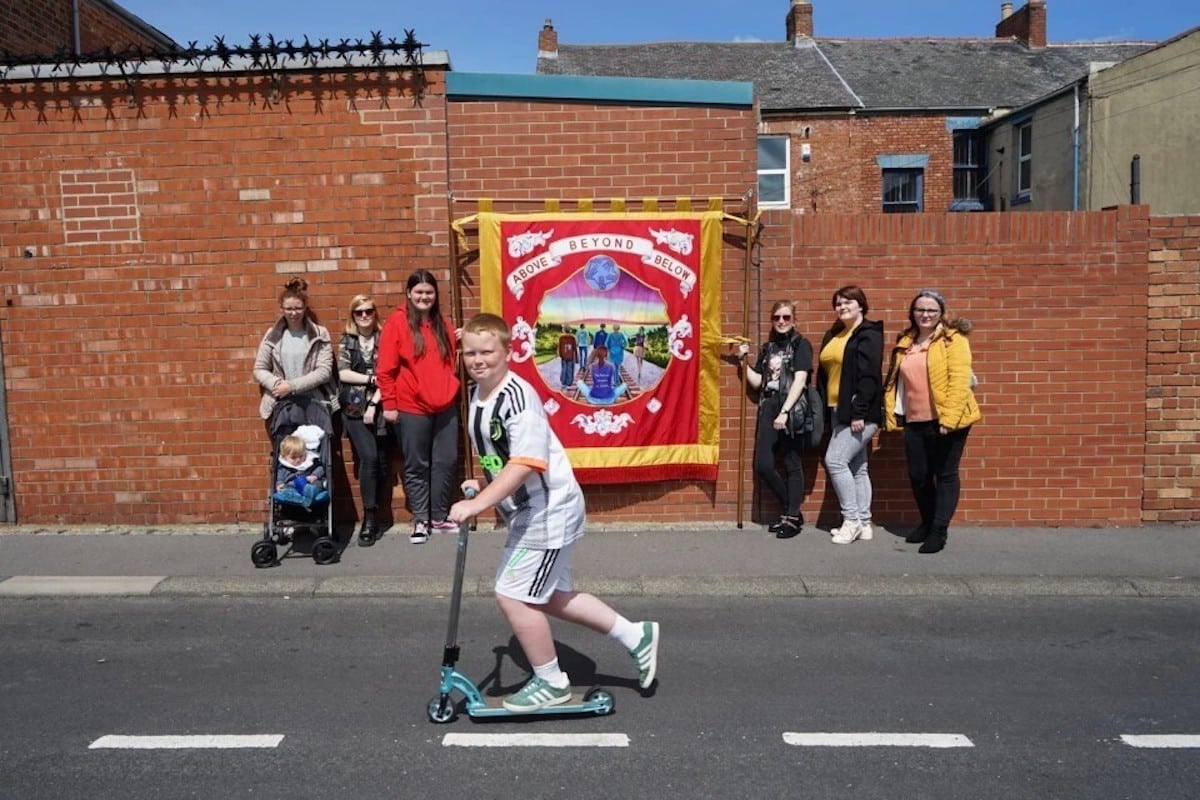
The more interesting story, and the one the review is partly trying to address, is what happens at the other end of the scale. In County Durham, a project called No More Nowt, formerly known as East Durham Creates and funded through Arts Council England’s Creative People and Places programme, has been running community-led arts activities in an area where 97 per cent of participants come from areas with low cultural engagement. One of those participants described the project as giving them the chance to be proud of their home and the people in it, to show that their stories matter, and to be allowed to be creative. That sentence carries more weight than most funding impact reports can muster. It also points to something the headline figures tend to obscure: the lottery’s most significant cultural work often happens in places and with people who are completely invisible to the London-centred art world.
In Scotland, the Rathfern Community Regeneration Group in Newtownabbey has used a decade of National Lottery Community Fund support to run youth clubs, a men’s shed, mental health support, employability training and environmental programmes, and to install solar panels that have reduced energy costs and put the savings back into services. In Wales, the Be Active Wales Fund has made 30,000 awards since its inception, including one to the Scarlets and Aberystwyth Wheelchair Rugby Club to establish a disability sport hub in rural mid-Wales. Research suggests that every pound invested in Welsh sport generates around £4.44 of wider social value. In Northern Ireland, heritage funding supported students with special educational needs at the Enniskillen Workhouse to recreate a traditional walled kitchen garden, learning dry stone walling and companion planting, and developing technical skills and friendships in the process.
The BFI Film Audience Network, delivered through eight regional Film Hubs, has expanded access to independent and British film across the country, including through audio-described screenings, BSL-interpreted events, relaxed screenings for autistic and neurodivergent audiences and dementia-friendly screenings. Film Hub North has empowered 16- to 25-year-olds to programme their own screenings at venues including the Tyneside Cinema in Newcastle and the Showroom in Sheffield. Cinema attendance, the data suggests, is second only to reading as the most popular form of engagement with the arts, with direct links to improvements in brain function, social connection and creativity.
What the review is now asking is whether the system that has delivered all of this is still the right one, or whether thirty years of use has calcified it in ways that now work against the communities it is meant to serve. The government’s framing is explicit on this point. The current model, it says, was built for a world that has long since passed. It relies too heavily on centralised decision-making. It favours organisations with the capacity to navigate complex application processes. It makes it harder than it should be for small, grassroots groups to access support.
Three objectives are set out for the review. The first is to ensure good cause funding continues to deliver on public priorities, both nationally and locally, with maximum impact in communities most in need. The second is to give communities a greater voice in how funding is spent in their areas, and to make it easier for smaller organisations to access support, including through small and micro grants. The third is to reduce bureaucracy and improve efficiency, so that as much money as possible reaches communities directly rather than being absorbed by administrative processes.
The National Lottery Heritage Fund’s Heritage Places programme is cited as an example of the direction of travel: a £200 million ten-year investment that moves away from one-off grant-making toward a place-based approach in 20 locations across the UK that have historically been under-invested. The Sauchiehall Street renovation in Glasgow is one example, using funding to drive economic and social renewal based on community need rather than a national template. Sport England’s Place Partnerships programme is another, building long-term partnerships in specific areas of greatest need and giving residents a direct voice in how investment is used. In Blackpool, that has meant funding a youth-led organisation called House of Wingz, which uses street dance, skating, and creative arts to reach families who feel excluded from traditional sports settings.
The Awards for All scheme, run by the National Lottery Community Fund, is presented as a model of simplification: a streamlined digital application with a single-stage decision process, designed to get money to grassroots organisations as quickly as possible without drowning them in paperwork. It was used, among other things, to support the Windrush 75th Anniversary.
The context for the review extends beyond the structural. Allwyn, which holds the current lottery operating licence, has committed to doubling good cause income by the end of the Fourth Licence in 2034, from £30 million to £60 million a week. If that target is met, the volume of funding available for distribution will increase substantially, which makes the question of how it is distributed more consequential, not less. Getting the model right now, before the money grows, is the argument for doing this review now rather than waiting.
Baroness Twycross, the Minister for Museums, Heritage and Gambling, connected the review to a recent visit to the De La Warr Pavilion in Hastings, a lottery-funded arts institution on the Sussex coast. Places like this, she said, do not just preserve heritage. They bring people together. After 30 years, it is time to ask how to ensure that communities are properly funded.
Responses to the call for evidence can be submitted online via a survey on GOV.UK, or by email to lottery-good-causes@dcms.gov.uk, or by post to the National Lottery Good Causes Team at the Department for Culture, Media and Sport, 100 Parliament Street, London SW1A 2BQ. The government has confirmed it will use a large language model to help process and thematically group the expected volume of responses, with human analysis of the emerging themes. Responses will be anonymised. The government has reserved the right not to reply individually to submissions.
There is something both necessary and slightly uncomfortable about a funding review framed around the idea of giving communities more say, while also confirming that AI will be used to process what those communities actually say. The tension is not unique to this review. It runs through most contemporary public consultation processes, and it does not undermine the genuine importance of what is being asked.
Thirty years of lottery funding has shaped British cultural life in ways that are difficult to overstate. The institutions it has built, the athletes it has supported, the community projects it has sustained in places far from the attention of arts journalists and policy makers- these represent a genuinely significant public investment in who we are and how we live together. The question of whether that investment is being made in the right ways, by the right people, and with enough voice for the communities it is supposed to serve is worth asking in earnest. – PCR
Top Photo: Image credit: Above Below Beyond Youth Panel and Banner- East Durham Creates, Photographer Alex Zawadzki, Courtesy National Lottery
The call for evidence closes at midday on 23 September 2026.