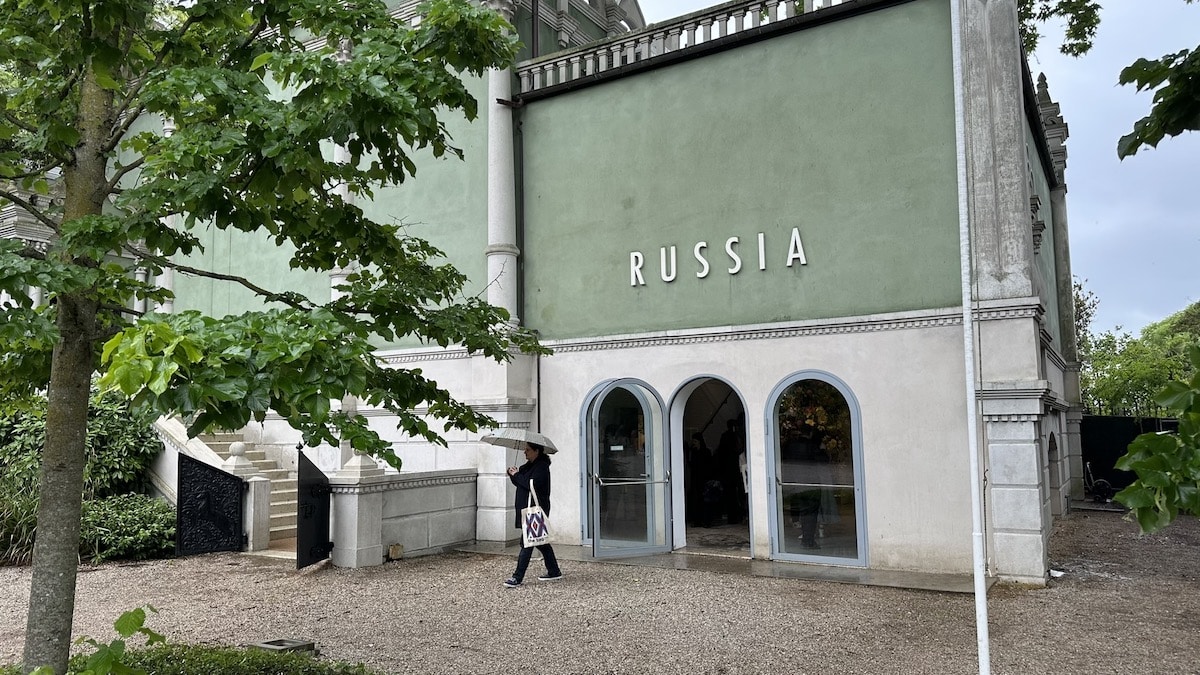
The European Commission has pulled €2 million in funding from the Venice Biennale following a dispute over the return of the Russian Pavilion to this year’s exhibition. The recommendation, reported by Art Journal, was made by EU executive vice-president Henna Virkkunen, who stated that publicly funded culture should uphold democratic values and that the Commission’s position followed a formal assessment of the Biennale’s justification for allowing Russia’s participation.
Russia’s pavilion reopened at this year’s Biennale for the first time since the full-scale invasion of Ukraine in 2022. The Biennale committee defended its decision by arguing that it adhered to established international rules and that the pavilion had not been open to the general public. It further maintained that excluding countries on political grounds would amount to censorship, a position the institution has held consistently since the controversy began. The final decision on whether to withdraw the funding rests with the European Education and Culture Executive Agency.
The dispute has escalated at a particularly charged moment for an institution whose entire history has been entangled with politics, whether it wanted to be or not. The Biennale was founded in 1895 by the Venice City Council under Mayor Riccardo Selvatico, originally conceived as a celebration of Italian art and timed to coincide with the silver wedding anniversary of King Umberto I and Queen Margherita of Savoy. More than 200,000 people attended that inaugural exhibition in the Giardini di Castello, and the event has grown steadily in ambition and scale.
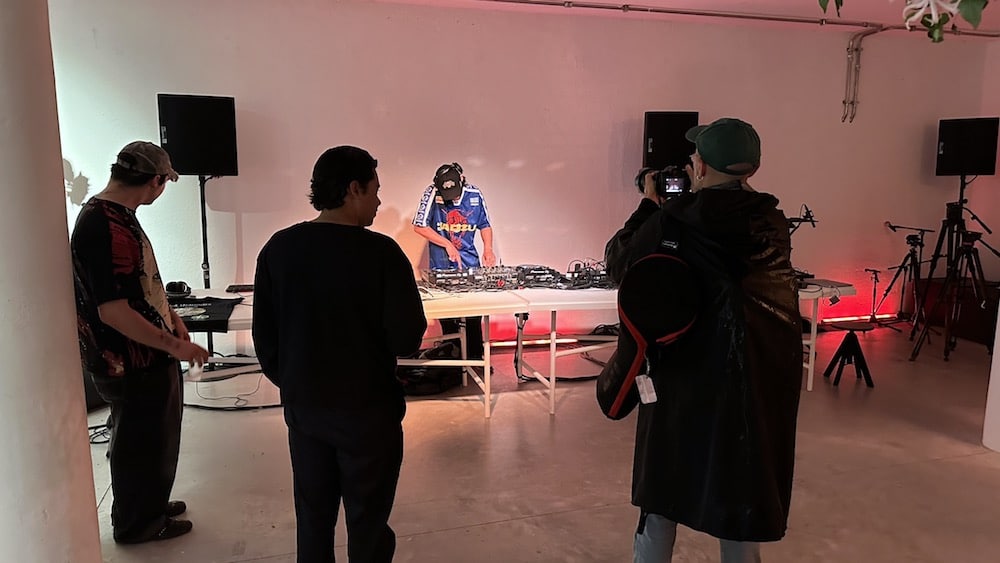
Inside The Russian Pavilion Venice Biennale 2026 © Artlyst.JPEG
The national pavilion system, which now sits at the centre of the current dispute, began in 1907 when Belgium built the first permanent national structure in the Giardini. Britain, Germany, France and others followed, and the Giardini now houses 29 national pavilions. The format has always made the Biennale a place where art and geopolitics coexist in close and sometimes uncomfortable proximity. The institution fell under Fascist control during the 1930s, saw its focus redirected toward state-sanctioned aesthetics, and was used as a vehicle for cultural propaganda before the war interrupted proceedings entirely. Its 1948 reopening, which featured a landmark Picasso retrospective and Peggy Guggenheim’s personal collection of American and European modernism, was as much a political act of rebuilding as an artistic one.
The pavilion format has generated some of the Biennale’s most politically charged moments. In 1964 the international Grand Prize went to Robert Rauschenberg. This decision effectively introduced Pop Art to Europe and shifted the perceived centre of contemporary art from Paris to New York almost overnight. In 1993, Hans Haacke smashed the stone floor of the German pavilion, which had been built during the Hitler era, for his contribution to that year’s exhibition. The collapse of the Soviet Union reshaped which nations occupied which spaces. Artists have consistently used their country’s pavilion as an opportunity for institutional and political critique.
The expansion into the Arsenale in 1980 gave the event far greater physical scope, allowing for large-scale installations, thematic pavilions and a growing programme of collateral exhibitions across the city. Recent editions of the main curated exhibition have reflected a shift in the art world’s priorities, with Adriano Pedrosa’s Foreigners Everywhere in 2024 foregrounding diaspora narratives, indigenous perspectives and queer histories, and the 2026 edition continuing in a related direction under curator Koyo Kouoh.
The question of Russia’s return has been inseparable from what the Biennale is for and whom it serves. Critics of Russia’s inclusion, among them the punk protest group Pussy Riot and Ukrainian arts figures, have argued that cultural participation confers a form of legitimacy that cannot be disentangled from the political context in which it is granted. The Biennale’s counter-argument, that art and culture require open exchange and that exclusion is itself a form of censorship, reflects a principle the institution has maintained since its founding. However, that principle has not always survived contact with the politics of the moment.
Whether the European Commission’s funding recommendation translates into an actual withdrawal, and what consequences that might carry for the Biennale’s future relationship with EU cultural financing, remains to be seen. What is clear is that the institution’s long-standing insistence on remaining above political dispute is being tested in ways that a funding body with democratic values written into its mandate finds increasingly difficult to accommodate.