Founded in 2004, the UK’s largest annual festival of visual art, the Edinburgh Art Festival (EAF) ran this year from 14-30 August, though exhibitions in some venues continue. A plethora of projects, events, exhibitions and commissions showcase emerging and established local and international artists working in a variety of media at major institutions, galleries, and smaller, independent, more nimble spaces. I certainly only scratched the surface, visiting the city for only 30 hours and feeling I’d taken in as many exhibitions as possible, concentrating on the visual arts and sadly missing several performances under the EAF umbrella.
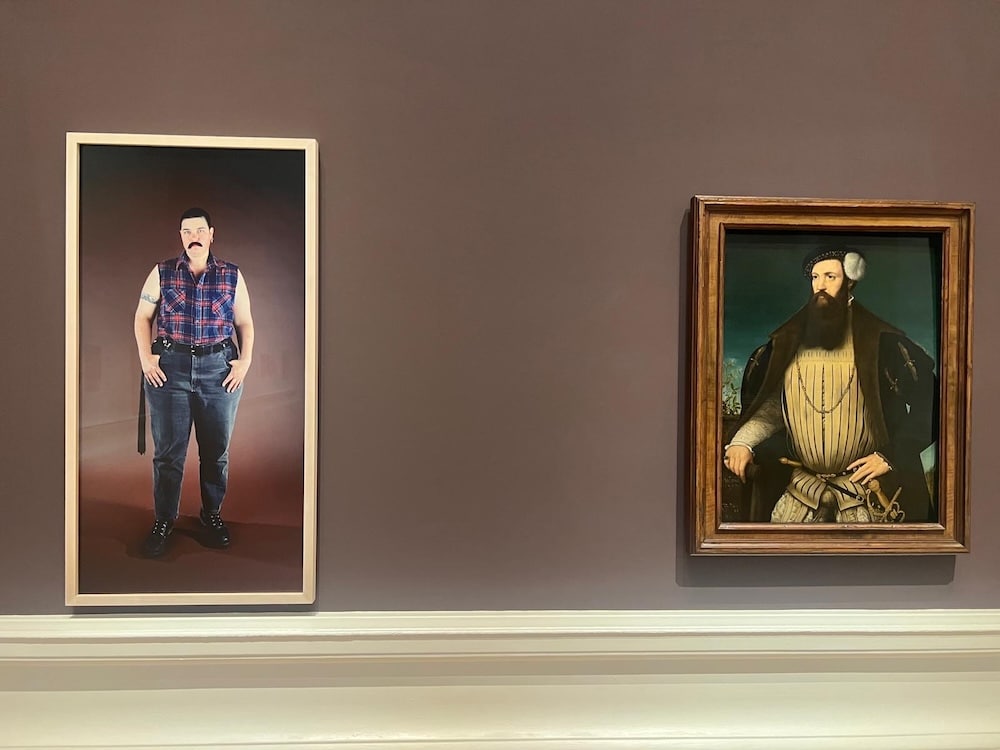
Catherine Opie, Royal Scottish Academy
Stories of marginalised and overlooked communities are prevalent. Love Bites Back at EAF@92 presented the documentary photography of Del LaGrace Volcano, highlighting the leather dyke culture in the UK, particularly in Edinburgh, from the early 1980s to the mid-nineties. An obvious parallel is the communities Catherine Opie depicts in To Be Seen at the Royal Scottish Academy (until 1 November), which I reviewed at the National Portrait Gallery in London earlier this year. (Read the review here). Here at the RSA, more gallery space makes for an enhanced experience, and the interventions of works from the permanent collection, brilliantly selected by Opie and juxtaposed with her own photographs within the exhibition itself, make better sense.
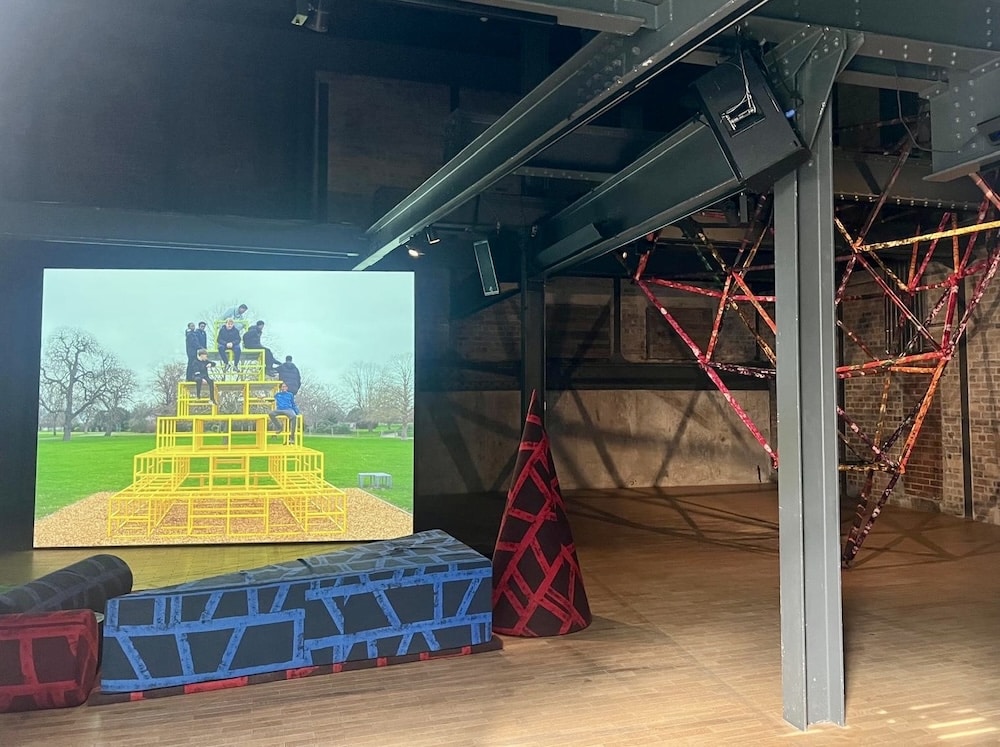
Eva Rothschild, Fruitmarket Gallery
Photography exhibitions are strong at this year’s EAF, and at Stills, South African-born photojournalist Jillian Edelstein’s Among People (until 24 October) features many famous faces across the past 40 years – a standout being the remarkable portrait of an exhausted Desmond Tutu, face buried on folded arms. Nearby at City Art Centre, Sandra George: Start from the Level (until 27 September) presents over 200 photographs by the photojournalist who documented local communities in Edinburgh from the 1980s onwards – Unions and strikes, children at play, several of her son at various stages of his childhood. The importance of play can also be seen across the road at Fruitmarket Gallery in Eva Rothschild’s The Void Presses The Wall (continues until 11 October) that includes sculptures and a film, Safe (2026), where boys in a playground question ‘masculine stereotypes of confidence and swagger.’
Dovecot Studios, established in 1912, focuses on craft, textile and design, and contains a tapestry studio where weaving is practiced today on huge hand looms in a vast central space converted from the Infirmary Street Baths in 2008. Elizabeth Blackadder: A Life in Colour (until 14 November) contains over 30 tapestries and rugs crafted from her drawings, following on from a long line of artists who have had their works made on these looms, including Graham Sutherland, Stanley Spencer, Patrick Caulfield, R B Kitaj, Alan Davie, and Chris Ofili.
Ingleby Gallery opened in Edinburgh in 1998 and, for the past six years, has been located in a magnificent Glasite Meeting House built in 1834, its main lofty gallery space capped by an octagonal rooflight. In Songs of Innocence and Experience, Part II (until 12 September), twenty artists have submitted responses to or in conversation with Antiguan artist Frank Walter to mark the centenary of his birth, including Andrew Cranston, Alvaro Barrington, Rose Wylie, Peter Doig, and Lynette Yiadom-Boakye. It’s a gem of a show.
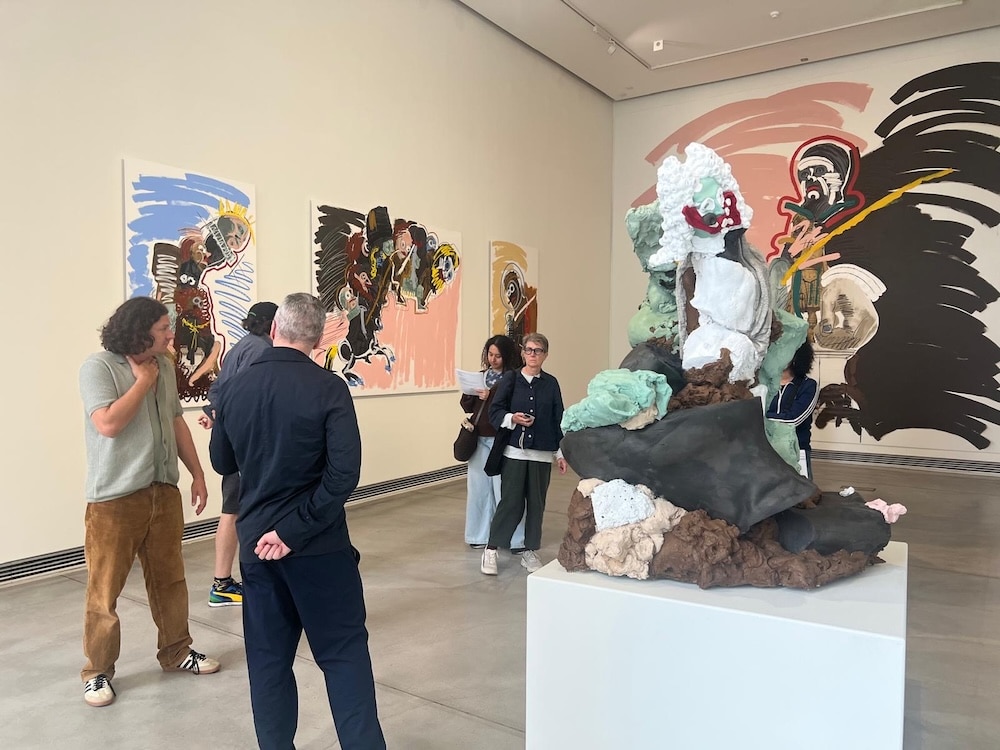
Jamie Fitzpatrick, Edinburgh Printmakers
Established in 1967, Edinburgh Printmakers has been situated in a converted heritage industrial complex in Castle Mills since 2019. Memorials to Sausage Politics (until 25 October) is showing Jamie Fitzpatrick’s mutated, wonky-wigged, colourful sculptures recalling the toppled statuary of colonial figures alongside screenprints that include bronze pigments and layered collaging of materials. These don’t have the polished finish of past memorials, but have a visceral quality, almost as if they’re gouged out of clay or putty, and remind me, in their texture and freshness, of Dana Schutz’s recent sculptures.
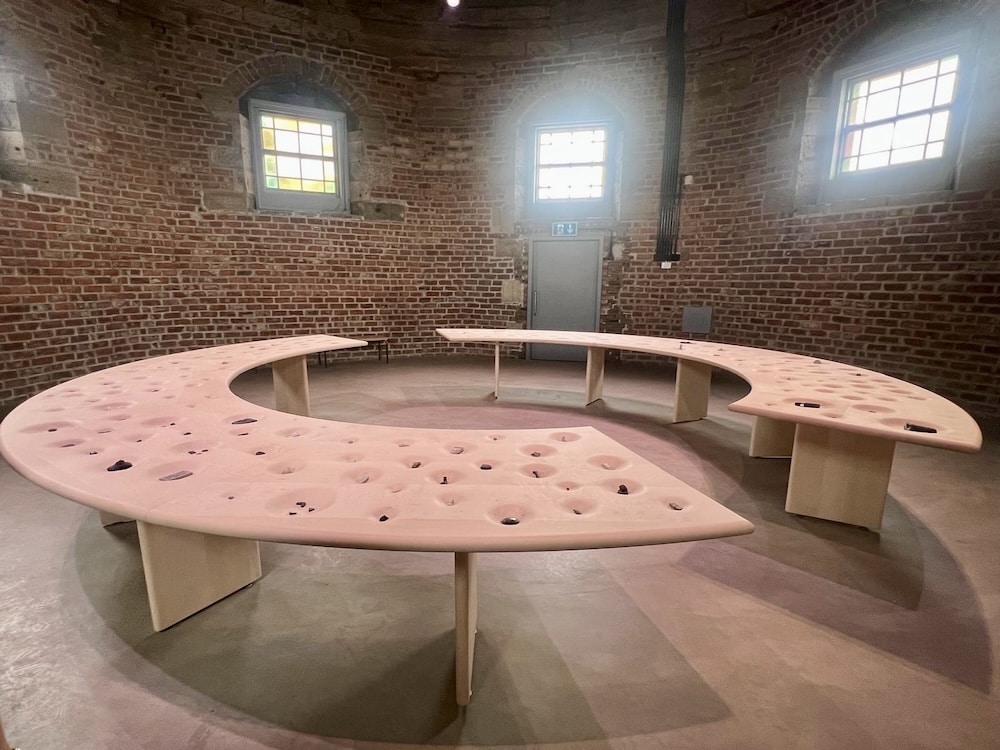
Katie Paterson, Dome Gallery
Katie Paterson’s Afterlife (until 6 September) is displayed in the Dome Gallery at Collective on Calton Hill, once the observatory. I first saw this piece, a circular wooden table with beautifully smooth indentations holding almost 200 amulets made from recycled and sourced materials, at the Folkestone Triennial in 2025. Housed there in a similarly interesting rotunda, a Martello Tower on the cliffs overlooking the sea, this work speaks to the environment and its future as much as to ancient time, mythology, and excavation.
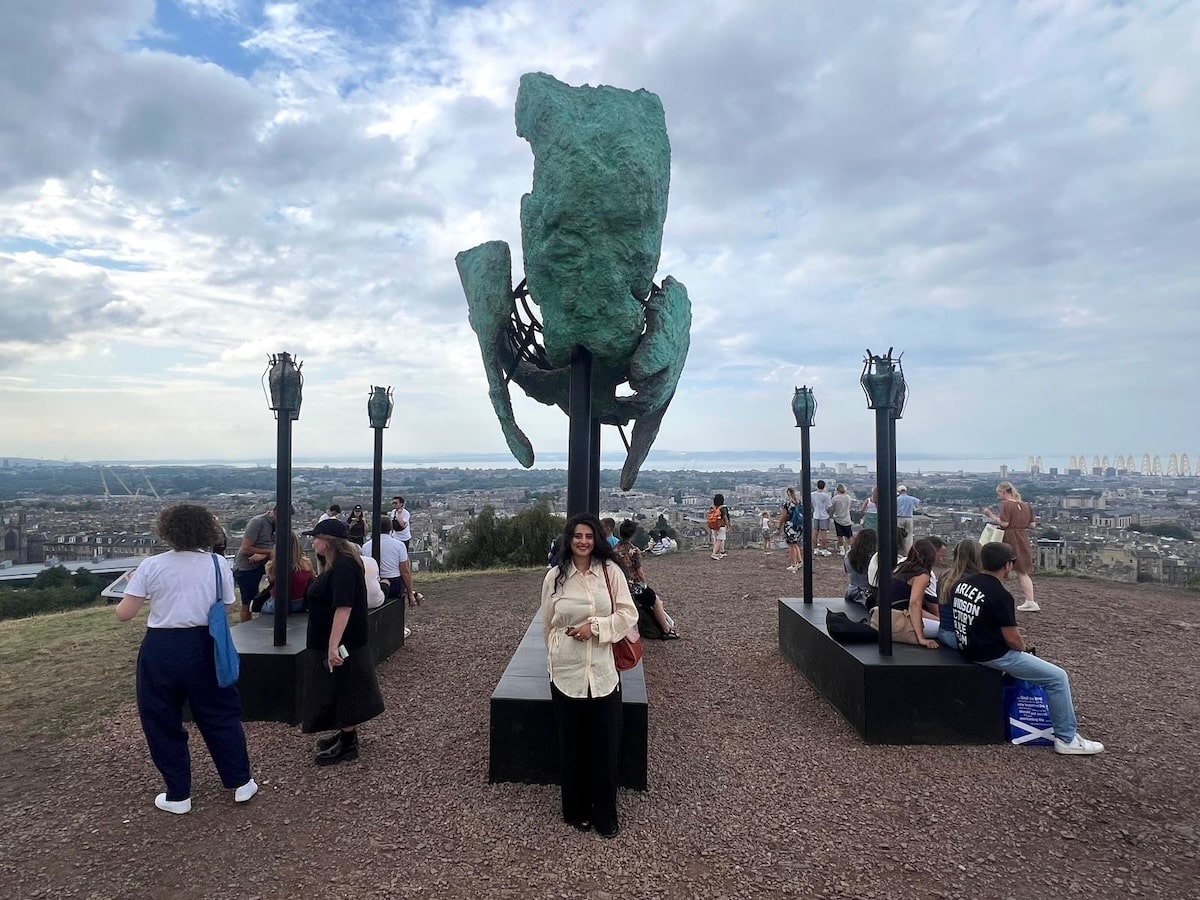
At the top of Calton Hill stands Emii Alrai’s monumental commission Guardian. This ravaged verdigris behemoth stands sentinel on the edge of the basaltic crag, surveying all it sees, across the city towards Leith’s cranes and the Firth of Forth. Recalling the Lamassu, the ancient Mesopotamian hybrid guardians of the cities and palaces of Nineveh and Nimrud, it seems as if it’s just been excavated, and its skeleton, resembling a boat’s ribbed hull or the giant whales in natural history museums, sits well alongside other completed and unfinished monuments. Alrai grew up in Edinburgh; her British-Iraqi heritage informed this piece, first shown at Bold Tendencies in May 2025. Having worked as a registrar in museums, Alrai is aware of the contested histories presented in institutions – Lamassu now embedded permanently in the walls of the British Museum, say. Sadly, this Guardian remains on site through the Festival dates only, unlike some previous commissions that now form part of the infrastructure of Edinburgh – Martin Creed’s No.1059, The Scotsman Steps from 2011, for example.
Outside Edinburgh at Jupiter Artland, In Pride, In Piety, In Vigilance (until 18 October) by Glasgow-based Irish artist Sgàire Wood is a riot of contemporary culture mixed with mythology and heritage. Her practice is mostly performance-based, rooted in drag and queer nightlife spaces, and here elements of costume, false eyelashes, cheap Halloween accessories, even fake blood, are layered to construct quasi-heraldic shields and free-standing sculptural pieces that reference Orange parades and hark back to the sectarian violence of Northern Ireland where she grew up. “I find heraldry so interesting, because to me it feels almost ancient and archaic; the use of colour and pattern, and the use of quite straightforward symbolism, reveals a lot to me about why we project certain meanings onto certain things. Taking things from their original context and creating something new that is purposefully a bit disorientating and its meaning obscured. I have thought about the relationship between the authentic and the artificial – something being real and something performing; I wanted to have some kind of nod to that.”
EAF (Edinburgh Art Festival) 14-30 August 2026
Visit Here