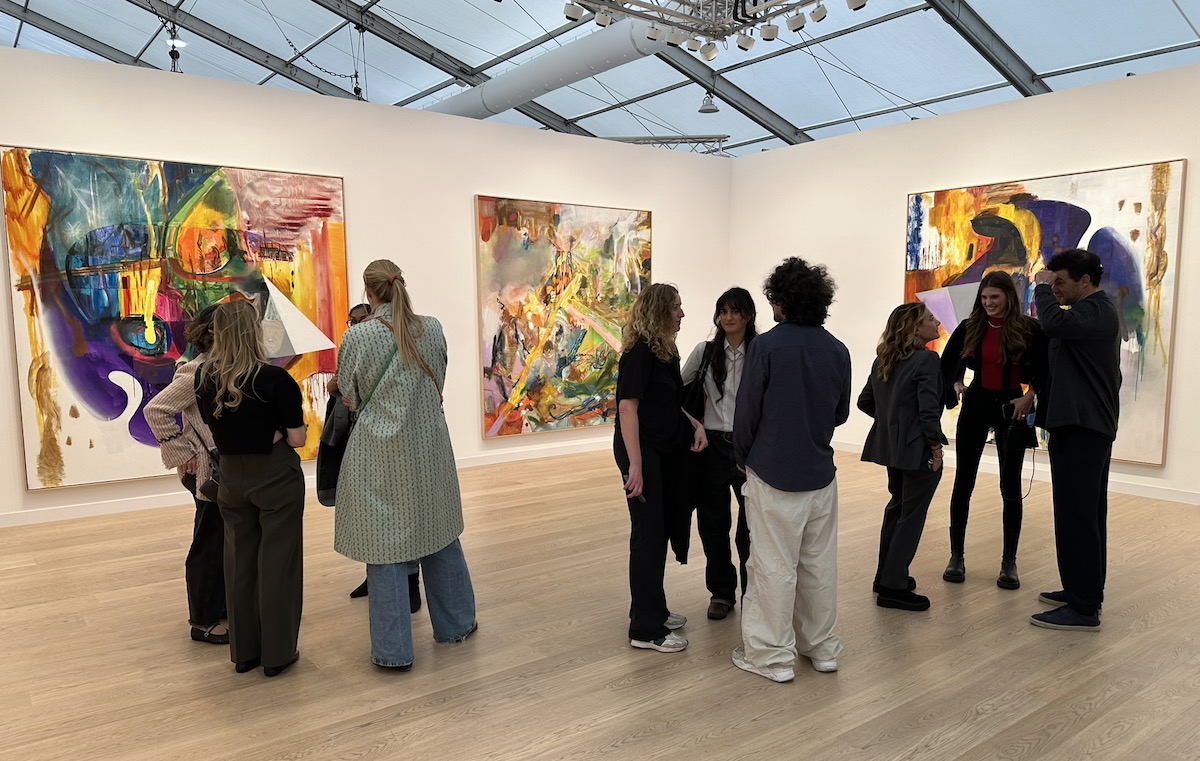
Frieze feels rather like Disneyland for art-world fanatics: the excitement, the rollercoaster of emotions, and the palpable stress in the room as dealers, having paid six-figure sums to be under this momentous tent, face the pressure of selling works worth millions.
Yet galleries are also tastemakers, offering us a visual diary of contemporary desires and shifting tastes.
Frieze Masters is always a wonderful starting point. Its softer lighting, diffused atmosphere, quiet sumptuousness and sense of composure gently ease the visitor into the frenetic energy of the art fair.
A particular highlight of this year’s Frieze Masters is the Spotlight section, thoughtfully curated by Courtauld academics Dr Devika Singh and Dr Sofia Gotti. It brings together solo presentations of pioneering 20th-century artists from Latin America, the Caribbean, Europe, North and West Africa, and Asia, creating a cultural dialogue between art-historical scholarship and the contemporary art market.
Frieze Masters
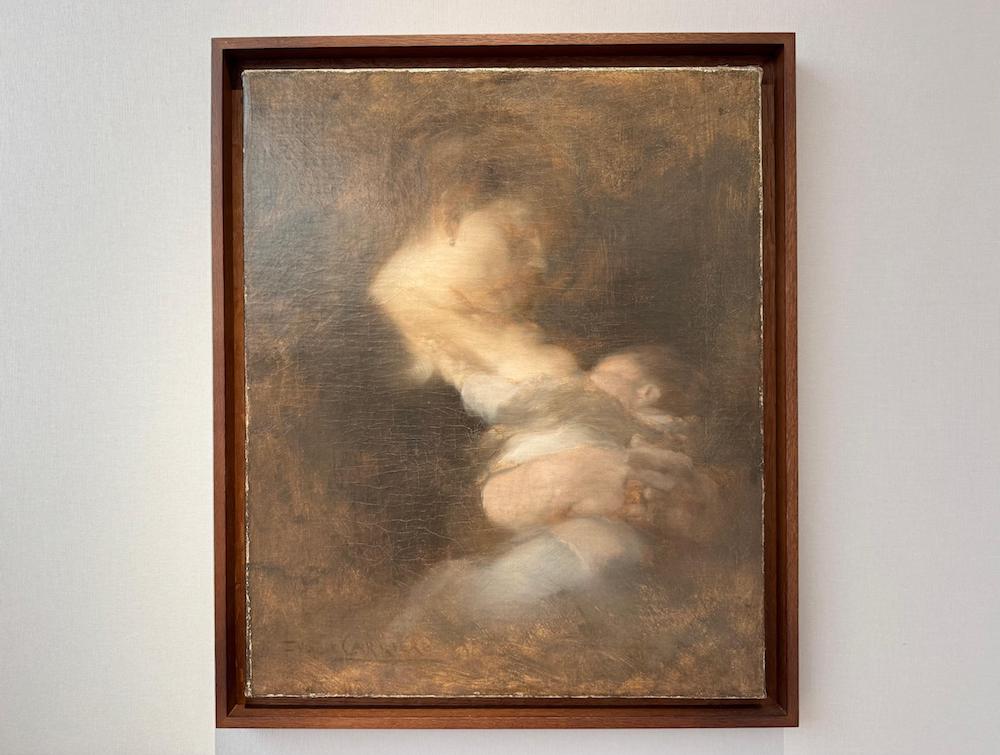 Daniel Katz Gallery: Eugène Carrière (1849-1906); Mère et Enfant; Oil on Canvas Laid on Board; 64.3x52cm
I was lucky enough to be introduced to this work by Robin Katz, who shared a beautiful description of Carrière’s portraits as: “delicately clouded, ultimately intimate in their revelation of the souls of his sitters”.
Robin adds: “Their nebulous and tender aspect goes hand in hand with a proto-modernist radicalism in which repetition and monochromaticism foreshadow some of the giant inventions of the twentieth century”.
Initially courting outrage from the French Salon, Carrière gradually gained recognition, winning prizes from 1884 onwards before becoming President of the Société Nationale des Beaux-Arts in 1904.
The painting’s characteristic muted brushwork and haunting beauty could effortlessly pass as a contemporary work. Eugène Carrière’s work has only relatively recently come to my attention, and I find each piece extraordinary in its painterly mysticism.
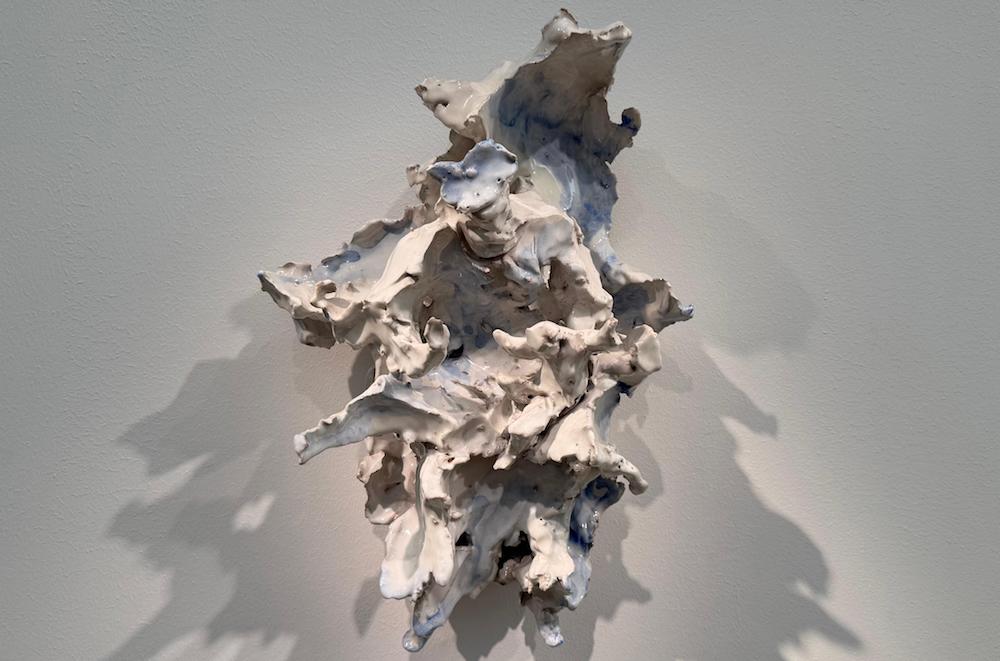 Robilant: Lucio Fontana (1899-1968); Madonna col Bambino (Madonna and Child); 1953-54; Glazed and Painted Terracotta; 37x26x15cm
I always love the curation at Robilant; their mastery of juxtaposing Contemporary Art with Old Masters is rare, and I was looking forward to visiting their booth.
It was this small, wall-mounted Fontana that caught my Eye, although best known for his slashed canvases, Fontana regarded ceramics as the “aristocracy of sculpture”.
His religious terracotta pieces from the 1940s and 1950s fuse Baroque exuberance with abstraction. This piece feels wonderfully tactile, its surface bearing the unmistakable marks of the artist’s hand. The dynamic modelling of the clay captures the very moment of its making.
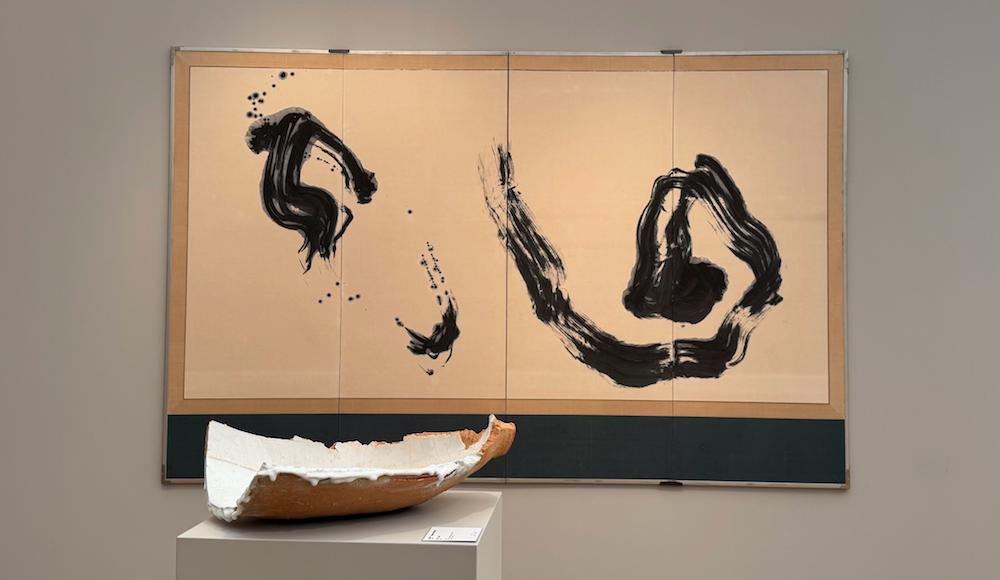 Shibunkaku: Morita Shiryū (1912-1998); Ekō; illumination: a light shining on a wall shines back on me, or seeing is to be seen; 1967; Ink on Paper; Four-panel folding screen; 139 x 267 cm.
A striking example of postwar Japanese avant-garde calligraphy, this work by Morita challenges the boundaries between writing and abstract painting.
Rooted in traditional calligraphic techniques, the work nevertheless shares a visual language with Abstract Expressionism. Its sweeping brushstrokes possess a remarkable physicality.
The tension lies between the cultural inheritance of a disciplined, controlled line and the apparent spontaneity of its execution. In doing so, Morita bridges centuries of Japanese calligraphic tradition and modern abstraction, demonstrating how an ancient artistic practice can become a vehicle for radical contemporary abstraction.
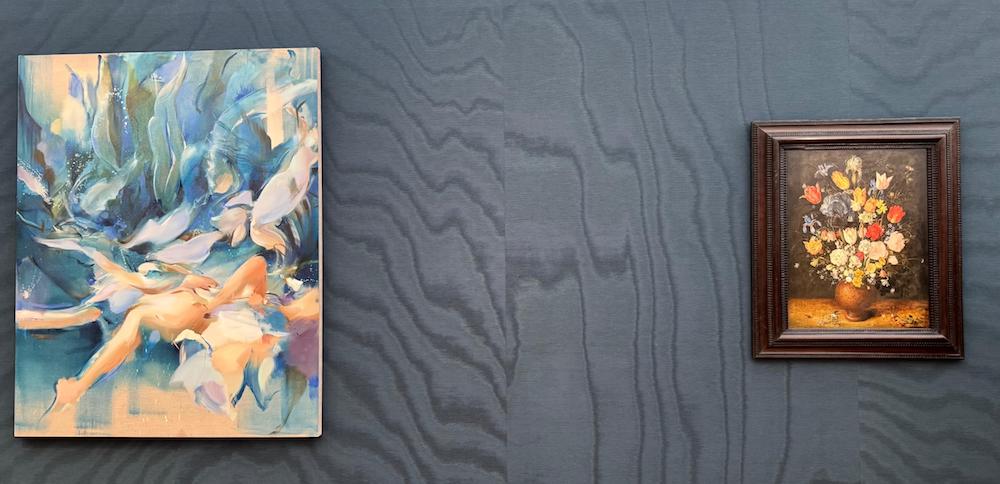 Hauser & Wirth: Jan Brueghel the Elder; Still Life of Flowers in a Stoneware Vase; c. 1607-1608; Oil on Canvas, shown with a new work by Flora Yukhnovich
I will never tire of Flora’s Yukhnovich’s referential works, and it was a pleasure to see this specially commissioned painting in response to the Brueghel.
There were a few Brueghels at the fair this year; their attention to detail, so characteristic of the Northern Renaissance, is made all the more apparent beside Yukhnovich’s loose, expressive, abstract brushstrokes.
The painter effortlessly captures the essence of the Old Master painting while giving it a life of its own. Her work explores a sense of fleeting beauty and an obsession with possession.
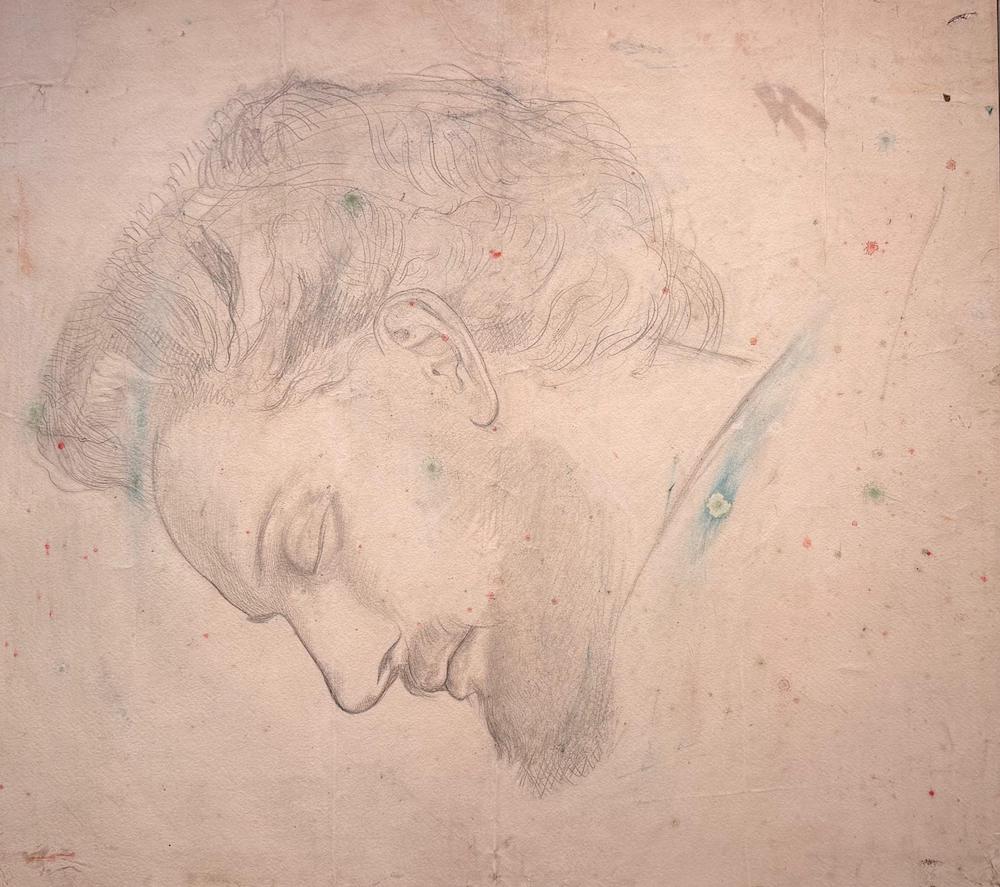 Philip Mould: Dante Gabriel Rossetti (1828-1882); Study for the Mural ‘Sir Lancelot’s Vision of the San Grael’ for the Oxford Union Debating Hall; 1857
It is difficult to visit Frieze Masters without stopping at Philip Mould’s booth.
This Dante Gabriel Rossetti immediately caught my Eye, with its elegance, the fragility of its line, and its psychologically expressive treatment of the sitter.
This is an exquisite preparatory drawing that embodies the romantic idealism of the Pre-Raphaelite Brotherhood.
The delicately rendered profile, downcast gaze and soft features convey a profound sense of introspection. The contrast between the meticulously drawn hair and the almost ethereal softness of the face lends the drawing a remarkable intimacy.
Frieze London
Frieze Contemporary is a different kettle of fish, a rather overwhelming experience and certainly harder to navigate (thank god for my dear friend Gigi’s sense of orientation, or else I would still be there). However, the recent remapping of the fair and the decision to move the blue-chip galleries towards the centre encourage visitors to look beyond the familiar names and pay attention to the other exhibitors.
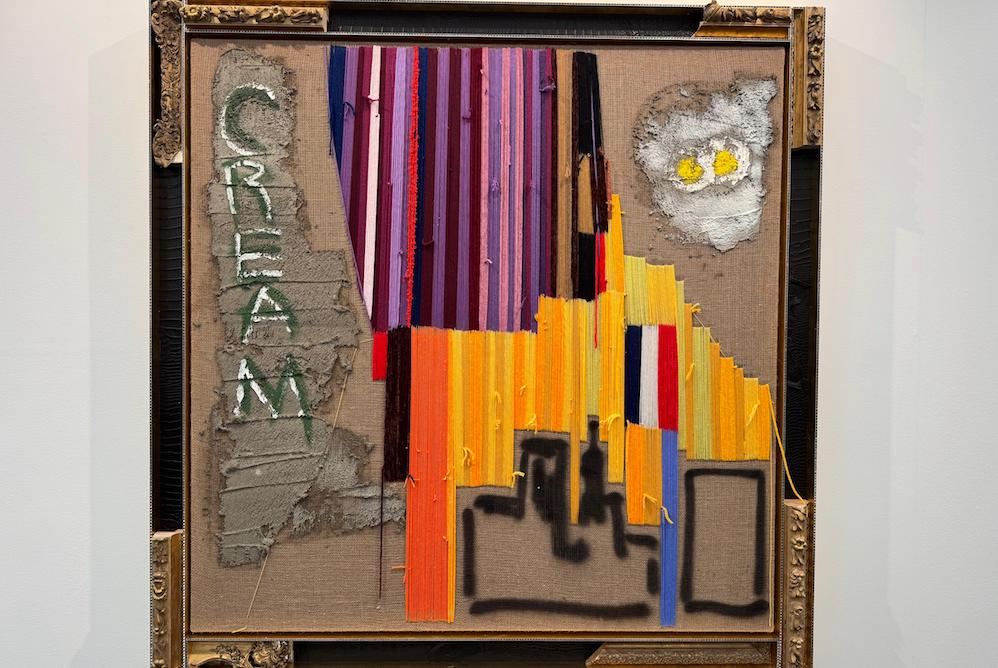 Emalin: Alvaro Barrington (b. 1983); C.R.E.A.M; 2026
Emalin has an incredible program of contemporary artists, and Alvaro Barrington is certainly one to watch. Describing his practice as “concerned with celebrating communities in the way that they celebrate themselves, and the diverse cultural languages in which we celebrate ourselves”, Barrington draws upon the heritage of his Grenadian mother and Haitian father. Deeply influenced by hip hop culture, his work brings together an eclectic range of visual references and artistic traditions. I find his paintings particularly compelling for their fusion of influences, with echoes of de Kooning, Twombly and Katharina Grosse while retaining a visual language that is distinctly his own.
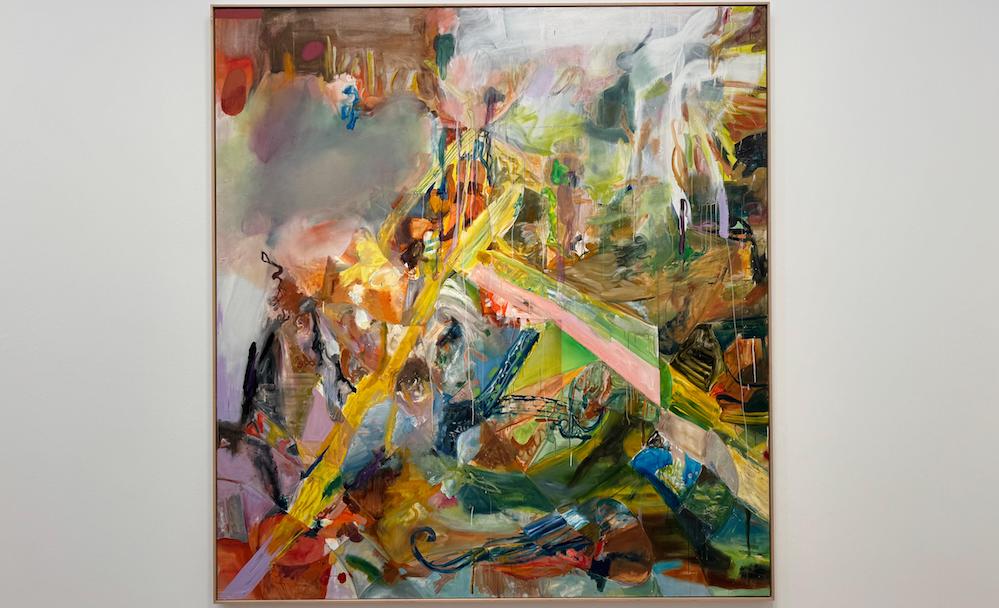
Gagosian: Albert Oehlen (b.1954); 2026
Having seen Albert Oehlen’s exhibition at the Serpentine in 2019, I couldn’t wait to see his works on the Gagosian stand. Oehlen brings the legacy of gestural abstraction into a contemporary, distinctly German language, incorporating elements of Surrealism along the way. His paintings could almost be mistaken for amateurish experiments, yet they possess real compositional precision. What interests me the most is his deconstruction of painting as we know it: visceral smears of artificial pigments, bold hues and fleshy tones appear rough, even awkward at first glance, but upon closer inspection reveal themselves to be carefully articulated and almost meticulously puzzled together.
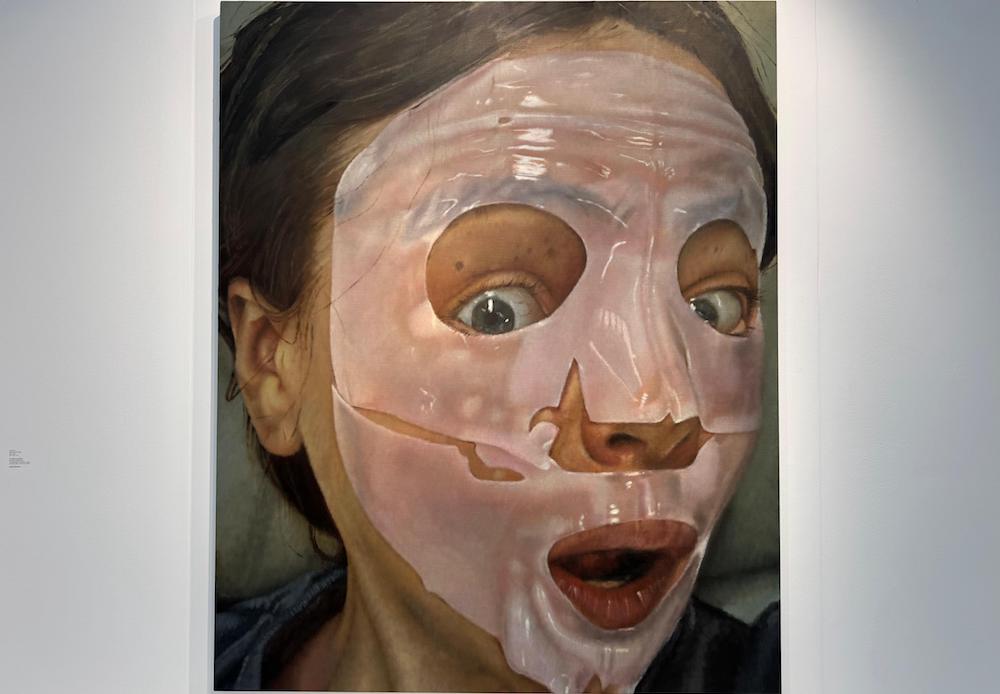 Carlos/Ishikawa: Issy Wood (b.1993); Self Portrait 91; 2026; Oil on Linen; 215x175x5cm
In my opinion, Issy Wood is one of the most important painters of our generation, and her work at Frieze certainly stood out for its quality. I recently read an interview with her ahead of her blockbuster solo exhibition at the National Portrait Gallery, in which she spoke with great vulnerability about the complexities of self-image and about navigating the art world as a young female painter. Her self-portraits are particularly fascinating for their interplay between vanity and vulnerability, revealing the complexities of one’s relationship with one’s own appearance. There is something extremely raw and unsettling about her work, almost uncanny in the contrast between its softly painted surfaces and intense psychological narrative.
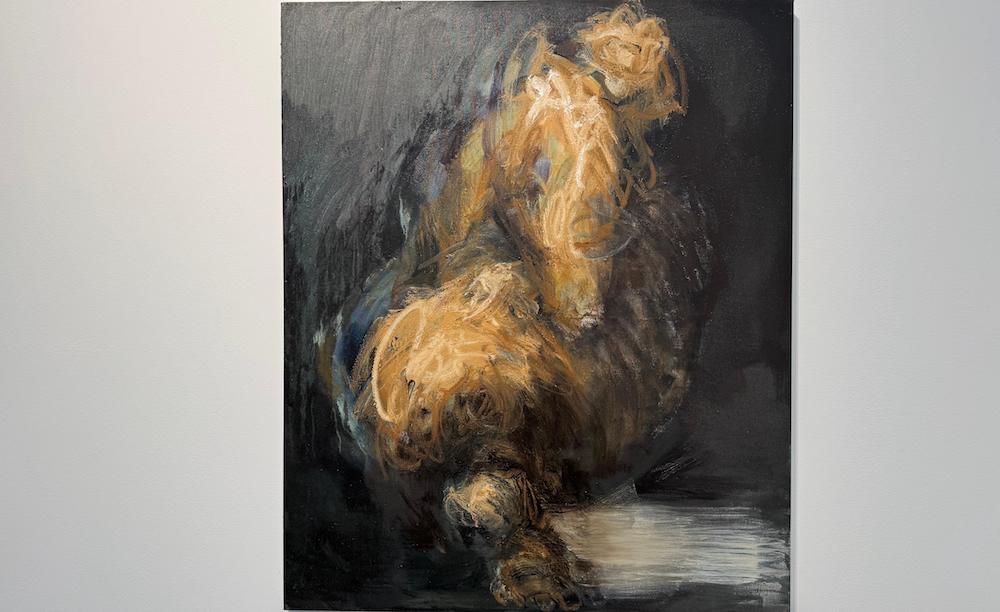
Fortes D’Aloia & Gabriel: Márcia Falcão; Seated Coolly in Warm Light and Shadow, from the Defragmented series; 2026; Oil and Oil Stick on Canvas; 120x100cm
Among the many Auerbachs scattered throughout Frieze, it was refreshing to encounter a contemporary female painter carrying forward this tradition of expressive figuration. Recalling Soutine, Kossoff and Willem de Kooning, Márcia Falcão offers a more vulnerable yet highly tangible approach to abstract figuration. Her treatment of the body is visceral, with thick brushstrokes, giving the painting an extraordinary physicality. What I find particularly compelling is the tension between the apparent violence of the brushwork and the vulnerability of the figure itself. Her use of ochre and golden pigment against the dark background creates a dialogue between intimacy and monumentality, charged with an almost palpable, raw energy.
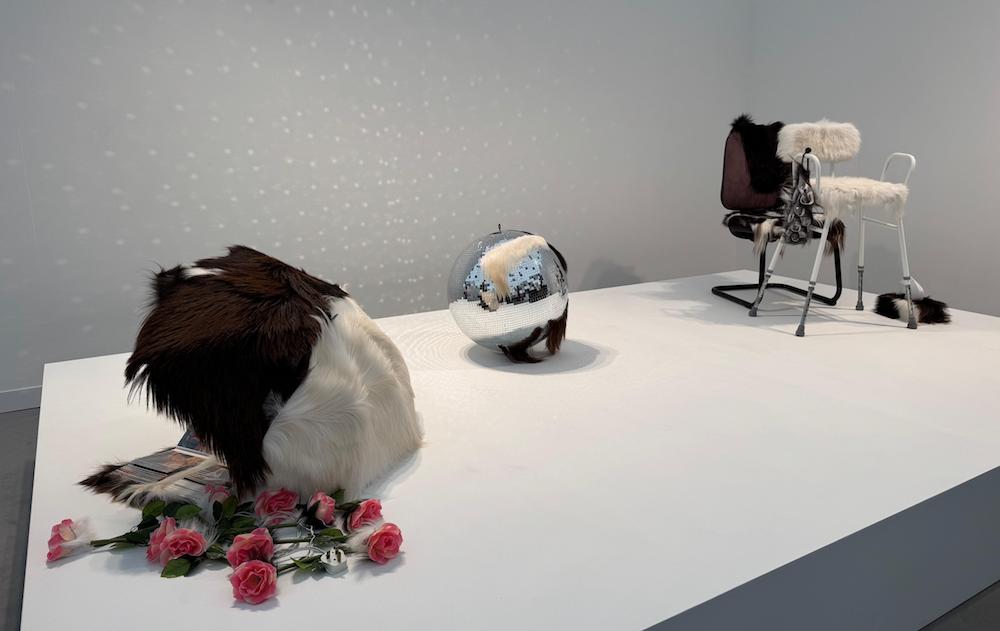
FOCUS – Rose Easton: Amanda Moström, Bikini Bottom, 2026
Amanda Moström’s works are so vivacious, set on a stage amid the very busy Focus section. It was a playful discovery, and Meret Oppenheim’s ‘Le déjeuner en fourrure’ immediately came to mind. Moström’s work, however, is wonderfully humorous and glamorous, yet there is something faintly unsettling in her transformation of everyday objects into sculptures charged with sensuality.
The artist’s exploration of softness, both material and psychological, sets a stage for a feminine surrealist play—a great work to end on.
Marie-Claudine Llamas, gallerist and independent researcher, Courtauld MA Art and Business student