Over the weekend, protesters formed a human chain around the Kennedy Centre for the Performing Arts in Washington, DC, as disputes over art removals and the renaming of the building escalated.
Roughly 1,500 people gathered outside the John F. Kennedy Centre for the Performing Arts, forming a human chain around the entire building in protest against what organisers describe as a sustained campaign to reshape, rename and, if necessary, dismantle one of Washington’s most significant cultural institutions.
Hands Off The Arts staged the demonstration that included a coalition founded last year by former Kennedy Centre staff, artists and union organisers, initially formed to oppose mass layoffs but which has since broadened into a near-full defence of the institution itself.
Protesters held hands and sang while standing behind police installed barricades, facing a building still partly covered by the blue and white striped tarpaulin draped over the section of wall where Trump’s name had briefly been displayed before a judge ordered it removed. Tara Hoot hosted the event, introducing Hands Off the Arts co-founders Mallory Miller and Chris Raleigh, who spoke about their own history with the centre and the toll taken by the past year’s upheaval. “He came in on a wrecking ball,” Miller told the crowd, describing the effect of Trump’s takeover since he purged the board and installed loyalists who subsequently elected him chair.
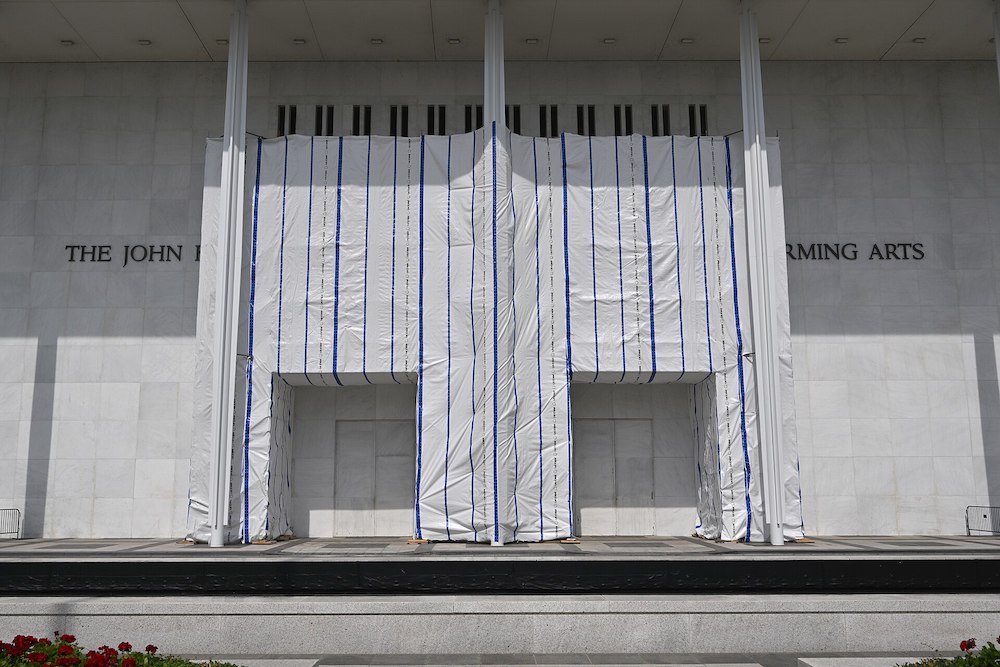
Kennedy Centre name covered, June 26, 2026 Wikimedia Commons
Richard Grenell, who directed the centre before resigning in March, instructed curator Josef Palermo to begin removing artwork from both inside the building and across its grounds, clearing space for what internal planning documents describe as a new collection more closely aligned with the current administration’s preferences. Palermo, who was laid off the same month Grenell departed, later wrote in The Atlantic that he personally opposed the plan to purge the collection. Yet the documents themselves paint a more complicated picture, showing Palermo actively drafting proposals for a new Collectors Council designed to recruit wealthy, Trump-aligned donors, some of whom would reportedly pay up to $100,000 for membership. A memo describing the council’s intended function spoke of removing “outdated or inappropriate artworks” and replacing them with pieces reflecting what it called shared American values.
Speaking afterwards, Palermo described his role in fairly resigned terms. “It was my job to take orders and try to implement them,” he said, adding that Grenell had told him directly that the president wanted entirely new art for the building. Grenell, for his part, has offered a somewhat different account, saying in one interview that he never actually discussed art directly with Trump, and that his instructions to Palermo were to contact past donors and offer to return previously gifted pieces. In a later conversation, Grenell said his focus had been specifically on returning works that the centre could no longer afford to maintain and that needed repair or restoration.
Whatever the precise motivation, the removal plan identified more than twenty individual artworks, both inside the building and on its grounds, including Joel Shapiro’s towering outdoor sculpture Blue (now removed), which the artist himself gifted to the centre. Inside, the plan targeted fifteen works housed in the African Lounge, an events space near the Opera House that had operated since 1977 before being closed and locked once Trump’s team took control. Among the pieces removed without public explanation was a carved wood sculpture from Ghana, created specifically to represent African grief following Kennedy’s assassination. Other works under threat of being removed include: The artworks at the Kennedy Centre that had been targeted for removal include a sculpture by the Colombian artist Eduardo Ramirez Villamizar; a bronze relief panel, “Amerika,” by the German artist Jürgen Weber; a sculpture of Don Quixote by the Spanish artist Aurelio Teno; and “Milk River,” a bronze-cast sculpture of a mare by Deborah Butterfield. Credit…
Asked directly about the removal plan, the centre responded only that its artworks remain fully safeguarded, with no changes currently planned or imminent, and that the collection has been comprehensively catalogued. Officials said the African Lounge pieces are being preserved somewhere within the building, though they declined requests actually to view them.
Compounding the controversy, internal documents obtained ahead of a board meeting scheduled for this coming Tuesday warn that the centre faces certain fiscal collapse within weeks unless Trump’s name is restored to the building in some form. The warning appears in a draft resolution that seems designed, at least in part, to persuade a federal judge that the institution’s financial survival depends on honouring the president somewhere on its facade. That judge, Christopher Cooper, had already ruled months earlier that Trump’s name needed to come down, because Congress had never actually approved renaming the building the Trump Kennedy Centre. The draft resolution nonetheless claims the centre risks bankruptcy and missed payroll, while noting that Trump has personally offered to help raise the necessary funds, provided his name appears on the building. Ten separate design options for adding his name beneath the main signage are reportedly included in the document circulated to trustees ahead of Tuesday’s vote.
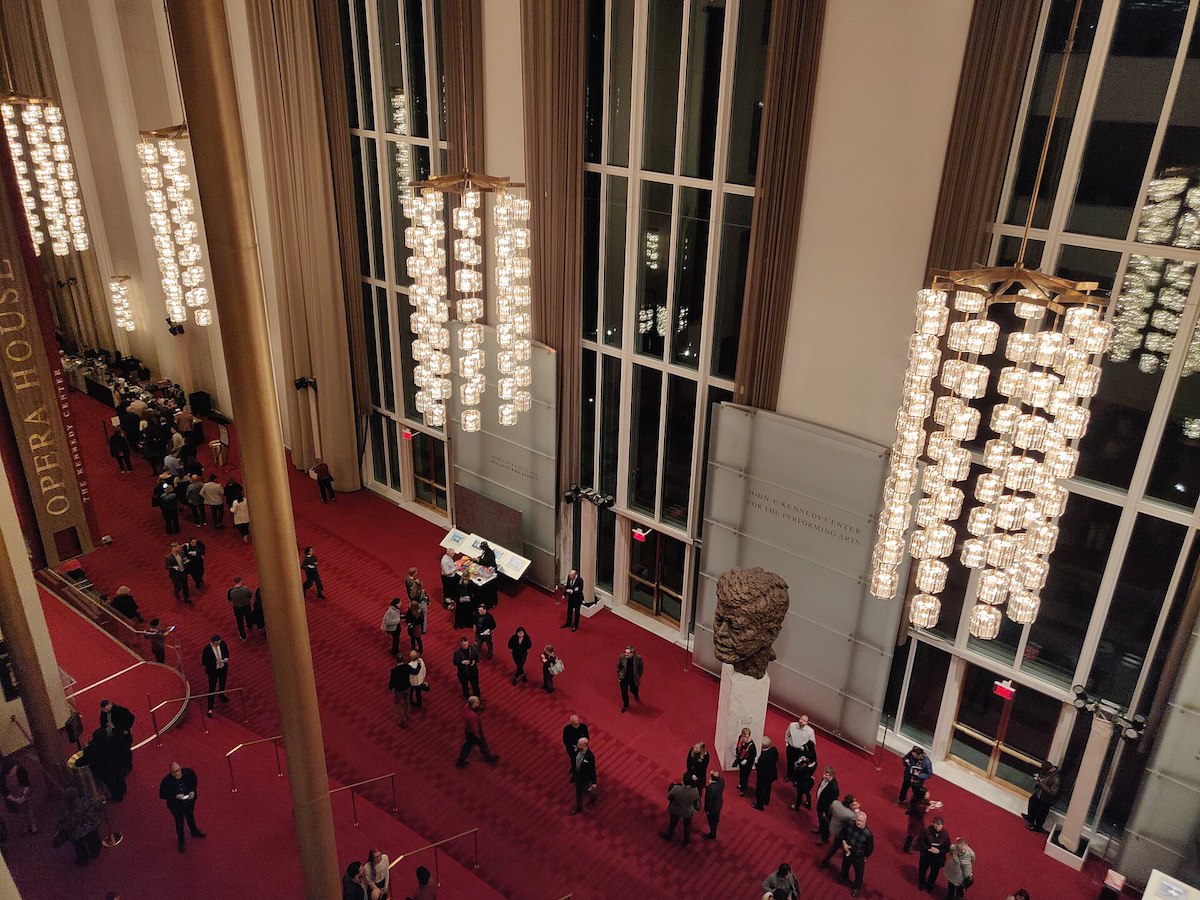
Top Photo: Kennedy Centre patrons in the Grand Foyer during an opera intermission, viewed from the balcony Wikimedia Commons
By Sdkb