
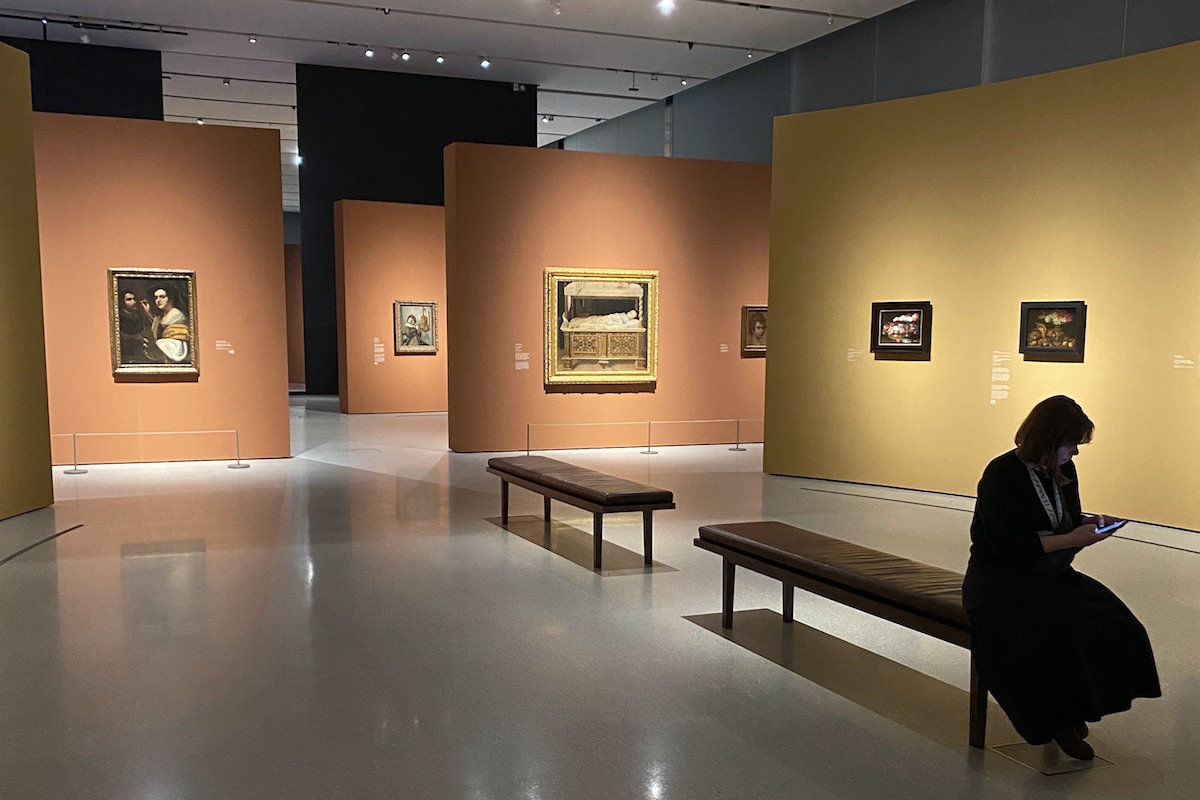
The show Woman Painter at the National Museum of Norway is another reset of the story of female artists in 16th- and 17th-century Europe. It focuses on the work of 19 women artists, with 51 paintings, revealing not only new information about specific individuals but also broader insights into how women learned, defied convention to make their mark in the art world, and created work more ambitious than previously thought.
“We wanted to show that women were able to approach complex subjects, that they were awarded important public commissions, and that they created large-scale and mythological paintings,” explains co-curator Patrizia Cavazzini.
Step forward one of the show’s standout works, Lavinia Fontana’s Minerva in the Act of Dressing (1613), the first time a woman painted a female nude. It was probably commissioned by Cardinal Scipione Borghese in Rome, and completed by Fontana a year before her death. The figure, turning away from the viewer, gazes coquettishly over her shoulder at us. The painting proves that women were painted in the same way as men, says co-curator Cynthia Osiecki. “Did women paint differently? No: here we have a nude, painted for a patron exactly as a man would have done.”
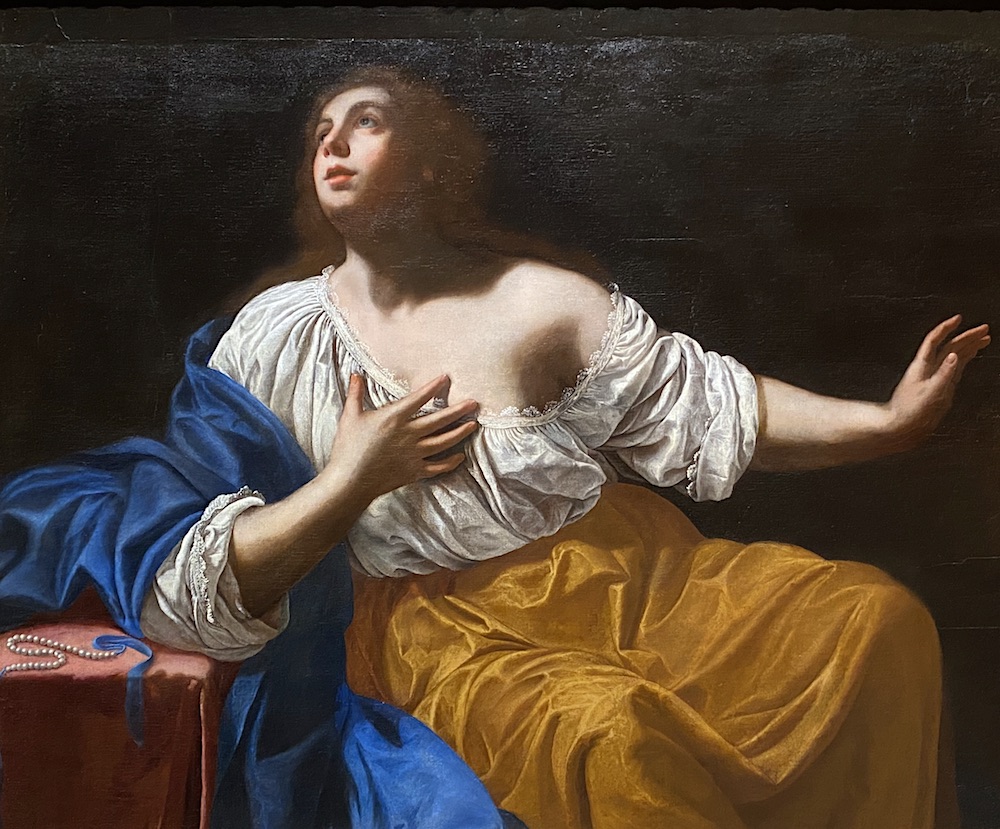
Artemisia Gentileschi Mary Magdalene
It’s long been known that many women artists of the Renaissance centuries learned their skills from fathers or brothers who were artists: Fontana herself is one (her father, Prospero, taught her); Artemisia Gentileschi, represented in the show with four works, was another; and indeed the show also includes work by her father Orazio. His David with the Head of Goliath (1610-12) is included to pose the question of whether works attributed to a father or a brother may have been the work of a daughter or sister who painted alongside them in the same workshop.
But a male relative teacher was not the only way a woman learned to paint. Plautilla Nelli (1524-88), a Dominican nun in Florence, was self-taught. Her St Catherine de’ Ricci in the garb of St Catherine of Siena (c1570) shows her fellow nun in profile, her habit open to reveal the side piercing of the stigmata.
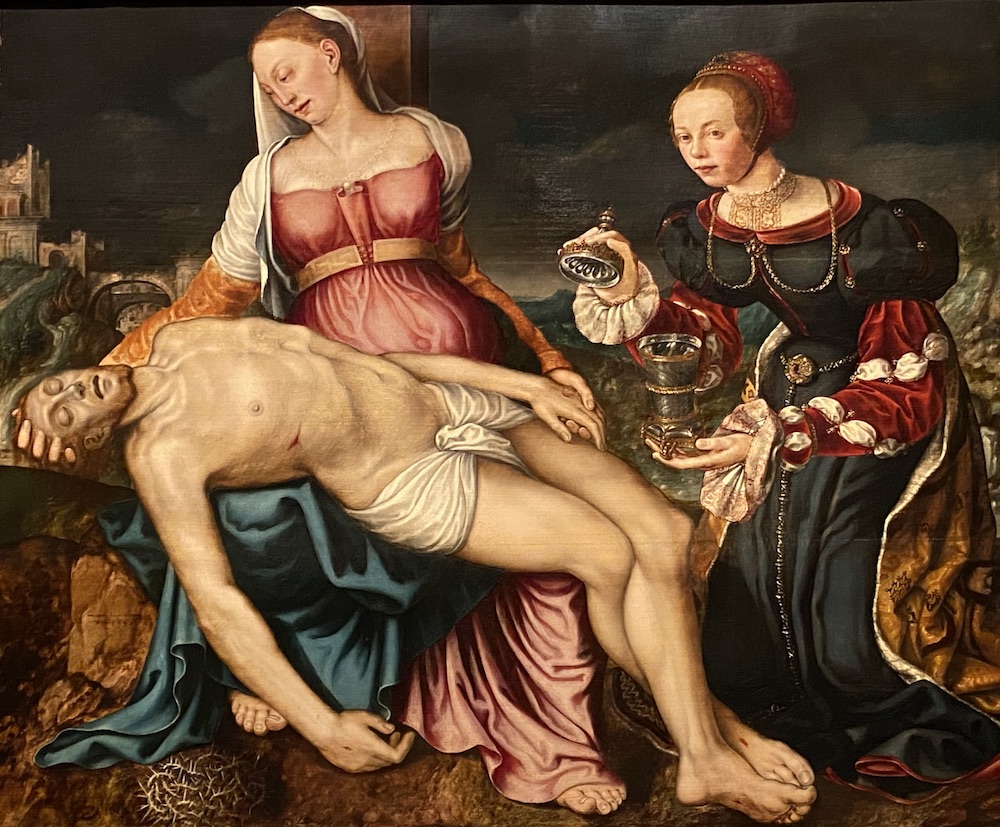
Mechtelt van Lichtenberg toe Boecop’s Pieta with Mary Magdalene (1546
The oldest work in the show is one of the most ambitious: Mechtelt van Lichtenberg toe Boecop’s Pieta with Mary Magdalene (1546). It is an altarpiece, showing the Virgin cradling her dead son. At the same time, a sumptuously dressed Mary Magdalene, perhaps the patron and modelled from life, since there are no underdrawings, holds an exquisite ointment jar. In the Galleria Borghese in Rome, to where the show will travel in the spring, there will be two altarpieces by Michaelina Wautier, whose show at the Royal Academy in London earlier this year was widely received as a triumph in the task of resetting the dial on the quality of work by women artists of the past.
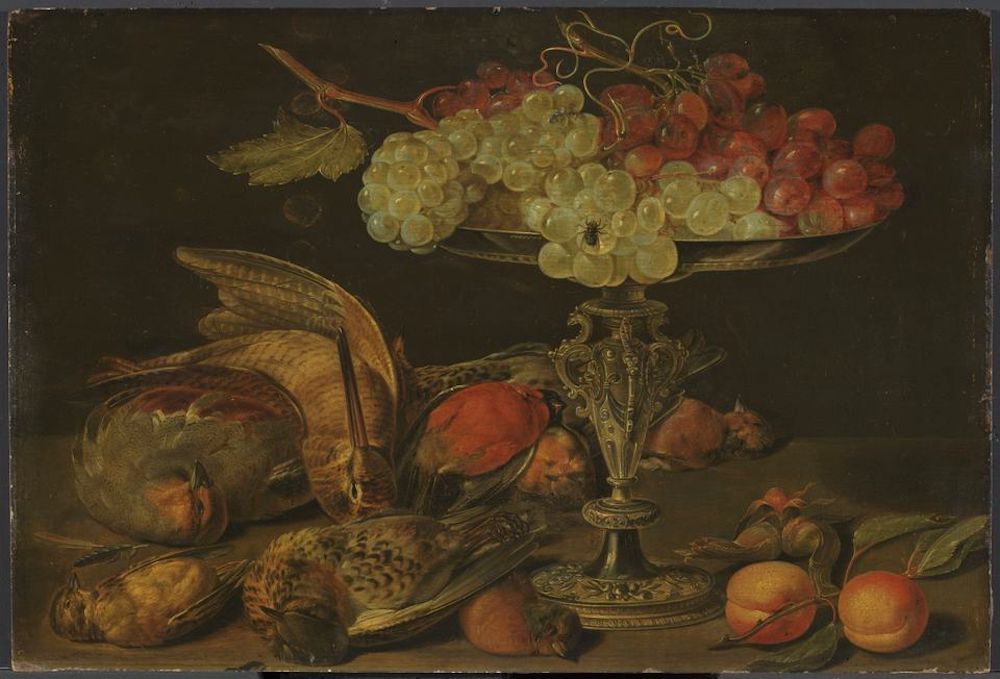
Clara Peeters, “Still Life with Small Game and Grapes on a Gilded Tazza”, c. 1620
The exhibition is laced with revelations about individual works, including a newly attributed still life by Clara Peeters, Still Life with Small Game and Grapes on a Gilded Tazza (c1620), previously thought to be by Brueghel. Artemisia Gentileschi’s Mary Magdalene Penitent (c1640) was attributed to her in the 1970s, after many years of being attributed to Ribera. But conservation work undertaken ahead of the show revealed a hole in the canvas that had been clumsily disguised with a strange object; its removal strengthens the piece and shores up the Gentileschi attribution.
Among the portrait section, the most enigmatic is Claudia del Bufalo’s painting of her sister Faustina (1604). For many years it had been assumed that both artist and her elaborately dressed sitter were members of an aristocratic Roman clan: but research carried out ahead of the Oslo exhibition has revealed they were not related to the family, or wealthy, but that Claudia was a well-known cultural figure in Rome who may have once been a courtesan, and who seems to have been caught up in the murder of another sister’s husband.
One of the later artists in the show, the Dutch Judith Leyster, also defies expectations. Although she was often assumed to have been barred from the guilds, she was a member of the artists’ guild in Haarlem and, in addition to being a prolific artist herself, managed her husband Jan Miense Molenaer’s workshop. “She would hunt down people who hadn’t paid their bills: she had a very public-facing role,” says Osiecki. “And it had also been assumed that once she married she was no longer painting herself, but we now know that even as an elderly woman she continued to work as an artist.”
The Oslo show proves, says Osiecki, that “the art world is finally taking this seriously, and looking at women artists of history. We still have much to learn, but we know the material’s potential, and there’s much more to discover, both in terms of works and the artists’ stories, in the years ahead. So our show represents the status quo, but let’s see how the next decade plays out. Museums are looking for women to exhibit: they’re looking at what they have in their own stores and what they can buy. Art history was written by men – but it’s a process, and things are changing. Who does the research and what they’re looking for determines what we find out, and there is plenty to discover.”
Words/Photos Joanna Moorhead © Artlyst 2026
Woman Painter, National Museum of Norway, to 7 February 2027