

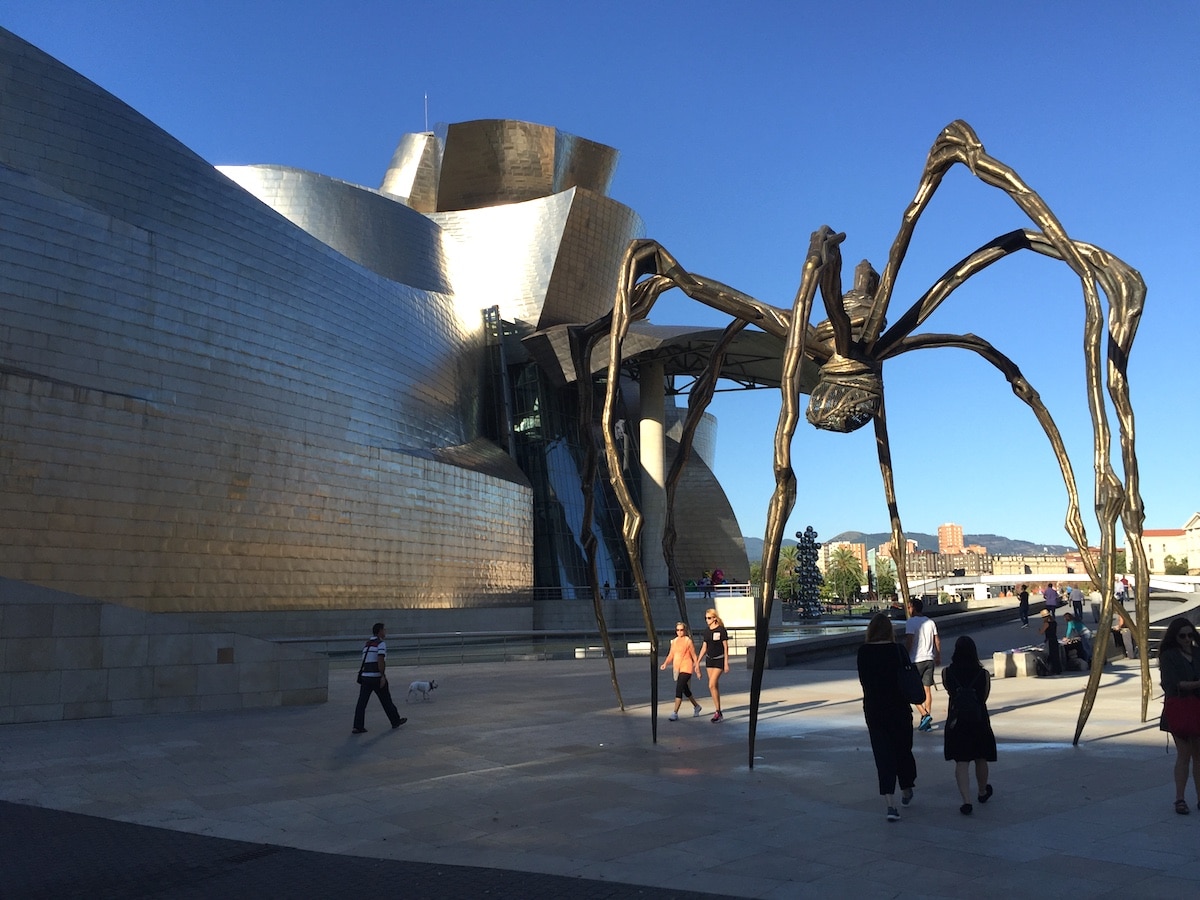
Nearly thirty years after Frank Gehry’s Guggenheim turned a worn-out industrial port into a destination, Spain is preparing a fresh round of museum openings, and several of them sit well away from the usual circuit. Some are new buildings. More are old ones, convents, churches and warehouses, given a second life as art spaces.
ABTA’s Travel Trends 2026 report finds that 48% of UK adults want to visit places they have not been before, and the openings fit Spain’s Sustainable Tourism Strategy 2030, which aims to spread visitors more evenly across the year and the country.
Bilbao is the case everyone cites. The Guggenheim opened on 18 October 1997 and drew 1,305,003 visitors in 2025, 69% of them from abroad and 9% from the UK. According to the museum’s own figures, it contributed €676.7 million to the Basque economy and supported 14,319 jobs. Its thirtieth-anniversary programme in 2027 includes the first Spanish exhibition devoted to Philippe Parreno, starting in mid-March, and a Carmen Herrera retrospective, starting in late April.
The city has kept building since. The Museo de Bellas Artes de Bilbao reopened on 6 October after more than four years of work. Norman Foster and Luis María Uriarte designed an extension that rises above the 1945 and 1970 buildings without hiding them, with a free Arriaga Atrium at the centre. Admission is free from 6 to 13 October.
Zaragoza follows. The Museo Goya, run by Fundación Ibercaja, reopens this week, with the press material giving 8 October in one place and 9 October in another. It now covers 4,661 square metres, with a stone façade onto the Plaza del Pilar that carries fragments of Goya’s prints, and ramps linking every floor: the opening show, Solo Goya. El arte de ver gathers more than forty works from leading collections.
Closer to Madrid, the Museum of Painting at the Royal Monastery of San Lorenzo de El Escorial reopened on 2 October after a decade closed. About a hundred paintings hang there, by Titian, Tintoretto, Veronese and Rogier van der Weyden, and 21 are on permanent display for the first time. Van der Weyden’s El Calvario has been restored. The hang no longer follows chronology or national school and instead traces how Spain’s monarchs, from Philip II onwards, assembled the royal collection. Entry is free until 31 December.
Heritage buildings supply much of the rest. In Cuenca, a new Museum of Fine Arts is expected around December or January in the Church of Santa Cruz, one of the city’s first parishes. It will cover classical art up to the twentieth-century avant-garde and feature local names such as Marco Pérez, Pedro Mercedes and Fausto Culebras, complementing the Museo de Arte Abstracto Español in the Hanging Houses. Toledo, half an hour from Madrid by fast train, will turn the Convent of Santa Fe, built on the site of eleventh-century taifa palaces, into a contemporary art museum in early 2027. It will have sixteen rooms, from the mid-twentieth century to now, one of which is given to the Toledo artist Alberto Sánchez. The city also marks eight centuries since work began on its Gothic cathedral, with the exhibition Primada, 350 works, running until 14 October, and a Jubilee Year from 25 October 2026 to 27 October 2027.
Valencia has two projects. Espai Valdés, due in 2027, will convert a historic industrial warehouse in Parc Central into a free space for about thirty previously unseen works by Manolo Valdés. Early that year, more than 200 works by Joaquín Sorolla from the Hispanic Society in New York are expected to be on view at the Museo de la Ciudad, in his home city. In Madrid, the Museo Sorolla reopens this October with a new wing and improved accessibility, including tactile guidance, hearing loops, and sign language interpretation.
The big institutions are planning too. The Prado, which had a record 3.5 million visitors in 2025, is reworking the seventeenth-century Salón de Reinos, which has been closed to the public for sixteen years, with an opening expected by the end of 2028. The Thyssen-Bornemisza has announced a second Madrid site, described as a civic hub for contemporary art, ecology, and public participation, housing more than 360 works from the TBA21 Collection, with completion expected around 2031. The Reina Sofía is preparing its first associated centre in Santander’s former Bank of Spain building, home to the Archivo Lafuente and its 130,000 items on twentieth-century art. Works should finish by the end of 2026, and no opening date has been confirmed.