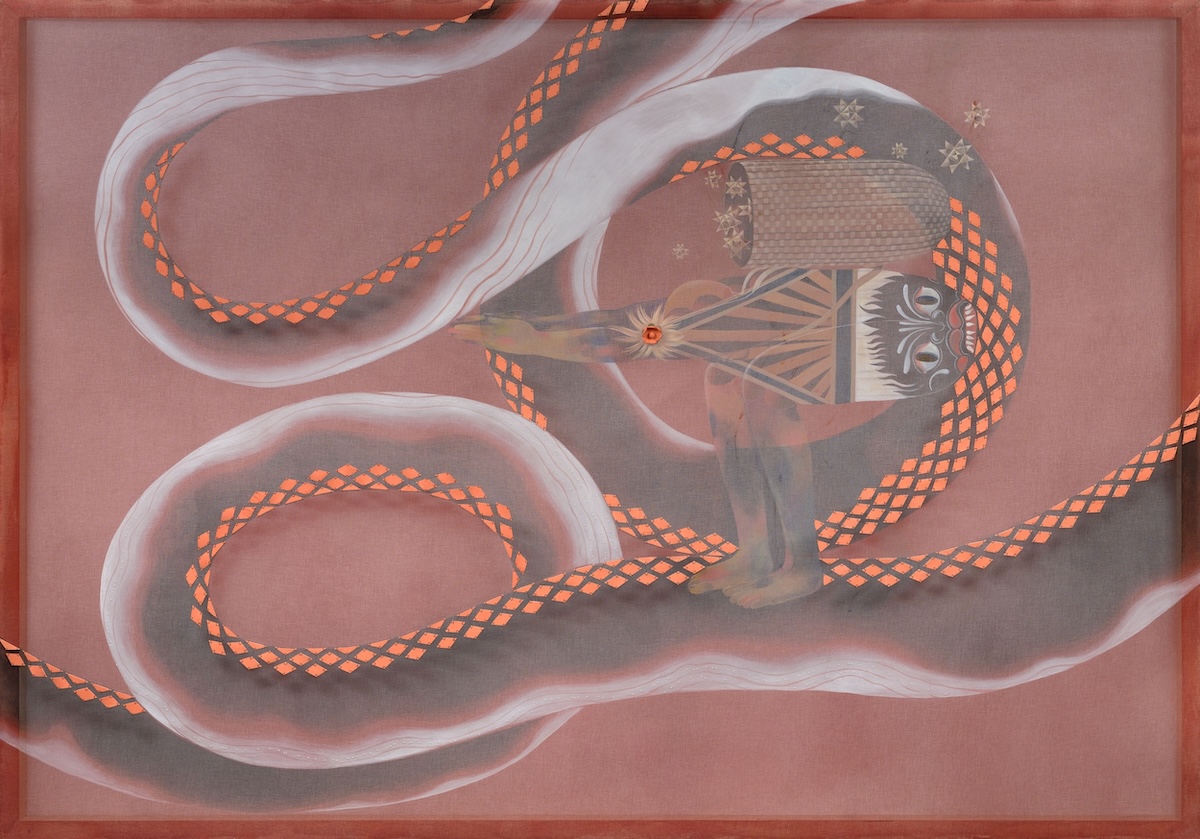
In ‘Women, Art, God’, art historian and priest Ayla Lepine invites us to explore the relationship between faith and imagination. Across centuries, cultures, materials and subjects, women’s stories and works of art provide wisdom about the power of images. In this book, which I am currently reviewing, Lepine, through vibrant conversations about art, life and faith, enables us to glimpse God in the visions of artists including Frida Kahlo, Artemisia Gentileschi and Sonia Boyce. Women’s art and spirituality guide readers across centuries and continents, encouraging us to take religion’s importance in visual culture and creativity seriously. Women, Art, God provides a bold and fresh approach to feminist theology and art history.
For the November diary, I begin by staying with the question that Lepine explores in her book: How can art by women transform our experiences of spirituality and religion? Highlighted exhibitions include works by Edmonia Lewis, Ethelwynne M. Quail, Emma Kunz, Gabrielle Goliath, Cecilia Vicuña, and Yu Hong. This is followed by commissions and exhibitions involving Graeme Mortimer Evelyn, Maurice Denis, Stanley Spencer, Gary Bunt, Charlie Mackesy, and Mark Dunford. We then move through the centuries with exhibitions moving from Constantinople to the Renaissance and the Dutch Golden Age. I end with a series of relational group shows for European Cultural Centre Italy, Focal Point Gallery, NIKA Projects, The Minories, and Foundling Museum.
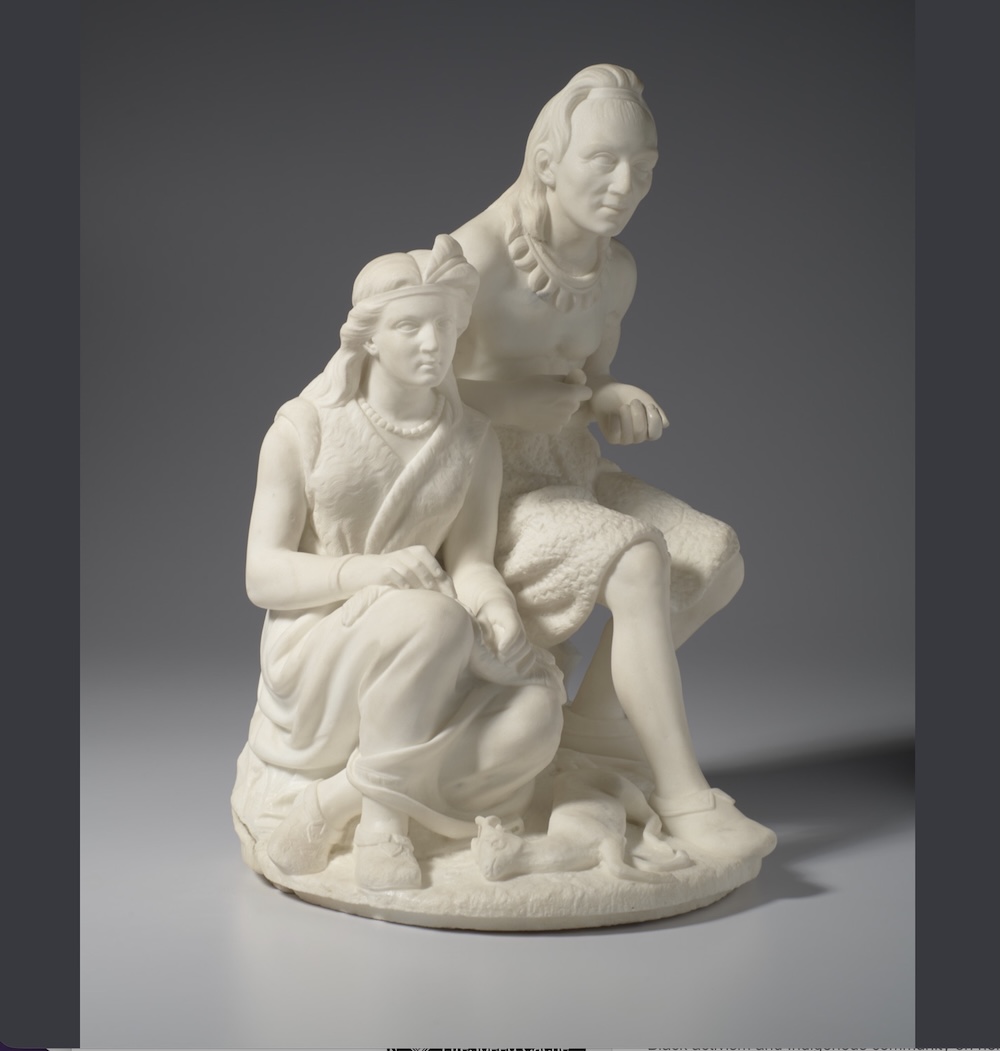
Edmonia Lewis, The Old Indian Arrow Maker and His Daughter”, modelled 1866, carved 1867, North Carolina Museum of Art, Raleigh. Gift of Marilyn Jacobs Preyer
One of the overlooked artists that Lepine brings to our attention in her book is Edmonia Lewis, whose work can currently be seen at the Georgia Museum of Art. Referred to as a “must-see” exhibition by The Art Newspaper and “an act of reclamation” by Art in America, the first major retrospective of the acclaimed 19th-century Black and Indigenous sculptor presents approximately 30 sculptures by Lewis from public and private collections across the United States and abroad. Additional objects in a range of media give visitors an opportunity to learn about Lewis’ mastery of marble and her remarkable life.
Born in Greenbush, New York, in 1844, Lewis became the first sculptor of Afro-Caribbean and Anishinaabe descent to achieve widespread international acclaim. Her mother was a member of the Mississaugas of the Credit First Nation, an Anishinaabe nation in present-day Ontario, and was known for her creativity in weaving and embroidery; her father was a free Black man who may have worked as a gentleman’s servant. She began her artistic career in Boston, which was a hotbed of antislavery activism when she arrived in 1863.
Lewis travelled to Rome in late 1865 to join the leading American sculptors of her generation. There, she continued her commitment to the antislavery cause with works like ‘Forever Free’, the first sculpture by a Black artist in the United States to celebrate emancipation. Alongside a vibrant community of expatriate women artists, she also helped craft a feminist approach to neoclassical sculpture. Through classically inspired sculptures, Lewis elevated contemporary stories of emancipation, Indigenous sovereignty and religious liberty.
The exhibition underscores themes of community, reform, and resilience, and examines the lifelong impact of both Black activism and Indigenous community on her sculpture practice. her death, Lewis’ legacy endured in Black communities, yet her contribution to American sculpture has largely been underrecognised. Some of her great masterpieces were rediscovered decades later, while others remain lost. ‘Said in Stone’ features several sculptures by Lewis that have never been exhibited before, along with cutting-edge research that brings to light previously unknown details of her life and career.
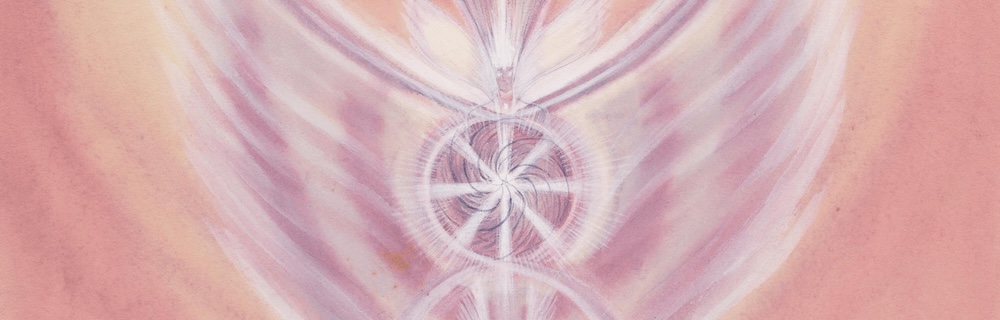
Ethelwynne M. Quail
Similarly, for decades, Ethelwynne M. Quail’s paintings of devas and nature spirits were known only as small reproductions in a 1952 book, credited to a name most readers skipped past. Now, in ‘Ethelwynne M. Quail: The Kingdom of the Gods’, over 20 of her original works go on public display for the first time, revealing the artist behind Geoffrey Hodson’s visionary text. For most of the last century, Quail has been known – if she has been known at all – as a footnote. Her name appears in small print beneath 29 luminous colour plates in a 1952 book about the unseen spirits in nature, credited simply as ‘illustrated by’. The book ‘The Kingdom of the Gods’ made her images famous within Theosophical circles worldwide. The artist behind them remained almost entirely invisible.
Quail was a South African artist and sculptor associated with the Theosophical movement. She was entirely self-taught and worked across sculpture, drawing, painting and writing throughout her short life. Long before her name became linked to devas and nature spirits, she had already built a career as a sculptor: her work was exhibited in Britain during the 1920s, including at the Royal Academy and the Walker Art Gallery in Liverpool. The exhibition repositions Quail within a lineage of women artists who used Theosophical and esoteric ideas to develop new visual languages for realities beyond ordinary perception. This lineage includes better-known names such as Hilma af Klint and Ithell Colquhoun. Where af Klint painted her sense of spiritual abstraction and Colquhoun explored surrealism and magic, Quail worked in close, direct collaboration with a clairvoyant’s testimony, translating someone else’s inner vision into a shared visual record.
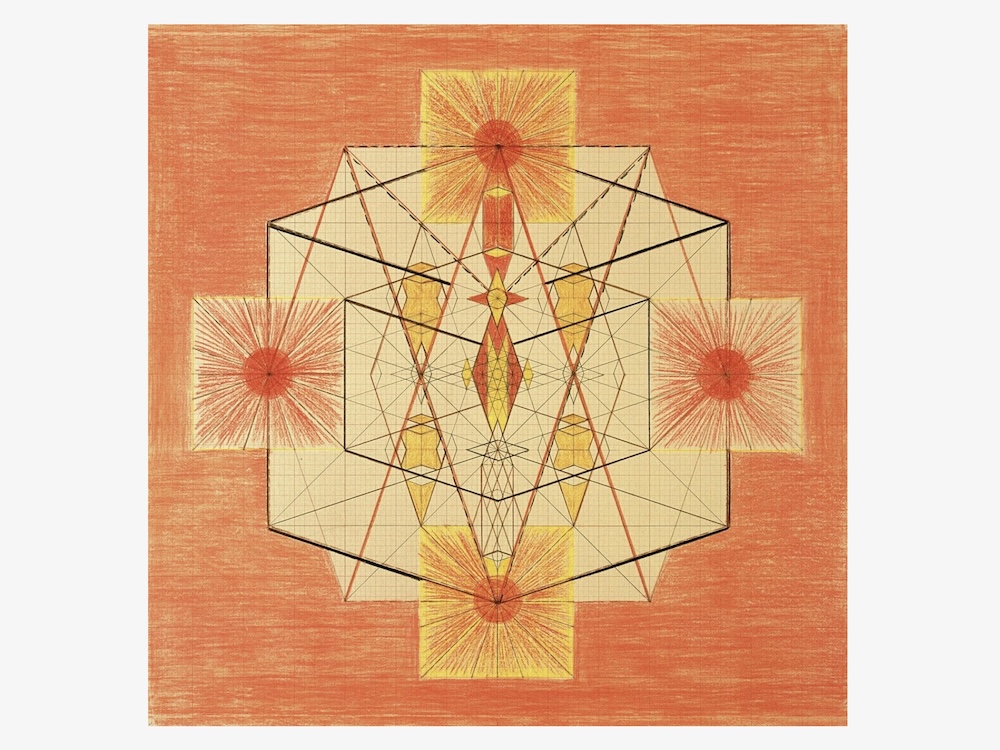
Emma Kunz, Untitled (Work No. 040), Emma Kunz Center © Emma Kunz Foundation, Photo: Emma Kunz Centre
Hauser & Wirth is presenting a major solo exhibition by Emma Kunz which brings together a rare selection of works that offer an insight into the visionary practice of an artist, researcher, poet and healer. Although Kunz did not identify as an artist during her lifetime, she is now recognised as a pioneering figure whose interdisciplinary work anticipated many contemporary concerns around spirituality, ecology and holistic systems of knowledge. Although she began her large-scale geometric drawings relatively late in life, after years spent working as a healer and naturopath in Switzerland, Kunz’s interest in drawing can be traced to her early school years. Employing a pendulum-guided technique known as radiesthesia, she created more than 400 geometric compositions, often developed through periods of concentrated observation lasting over a day. Rather than representing the visible world, these works served as tools for exploration, enabling Kunz to investigate underlying patterns and relationships that shaped both her research and therapeutic practice.
While Kunz’s work emerged from the landscape and healing traditions of rural Switzerland, its presentation at Hauser & Wirth Somerset establishes connections with a region whose cultural identity has long been shaped by narratives of myth, pilgrimage and the enduring relationship between landscape and belief. From longstanding theories about the county’s ley lines and energetic pathways, Somerset provides a resonant setting for an artist whose life’s work explored unseen connections between nature and human consciousness. Kunz developed paths toward healing, grounded in her understanding of the human being as an integrated whole of body, mind and spirit. Her drawings were therefore both the outcome of her research and an essential component of her healing practice.
Developed over more than a decade as a ritual performance and installation project, Gabrielle Goliath’s ‘Elegy’ gathers collective acts of mourning around lives and histories marked by violence, erasure and structural loss. ‘Elegy’ has evolved across multiple geographies and communities, with performative encounters staged in Johannesburg, Cape Town, São Paulo, Paris, Amsterdam, Munich, and beyond. The work has now arrived in London for a major institutional presentation, following the shocking cancellation of the South African Pavilion in Venice and its subsequent presentation as an independent exhibition at Chiesa di Sant’Antonin.
Installed in the sonic chamber of Ibraaz’s Minassa, voices and moving images immerse audiences within a space of mourning, kinship and collective care. Addressing contexts of rape culture and femicide in South Africa, the genocide of Ovaherero and Nama peoples in Namibia and the ongoing devastation of Palestinian life, ‘Elegy’ proposes mourning not as closure, but as a sustained practice of collective presence. Goliath is a Johannesburg-based artist whose practice explores ritual, sound, and social encounter, centring histories of racialised, gendered, and queer experience while foregrounding care, solidarity, and collective relation.
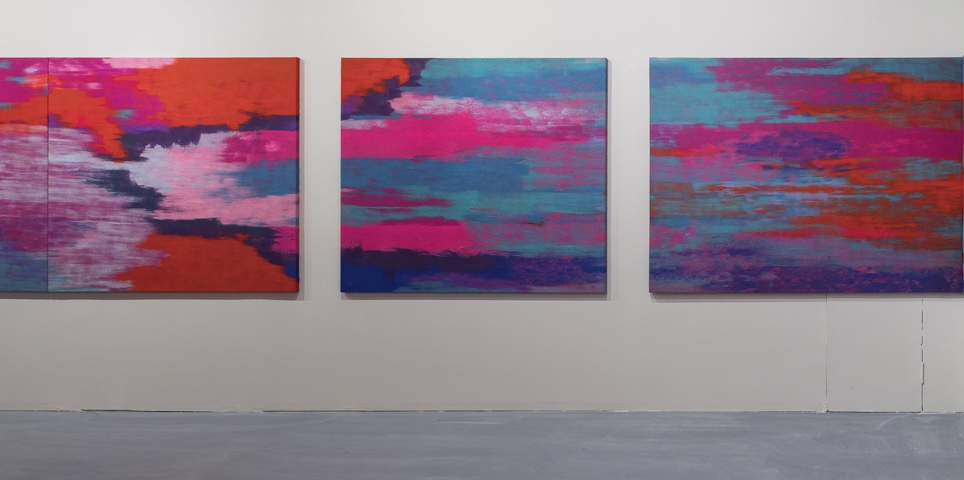
Gulnur Mukazhanova, The Manifold of Memory, The Whitworth
The Whitworth is presenting ‘The Manifold of Memory’, a major new commission by internationally acclaimed Kazakh artist Gulnur Mukazhanova. Born in Kazakhstan and now based in Berlin, Mukazhanova is recognised for her use of felt, a material deeply rooted in the nomadic cultures of the Central Asian steppe. For centuries, felt has been used to create homes, clothing and everyday objects across this region. In Mukazhanova’s hands, it becomes both material and language; a medium through which histories, identities and inherited knowledge can be explored. ‘The Manifold of Memory’ takes the form of a monumental textile installation made from felt, silk and vintage fabrics. Stretching approximately 16 metres across the gallery wall and rising five metres high, the work grows from a single textile fragment inspired by Mukazhanova’s research into the Whitworth’s collection.
Developed through extensive research into the Whitworth’s textile collection, the exhibition explores what happens when symbols lose their meaning and traditions become detached from their origins. Mukazhanova spent time examining objects in the Whitworth collection spanning centuries of textile history – from early Egyptian fabrics to nineteenth-century industrial textiles. Through this research, she became fascinated by a recurring phenomenon: how motifs that once carried spiritual, symbolic and communal meaning gradually became repetitive decoration. For the artist, this shift reflects a broader human experience of modernity, where industrialisation, globalisation and migration can distance people from cultural origins, collective memory and a sense of belonging.
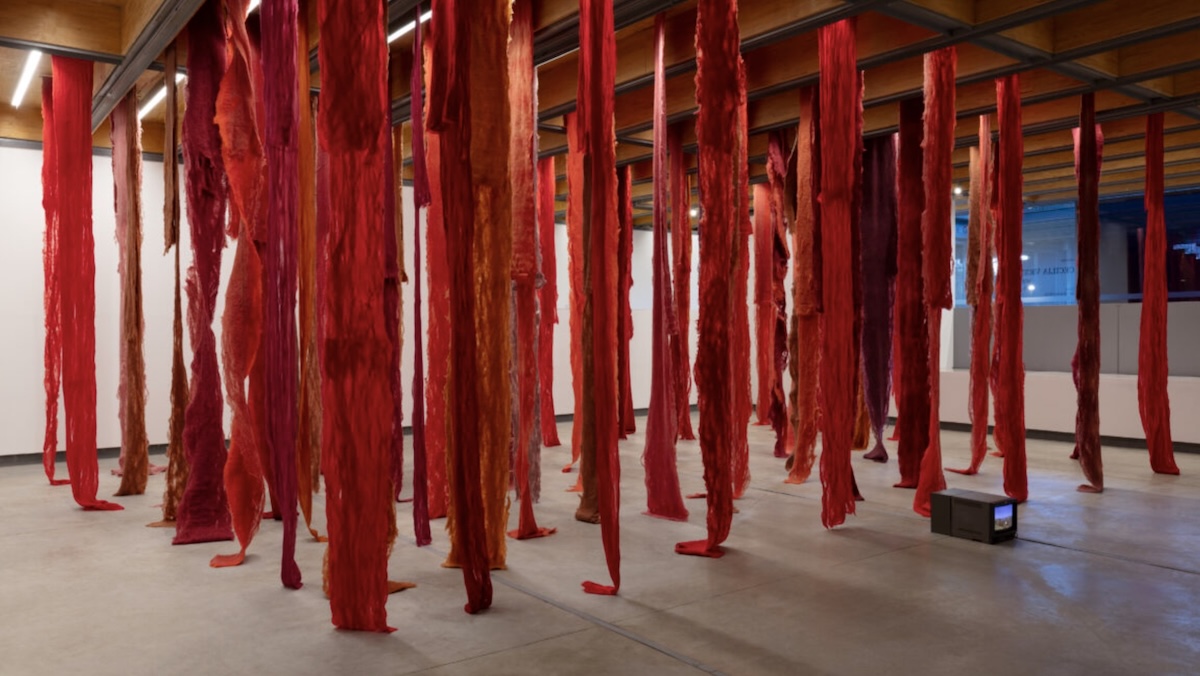
Cecilia Vicuña, Quipu Menstrual 1 (unknotted), 2006 / 2024. Site-specific installation with unspun wool and video. Dimensions variable; video duration: 4 minutes, 13 seconds. Installation view, Cecilia Vicuña: Soñar el Agua. Pinacoteca do Estado de São Paulo, Brazil. May 17 – September 15, 2024. Photo Isabella Matheus
Cecilia Vicuña is one of Latin America’s most internationally renowned artists, poets, and feminist activists. Spanning six decades, her exhibition at Whitechapel Gallery provides a unique opportunity to explore her interdisciplinary practice, which intentionally dissolves the boundaries between visual art, poetry, performance, ritual and activism, and encompasses painting, textile, photography, installation and film.
Born and raised in Santiago, Vicuña came to London in the early 1970s, where she went into self-exile after the violent military coup against President Salvador Allende in 1973. London provides the starting point for this exhibition – Vicuña had a studio in Stepney Green when she was a student at the Slade School of Art, and her time here marked a key moment in her development. In the early 1970s, London was a hub for politically engaged artists from across the globe, providing a nexus for resistance and liberation movements, where artistic experimentation and political organising were deeply intertwined. As a creative and personal response to the situation in Chile, Vicuña’s practice became more explicitly political during the Allende period, a process that intensified in London, reflecting her experience of displacement, loss, political violence and instability.
A key facet of Vicuña’s work, evident from the 1960s onwards, is her deep commitment to honouring and preserving ecosystems and indigenous systems of knowledge. She regards the destruction of the natural world and erasure of indigenous communities as interconnected forms of violence. She sees their recovery and preservation as the only way to imagine and create alternative futures. Many of her installations function as acts of remembrance for cultures, languages and ways of being that have been suppressed by dominant Western models and colonial systems.
The exhibition opens with ‘Quipu Menstrual’, a dense sculptural installation of unspun wool in vivid shades of red and brown suspended from the ceiling. Vicuña has been creating ‘quipus’ (knots) for over 50 years as striking embodiments of an ancestral, non-alphabetic communication system rooted in Andean culture. Traditionally used in pre-Hispanic civilisations, quipus were used to encode knowledge and transmit messages or stories through intricate systems of braiding and coloured threads. Vicuña reclaims and reactivates this ancient language as a living symbol of memory and resistance, often producing quipus through collective making processes, adding a distinctive communal dimension to the works.
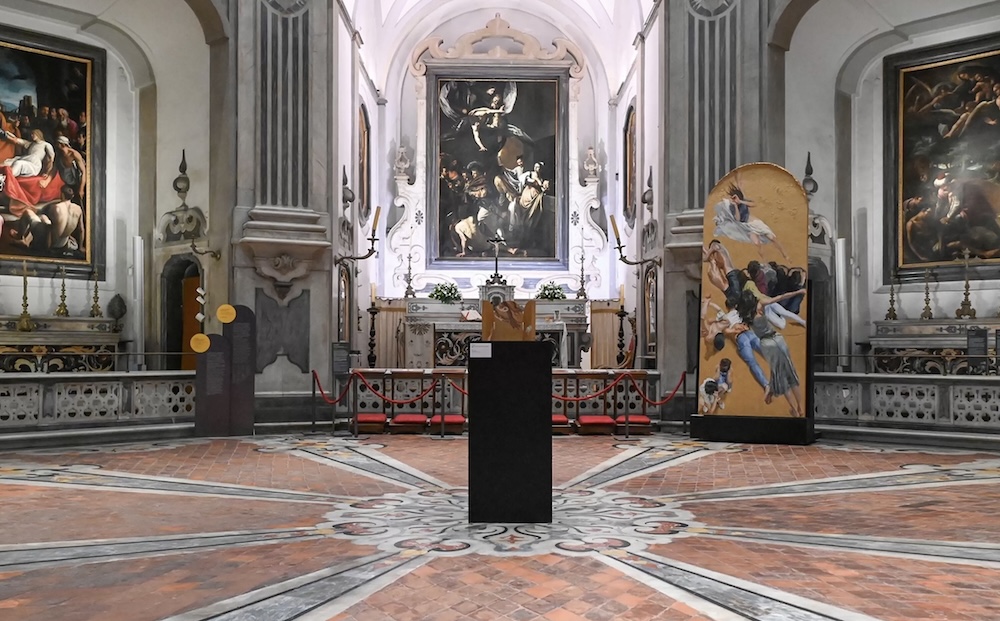
Yu Hong, Make a Wish, 2023. © The Artist, Courtesy Lisson.
Pio Monte della Misericordia in Naples has opened its historic chapel for ‘Humanity: Confronting Darkness and Gold ‘, which brings Yu Hong’s ‘Make a Wish’ into dialogue with Michelangelo Merisi da Caravaggio’s ‘The Seven Works of Mercy’. The exhibition explores the interplay between two works that, although created centuries apart, both shed light on the human condition. ‘Make a Wish’ was the centrepiece of Yu Hong’s 2024 Venice Biennale exhibition, ‘Another One Bites the Dust’. Named among the New York Times’ top eight hits of the Biennale, the monumental painting takes Caravaggio’s ‘The Seven Works of Mercy’ as its basis. Following its presentation in Venice, ‘Make a Wish’ was acquired by Pio Monte della Misericordia and will become part of the institution’s contemporary art collection. It will be presented alongside Yu Hong’s ‘Death Can’t Be Known until One Knows Life’, a small triptych already held in the collection.
Somewhere between saint, sinner, and close companion of Christ, Mary Magdalene has, for centuries, been one of the most multifaceted female figures in biblical tradition and art history. The Städel Museum and the Liebieghaus Skulpturensammlung are currently presenting the first comprehensive exhibition in the German-speaking world dedicated to her, ‘Mary Magdalene: Sin. Pray. Love.’ This exhibition portrays her not only as a projection screen for cultural and religious ideas, but also as an independent figure through whom diverse conceptions of the body, faith and social roles are revealed.
The exhibition brings together over 100 outstanding paintings, sculptures and prints from the Middle Ages to the present day, offering comprehensive insight into the artistic and emotional range of depictions of Mary Magdalene and illustrating how each era has imbued the figure with its own questions, ideas and longings. Works by women artists such as Lavinia Fontana, Elisabetta Sirani, Luisa Roldán, Ottilie W. Roederstein, Lotte Laserstein, Kiki Smith, Marlene Dumas and Nieves González are a special focus of the exhibition, alongside major works by eminent male artists including Albrecht Dürer, Pedro de Mena, Guercino, Georges de La Tour, Claude Lorrain, Arnold Böcklin, Max Beckmann and David LaChapelle. The exhibition opens with a look at contemporary perceptions of Mary Magdalene. It traces how her figure has been repeatedly reinterpreted, reshaped and reconstructed from the earliest biblical accounts up to the modern era.
The ‘Calvary Icons Project’ is an ambitious effort that uses artistic expression as a path to racial healing to honour, preserve, and activate the powerful legacy of The Historic Calvary Episcopal Church, the first independent Black Episcopal congregation in the Southeast USA, founded in 1847 by and for Freed and Enslaved people in Charleston. Through oral histories, storytelling, and the creation of a contemporary art altarpiece, the ‘Calvary Icons Project’ offers truth and reflection, not guilt or blame, while demanding respect, visibility, and belonging. By fostering youth engagement, community partnerships, and practices of reconciliation, it provides a living model of how communities can work together to repair breaches in history and guide others on the journey toward healing and growth.
The centrepiece of this initiative is the creation of a contemporary altarpiece, a sacred work of art that draws from two and a half years of deep community engagement. Guided by extensive research, oral history collection, and intentional dialogue with the Calvary congregation and Charleston community, the altar piece is both a visual and spiritual embodiment of Calvary’s enduring presence and witness. This work by artist Graeme Mortimer Evelyn reflects the voices, stories, and strength of the community it serves. Already, this initiative has sparked healing conversations, united congregations, and brought long-overdue recognition to vital chapters of Charleston’s story. From locating original baptismal, marriage, confirmation, and burial records of the enslaved, to drawing national artists and local historians into collaborative work, this project is making Calvary’s story visible, tangible, and lasting.
‘The Imitation of Christ’ was one of the first texts illustrated by Maurice Denis, in which he merged his interest in illustration – “decoration without servitude to the text” – and his Christian faith. The work is a devotional book attributed to the Flemish monk Thomas à Kempis, written in the early 15th century and a bestseller until the 19th century, when it was among the most widely read books. Denis discovered it when he was a teenager and had always wanted to illustrate it. After a dozen years of work, he finally found a publisher in the person of Ambroise Vollard. The book, illustrated with woodcuts based on Denis’ drawings, was published in 1903. Almost seventy woodblock artists worked on its creation.
‘Maurice Denis: Illustrating Christian Mysticism’ at the Musée d’Orsay invites visitors to immerse themselves in the genesis of the work and to understand the artist’s thought processes from initial idea to final image. A tireless experimenter, Denis explored a variety of techniques, including pencil, ink, wash, and tracing, to express religious precepts through drawing. These drawings are exhibited alongside paintings by Denis and various other of his projects on Christian and spiritual subjects; they are presented in comparison with pages from the final book, of which the Musée d’Orsay recently acquired an unbound copy, the form in which it could be bought when it was first published. This arrangement enables the Musée d’Orsay to integrate the drawings into the overall publishing project that brought the Nabi artist and avant-garde publisher together.
The Stanley Spencer Gallery has brought together the work of Gary Bunt and Stanley Spencer for the first time in a new exhibition, ‘What a Dream’. A largely self-taught painter, Bunt is best known for his vibrant, joyful scenes of everyday British life, drawing on popular culture and folk traditions. While his style reflects influences such as Alfred Wallis and Winifred Nicholson, it was Spencer who most profoundly shaped his imagination. Bunt felt a strong affinity with Spencer, whose ability to fuse the sacred with the everyday resonated with his own work. Both artists approached the human condition with wonder and compassion, finding deep spirituality within ordinary life. Their paths, however, differed: Spencer’s artistic vision formed early, rooted in his idyllic upbringing in the Berkshire village of Cookham, while Bunt, who spent a happy childhood in Kent, came to painting more by chance, beginning his working life as a bricklayer before gradually turning to painting.
For both, the English landscape was a place of encounter, where the sacred and the everyday merge. Their work centres on people and the search for meaning in daily life – whether in Bunt’s quietly universal scenes of a man and his dog, or in Spencer’s explorations of love, grief, and redemption. In each artist’s work, humour and wonder coexist. Bunt’s imagined worlds – where a dog might fret about the Last Judgement or meet Vincent van Gogh in heaven – echo Spencer’s own ability to treat sacred subjects with both familiarity and depth. When Bunt was invited to exhibit at the Stanley Spencer Gallery, his response was immediate: “What a dream.” He began work on a series of paintings created especially for the exhibition. Those completed before his untimely death last year are being shown, alongside other works, including his ‘Tribute to Stanley Spencer’, painted in 2021. The exhibition features 20 paintings, sculptures and sketches by Bunt, alongside 15 works by Spencer including ‘Swan Upping’, on loan from Tate.
An exhibition at Dulwich Picture Gallery brings together never-before-seen early sketches, unpublished studies, and original works from across Charlie Mackesy’s career, offering visitors a unique insight into his creative process and celebrating the universal message that art is for everyone. Visitors will encounter rarely displayed preparatory sketches alongside finished illustrations from Mackesy’s internationally best-selling books ‘The Boy, the Mole, the Fox and the Horse’ and ‘Always Remember: The Boy, the Mole, the Fox, the Horse and the Storm’. Praised for their compassion and gentle wisdom, these works have captured the hearts of a generation, inspiring messages of resilience, hope and friendship.
Highlighting Mackesy’s belief that creativity is for everyone, the exhibition invites visitors to make their own drawings in response to the works on display, emphasising the health and wellbeing benefits of art. By revealing his ‘messy’ preparatory sketches, Mackesy offers an intimate glimpse into his working process and the playful, universal nature of art. Although universally received, the compassion evident in Mackesy’s work derives from his Christian faith, a theme particularly evident in works depicting embraces, whether based on the parable of The Prodigal Son or on crucifixion images.
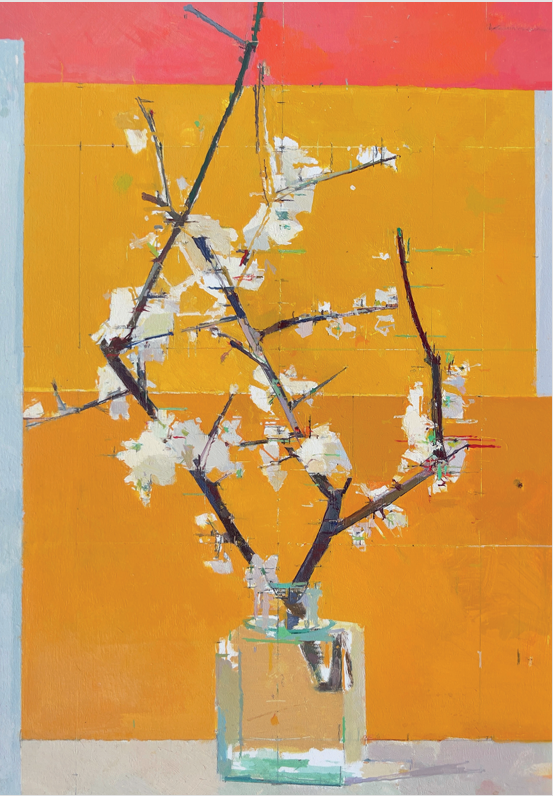
MARK DUNFORD, Sloe Blossom, oil on panel,
Works in ‘Mark Dunford: Spaces: Paintings and Drawings’ at Browse & Darby reflect a process that “is investigative” in which “what is discovered remains a mystery until the painting or drawing stops; there are no preconceived results or outcomes”. Most of the pictures in this exhibition are made directly from motifs in Cornwall and, recently, Italy. Dunford says: “I am driven by drawing how beautiful something appears, trying to look as hard as I can, balancing observation, invention, and imagination. My paintings take time, so they must deal with change, the thing changes, and my perception changes.”
Writer, artist and editor, Rupert Loydell notes that: “Although rainbows or skyscape, trees or fields, fruit or flowers are the ostensible subjects of his work, Dunford is more interested in how to use a certain colour to catch light and colour even as it evolves minute by minute”: “It would be easy to categorise Dunford as a landscape artist, a still life artist or – to a lesser extent – a portrait artist, but that would be to miss the point. Dunford quite rightly considers that both abstract and so-called realistic painting share the same language of colour, shape, form, rhythm, tone, dynamic and colour. Any sense of ‘recognition’, empathy for, or engagement with a painting’s subject matter or implied narrative is a bonus, an added extra, and is not the main focus of this art. If you cannot see beyond the flower or river or view, then you are missing out on ‘the bigger picture’. (Sorry!) These paintings are not realist, evocations, or ‘nice pictures’; they are complex, hard-fought skirmishes with the very nature of visual perception and human understanding. If we pay attention, they can challenge our assumptions and expectations as well as delight us.”
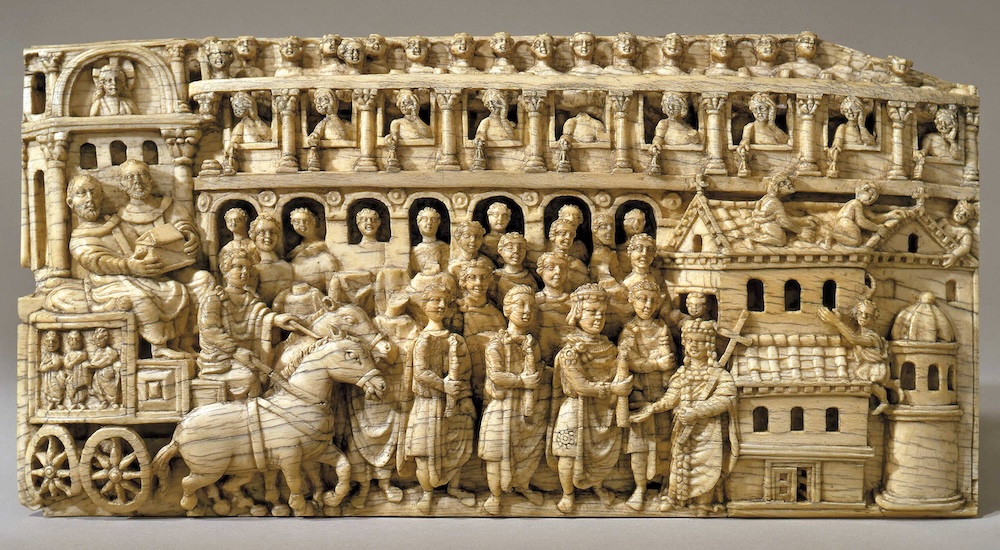
Ivory relief panel with arrival of relics, possibly 5th century, Trier Cathedral, Germany, Treasury, Markus Groß-Morgen
‘Constantinople to Istanbul: One City, Two Empires’ at V&A charts 1,600 years in a UK-first show. The exhibition takes visitors on a journey across one of the world’s great cities, dropping in on its best-known landmarks, from the Hippodrome and Hagia Sophia to Topkapı Palace and the Galata Tower. Rarely seen objects dating back to the 4th century are drawn from the V&A collection as well as national and international loans. The exhibition tells the story of an imperial city over more than a millennium through its globally important art, its everyday luxuries and the staging and re-staging of power, revealing the awe-inspiring past of the largest city in Europe, capital to two great empires in unbroken succession, the first Christian, the second Muslim.
Spanning AD 330 to 1922, the exhibition brings together remarkable works of art, design and architecture to reveal the enduring creative legacy of an imperial capital that shaped the Mediterranean world and far beyond. It offers a compelling new perspective on a city defined by artistic excellence across more than a millennium. The exhibition explores the distinct yet connected traditions of art and design of two successive empires – the Byzantine (AD 330–1453) and the Ottoman (1453–1922) – built across sixteen centuries. It follows changes in patronage and production that reflect the ups and downs of the city’s history and the lasting impact of its creative output on the Christian and Islamic worlds. The exhibition showcases over 200 objects across four main sections, including rarely seen decorative arts such as fine silks and textiles (including historical dress), ceramic tiles, mosaics and tableware, precious metalwork and jewellery, as well as sculpture and architectural furnishings, works on paper, manuscripts and paintings.
For many people, the mere mention of the name ‘Medici’ evokes wealth, intrigue, and power – and rightly so. From the end of the 14th century, the Medici rose from provincial bankers to de facto rulers of Florence and surrounding Tuscany, with popes, grand dukes and even royalty among the scions of this remarkable family. In its latest, focused display – ‘Cosimo I de’ Medici: Art and Dynasty’ – the Wallace Collection puts the spotlight on one family member who contributed significantly to their rise to fame. Through a group of five magnificent objects, including paintings, arms and armour and maiolica (earthenware), the exhibition explores how Cosimo I de’ Medici, Duke of Florence, first Grand Duke of Tuscany and one of the 16th century’s most powerful Italian princes, fashioned himself to legitimise his rule, express the magnificence of his court, and further establish the power of the Medici dynasty.
The objects in the exhibition show that Cosimo was a cunning politician adept at manipulating public opinion and a master of appearances. Building on the ideal of the ‘Medici dynasty’, he actively drew close ties to his ancestors to convey a sense of continuity, dynastic power and legitimacy. When seen together, the works in ‘Cosimo I de’ Medici: Art and Dynasty’ offer a fascinating glimpse of Renaissance splendour and the ways images and objects were harnessed to secure dynastic ambition. Curatorial Assistant and curator of the display, Dr Julia van Zandvoort, says: “These splendorous objects related to Cosimo’s court show how design and image can be choreographed to project dynastic authority. This display helps visitors ‘read’ historical objects as instruments of power, not just things of beauty.”
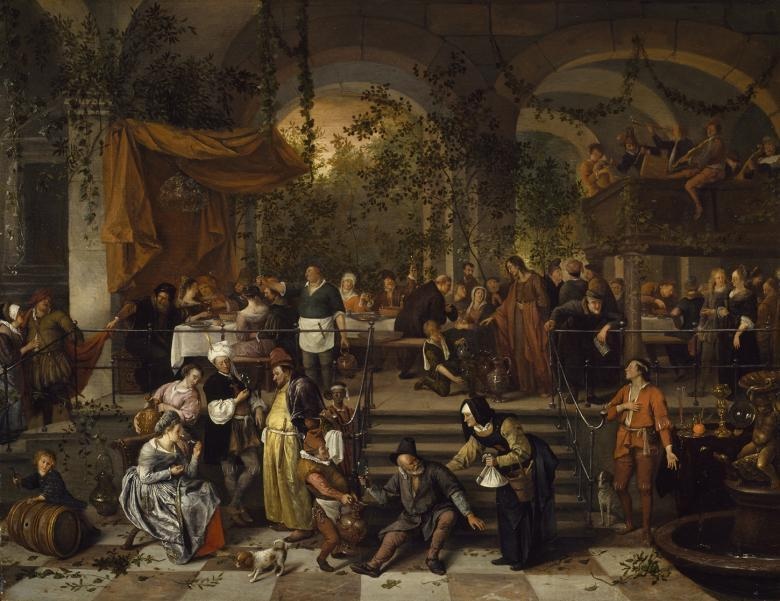
Jan Steen (1626-1679), The Marriage Feast at Cana, 1665-1670, Oil on canvas. Image credit line: Photo, National Gallery of Ireland
‘Jan Steen: Sacred and Profane’ at National Gallery of Ireland features seven works by the artist from Leiden, drawn from the Gallery’s collection as well as important loans from the Rijksmuseum, Museum Boijmans Van Beuningen, the Bredius Collection, the Bute Collection, and the National Gallery, London. Through these seven major works, visitors get a focused look at the sheer breadth, detail and brilliance of this Dutch master. Celebrated for his satirical and chaotic domestic scenes, Steen’s name is still synonymous in the Dutch language with a disorderly household. But during his prolific career he also produced history paintings, portraits and refined genre scenes. This exhibition highlights the variety of subject matters, united by his lively and characterful approach to painting.
In ‘The Marriage Feast at Cana’, Steen takes an episode from the Gospel of John in which Christ performs his first miracle, turning water into wine. In this highly detailed scene, Christ is eclipsed by the many revellers, including a drunken man in the foreground whose wife tries to convince him to leave the festivities. This is emblematic of Steen’s humour and his mastery of theme and composition in religious painting.
The eighth edition of ‘Personal Structures’, the biennial contemporary art exhibition organised by the European Cultural Centre Italy in Venice, has been running alongside the Venice Biennale at three iconic venues, Palazzo Bembo, Palazzo Mora, and the Marinaressa Gardens, offering a vibrant stage for installations, paintings, sculptures, and performances. ‘Personal Structures 2026’ is shaped around the theme Confluences, aiming to be the place where artistic practices, cultures, and disciplines intersect, contaminate one another, and generate new possibilities for coexistence. Artworks and languages intersect within a continuously transforming collective fabric, making the curatorial process visible and opening a space for reflection on the present and future possibilities in which society, nature, and technology engage in an ever-evolving dialogue.
One of those participating, cross-disciplinary artist Zi Ling, focused on etching in her early years, a technique she specialised in while at the Central Academy of Fine Arts in China, where she was fascinated by abstract figures. After her time at Royal Central School of Speech and Drama and Chelsea College of Arts, she started to experiment with video art, painting, drawing, and theatre. In her own words, a portrait is a portal to the beauty of a human being, a mystical conversation between the Self and others, while abstract painting is the love and acceptance of the Self. It is a pure expression from within. Each abstract painting she has created began from a meditation, and the rest is a leap of faith.
Salvatore Vitale, ‘untitled’ from the series ‘Death by GPS’, 2022–26. Courtesy the artist
This autumn, Focal Point Gallery is presenting a group show exploring the impact of networked media on our collective mental well-being. ‘Compulsory Continuous Connectedness: rest in a networked world’ is led by a new commission and research from artists Caroline Sinders and Romy Gad el Rab, and features work by Helen Cammock, Nina Davies, Rebecca Moccia, Salvatore Vitale and Qualeasha Wood. The works featured address the mechanisms by which digital platforms reshape our lives and well-being, while also inviting visitors to consider whether the alternative to our networked world might not be simply to switch off, but to switch on a different kind of thinking, where rest is both resistance and replenishment. Media scholar Ludmila Lupinacci coined the term ‘compulsory continuous connectedness’ to describe our contemporary state of being online – addressing the impossibility of logging off and the paradoxical feelings of overwhelm and isolation created by tools designed to connect us.
The first section of the exhibition features artists whose work explores this concept. In the exhibition’s second half, a major new installation by Caroline Sinders and Romy Gad el Rab proposes a resistant way to exist in our chronically online world, based on research into the Default Mode Network (DMN). The DMN is a series of neural connections said to be active during wakeful rest: times of daydreaming and mind wandering but not sleep. These connections are essential for creativity and reflection, but the pervasive demands of our ‘plugged in’ lives leave little space to achieve them. Helen Cammock’s video work ‘They Call It Idlewild ‘ also plays in the space. Cammock explores the politics of ‘doing nothing ‘. Thinking of idleness as a form of meditation, the artist asks what the physical and emotional costs of neoliberal hyper-productivity are, and who might be particularly affected by them.
NIKA Project Space is presenting ‘The Territory Dreams Back’, a group exhibition of newly commissioned and recent works by Rajni Perera, Sancintya Mohini Simpson, Soma Surovi Jannat, Karan Shrestha and Rain Wu, on view at the gallery’s Dubai space in Al Quoz. Bringing together five artists whose work offers different perspectives on our relationship with place, ‘The Territory Dreams Back’ moves between mythology and memory, migration and ecology, political power and the systems through which places are mapped and organised. At its heart is the idea that places are shaped by more than their physical geography. Land and water hold histories and memories; stories and beliefs influence how landscapes are understood; political decisions affect who can access and control land; and maps and infrastructure can change the environments they set out to describe. Together, the five artists reveal how these forces shape both the places around us and the ways people live within them.
A landmark exhibition of street art, featuring 28 original artworks by Banksy, alongside significant pieces by more than 20 leading figures in the global street art and urban contemporary art movements, is currently on view at The Minories. Unlike many exhibitions purporting to celebrate Banksy’s work, every single piece in ‘Out of Line’ is an original artwork or an artist-certified print. What you will see is the real thing. Peter Vergo, Emeritus Professor of Art History and Theory, University of Essex, says: “‘Out of Line’ is one of the best exhibitions I have ever seen. Even judged by the standard of shows staged by prestigious national and international museums, it far exceeded my expectations. It made me rage and cry at the cruelty and injustices that result from bigotry, jingoism and political expediency. It made me smile and laugh at the cheekiness and sense of fun that pervade so many of the works on display.”
Finally, ‘Where We Grow’ explores the powerful relationship between childhood, childcare and the natural world, from the Foundling Hospital’s 18th-century landscape to the gardens, playgrounds and green spaces that continue to shape children’s lives today. Through contemporary art, photography, archival material, and historic objects, this exhibition reveals how nature can offer freedom, imagination, and belonging, and asks what happens when access to it is unequal. Setting childhood histories and perspectives from young people today alongside artistic explorations of children’s encounters with nature, ‘Where We Grow’ invites visitors to consider what we need from the places where we play, live and learn. From 18th-century seed lists and the botanical motifs woven throughout the Museum’s extraordinary Rococo Court Room Gallery, to contemporary artworks by Joy Gregory, Andy Holden, Jade de Montserrat, Mark Neville, Quentin Blake, Larry Achiampong and David Blandy, the exhibition traces changing ideas about what children need to flourish – and who gets to decide.
‘Women, Art, God: Spirituality in the work of twelve artists’ by Ayla Lepine, SCM Press – Visit Here
‘Edmonia Lewis: Said in Stone’, 8 August 2026 – 3 January 2027, Georgia Museum of Art – Visit Here
Ethelwynne M. Quail: The Kingdom of the Gods’, 10 October 2026 – 31 January 2027, The College of Psychic Studies – Visit Here
‘Emma Kunz’, 7 November 2026– 4 April 2027, Hauser & Wirth Somerset – Visit Here
‘Elegy: Gabrielle Goliath’, 8 October 2026 – 17 January 2027, Ibraaz – Visit Here
‘Gulnur Mukazhanova: The Manifold of Memory’, 19 November 2026 – 27 May 2027, The Whitworth –
Visit Here
‘Cecilia Vicuña: Living Threads’, 7 October 2026 – 14 February 2027, Whitechapel Gallery – Visit Here
‘Humanity: Confronting Darkness and Gold’, 10 October 2026 – 10 January 2027, Pio Monte della Misericordia, Naples – Visit Here
‘Mary Magdalene: Sin. Pray. Love.’, 17 September 2026–17 January 2027, Städel Museum – Visit Here
‘The Calvary Icons Project’ by Graeme Mortimer Evelyn – Visit Here
‘Maurice Denis: Illustrating Christian mysticism’, 8 October 2026 – 10 January 2027, Musée d’Orsay – Visit Here
‘STANLEY SPENCER & GARY BUNT: What a Dream’, 6 November 2026 – 21 March 2027, Stanley Spencer Gallery – Visit Here
‘Charlie Mackesy: The Boy, the Mole, the Fox, the Horse…and You’, 3 November 2026 – 7 February 2027, Dulwich Picture Gallery – Visit Here
‘Mark Dunford: Spaces: Paintings and Drawings’, 5 November – 3 December 2026, Browse & Darby –
Visit Here
‘Constantinople to Istanbul: One City, Two Empires’, 7 November 2026 – 9 May 2027, V&A – Visit Here
‘Cosimo I de’ Medici: Art and Dynasty’, 18 November 2026 – 21 March 2027, Wallace Collection – Visit Here
‘Jan Steen: Sacred and Profane’, 21 November 2026 – 25 April 2027, National Gallery of Ireland – Visit Here
‘Personal Structures’, 9 May – 22 November 2026, European Cultural Centre Italy – Visit Here
‘Compulsory Continuous Connectedness: rest in a networked world’, 30 September 2026 – 9 January 2027, Focal Point Gallery – Visit Here
‘Rajni Perera, Sancintya Mohini Simpson, Soma Surovi Jannat, Karan Shrestha, Rain Wu: The Territory Dreams Back, Dubai, UAE, 17 November 2026 — 15 January 2027 – Visit Here
‘Out of Line: Banksy and the Art of Dissent’, 10 October 2026 – 28 February 2027, The Minories, Colchester
Visit Here –
‘Where We Grow: Nature, nurture and childhood’, 17 November 2026 – 18 April 2027, Foundling Museum – Visit Here