
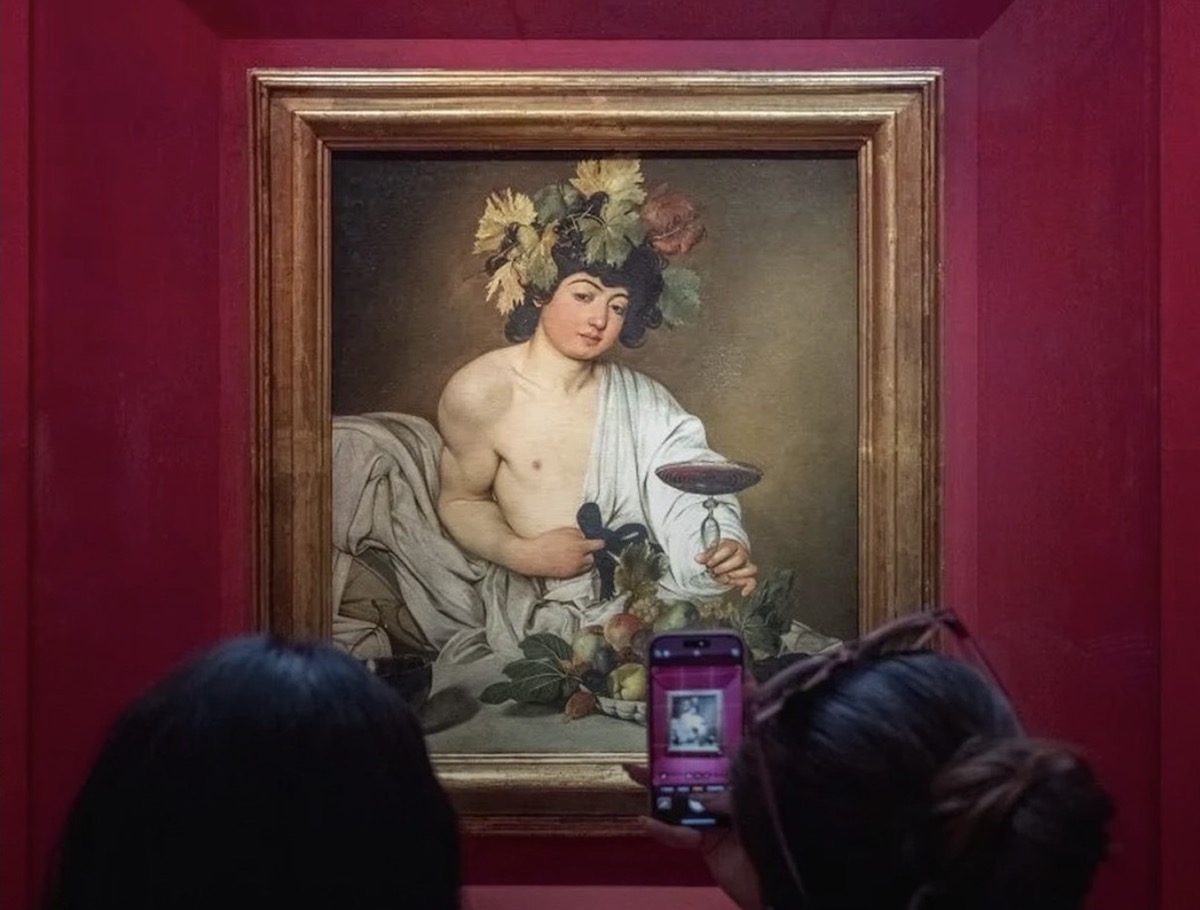
Flash flooding sent rainwater cascading over Caravaggio’s Bacchus at the Uffizi Gallery in Florence on Thursday. A sudden downpour caused a window to leak, flooding the protective glass case housing the painting, one of the museum’s most significant holdings. The painting was removed from display as a precaution shortly afterwards, though museum officials said it sustained no actual damage.
The storm hit the Tuscan city in the early afternoon, dumping nearly two inches of rain in a single hour, the type of sudden, torrential burst that tends to overwhelm even well-maintained infrastructure. Footage shared online from inside the gallery shows water streaming steadily from a window directly above the painting, running down over the glass case protecting it. Six other works hanging in the same room of seventeenth-century art were apparently untouched by the leak, which remained confined to the section directly beneath the window.
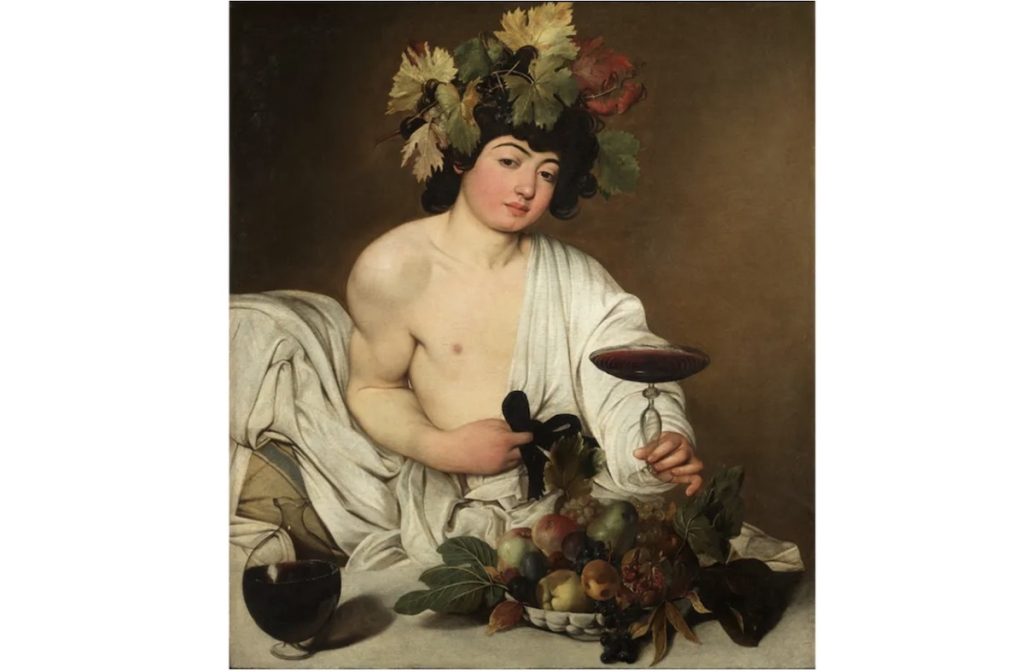
Caravaggio’s Bacchus At The Uffizi Caught in Torrential Rains
In a statement, the Uffizi described the incident as a minor leak, emphasising that the protective glass covering meant Bacchus was never directly exposed to water. The painting’s removal from the gallery, the museum said, was purely precautionary, a standard response rather than an indication that any actual harm had occurred. What the museum did not offer was much clarity on the underlying cause. Asked why the leak happened in the first place, or what steps might prevent something similar in the future, officials declined to comment further.
The disruption was not limited to the Uffizi alone. Rain damage was also reported at the nearby Pitti Palace, where water reached parts of the galleries, suggesting the problem was broader across the infrastructure connecting Florence’s cluster of museum buildings rather than being isolated to a single roof or window. Investigators are still working to establish exactly where the failure originated.
Bacchus occupies an unusual place within the Uffizi’s collection, a museum otherwise crowded with instantly recognisable masterpieces like Botticelli’s Birth of Venus and a substantial run of Titians. The painting itself sat unrecognised in storage for years before being rediscovered in 1913, and was later identified by art historians Roberto Longhi and Matteo Marangoni, who spent the following decade examining it closely before concluding it was an early Caravaggio. Their attribution held up, bolstered by stylistic parallels with other works from the same early period in the artist’s career.
Caravaggio painted Bacchus around 1596, when he was roughly twenty-five years old, on commission from Cardinal Francesco Maria del Monte, one of his earliest and most important patrons. The painting eventually made its way into the Medici collection, likely as a gift to Grand Duke Ferdinando I of Tuscany, and is documented there as early as 1618, giving it a fairly continuous provenance stretching back more than four centuries.
The painting offers a familiar subject, the Roman God of wine reclining amid grapes, goblet raised toward the viewer in a gesture that reads somewhere between invitation and challenge. What made it significant to art historians was not the subject matter itself but the treatment, an early sign of Caravaggio’s growing interest in rendering mythological and religious figures with a distinctly human, almost uncomfortably physical presence. That instinct would eventually harden into the dramatic chiaroscuro the artist became famous for, the sharp collisions of light and shadow that defined Baroque painting for the following century.
The sight of water pouring directly over a four hundred-year-old painting, however well shielded, is the kind of image that tends to linger regardless of the reassurances that follow. Florence’s museums have weathered serious flooding before, most infamously during the catastrophic 1966 flood that damaged or destroyed thousands of works across the city, and while yesterday’s storm was nowhere near that scale, it is a reminder that the infrastructure protecting some of the world’s most valuable paintings remains, in places, only as reliable as the roof above it.
Photos Courtesy Uffizi Gallery