There is no week on the international art calendar quite like New York Art Week in May. Frieze and TEFAF, two outstanding art fairs, headline an operation at a scale and intensity that no other city can match. This is a concentrated period in which the world’s most significant commercial galleries, the major auction houses, and several of the city’s finest non-profit institutions converge, producing a density of activity that rewards the committed visitor and exhausts almost everyone else.
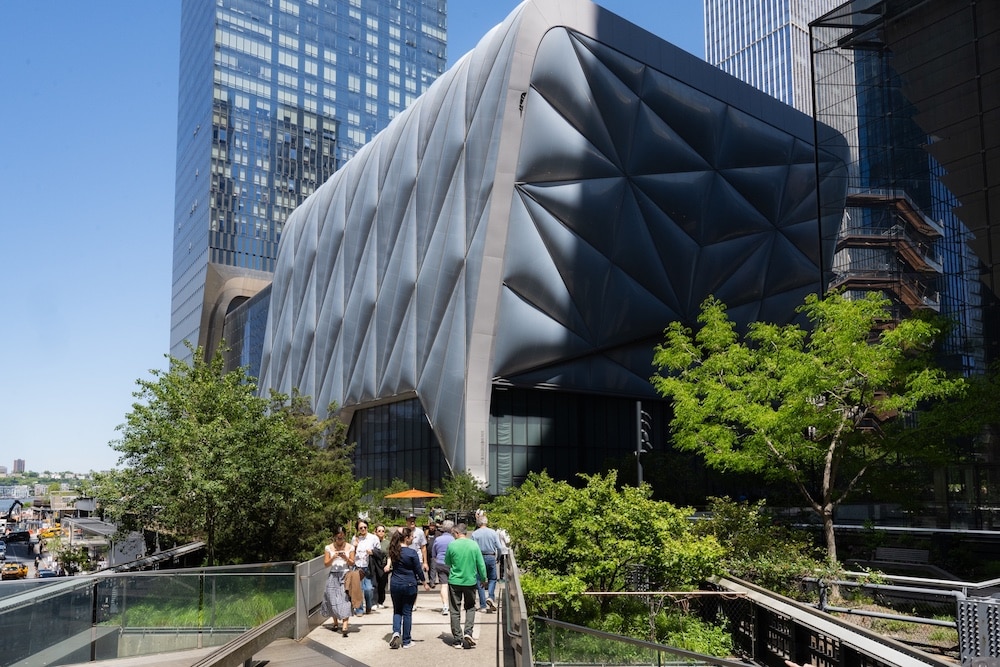
Frieze New York, now in its 15th year and firmly embedded at The Shed in Hudson Yards, closed its edition with 25,000 visitors from 75 countries and a sales report suggesting genuine market health across multiple price points. The fair’s particular achievement this year was institutional rather than purely commercial. The launch of the Sherman Family Foundation Acquisition Fund enabled four artists’ works to enter the permanent collections of the Brooklyn Museum and the Baltimore Museum of Art, with each artist receiving an unrestricted $5,000 award alongside the acquisition. It is a model that other fairs might consider, and the breadth of the resulting acquisitions, spanning galleries, geographies and practices, demonstrated what thoughtfully structured institutional money can do within a fair context.
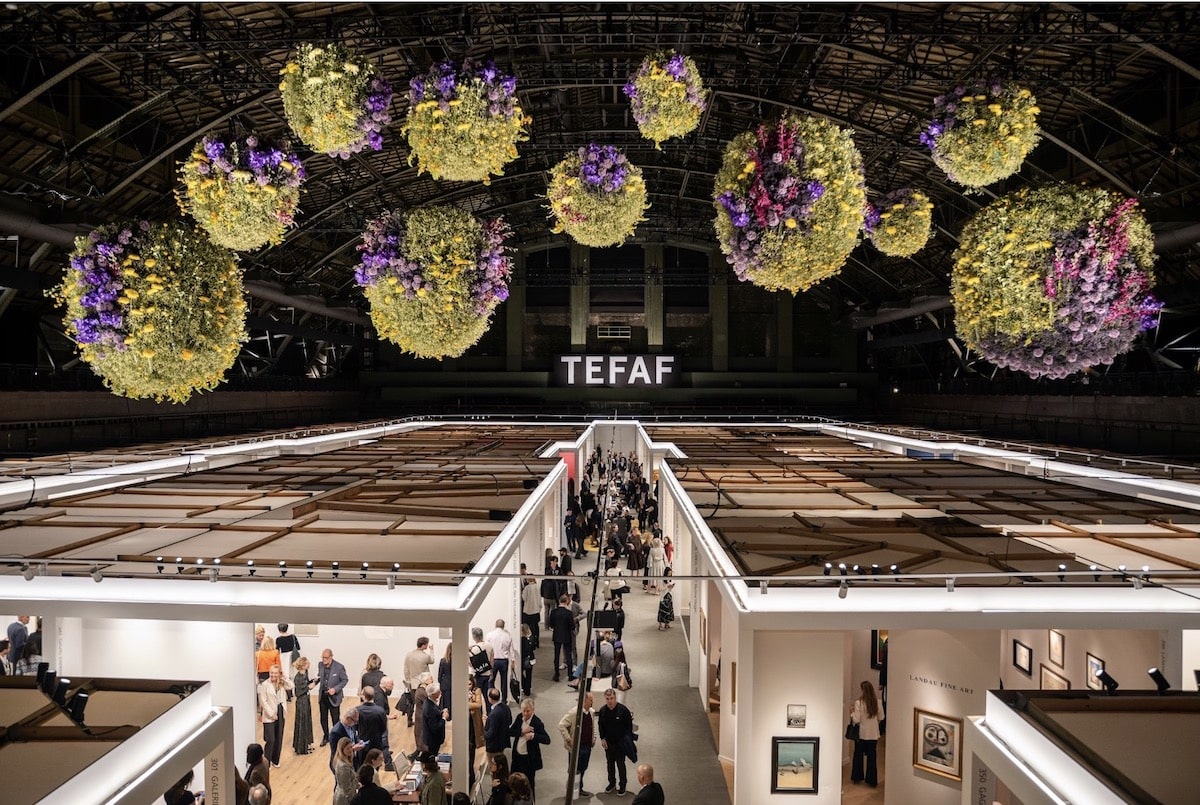
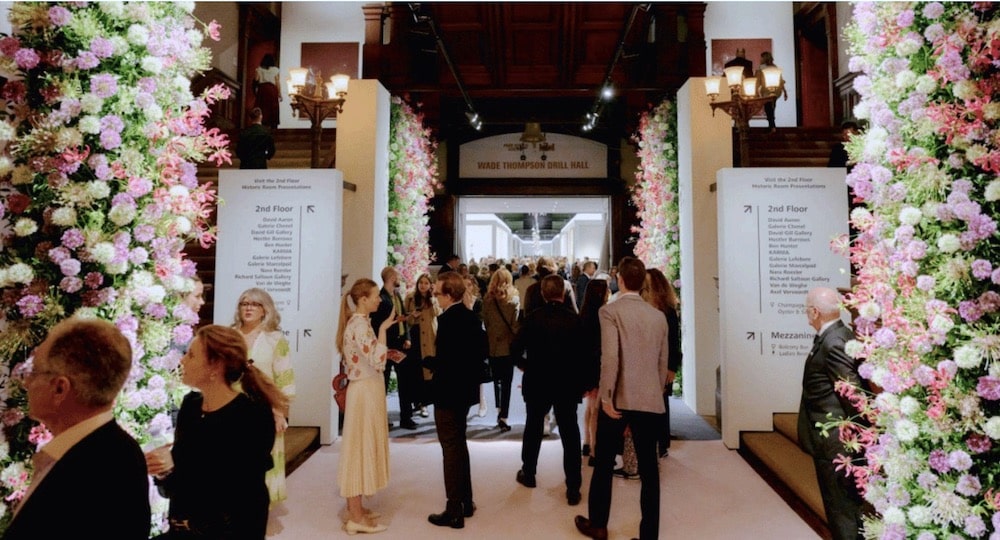
At the Park Avenue Armoury, TEFAF New York occupies a different register entirely. The fair brings together more than 90 prestigious international galleries in one of Manhattan’s most extraordinary architectural settings, activating 16 historic period rooms across the building’s first and second floors with presentations ranging from ancient art to contemporary design. The rooms themselves, designed in the nineteenth century by figures including Louis Comfort Tiffany and Stanford White, provide a context that no purpose-built fair space can replicate, and the tension between the historic interiors and the works installed within them is part of what makes TEFAF New York unlike anything else in the fair calendar. The Creative Spaces initiative extends the experience further, placing large-scale works throughout the fair in locations outside individual stands, pushing questions of scale and concept into every corridor and anteroom.
Independent, held at Pier 36 in Lower Manhattan, operates with the focused intensity that has made it a fixture for curators and serious collectors who find the larger fairs overwhelming. Its tightly edited presentations reward the kind of sustained attention that a more expansive fair makes difficult, and its market positioning, neither blue-chip nor purely emerging, gives it a critical independence that its name accurately advertises. NADA New York and 1-54 Contemporary African Art Fair, both typically held at the Starrett-Lehigh Building, complete the fair landscape with programming focused on emerging artists and contemporary African art, respectively, providing an essential counterweight to the established hierarchies that dominate the week’s larger events.
Running alongside the fairs, the auction house previews are among the most democratically valuable aspects of New York Art Week. Sotheby’s on Madison Avenue, Christie’s at Rockefeller Centre, and Phillips on Park Avenue all open their spring sale previews to the public entirely free of charge during the week, creating rare opportunities to stand in front of works estimated at tens of millions of dollars without any obligation or expectation. This year’s previews included the Lewis Collection at Sotheby’s, works from the Anna Condo Collection at Christie’s, and Roy Lichtenstein’s Anxious Girl, estimated at $40 million to $60 million. The auction house previews are, in their way, the most honest expression of what art weeks can offer: access without pressure, looking without buying, the opportunity to encounter major works in the days before they disappear into private collections for another generation.
The market conditions surrounding this year’s week were not uniformly comfortable. Luxury spending has been contracting globally, and the broader art market has shown signs of strain at the upper end of several categories. Against that backdrop, the results reported across the week carry additional significance. Frieze alone saw El Anatsui works sell for $2.2 million and $1.9 million through White Cube, a Baselitz placed at €1.4 million through Thaddaeus Ropac and a Turrell light work at close to $1 million through Almine Rech. Emerging galleries, including Public Gallery and Soft Opening, reported sold-out booths, and Night Gallery sold 7 paintings by Hayley Barker throughout the fair.
What New York Art Week ultimately offers, beyond the transactions, attendance figures, and institutional announcements, constitutes a concentrated argument for the continued relevance of the physical art fair as a format. In a world where images of almost everything are available instantly and everywhere, there remains something irreplaceable about being in a room with a work of art, about the conversation that happens between strangers in front of a painting or a sculpture, about the serendipitous discovery that no algorithm can deliver. New York in May provides those experiences in unusual abundance, and the city, with its particular combination of institutional density, collector appetite and sheer competitive energy, provides a context in which they feel genuinely consequential.
The week is over for another year. The works have been sold, the stands dismantled, and the conversations have continued over dinner in restaurants that will not appear in any art-world guide. What remains is the work itself, now dispersed into collections across the world, and the question of what it meant, which is always the question that the market answers last, if it answers it at all.
Frieze New York
Institutional purchasing can sometimes produce. The Brooklyn Museum acquired two works by Bettina, presented by Ulrik. The Baltimore Museum of Art made three acquisitions: Reika Takebayashi’s Both Banks I from Public Gallery, Seba Calfuqueo’s Destellos, PILLAN SIKILL 1 from W-Galería, and Joanne Burke’s Festival 7 from Soft Opening. The breadth of those acquisitions, spanning different galleries, geographies, and practices, suggests a fund designed to distribute its impact rather than concentrate it.
Beyond the acquisition programme, Frieze extended its institutional relationships through collaborations with the Whitney Museum of American Art, the Dia Art Foundation and Counterpublic. These produced Jonathan González’s performance and photographic installation, a collaboration between David Lamelas and Dia, and a new commission by Kite. The depth of curatorial engagement throughout the week, according to Christine Messineo, was a defining feature of the edition. Messineo, Director of Americas at Frieze, described the 2026 fair as marking an important new chapter in the relationship between the event and public collections, noting strong demand from leading private collectors, major museums and foundations across both emerging and established practices.
HIGHLIGHT SALES
Sales at Frieze New York 2026 ranged from seven-figure placements to $4,000 works by emerging artists, with significant institutional acquisitions and broad sales activity throughout the week.
On the opening day of the fair White Cube sold two major works by El Anatsui — LuwVor I (2025) for $2.2 million and MivEvi III (2025) for $1.9 million — alongside Antony Gormley’s SET VII (2024) for £450,000, Howardena Pindell’s Deep Space #4 (2025) for $275,000 and Marina Rheingantz’s Salvador (2026) for $250,000, with additional works by Marguerite Humeau, Sara Flores, Emmi Whitehorse, Danica Lundy, Louise Giovanelli and Julie Curtiss placed across the week.
Thaddaeus Ropac also saw early success selling Georg Baselitz’s Stunde der Nachtigall (2012) for €1.4 million and Ohne Titel (2025) for €85,000, Robert Rauschenberg’s Bob Song (Salvage) (1984) for $825,000 and Alex Katz’s Black Roses 3 (2025) for $600,000, with additional works by Martha Jungwirth and Joan Snyder. Almine Rech placed a major light work by James Turrell in the range of $900,000 to $1 million, while Hales sold the centrepiece of its solo presentation by Virginia Jaramillo for $540,000. Gagosian reported sales across multiple artists from its roster, including Derrick Adams, Helen Frankenthaler, Gerhard Richter, Adriana Varejão, Stanley Whitney, and Francesca Woodman. Pace Gallery sold numerous works from their dual presentation of Maya Lin and Leo Villareal in the range of $100,000 to $200,000.
Kukje Gallery saw widespread activity, selling two works by Ha Chong-Hyun in the ranges of $390,000 to $468,000 and $10,000 to $12,000, respectively, alongside works by Kibong Rhee, Kyungah Ham, Ugo Rondinone, and Julian Opie priced between £45,000 and $108,000, plus sculptures by Gimhongsok and Jean-Michel Othoniel. Tina Kim Gallery sold two paintings by Ha Chong-Hyung, the first for $390,000 and a second for $180,000, a Kim Tschang-Yeul painting in the range of $120,000 to $140,000, a painting by Kibong Rhee in the range of $120,000 to $130,000, two textile works by Lee ShinJa, one ranging between $90,000 to $100,000, and a second betweem $40,000 to $50,000 and additional works by Maia Ruth Lee, Livien Yin, Lee ShinJa, Suki Seokyeong Kang, Davide Balliano, Pio Abad and Jane Yang D’Haene at prices ranging from $20,000 to $80,000. Johyun Gallery sold out its focused presentation of works by Lee Bae, ranging from $100,000 to $250,000, with additional sales throughout the week, including a work by Kishio Suga at $40,000 to $50,000, five paintings by Kim Taek Sang priced from $10,000 to $60,000, and a work on paper by Hwang Jihae in the range of $30,000 to $50,000.
303 Gallery sold Terra by Doug Aitken for $225,000, two works by Rob Pruitt one for $150,000 and another for $80,000, six works by Sam Falls including the ceramic diptych for $150,000, a painting at $110,000, a ceramic table at $90,000, a ceramic vase for $65,000, a painting by Sue Williams for $115,000, three sculptures by Jeppe Hein, one for €90,000, and two for $85,000, and additional works by Rob Pruitt, Stephen Shore, Alicja Kwade and Doug Aitken at prices ranging from $15,000 to $150,000. James Cohan sold out their booth, placing all eight paintings from its solo presentation of Kelly Sinnapah Mary, with The Sacred Garden (2026) leading at $130,000 and additional works priced from $20,000 to $95,000. Night Gallery sold seven paintings by Hayley Barker priced between $30,000 and $175,000. Southern Guild presented numerous works by Lebohang Kganye, Amine El Gotaibi, Mmangaliso Nzuza, Patrick Bongoy, Usha Seejarim and Chidy Wayne, priced from $20,000 to $38,000.
The joint presentation of Almeida & Dale and François Ghebaly nearly sold out their booth, including a work by Jaider Esbell for $180,000, a painting by Amadeo Luciano Lorenzato at $115,000, a Tony Matelli for $90,000, a work by Melike Kara for $43,000, a painting by Patricia Iglesias Peco for $35,000, and several works by Maia Ruth Lee and Maxwell Alexandre for $25,000 each. Nara Roesler sold a work titled Seeds VII (2025-2026) by Marcelo Silveira for $45,000, and an additional five works by Jonathas de Andrade, ranging from $12,000 to $22,000.
Focus section, supported by Stone Island and dedicated to galleries founded in the last 12 years, saw strong sales and institutional placements throughout the week. Prize-winning W-Galería’s solo presentation of Seba Calfuqueo included the acquisition of Destellos, PILLAN SIKILL 1 by the Baltimore Museum of Art through the inaugural Sherman Family Foundation Acquisitions Fund. Public Gallery reported a sold-out presentation of works by Reika Takebayashi, with Both Banks, which I also acquired for the Baltimore Museum of Art through the Fund. Soft Opening also reported a sold-out booth of new works by Joanne Burke.
Additional notable sales across the fair included Ortuzar Projects and Marc Selwyn Fine Art’s joint presentation of Akinsanya Kambon, which nearly sold out with nine works placed in the $25,000 to $55,000 range; Daniel Faria Gallery placed numerous works from their booth, including two works by Stephanie Comilang in the range of $20,000 to $30,000 and a work by Shannon Bool in the range of $20,000 to $30,000; Mitre Galeria’s sale of nine works by Wallace Pato, Pedro Neves and Manauara Clandestina priced between $5,000 and $36,000; Union Pacific’s sale of 29 works by artists including Niklas Asker, Sebastián Espejo, Aya Higuchi, Koak, Jin Han Lee, and Soumya Netrabile priced from approximately $4,000 to $33,000; a photograph by Gordon Parks at Jenkins Johnson for $80,000; P420 sold a work by Francis Offman for $20,000, The Hand of M (2026) by Adelaide Cioni for $20,000 and two additional works; Yeo Workshop sold a painting by Maryanto for $25,000 and sold a painting by Citra Sasmita for around $20,000; and G Gallery placed two works by Rachel Youn at around $10,000 each, a work by Sueyon Hwang for around $20,000 and another work by Yehwan Song for around $20,000.
Latin American representation was a conspicuous strength of this year’s edition, with fourteen galleries from the region participating. Fortes D’Aloia & Gabriel, A Gentil Carioca, Almeida & Dale, Kurimanzutto, Mendes Wood DM, Instituto de Visión and W-Galería were among those present, and the results across several of these booths contributed to a broader narrative about the sustained growth of Latin American art in the international market. Frieze has been developing this dimension of its programming with increasing deliberateness, and the 2026 New York edition represented a meaningful step in that commitment.
The broader market context for the fair is worth noting. The art market has been navigating a difficult period, with luxury spending contracting globally and auction results at the upper end of the market showing signs of strain in several categories. Against that backdrop, a fair that can report sold-out booths at the emerging level, seven-figure transactions in multiple categories, and the launch of a new institutional acquisition programme represents something more than a routine success. It suggests that Frieze New York’s particular combination of curatorial ambition, institutional engagement and commercial infrastructure continues to create conditions that the market finds productive even in a challenging environment.
Meredith Hodges, CEO of The Shed, described the energy of the week as extraordinary, a word that fairs tend to deploy liberally but that the numbers here partially substantiate. Whether the 2026 edition marks a genuine inflexion point for the New York market or simply a strong performance in difficult circumstances will become clearer as the year progresses. What is not in doubt is that Frieze New York, at fifteen, remains the event around which the city’s May art week organises itself, and that the institutional relationships it is building give it a foundation that commercial performance alone could not provide.
New York Art Week 2026 TEFAF
TEFAF
The aisles were crowded. By the time VIP guests began arriving at the Park Avenue Armoury on 14 May, queues had already formed outside, signalling a buoyant opening for the twelfth edition of TEFAF New York, which this year marks the fair’s tenth anniversary in the city. Dealers spoke of serious buying from the opening hours, with several galleries reporting sold-out presentations, institutional acquisitions and multiple seven-figure transactions before the public opening on Friday.
Bringing together nearly 90 international exhibitors, TEFAF once again demonstrated its unusual breadth. Museum-quality antiquities sat alongside post-war design, Old Master paintings, contemporary art and high jewellery, creating the kind of cross-category collecting environment that increasingly distinguishes the fair from its rivals. While the market remains selective, early sales suggested that demand for exceptional material at the highest level remains resilient.
The fair’s invitation-only preview attracted a substantial concentration of collectors, advisors and museum figures. More than 100 institutional representatives attended, including directors and senior curators from major American and European museums. Among them were Max Hollein of the Metropolitan Museum of Art, Glenn Lowry of the Museum of Modern Art and Axel Rüger of The Frick Collection, underlining the fair’s continued importance as both a commercial and scholarly meeting point.
The opening evening also hosted the annual benefit organised by The Society of Memorial Sloan Kettering, which raised $477,000 in support of patient care, research and education programmes at the cancer centre. The guest list reflected the increasingly blurred line between the art world, fashion and entertainment industries. Attendees included Drew Barrymore, Anderson Cooper, Ryan Murphy, Aerin Lauder, and Jack Antonoff, among a broader crowd of patrons, collectors, and benefactors.
Dealers described the atmosphere as confident rather than euphoric. That distinction matters. After two years of cautious buying and softer auction results, TEFAF New York appears to have benefited from a market increasingly focused on rarity, provenance, and curatorial quality rather than speculation. Several exhibitors noted that collectors arrived prepared, often targeting works before the preview doors officially opened.
The fair continues through 19 May, but its opening days have already reinforced New York’s position as the centre of the upper end of the global art market this season.
NEW EXHIBITORS
This year, TEFAF New York welcomed nine new exhibitors from around the world, including Larkin Erdmann (Switzerland), FORMS (Hong Kong), Sarah Myerscough Gallery (United Kingdom), Piano Nobile (United Kingdom), Alison Jacques (United Kingdom), Galerie Lelong (France), David Lévy & Associés (Belgium), Macklowe Gallery (United States), and ML Fine Art (Italy). The energy of the fair was felt by first-time participants, with gallery leadership expressing their sentiments on the opening few days with energy and optimism:
“It’s incredibly exciting for us to be in one of the historic rooms at the Park Avenue Armoury, especially in our first year exhibiting at TEFAF New York,” said Benjamin Macklowe, President at Macklowe Gallery. “The room itself was constructed circa the 1880s, which is exactly the period of lighting that we specialise in. So for us, bringing Tiffany back into the Armoury— particularly when so many of these historic rooms were designed by Tiffany himself—is really a point of pride.” TEFAF New York is the only fair that is permitted to exhibit in the historic rooms on the Park Avenue Armoury’s second floor.
Added Tzvika Janover, Co-founder of Hong Kong’s high jewellery house FORMS, “We are honoured by the response to FORMS at TEFAF New York. For our first presentation at the New York fair, it was especially rewarding to connect with new collectors discovering the house – notably, we sold as many pieces to new collectors as we did to long-standing clients who continue to champion our work on opening day, making it an incredibly meaningful debut at the Park Avenue Armoury.’
Sales kicked off swiftly, with ML Fine Art (Stand 201) placing Andy Warhol’s Mao in the first hour of the fair. Mennour (Stand 305) sold Lucio Fontana’s Concetto Spaziale for $2.3 million.
Several booths sold out during the Collectors Preview, including Lévy Gorvy Dayan (Stand 337), Gagosian’s (Stand 350) solo presentation of Kathleen Ryan’s Bad Fruit sculptures, and Thaddaeus Ropac (Stand 345). All three of Eva Helene Pade’s paintings at Thaddaeus Ropac were placed with U.S. institutions. The artist’s larger works are priced between $160,000 and $ 200,000.
Gladstone (Stand 344) sold 20 works by Czech painter Anna Zemánková for prices ranging from $75,000 to $125,000. Tina Kim Gallery (Stand 358) sold two paintings by Ha Chong Hyun, one for $390,000 and a second for $250,000; two paintings by Kibong Rhee, each for $100,000; and a trapunto work by Pacita Abad for $200,000. W&K-Wienerroither & Kohlbacher (Stand 308) sold works by Franz West, Gustav Klimt, and Egon Schiele for between five and seven figures. Thomas Gibson Fine Art (Stand 327) sold several pieces to private collectors, including Henry Moore’s Reclining Figure bronze sculpture for $395,000 and John Chamberlain’s Honeybee Banquet sculpture for $250,000. Thomas Gibson Fine Art also had great success with prints, selling three linocuts by Claude Flight, priced $12,000–35,000, and eight linocuts by Cyril Power, priced $6,000–30,000. Richard Saltoun (Stand 374) focused its booth on female surrealist artists, selling a pyrographed wood panel by Canadian artist Mimi Benoit Parent for $200,000 and a painting by Puerto Rican artist Cossette Zeno for $18,000. The Gallery also sold a painting by French artist Valentine Hugo for $80,000.
A signature component of TEFAF New York is the intersection of modern & contemporary art with design, jewellery, and antiquities. Design exhibitors received strong interest, including Friedman Benda (Stand 325), which sold Joris Laarman’s wooden Ply Loop Console, Nendo’s hyouri R pendant light, and Frida Escobedo’s Creek Bench (2022). Hostler Burrows (Stand 203) sold Berndt Friberg’s Studio Vases for Gustavsberg (1959-1966), and Modernity (Stand 364) sold Finn Juhl’s Dining Table Judas and Ole Wanscher’s Set of Six T-Chairs both for asking prices of $115,000, and Carl Axel Acking’s Ceiling Lamp Model 981 for an asking price of $42,500. Galerie Chastel-Maréchal (Stand 318) sold the Torsade Coffee Table by Diego Giacometti to an American collector. Galerie Patrick Seguin (Stand 331) sold Jean Prouvé’s Centrale Table. Galerie Jacques Lacoste (Stand 301) sold a few pieces, including Eugène Printz and Jean Dunand’s Dining table in lacquered beech, and Louis Süe and André Mare’s Patou low table in walnut.
In antiquities, David Aaron (Stand 212) sold a remarkably well-preserved 3,300-year-old ancient Egyptian stele with a list price of $600,000, and Galerie Chenel (Stand 210) sold a Roman marble Torso of a Man, dated to the 1st–2nd century AD. For jewellery, the first-time exhibitor at TEFAF New York, FORMS (Stand 102), had a very successful debut, including the sale of a standout pair of Diamond and Shakudo Sphere Earrings featuring 20.24 carat diamonds.
PROGRAMMING
Beyond exhibitor stands, TEFAF New York offers an engaging program roster, including TEFAF Talks and TEFAF Meet the Experts conversations, included in fair admission. For a full schedule, please visit tefaf.com.