We read the world interventionally, as visitors to this place, “and our faces, my heart, brief as photos” – as the actual title of one of Berger’s books reads. The BBC series Ways of Seeing (1972) brought Berger a kind of Easy Rider fame in the contemporary art world. The premise for the TV series was, “Seeing comes before words. The child looks and recognises before it can speak.” And what a broad historical canvas John had to erase, rephrase, and then repaint. While Marshall McLuhan’s “The medium is the message” redefined a global village and media-based world, John Berger was there at the right time, as all things cultural accelerated (after all the myths art history had built in defence of empires and capital), reinventing what art out of politics and history could be. The “famous” artists like Goya or Rembrandt may have seen things differently, as, in the Gorbachev era, for Berger, Goya’s Disasters of War became a point of interest, inspiring the play Goya’s Last Portrait. As biographer Tom Overton notes, the play conveys a sense of “coming to the end of a particular vision of revolutionary change”. Goya’s Last Portrait was not a success… All the convoluted ideologies that writers like Orwell, Spender, Toynbee, and Auden had to face in post-civil-war Spain continued to obscure the less party-driven, or politically ideological, visionary truths that persisted.
Writing for New Society in the mid-1960s, Berger opened up the debates on art, re-envisioning art’s political, social and biological links for a new era. As there was not much editorial control over his input, these were excellent conditions for a writer of his capacity, for Berger favoured the known and the less well-known equally. The Success and Failure of Picasso caught the artist at a transition point, and enabled new ways for the public to engage with artists who had made it. Russian Art and Revolution: Ernst Neizvestny, Endurance, and the Role of Art (the only book John Berger was ever commissioned to write)took an altogether different tack. Here was a less well-known artist who needed exposure in the West. Always surprising, that’s why we followed John Berger!
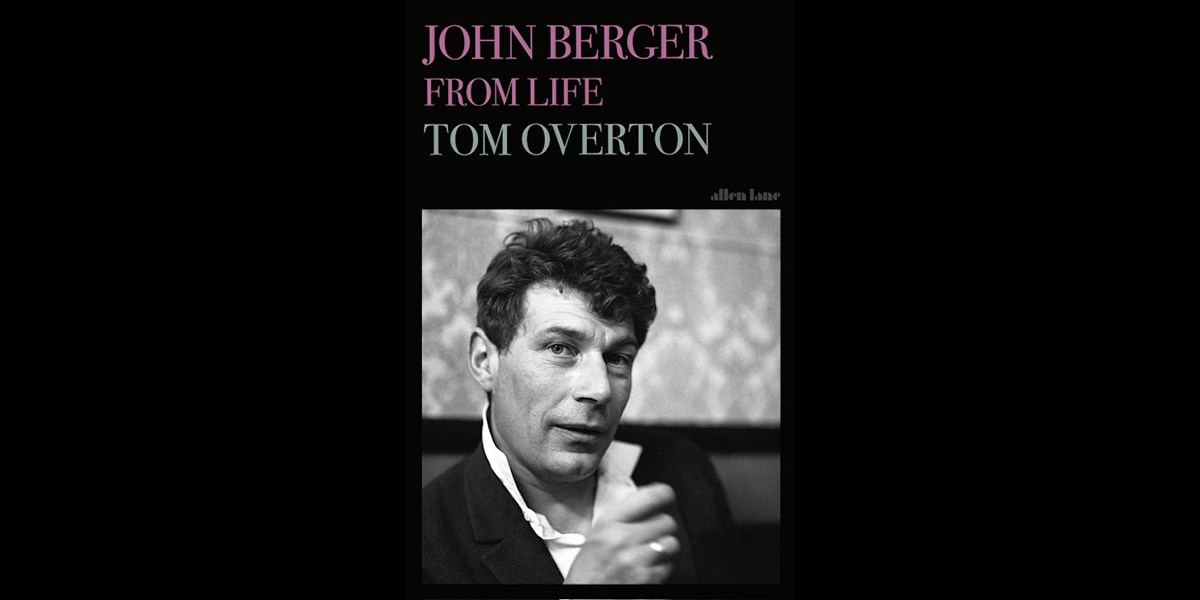
Power and capital were never Berger’s main focus. He was international and impetuous. Reading Tom Overton’s well-researched biography, what becomes clear is that John Berger’s books themselves are the real story, whether the novels like G (1972) and To the Wedding (1995) or the plays and writings on art and artists. All this may be lost on the post-Thatcher, BritArt generation for whom Ways of Seeing was the establishment art-history reading. Plus ça change, plus c’est la même chose! Overton brings into focus issues such as the nuclear threat, the AIDS crisis and the New World Order, very real concerns for John Berger. In our era, where AI challenges or even Facebook hits measure success, art is morphing into something completely different. The minutiae of events and people in John Berger: From Life make this book a must-read. And thanks to Tom Overton for bringing the British Library’s John Berger archives to Life in a way no one else ever could. The real story, though, is the sheer beauty of Berger’s syncopated style and writing. – John K. Grande
John Berger From Life by Tom Overton
Allen Lane / Penguin 2026, 400 pages, £25.00 (Hardback)
ISBN 9780241262528