
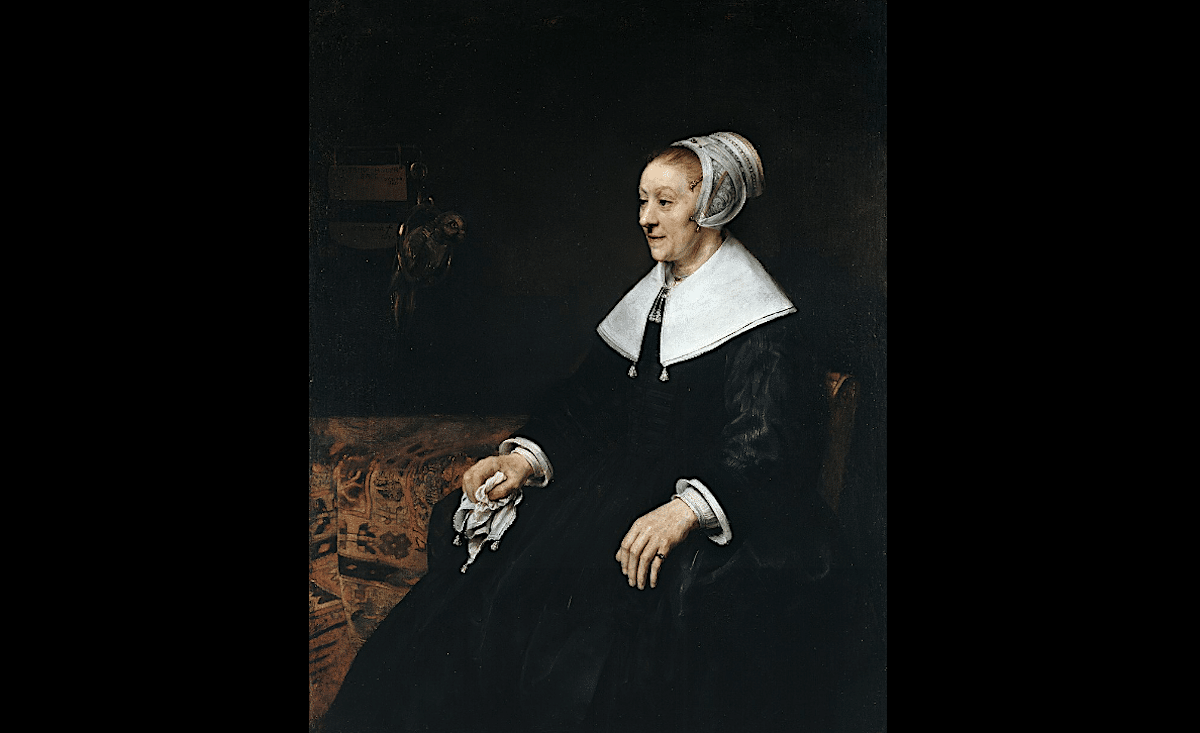
One of the finest late portraits by Rembrandt van Rijn is at risk of being exported from the United Kingdom after efforts to secure it for the nation broke down. Portrait of Catrina Hooghsaet, painted in 1657 and valued at £35 million, has been in the UK for more than 250 years and was most recently on public display at the Ashmolean Museum in Oxford, having previously been on long-term loan to Penrhyn Castle in North Wales.
Former Culture Minister Ed Vaizey placed a temporary export bar on the work following a recommendation from the Reviewing Committee on the Export of Works of Art and Objects of Cultural Interest, administered by Arts Council England. The committee cited the painting’s outstanding aesthetic importance, its significance for the study of Rembrandt’s late career, and its long association with British and Welsh cultural life. Wales currently holds no publicly owned Rembrandt painting, a fact that made the case for keeping the work in the country particularly compelling.
The Art Fund had been working to raise funds to acquire the painting for Amgueddfa Cymru, National Museum Wales, thereby giving it a permanent public home. That effort came to nothing after the vendors, Penrhyn Settled Estates, withdrew their export licence application on 23 October, effectively removing the painting from the export review process and freeing them to pursue a private sale. The Art Fund described the outcome as a significant cultural loss. “It is deeply regrettable that this once in a lifetime opportunity to secure this magnificent painting for the nation, forever, and at a greatly reduced price, has not been possible,” the organisation said, adding that the episode pointed to an urgent need for improvements to the systems designed to protect nationally important works. This latest export bar gives UK museums and galleries until 26 December to raise the funds to keep the painting in the country
The painting is now expected to sell to a private buyer through Christie’s. A spokesperson for the auction house said the prospective buyer was considering lending the work to a UK institution, which would mean it would remain visible to the public for the time being, though no formal commitment to that arrangement has been made. Penrhyn Settled Estates cannot apply for another export licence for ten years should the sale fall through, but any buyer of the painting faces no such restriction, meaning the work could still leave the country.
The portrait depicts Catrina Hooghsaet at age 50. She was a wealthy member of the Mennonite community in Amsterdam, a woman of considerable independence who had separated from her husband years before the portrait was made. Rembrandt conveys that independence with characteristic directness. She wears a rich silk dress with a lace collar, holds a tasselled handkerchief and is accompanied not by a husband but by a parrot, which she later mentioned in her will. The elaborate headdress she wears, known as hooftijsertgen, was typical of the Mennonite community’s restrained aesthetic, and Rembrandt observes it with a precision that connects this late work to the meticulous detail of his earlier portraits rather than the looser, rougher manner he adopted in paintings such as the Jacob Trip and Margareta de Geer at the National Gallery.
The picture was made at a period when Rembrandt was painting relatively few commissioned portraits. He had never considered portraiture his primary calling, defining himself instead as a history painter in the grand tradition. But when he did turn to individual sitters, particularly friends and people who interested him, the results were among the most psychologically penetrating portraits ever made. Catrina Hooghsaet is widely regarded as one of the finest examples.
RCEWA member Aidan Weston-Lewis described the painting as an exceptional portrait of a fascinating sitter about whom much remains to be discovered, and said its departure abroad would be particularly unfortunate given its long presence in the UK. Professor Christopher Brown, former Director of the Ashmolean, called it one of the greatest Old Master paintings in the country and one of the finest portraits Rembrandt ever produced.
The painting has been part of British cultural life since the eighteenth century, displayed at Penrhyn Castle, lent to the National Museum Wales and most recently shown at the Ashmolean, where it attracted considerable public attention. Whether it will remain accessible to British audiences now depends on decisions being made in the private market rather than through any public process.