
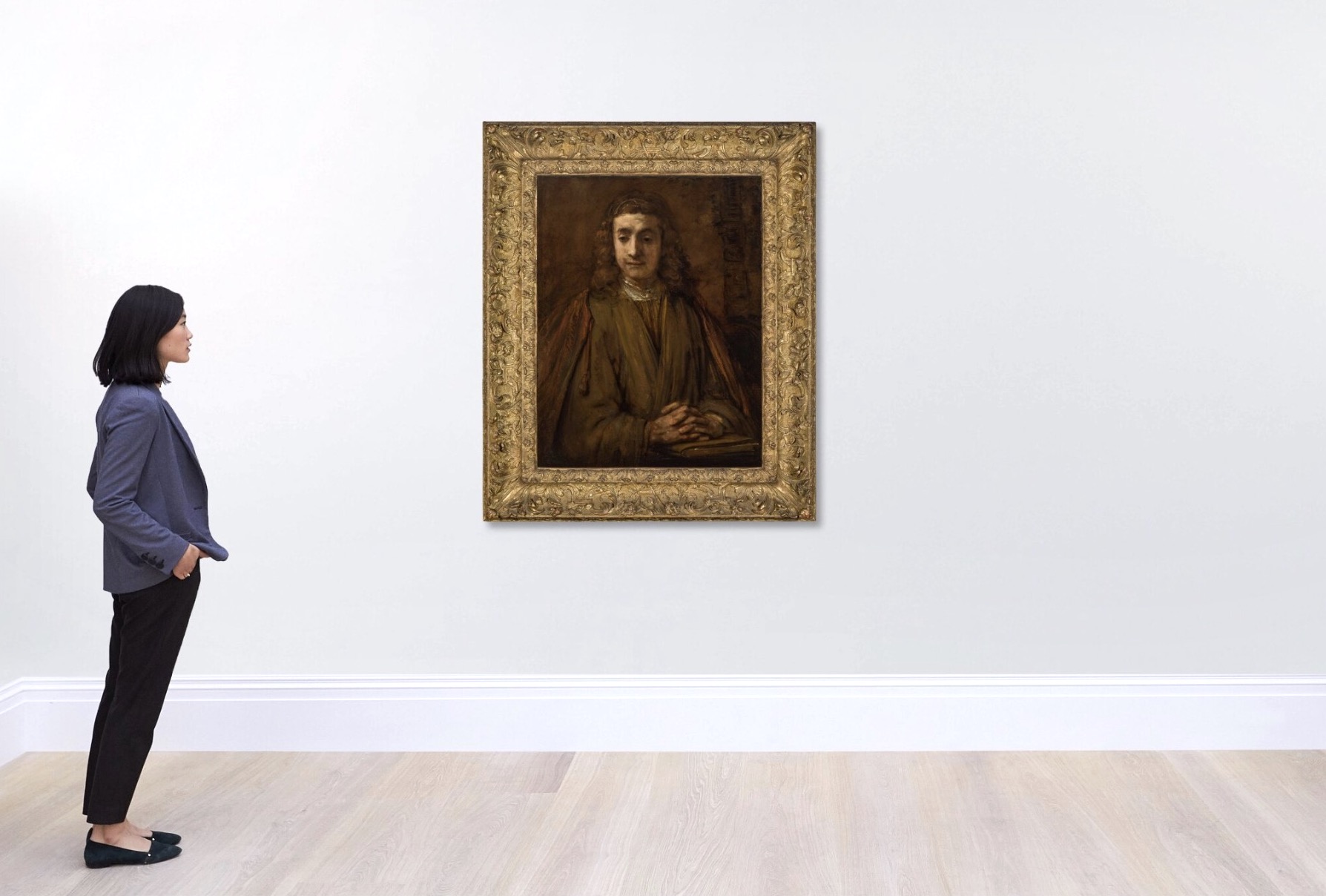
Thomas Kaplan, the New York collector behind the Leiden Collection, has been confirmed as the buyer of St John on Patmos. This Rembrandt painting sold for £6.75 million (roughly $9 million) at Sotheby’s last December. The acquisition brings Kaplan’s Rembrandt holdings to eighteen paintings, amassed over roughly two decades, a figure that comfortably makes his the most significant private collection of the artist’s work anywhere in the world.
The purchase raises a question about another Rembrandt sold by the collector just two months after this recent acquisition: a drawing of a lion that fetched nearly $18 million at Sotheby’s in February. Why would the collector most associated with Rembrandt worldwide choose to part with one of the artist’s finest works on paper almost simultaneously with the purchase of a major new painting? Kaplan acknowledges the apparent contradiction openly, explaining that the proceeds from Young Lion Resting, painted around 1638 to 1642, were intended to fund big-cat conservation, ultimately creating an endowment for the charity Panthera, a cause he and his wife, Daphne Recanati Kaplan, care deeply about. The Rembrandt sale and the Rembrandt purchase.
As for St John on Patmos itself, painted around 1661 during the final years of Rembrandt’s career, Kaplan describes the acquisition as an effort to preserve and effectively return to public view a major late work that has been essentially hidden for more than a century, one he says meaningfully enriches the core narrative running through his broader collection.
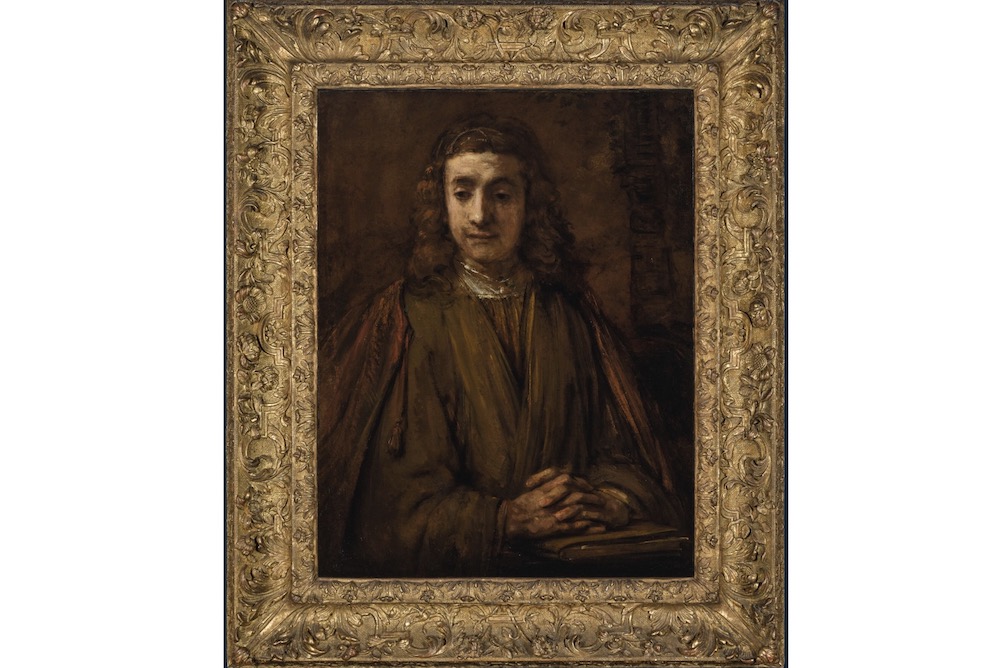
Rembrandt’s St John on Patmos Photo Courtesy Sotheby’s
The painting’s history alone justifies that description. Last exhibited publicly in 1923, it was known for decades afterwards only through a poor-quality black-and-white photograph, the kind of image that tends to obscure as much as it reveals. Its early ownership history reads almost like a cautionary tale about attribution. In 1904, an American dealer sold it for a mere $160, having attributed it to Carel Fabritius rather than Rembrandt. Nine years later, in 1913, the German art historian and Metropolitan Museum curator Wilhelm Valentiner recognised the work as an authentic Rembrandt and purchased it for his own collection for $525, believing the sitter to be the artist’s son, Titus, based on facial similarities with two other known portraits.
By 1923, or shortly afterwards, the painting had passed into the hands of Fritz Thyssen, heir to the German steel dynasty, whose relationship with the Nazi regime shifted dramatically over the following two decades. An early and influential supporter of Hitler in the late 1920s, Thyssen had turned into an open critic by the late 1930s, a reversal that cost him dearly. Arrested in 1941 while attempting to flee Vichy France, he was later sent to Sachsenhausen and then Dachau. The painting itself was seized by the Nazis in 1940. However, it was restituted to Thyssen in 1950 and shipped to Buenos Aires shortly before his death the following January, after he had emigrated to Argentina following postwar fines imposed by the Allies for his earlier Nazi sympathies. The work eventually passed to his grandson, Federico Zichy Thyssen, a noted breeder of Arabian horses, before entering a family charitable foundation upon his death in 2014.
Only shortly before last December’s Sotheby’s sale did researchers realise the painting was never actually a portrait of Titus at all, but a depiction of St John on Patmos. Cleaning and conservation work uncovered a palm tree, symbolising the Greek island, along with an eagle representing the evangelist, both details nearly invisible in earlier reproductions of the work. The finished composition shows the young evangelist resting his hands on a leather-bound manuscript, the letters he supposedly drew on while composing the apocalyptic vision recorded in the biblical Book of Revelation.
Arthur Wheelock, the seventeenth-century Dutch painting specialist who advises Kaplan, notes that although the now-defunct Rembrandt Research Project never examined the picture, having no access to it while it remained in private hands, Sotheby’s attribution has since been fully accepted across the field. Wheelock believes Rembrandt likely used Titus as a physical model for the figure, even though the painting itself is not intended as a portrait. “Rembrandt’s decision to ask Titus to model for St John suggests that he felt an underlying connection between his own affection for his son and the evangelist’s place in the Christian story,” Wheelock said.
Given how many Rembrandts Kaplan has now acquired, the question of his influence on the broader market is difficult to avoid. Any seller with a reasonable Rembrandt on hand knows Kaplan is a likely bidder, whether he ends up buying the work outright or simply pushing the price upward through unsuccessful bidding. Asked directly whether his presence affects prices, Kaplan allowed that it might, in specific moments. However, he attributes most of the market’s behaviour to sheer scarcity rather than his own participation. “When a painting as intensely personal as St John on Patmos emerges after 100 years in private hands,” he said, “the enthusiasm is already built into the sheer rarity of the moment.”