The Middlesbrough Institute of Modern Art has opened this year’s Turner Prize exhibition, bringing together work by the four shortlisted artists, Simeon Barclay, Kira Freije, Marguerite Humeau and Tanoa Sasraku, ahead of the winner’s announcement on 10 December. The show runs at MIMA, part of Teesside University, from 26 September through to the end of March next year.
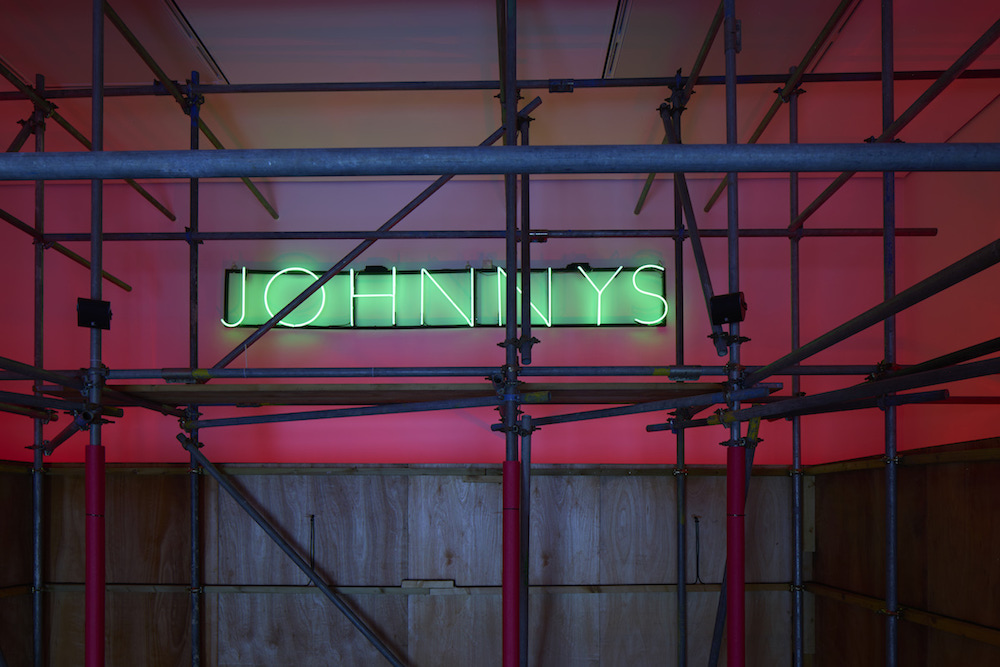
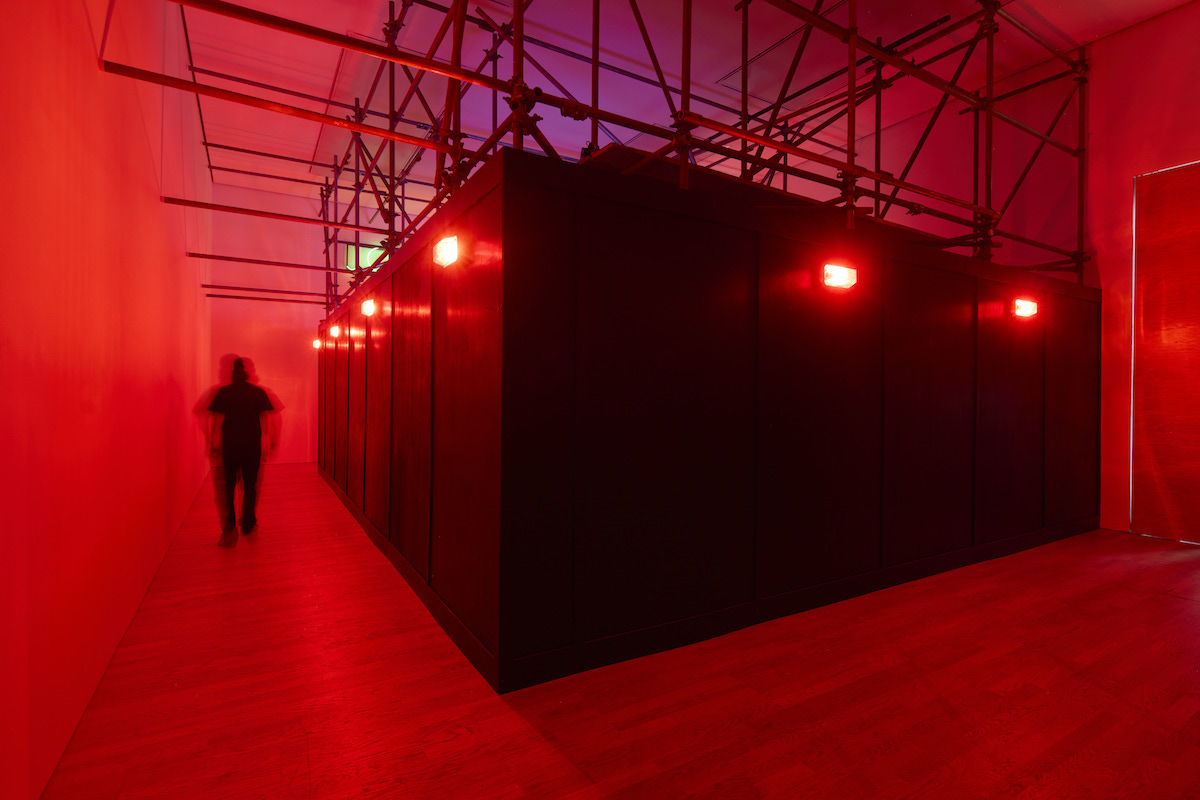
Simeon Barclay. Turner Prize 2026. MIMA (Middlesbrough Institute of Modern Art). Middlesbrough, UK. Photograph by David Levene 19/9/26
Barclay’s nomination centres on The Ruin, a performance commissioned by the Roberts Institute of Art that has already travelled through the ICA in London, the Hepworth Wakefield and New Art Exchange in Nottingham. His practice generally works by colliding objects, architecture, sound, video and image into something that reads as a personal, often wryly funny portrait of British culture, and his MIMA presentation translates the live energy of that performance into a physical, spatial intervention, resonating throughout with his own recorded voice. The work pulls visitors back to the era when the M62 motorway was being cut through the Pennines, one of postwar Britain’s most ambitious infrastructure projects, and one that shaped daily life for residents around Huddersfield, where Barclay himself grew up. A scaffolding structure runs through the installation, a fairly direct metaphor for a shared history that remains permanently under construction, never quite finished. The piece also draws visitors into more private territory, recreating the artist’s childhood living room, a space dominated by his father’s looming presence.
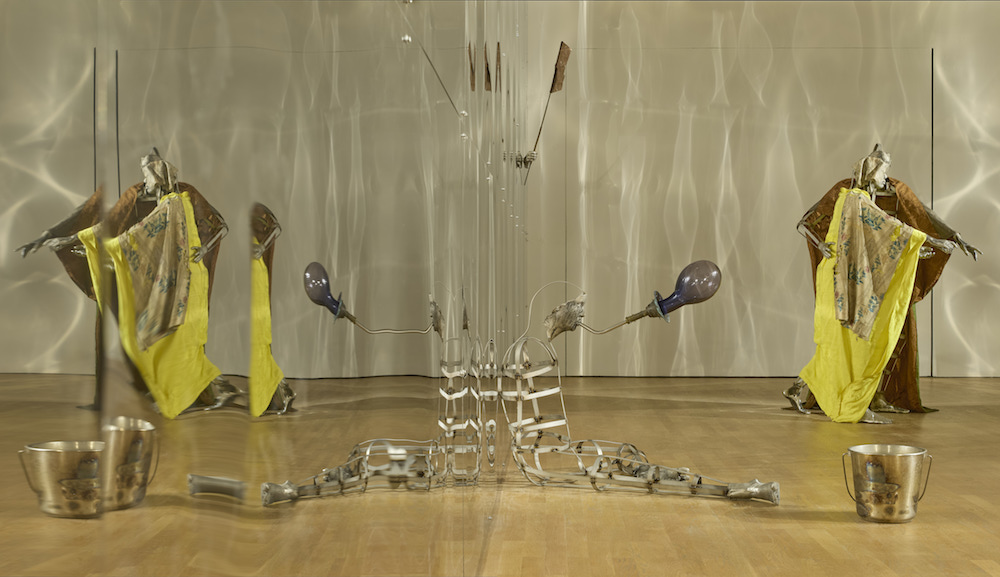
Kira Freije. Turner Prize 2026. MIMA (Middlesbrough Institute of Modern Art). Middlesbrough, UK. Photograph by David Levene 19/9/26
Freije’s contribution, Unspeak the Chorus, arrives from a solo show co-commissioned by the Hepworth Wakefield and Modern Art Oxford. Her sculptural practice builds worlds populated by human and animal forms, and at MIMA groups of figures occupy the gallery constructed from slender welded steel strips, open frameworks that read almost as line drawings pulled into three dimensions, with faces, hands and feet cast separately in aluminium. Scattered points of light across the walls suggest a night sky, doubled by mirrored surfaces, while a soft mist drifts through the space, treated by Freije as a material in its own right rather than mere atmosphere. The figures seem connected to one another and simultaneously withdrawn into private thought, their gestures suggesting care, grief, companionship and uncertainty without ever settling into a single fixed narrative. Freije deliberately leaves that interpretive space open. Salvaged textiles, glass and found materials run throughout the installation, many bearing visible traces of previous use, and animal forms appear scattered among the human figures, including references to the artist’s own dog, Laska, alongside birds caught mid-flight, existing within the space rather than performing for it.
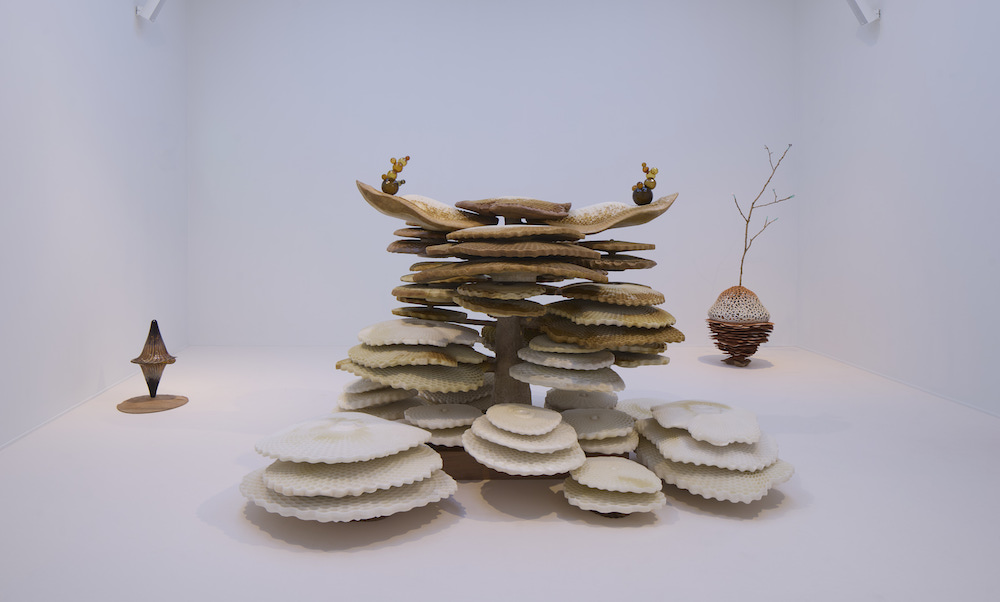
Marguerite Humeau Torches Turner Prize 2026 Installation View at MIMA
Humeau’s Torches, previously shown at ARKEN Museum in Denmark and Helsinki Art Museum, brings sculpture, sound and light together under a canopy of translucent glass orbs at MIMA. A monumental elephant matriarch figure approaches death within the installation, watched over by guardian figures who protect precious substances, as part of a broader vision in which death functions not as an ending but as a point of renewal. Humeau’s process leans heavily on collaboration, drawing on conversations with zoologists, anthropologists, foragers, and even clairvoyants, and gathering diverse forms of knowledge to reconsider humanity’s place within the wider history of life. She is particularly drawn to the intelligence found in animals, insects, fungi and microorganisms, and what that intelligence might teach humans about cooperation and survival. That thinking extends into the physical installation itself, where soft white flooring creates a shared terrain for her sculptural beings, echoing the connective networks found throughout the natural world, and gradually recording the traces of visitors’ own footsteps as they move through the space.
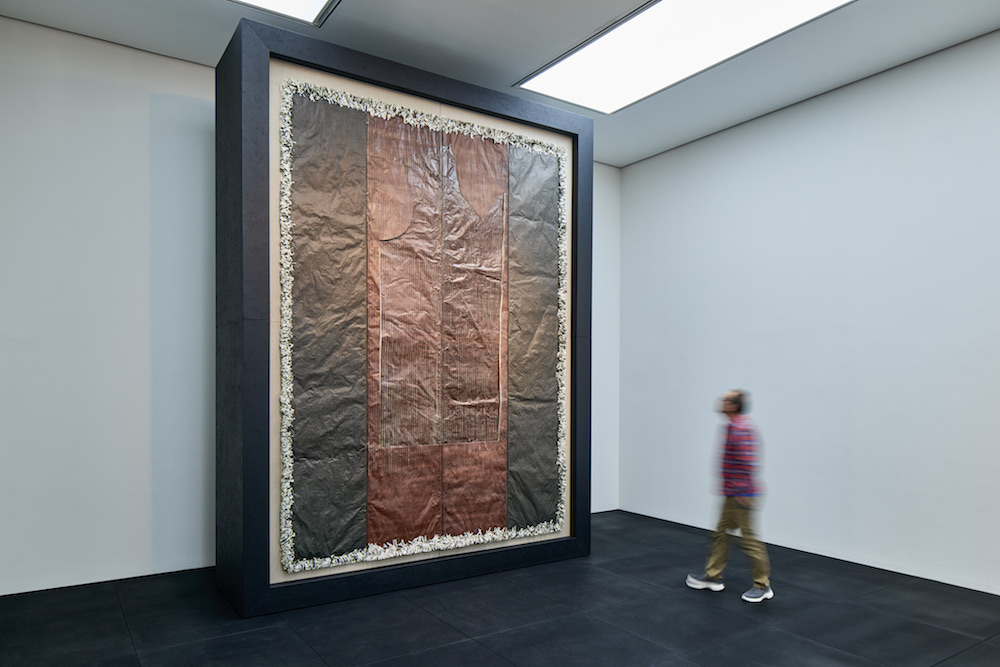
Tanoa Sasraku. Turner Prize 2026. MIMA (Middlesbrough Institute of Modern Art). Middlesbrough, UK. Photograph by David Levene 19/9/26
Sasraku’s nomination comes from Morale Patch, a solo exhibition staged at the ICA in London. Her work examines how materials themselves carry narrative weight, particularly in relation to structures of human power, and her MIMA presentation focuses specifically on extractivism, the large-scale, profit-driven removal of natural resources. The installation includes raw pigment sourced from the earth in both Cornwall and Ghana, used to saturate a paper garment pattern, alongside liquid crude oil sealed inside heavily processed acrylic paperweights, and stacked, bleached sheets of paper bound with binder clips, each one titled after a specific historical battle it obliquely references. The supporting structures throughout are built to project gravitas, almost pride, in the material spoils of extraction and conflict, while a dark rubber floor absorbs ambient light, pulling focus tightly onto the objects themselves.
Alex Farquharson, director of Tate Britain and chair of this year’s jury, said hosting the prize at MIMA reflected the institution’s close relationship with its local community, calling art a unique force for bringing people together and sparking conversation well beyond gallery walls. MIMA director Laura Sillars described the exhibition as a meeting point between four distinct artistic practices and the lived history of Middlesbrough and the wider North East, while Teesside University vice chancellor Mark Simpson framed the prize’s arrival as a statement about culture’s role in regional life.
Local political figures were similarly enthusiastic. Middlesbrough mayor Chris Cooke said he hoped the exhibition would inspire the town’s young people, noting the presence of Teesside University’s arts students and the Northern School of Art nearby, while Tees Valley mayor Ben Houchen pointed to the economic and reputational boost the prize brings, describing it as another chance to showcase regional ambition on a national stage.
Established in 1984, the Turner Prize remains one of the most closely watched awards in contemporary visual art, intended to stimulate public debate around new developments in British art practice. The winner receives £25,000, with £10,000 going to each of the remaining shortlisted artists. This year’s jury, chaired by Farquharson, includes Sarah Allen of South London Gallery, Joe Hill of Yorkshire Sculpture Park, Sook-Kyung Lee of the Whitworth, and Alona Pardo of the Arts Council Collection. The exhibition itself has been curated by Claire Louise Staunton and Helen Welford of MIMA.
Read Michael Petry’s insightful review this weekend