
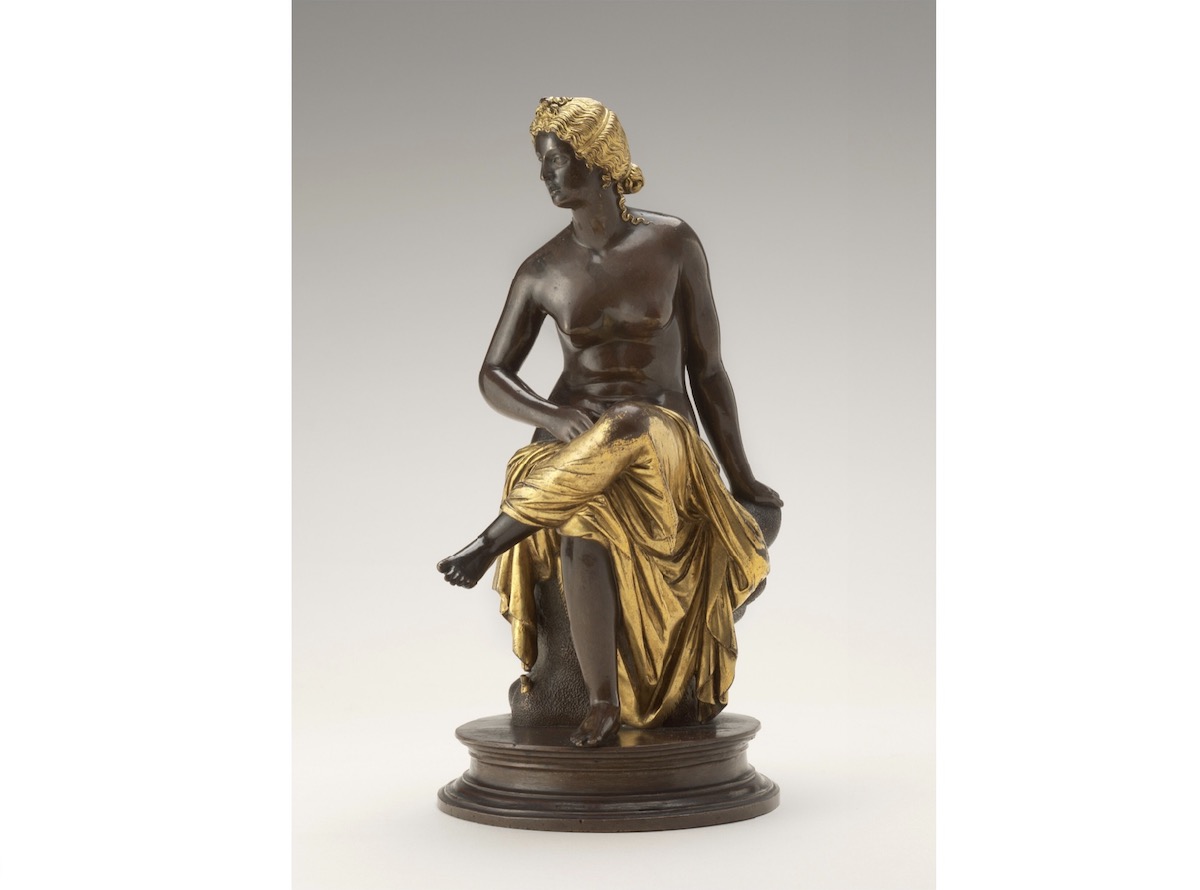
A small bronze statuette, cast more than five centuries ago by one of the Renaissance’s most technically gifted sculptors, has been temporarily blocked from leaving Britain, giving museums and galleries a window to raise the funds needed to keep it in the country permanently.
The government announced that institutions have until 17 December to come forward with an offer to acquire Seated Nymph, a work by the Italian sculptor known as Antico, before the export licence is reconsidered and the piece potentially leaves UK shores for good. The asking price is £4.6 million, plus VAT of £166,666.67, a substantial sum for an object that stands barely 20 centimetres tall.
What the statuette lacks in physical scale it apparently makes up for in craftsmanship. The figure features mercury-gilded hair and drapery alongside silver-inlaid eyes, details so fine that Arts Minister Ruth Mackenzie described the piece as small but mighty, praising its refinement for marking it out as genuinely exceptional. She expressed hope that the export bar would give the public a real chance to keep enjoying the sculpture’s beauty on home soil rather than seeing it disappear into a private collection abroad.
The bar itself followed a recommendation from the Reviewing Committee on the Export of Works of Art and Objects of Cultural Interest, an independent body that advises the government on whether objects being exported hold genuine national importance. The committee concluded that Seated Nymph met the threshold for what it calls outstanding aesthetic importance, and separately found it to hold outstanding significance for understanding the history of sculpture collecting in Britain specifically.
Committee member Stuart Lochhead noted that the piece had been rediscovered in the sculpture collection at Woburn Abbey, and warned that losing it to export would be a genuine loss to the public, depriving people of access to the work of what he called an exceptionally rare and hugely admired sculptor. According to Lochhead, Antico’s career was defined almost entirely by his skill at imitating classical antiquity. This talent grew into a highly sophisticated technique and eventually made him one of the leading artists working at the court of Mantua.
The figure was most likely designed as something intimate rather than monumental, probably meant to be held in the hand and turned slowly to catch the light from different angles. The tiara resting on its head has led scholars to suggest it may represent a goddess, quite possibly Venus, though the small scale and lack of surviving documentation leave some ambiguity around its precise subject.
Should a UK buyer come forward before the December deadline, the process does not end immediately. A second deferral period would then begin once an option agreement is signed, lasting a further five months to allow the sale itself to be properly completed.
Antico himself, born Pier Jacopo Alari Bonacolsi sometime around 1460 in Mantua, spent his career working almost entirely within the orbit of the Gonzaga court, one of Renaissance Italy’s most sophisticated centres of humanist learning and antiquarian taste. He earned his nickname, meaning simply “the ancient one,” precisely because of his uncanny ability to recreate the look and feel of genuine classical sculpture, producing small-scale bronzes that Renaissance collectors prized as substitutes for the ancient originals they could rarely obtain. Working primarily for Isabella d’Este and successive generations of the Gonzaga family, Antico refined a process of casting, chasing and gilding that allowed him to achieve a level of surface finish rarely matched by his contemporaries, turning small bronze statuettes into objects of genuine intimacy and luxury, meant to be handled and admired up close rather than viewed from a distance. He died around 1528, leaving behind a body of work so technically accomplished that pieces like Seated Nymph continue to surface, occasionally, in British country house collections centuries later, still capable of causing exactly this kind of stir.