Eurostar pulls out of St Pancras, and by lunchtime, you’re somewhere geographically and culturally magnificent. That’s the particular pleasure of this journey: two days, two cities, and more art per square kilometre than almost anywhere else in Europe.
Brussels: An Afternoon Well Spent
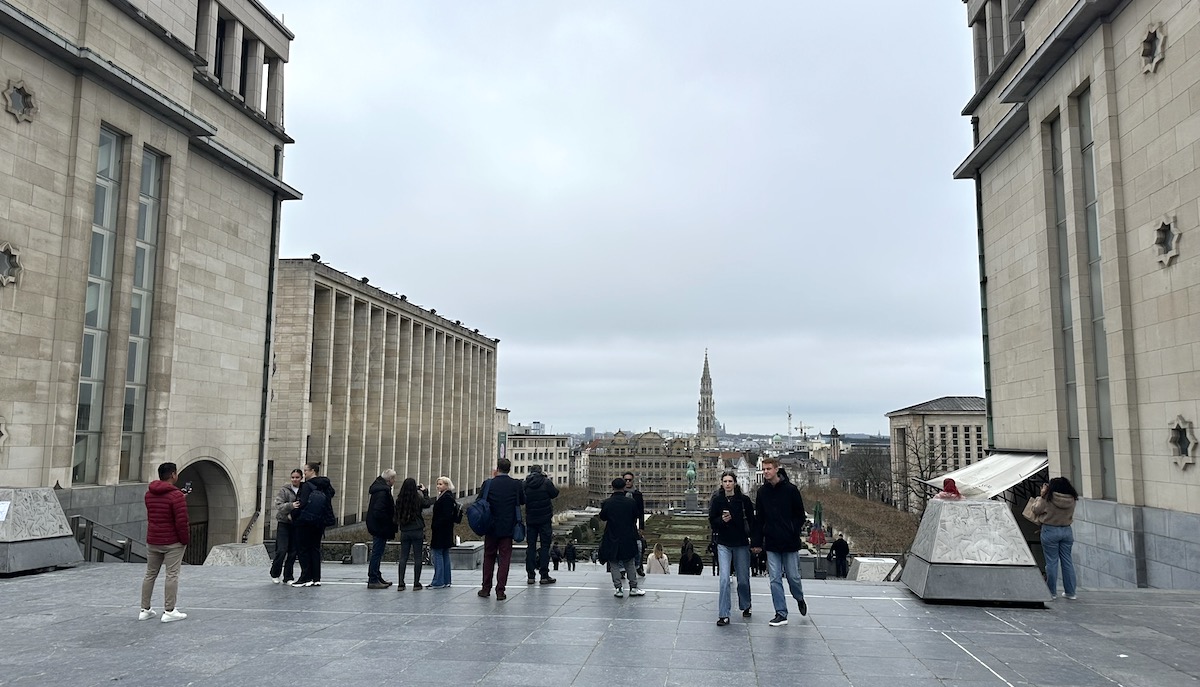
I arrived at Brussels Midi at 12:05, a five-minute hop to Centraal, and straight to lunch at Victor the brasserie inside Bozar, which is one of those rare instances where an arts centre restaurant actually deserves attention in its own right. It sets the tone well. Bozar itself is worth a moment’s pause if you haven’t been. Victor Horta’s building remains one of Brussels’ finest.
After lunch, the afternoon belonged to the KMSKB, the Royal Museum of Fine Arts, where curator Stefaan Hautekeete opened up the print collection. We were expertly guided by Jane Simpkiss, curator at Compton Verney, ahead of her exhibition, Bruegel to Rembrandt: Sketching LIFE, Drawing WONDER. This is extremely privileged access, and Hautekeete knows this material with the easy fluency of someone who has spent years with the collection. A private viewing of a print collection of this depth, handled up close, is a different experience entirely from walking the public galleries.
By mid-afternoon, we’re back on a train, this time to Antwerp. The journey is forty minutes, and Antwerp Centraal, all of it, the station itself, the vaulted ceilings, the sheer architectural ambition of the place, is an arrival worth savouring even before you’ve seen anything else.
Antwerp: Where Rubens Lived
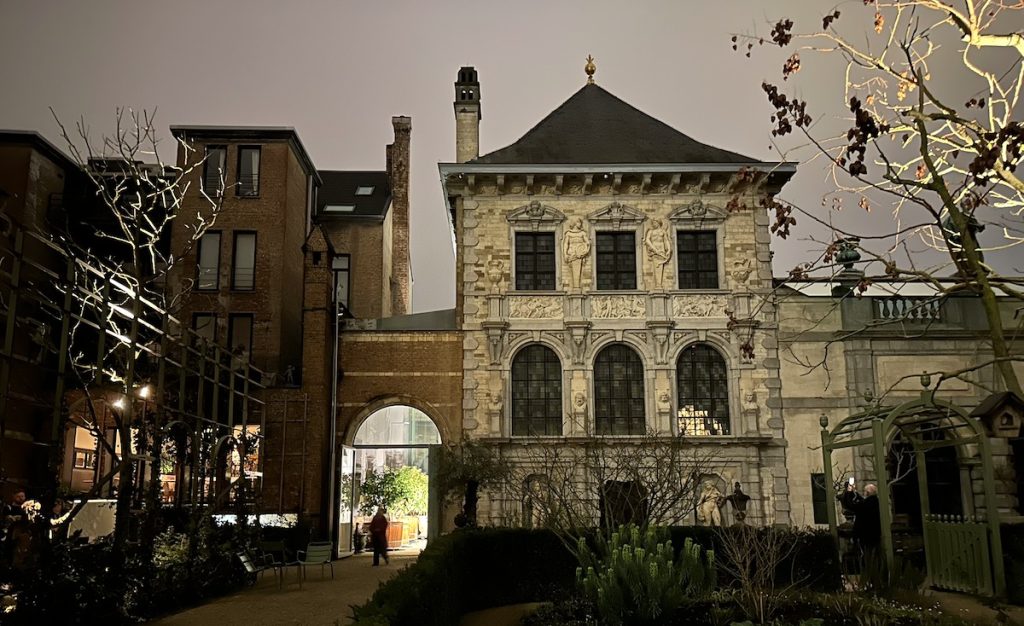
Once checked into the NH Collection on Pelikaanstraat, the real business of the evening begins. A short walk to the Rubens House, not just to see it, but for a private evening reception with An Van Camp and curator Klara Alen, who looks after the historical garden. The library and garden at dusk, with people who genuinely know the place, is something. Rubens lived and worked here for much of his career. The building has been many things since, but standing in that garden in the early evening, it doesn’t take much imagination to feel its weight. Dinner at Fiera on Lange Nieuwstraat, good food, the kind of Antwerp restaurant that doesn’t need to announce itself.
Day Two: Printers, Primitives and a Cathedral
I wasn’t expecting to see the “oldest working printing presses in the world” You may take this for granted, but you shouldn’t. They’re just there, in the room, still visible as machines. You could almost work out how to use them. The building hasn’t changed in four centuries, and you feel that, physically, in a way that’s hard to explain.
Virginie D’Haene met us and took us through the Old Master prints and drawings. Private access, no crowds, just the collection and someone who knows it inside out. Tens of thousands of books around you. The overwhelming quality of the artworks has left me paralysed. At one point, I stopped taking notes and just stood there. There are mornings that recalibrate something. This was one of them.
From there to the KMSKA, the Royal Museum of Fine Arts Antwerp, where curator Koen Bulckens takes you through the 16th and 17th-century collection. Seven centuries of Flemish art under one roof, from the Primitives through to the Expressionists, with a Rubens hall that needs no introduction. Lunch at Mampoko on the Amerikalei, then a guided tour of the Cathedral of Our Lady with Luc Horions, the Rubens altarpieces inside are, without overstating it, among the finest things in northern Europe.
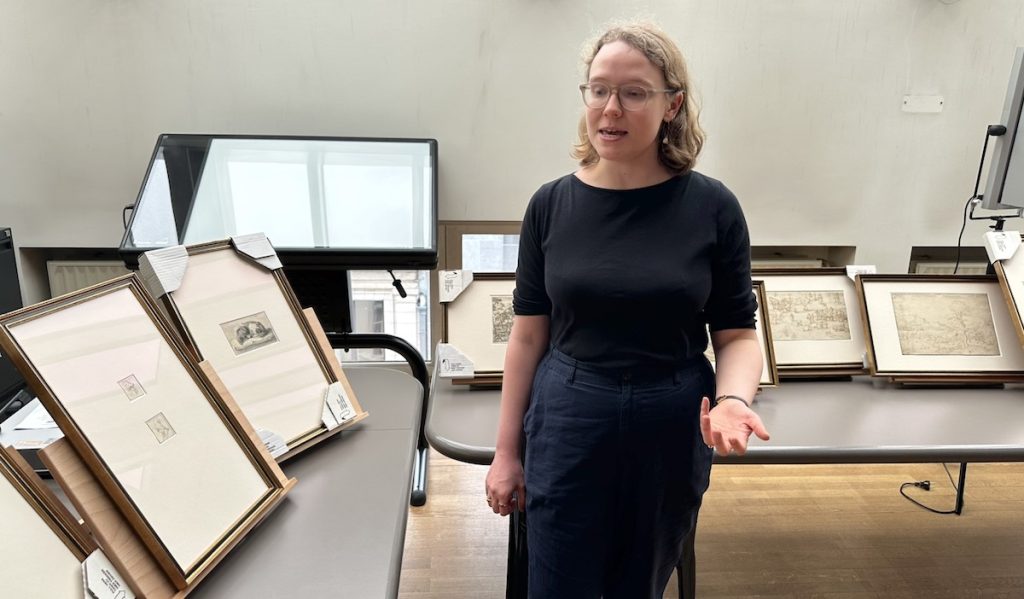
Curator Jane Simpkiss Compton Verney
A twenty-minute walk back to the hotel, bags collected, train to Brussels Midi, Eurostar at 18:51, London St Pancras. Two days. Entirely worth it. – Paul Carter Robinson
Bruegel to Rembrandt: Sketching LIFE, Drawing WONDER Compton Verney Saturday 14 March – Sunday 28 June 2026
This exhibition showcases artists across the 16th and 17th centuries, including Bruegel, Rembrandt, Rubens, and Jordaens, and reveals the magic of drawing as both an artistic tool and a means of storytelling. With charcoal, ink and chalk, these artists captured life in all its beauty, struggle and complexity during a period of extraordinary social, political and religious change.