
Tate Britain revisits the decade that reinvented British Culture from the YBAS to Alexander McQueen. There is a particular difficulty in exhibiting recent history. Too close for the distance that scholarship requires, too far for the participants to agree on what actually happened, the recent past tends to resist institutional framing. Tate Britain is going to attempt it anyway. The 90s: Art and Fashion, opening on 8 October 2026 and running until 14 February 2027, is the first major exhibition to examine the decade’s collision of contemporary art, photography and fashion, as well as the scale of its ambitions. More than 100 works by nearly 70 artists, photographers and designers suggest that Tate is approaching the subject with appropriate seriousness.
The exhibition begins in the DIY, anti-fashion world that defined early 1990s image-making. Photography by Corinne Day, Nigel Shafran and Juergen Teller, produced for publications including i-D and Dazed and Confused, established a lo-fi visual language that rejected the polished glamour of the previous decade in favour of intimacy, grit and a particular kind of authenticity that, at the time, felt genuinely new. The effect of that shift on fashion, art, and the broader culture was considerable and lasting. The exhibition places this photographic moment at its starting point, which is the right decision.
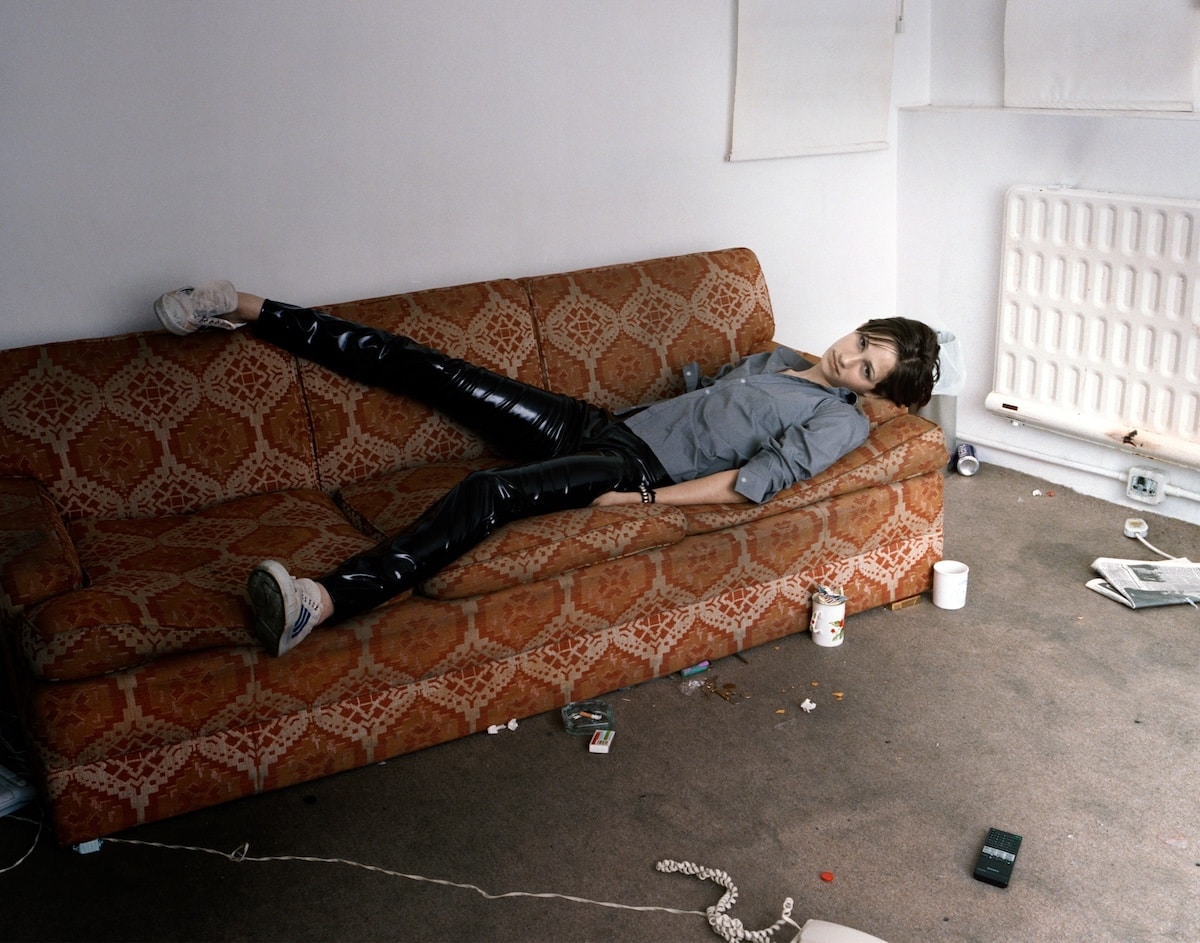
Rosemary Ferguson, 1993 (photo) by Day, Corinne (1962-2010); Private Collection Rosemary Ferguson, August 1993); © Estate of Corinne Day. All rights reserved 2025.
From there, the show moves through the terrain that has come to define the decade in cultural memory. The Young British Artists, Tracey Emin, Sarah Lucas, Sam Taylor-Johnson, Jenny Saville and Gillian Wearing, among them, brought a confrontational, direct approach to questions of class, sexuality and selfhood, placing British contemporary art at the centre of international attention. Their work sits alongside the theatrical, often deeply unsettling runway visions of Alexander McQueen and Hussein Chalayan, whose collections dissolved the boundary between fashion and performance with a rigour that the art world itself rarely matched. The proximity of these two worlds, the white cube and the catwalk, was one of the decade’s defining features, and the exhibition is at its most valuable when it explores the productive friction between them.
The show is also attentive to what the dominant Cool Britannia narrative consistently obscured. Steve McQueen’s Bear from 1993, Chris Ofili’s No Woman, No Cry, and Keith Piper’s work address questions of race, identity, and national belonging that the decade’s prevailing mood of cultural self-congratulation tended to elide. Designers, including Ozwald Boateng and Joe Casely-Hayford, expanded the visual language of British style in ways the industry was slow to acknowledge at the time and has been equally slow to credit since. That the exhibition foregrounds this work alongside the more canonical YBA material is both historically accurate and curatorially necessary.
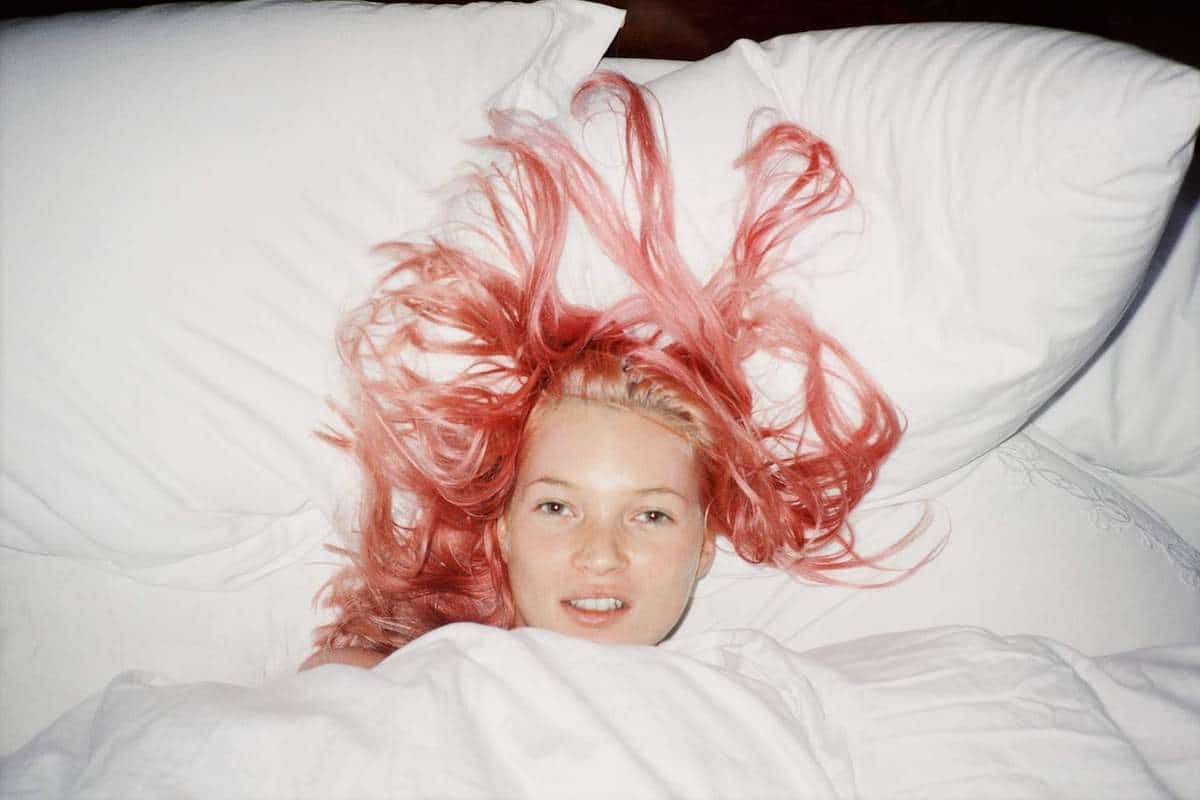
Juergen Teller, Young Pink Kate, London 1998 © Juergen Teller, All Rights Reserved
Nightlife and subculture occupy significant space. Mark Leckey’s Fiorucci Made Me Hardcore, one of the defining video works of the period, appears alongside photographic documentation of the Haçienda, Bagley’s and the broader landscape of jungle, drum and bass, rave culture and queer nightlife that powered the decade from beneath. This was a Britain shaped as much by sound systems and warehouse parties as by Britpop and Britart, and the exhibition does not allow the more celebrated surface to obscure what was happening underground.
The darker conceptual threads of the decade are also represented. Helen Chadwick and Cathy de Monchaux brought an unsettling rigour to questions of the body and desire that sat uneasily alongside the more exuberant energy of the YBA moment, and their inclusion here is welcome. Damien Hirst’s formaldehyde works, clinical and spectacular and still genuinely difficult to resolve, appear in a context that situates them within a broader cultural conversation rather than treating them as autonomous masterpieces.
The exhibition closes with Yinka Shonibare, Maud Sulter, Vivienne Westwood and John Galliano, figures whose work, in different ways, reflects on the decade’s contradictions, its optimism and its anxieties, its appetite for reinvention, and its unresolved tensions around identity, nationhood and belonging. The 1990s produced a Britain that looked, dressed, and made art differently than it had before. Whether that transformation was as radical as it felt at the time, or whether it contained within it the seeds of everything that followed, is precisely the kind of question that a good exhibition should raise without presuming to answer.
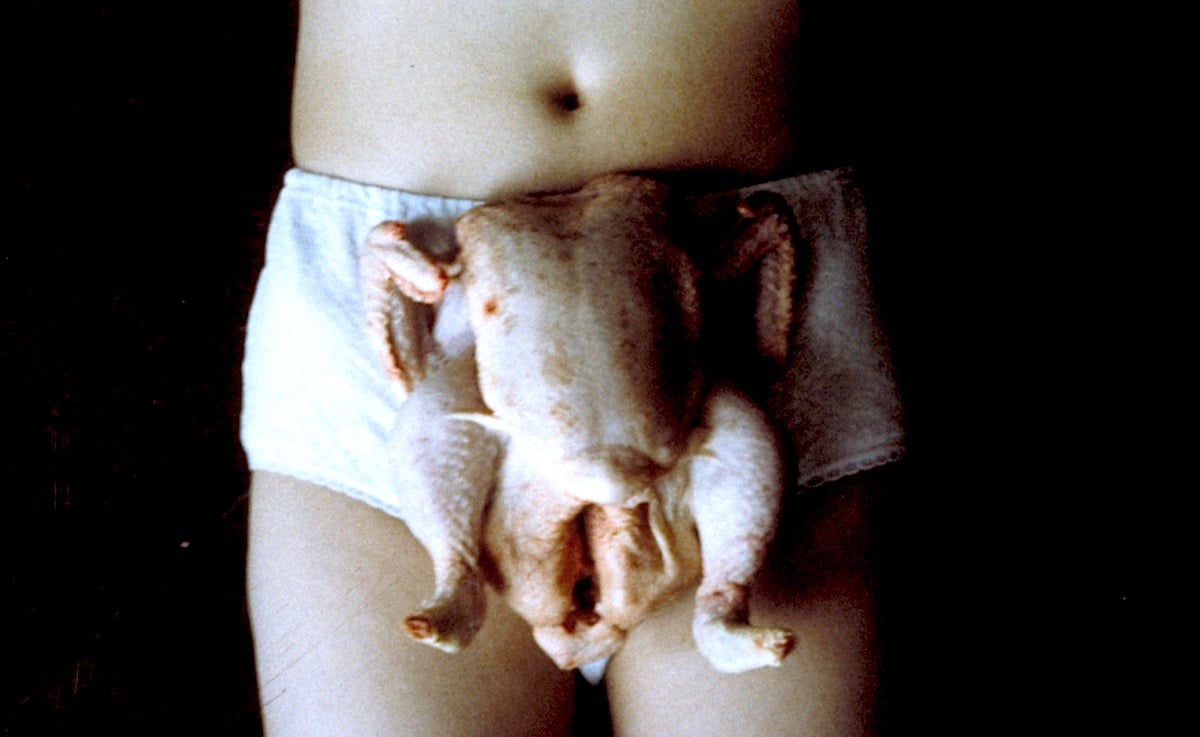
Top Photo Detail: Sarah Lucas, Chicken Knickers 1997. Courtesy the artist and Sadie Coles HQ, London
List of artists:
Abigail Lane, Alexander McQueen (with Sarah Harmarnee), Barbara Walker, Cathy de Monchaux, Cerith Wyn Evans, Chris Ofili, Corinne Day, Craig McDean, Damien Hirst, David Sims, David Swindells, Des Willie, Donald Rodney, Eddie Otchere, Eileen Perrier, Elaine Constantine, Ellen von Unwerth, Ewen Spencer, Fergus Greer, Gary Hume, Gillian Wearing, Glenn Luchford, Hamad Butt, Helen Chadwick, Hussein Chalayan, Jake and Dinos Chapman, Jason Evans (with stylist Simon Foxton), Jenny Saville, Joe Casely Hayford, John Galliano, Jon Shard, Juergen Teller, Koto Bolofo, Mark Leckey, Mark Mattock, Mark McNulty, Maud Sulter, Mischa Haller, Mona Hatoum, Nick Knight, Nigel Shafran, Normski (Norman Anderson), Ozwald Boateng, Peter J Walsh, Philip Treacy, Poulomi Desai, Rachel Whiteread, Roshini Kempadoo, Sam Taylor?Johnson, Sarah Lucas, Sean Ellis (styled by Isabella Blow), Seana Gavin, Shaun Leane, Steve McQueen, Sonia Boyce, Sophy Rickett, Stella McCartney, Stephen Jones, Steven Meisel, Stuart Linden Rhodes, Tony Davis, Tracey Emin, Vinca Petersen, Vivienne Westwood, Wolfgang Tillmans and Yinka Shonibare.
The 90s: Art and Fashion is at Tate Britain from 8 October 2026 to 14 February 2027