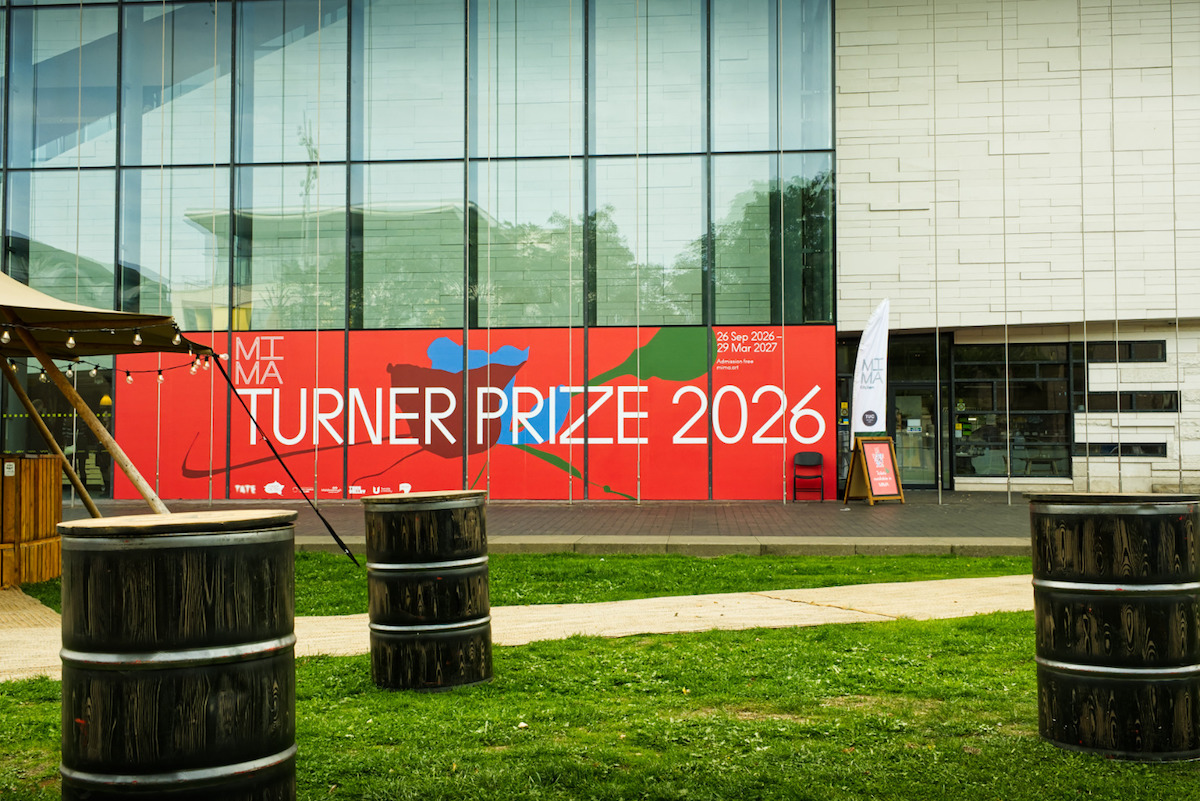
The Turner Prize roadshow has landed in Middlesbrough this year, featuring the work of Simeon Barclay, Kira Freije, Marguerite Humeau and Tanoa Sasraku. MIMA is a great venue, and artworks generally look good in its large, open spaces. This show is no exception, and a trip to visit the exhibition will be well worth the rather substandard rail connections. It is amazing that such a large city is so poorly served by public transport.
That said, the region is bustling with artistic energy and this year’s edition takes place alongside the 9th edition of Middlesbrough Art Week. It focuses on the main international group show, An Island of Neighbours, which pairs big names (Jeremy Deller, Larry Achiampong) with artists from across the Teesside region. It really is a good thing that the Turner focuses on spaces outside central London, broadening its appeal. This edition could not be better timed to be in the north, as Andy Burnham has finally announced that Labour might, just might, signal what a catastrophe for the UK exiting the EU has been. The UK was the cultural epicentre of Europe for so long that many thought, or hoped, that it could retain that central position even after our exit. But that has sadly not been the case.
Tanoa Sasraku Photo: © Lewis Alexander © Artlyst 2026
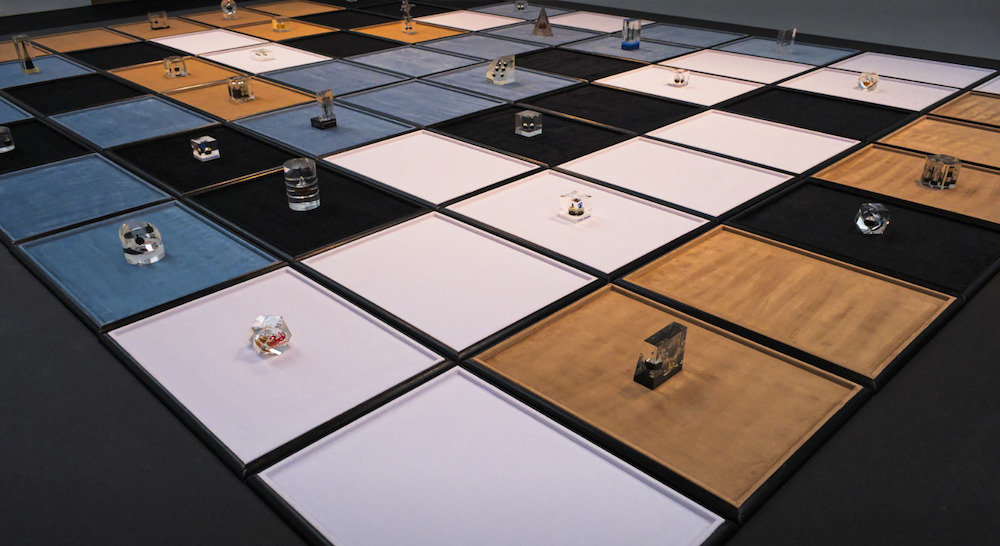
Sasraku was only 21 when we decided to commit economic and cultural self-sabotage. Sasraku’s work explores notions of nationality, Labour and memory, often using raw materials taken from the land. Barclay, the oldest artist represented (51), focuses on Britishness and what it means within our modern global context, often using humour to poke fun at masculinity, class and popular culture. Freije and Humeau create their own worlds that examine how we live now and how we might find ourselves extinct. It is clear from all their work that we live in an interconnected world, and that cutting oneself off (as a nation or a person) does not stop that world from moving on and moving in on us. Sasraku was given one large rectangular space, which she filled with works that also explored human intervention and disruption of our environment. Here, the floor was covered in large black rubber tiles, and the central work, Watchlist, sat upon a gigantic black plinth that held 32 found paperweights, each with some crude oil from different parts of the world. These acrylic gift items for visiting dignitaries sat on upholstered Italian velvet trays, each colour-coded to indicate where the oil was found. These are the trophies of a war against our own best interests, as we all suffer the rise in global temperatures due to the consumption of non-renewables. Other works on paper have been stained with raw pigment from Cornwall and Ghana, and they, too, are grandly framed to lend a sense of dignity and seriousness to the endeavour of environmental destruction.
Marguerite Humeau Photo: © Lewis Alexander © Artlyst 2026
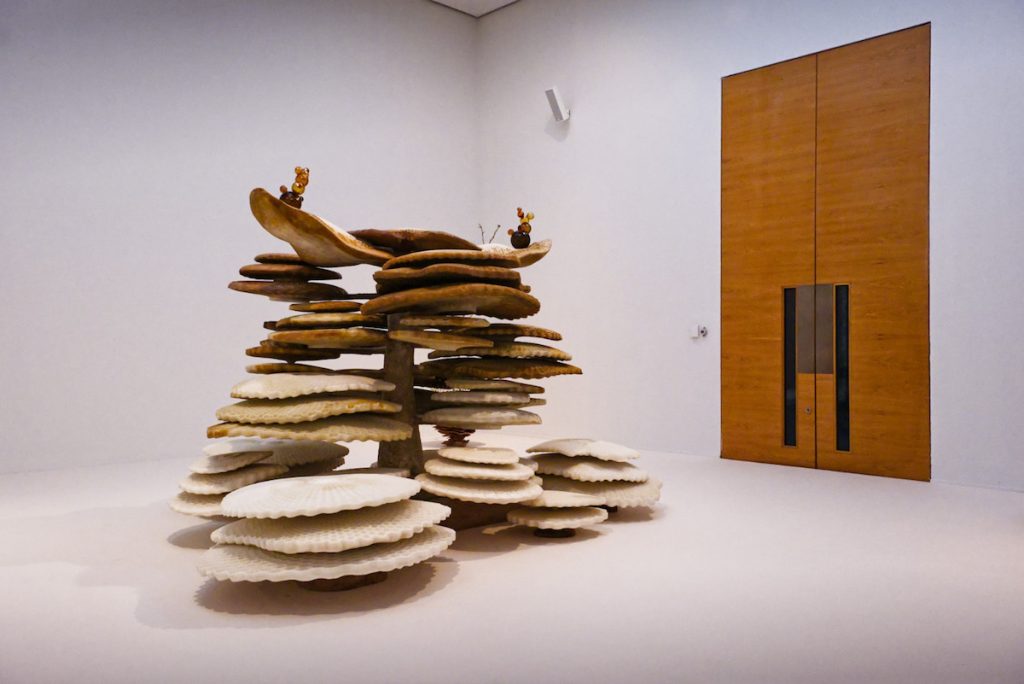
The exhibition itself is very well curated, and all of the artists have a reasonable amount of space for their work. We enter Humeau’s space to find ECHO, A Matriarch Engineered to Die, featuring a large white elephant with a blown-glass heart. We also hear an accompanying sound work of the death cries of a female elephant. It was haunting, moving, and for me, the most memorable work in the whole exhibition. We were then asked to slip on shoe covers to walk into the next gallery, with a white carpeted floor, where her other works were displayed. These included sculptures featuring carved wood, real beeswax, and blown glass. These works were exquisitely fabricated, and the fan-disk shapes of beeswax that formed the central work, The Holder of Wasp Venom, were beautiful, seemingly fragile, and spoke of how at risk the natural world is, and, of course, how at risk we are.
Simeon Barclay Photo: © Lewis Alexander © Artlyst 2026
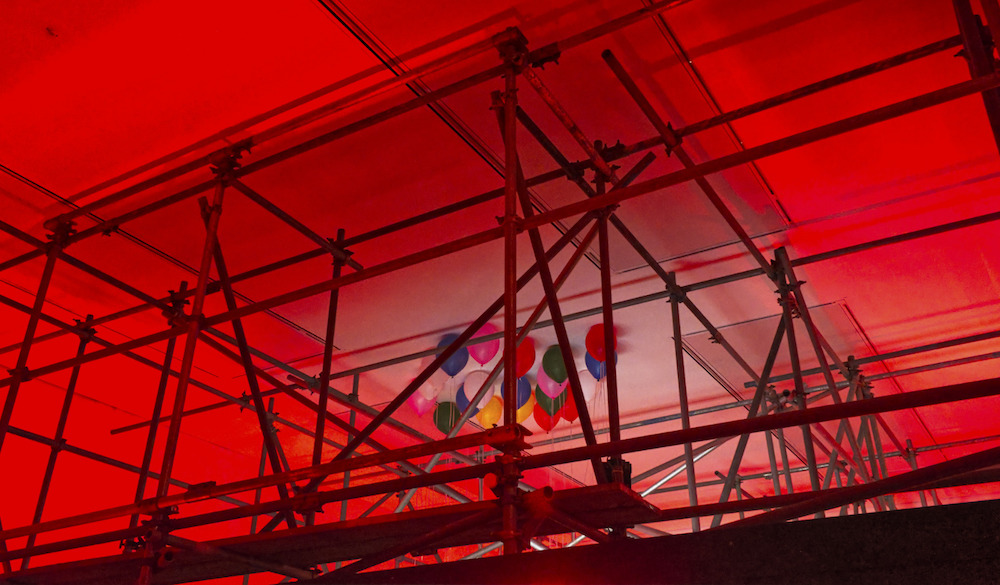
Visitors then enter a darkened hallway lit only by red construction lights. On the left are a huge blow-up of a photograph of a young man reading a newspaper and a framed photograph of a magical sunset on a mountaintop. Barclay’s massive installation The Ruin features scaffolding, boards, and said lights, which the viewer must navigate to find the small entrance to an internal space that shows a video. The ceiling above is filled with latex helium balloons (the entrance to the whole exhibition warns about them, loud sounds, and adult language), and at the back is another discreet neon work in green called Johnny’s. The hour-long performance and this installation version see Barclay tell the story of the construction of the M62 through the Pennines where he grew up. The work is a real showstopper and a great lead-in to Freije’s work, which is displayed on its own in a second-floor gallery.
Kira Freije Photo: © Lewis Alexander © Artlyst 2026
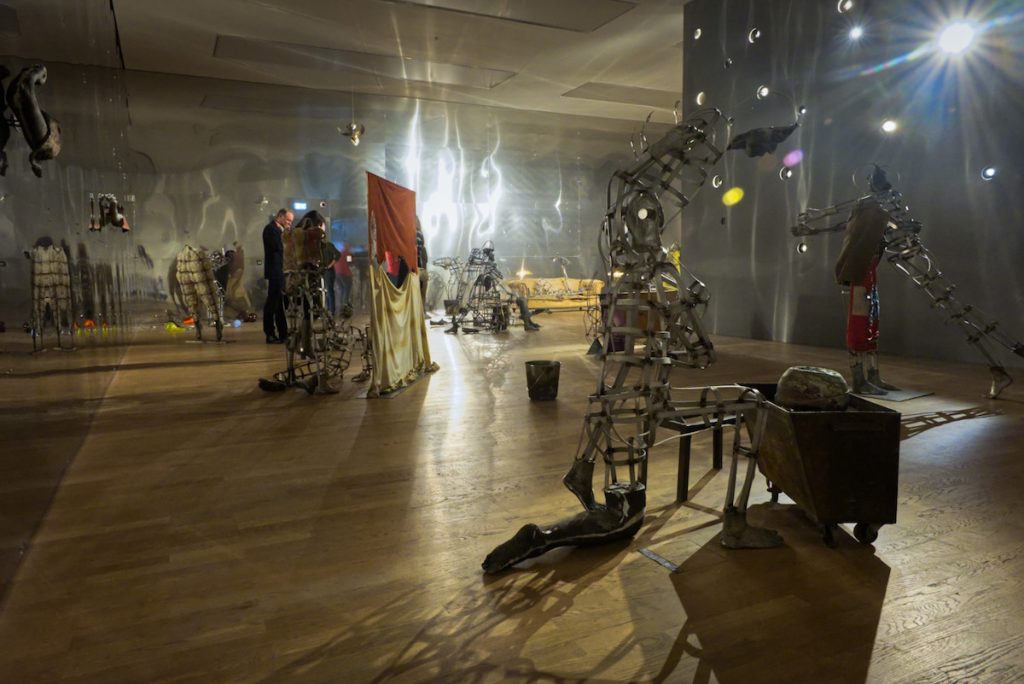
In many ways, Freije has the best space and opportunity to create her own visual world, away from the sounds on the ground floor, and she has used it wisely. She has left the floor alone but has clad the walls with mirrors and bright spotlights which illuminate her metal sculptures. These semi-abstract bodies feature actual casts of real people’s faces, hands, and feet bolted to them, and are dressed in worn, antique fabric. They look forlorn, or startled, but always human and touchingly so. She has also placed in the mix similar versions of domestic animals covered in odd bits of fur. These creatures look very sad, and as a dog dad, they certainly pulled at my heart. Each tableau was a separate sculpture, but the way she merged them into a total world was masterful.
Usually, one or two artists stand out as the likely winner; this is a competition, after all, no matter how many artists have protested in the past. This year I’d give even odds on all four of them. MIMA has served them all well and has proven itself to be a serious space for even the most challenging contemporary art.
Words: Michael Petry Photos: Lewis Alexander