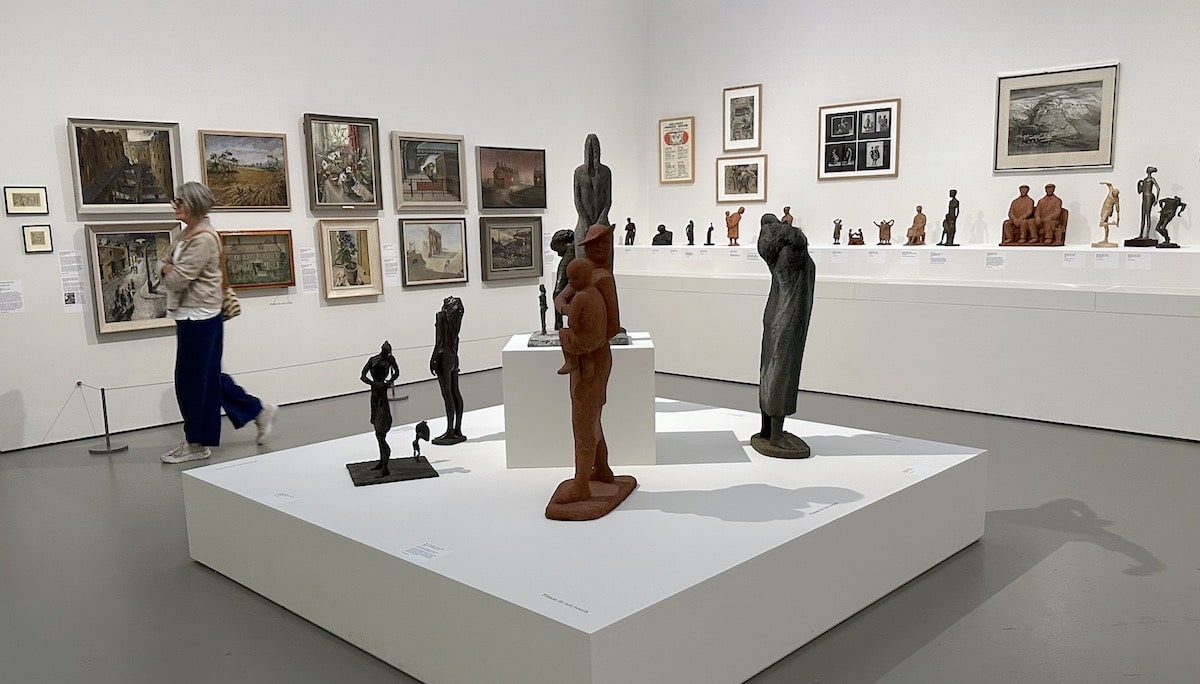
Comrades in Art: Artists Against Fascism, now showing at Towner Eastbourne’s top-floor galleries, is stuffed to the rafters with over 320 loans from 62 public and private collections. The narrative is unmissable, taking up almost as much wall space as the art on view. It tells a story that most people in Britain have never heard, about an organisation that most people in Britain have never heard of, and manages to feel both nostalgic and relevant throughout, without ever struggling to put ideals across.
The Artists International Association was founded in 1933 by a group of young, largely underemployed artists and designers responding to two simultaneous crises: the economic devastation of the Depression and the gathering political darkness of European fascism. Its founders were Misha Black, Cliff Rowe and Pearl Binder, none of them household names today, which is part of what makes this exhibition necessary. Within two years, the AIA had attracted the support of Duncan Grant, Henry Moore, Paul Nash, Laura Knight and Edward McKnight Kauffer, among others, staging a major exhibition called Artists Against Fascism and War in Soho Square. By 1937 it had nearly a thousand members and held the first British Artists’ Congress. It survived until 1958 and, according to curator and author Andy Friend, who has spent years researching its history, its influence extended to the founding of the Arts Council and, less obviously, the NHS.
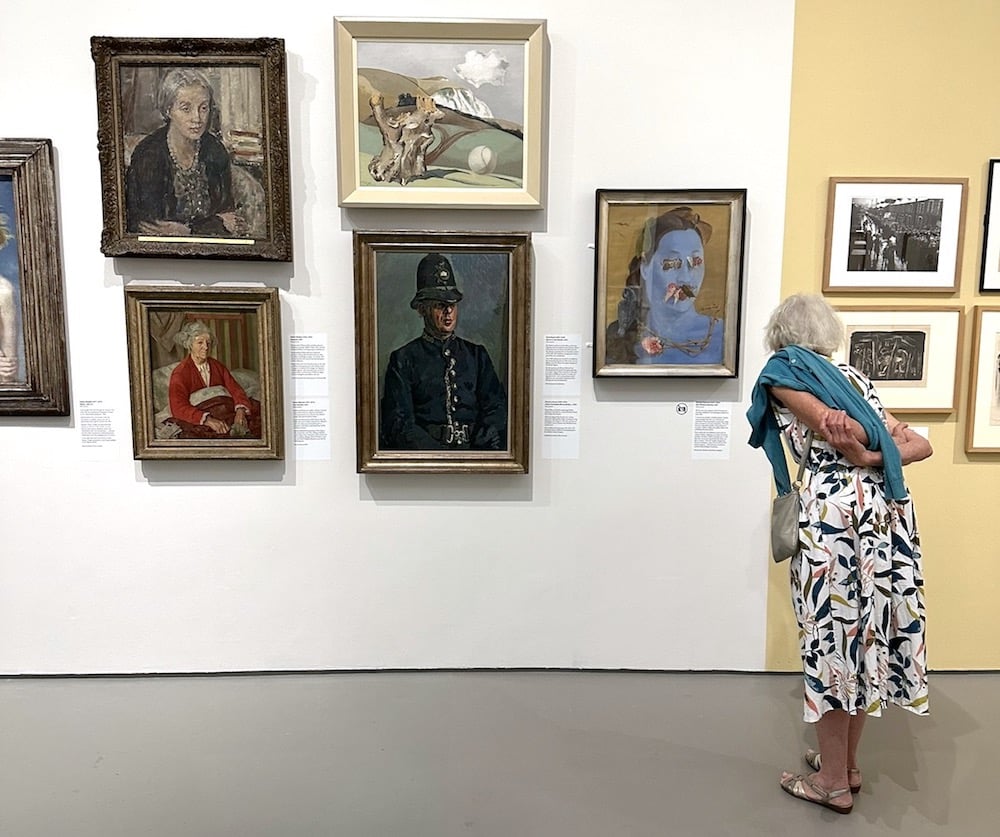
Comrades in Art: Artists Against Fascism Installation View Photo © Artlyst
The fact that this story has remained largely untold is itself part of the story. When it became feared during the war that the Gestapo might reach London, the AIA deliberately destroyed much of its own archive. What survived has been gathered here from collections across Britain and beyond, resulting in an exhibition of considerable depth and occasional revelatory force.
The show begins with the political circumstances that gave the AIA its reason to exist, moving through each phase of the organisation’s activity in rough chronological order while giving sustained attention to the personal stories of its members. That dual focus, on the macro history and the individual lives shaped by it, works well. Sections on specific artists reveal people who were making serious art while also producing propaganda posters, organising exhibitions at bombed-out sites on Oxford Street, and thinking hard about how to put art in front of audiences with no existing relationship to galleries.
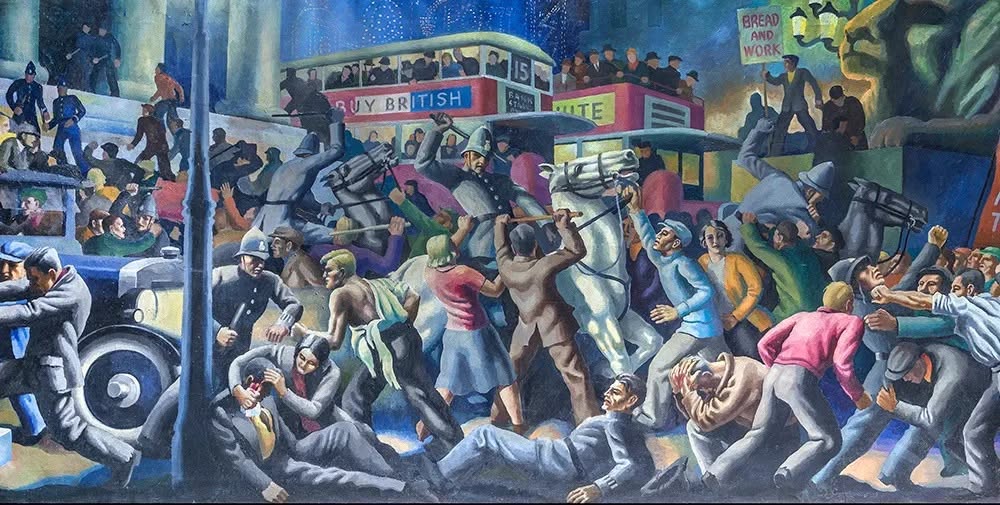
Cliff Rowe The Struggle Between the Unemployed and the Police Forces 1932-1933
One of the most striking works in the exhibition is Cliff Rowe’s The Struggle Between the Unemployed and the Police Forces, a three-metre-wide painting made between 1932 and 1933 while Rowe was in Russia, responding to newspaper accounts of civil unrest in London. The original is now in the Lviv National Art Gallery in Ukraine and is represented here through a scaled reproduction and Rowe’s preparatory sketchbooks, brought from Ukrainian collections. The decision to include the reproduction rather than leave the gap is the right one. The work needs to be seen at something approaching its actual scale to understand what Rowe was attempting, and the sketchbooks give it a human dimension that a reproduction alone would lack.
The Everyman Prints deserve particular attention. The exhibition shows what is believed to be the only surviving complete set of the 52 original lithographs that the AIA sold through major department stores from 1940, at prices intended to make them accessible to people who would never visit a commercial gallery. They range from James Holland’s A Country Town depicting militia in wartime Britain to Helen Binyon’s The Flower Show, a wistful evocation of ordinary English life that carries its elegiac quality lightly. Together they constitute a remarkable document of a society holding itself together under duress, and the fact that the AIA found a way to distribute art through Selfridges rather than through the existing gallery system reflects a genuine radicalism about access that went beyond rhetoric.
The exhibition handles the tension between aesthetics and politics honestly. These were artists who put aside significant differences in style and approach to work toward a common purpose, and the show neither pretends that the propaganda works are something they are not nor undervalues the serious artistic achievement of members who were simultaneously making politically committed work and developing their individual practices. Laura Knight is a good example. Her soft impressionist nudes from 1932 to 1933 sit in direct contrast to the sharp realism of her 1941 portrait of a WAAF corporal in full uniform, the shift in style reflecting what the moment demanded rather than any loss of quality or conviction.
The exhibition closes with the post-war period and reflects on what the AIA left behind, including a culture in which collective action by artists came to seem not merely possible but, for a significant period, normal. That legacy has largely been forgotten, which is one reason this exhibition matters.
Curator Andy Friend’s observation that the AIA’s members responded to political darkness not with passivity but with organisation and solidarity, looking always for what could unite rather than divide, is made without pressing it into service as a rallying cry for the present. The exhibition leaves that work to the visitor, which is the more respectful approach and, ultimately, the more effective one.
This is a serious, well-researched and thoughtfully presented show that restores an important chapter of British cultural history to view. It is also, if you come to it with any awareness of the current political landscape, an uncomfortable experience in the most productive sense. Towner continues to make a strong case for what a regionally rooted gallery with genuine ambition can achieve.
The exhibition has published an excellent catalogue available here
Top Photo © Artlyst 2026 / Words PCR
Comrades in Art: Artists Against Fascism is at Towner Eastbourne until 18 October 2026. Admission £5.50 to £12, free for members and under 25s, pay what you can on the first Friday of each month.