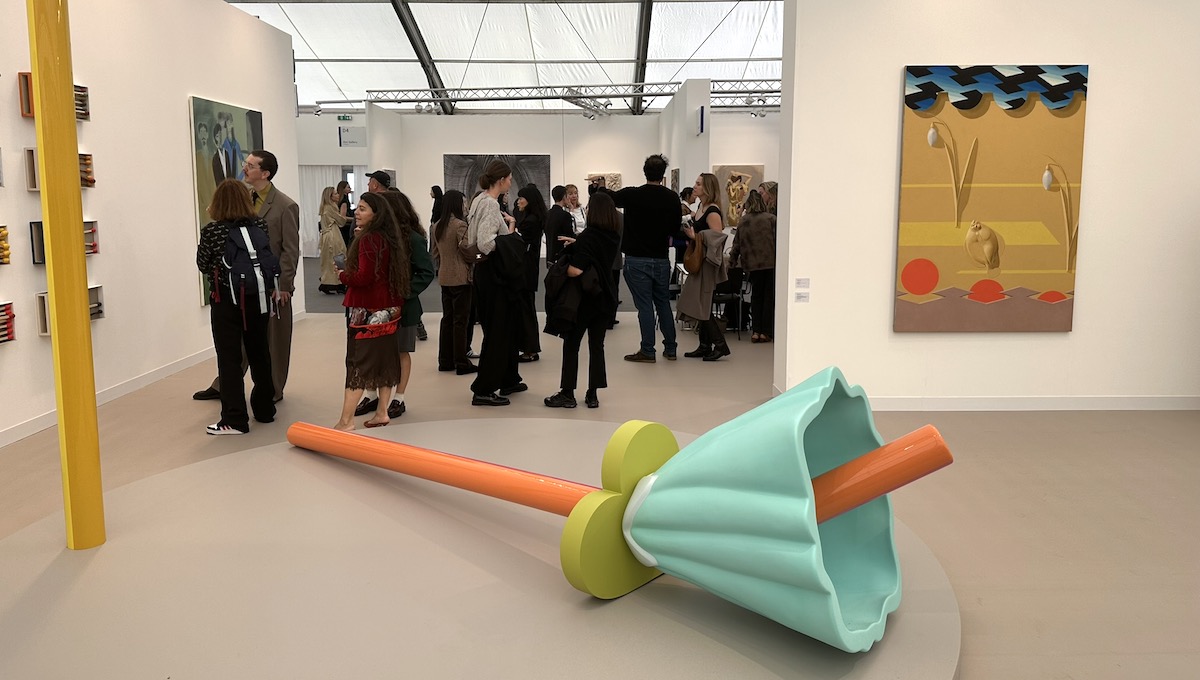
After a long hot summer, the trees are turning, the woollens are coming out, and the days are drawing in. It feels like the beginning of term, so it must be time for Frieze London, the now annual international Art fest in Regent’s Park that brings the art world together after a summer of the Venice Biennale and lotus-eating on various Mediterranean beaches. Featuring artists from all around the world, from Indonesia to Brazil, from the Ukraine to the US, the fair is an example of how contemporary art, despite these difficult geopolitical times, still functions as cultural and fiscal capital. According to Frieze committee member, Cédric Fauq, Curator of Contemporary International Art at Moderna Museet, Stockholm, ‘It’s important that Frieze echoes what’s happening in the broader contemporary art landscape beyond the market… it needs to challenge the eye… and twist the brain’.
So, what is showing? Well, this year’s commission for the Frieze Artist Award is a first-time collaboration with Google Arts and Culture by the Athens-based artist Theo Triantafyllidis. His all-singing, all-dancing The Feral Metaverse (Spider) ─ is a giant sculptural arachnid that acts as an adult play centre and climbing frame, where visitors can clamber up to indulge in online games on individual screens. Well, so far, so predictable ─ art that appropriates technological innovation in a world increasingly dominated by AI is par for the course. But what interested me, as I walked down the supermarket aisles of artworks, is that despite this populist tick-box piece, this year, for the first time in a long while, there appears to be far more painting and works on paper on show. Not the ironic jelly-bean technicolour stuff of the last two decades, but work that is quieter, deeper, and more reflective, that relies principally on the artist’s eye, hand, and aesthetic sensibility.
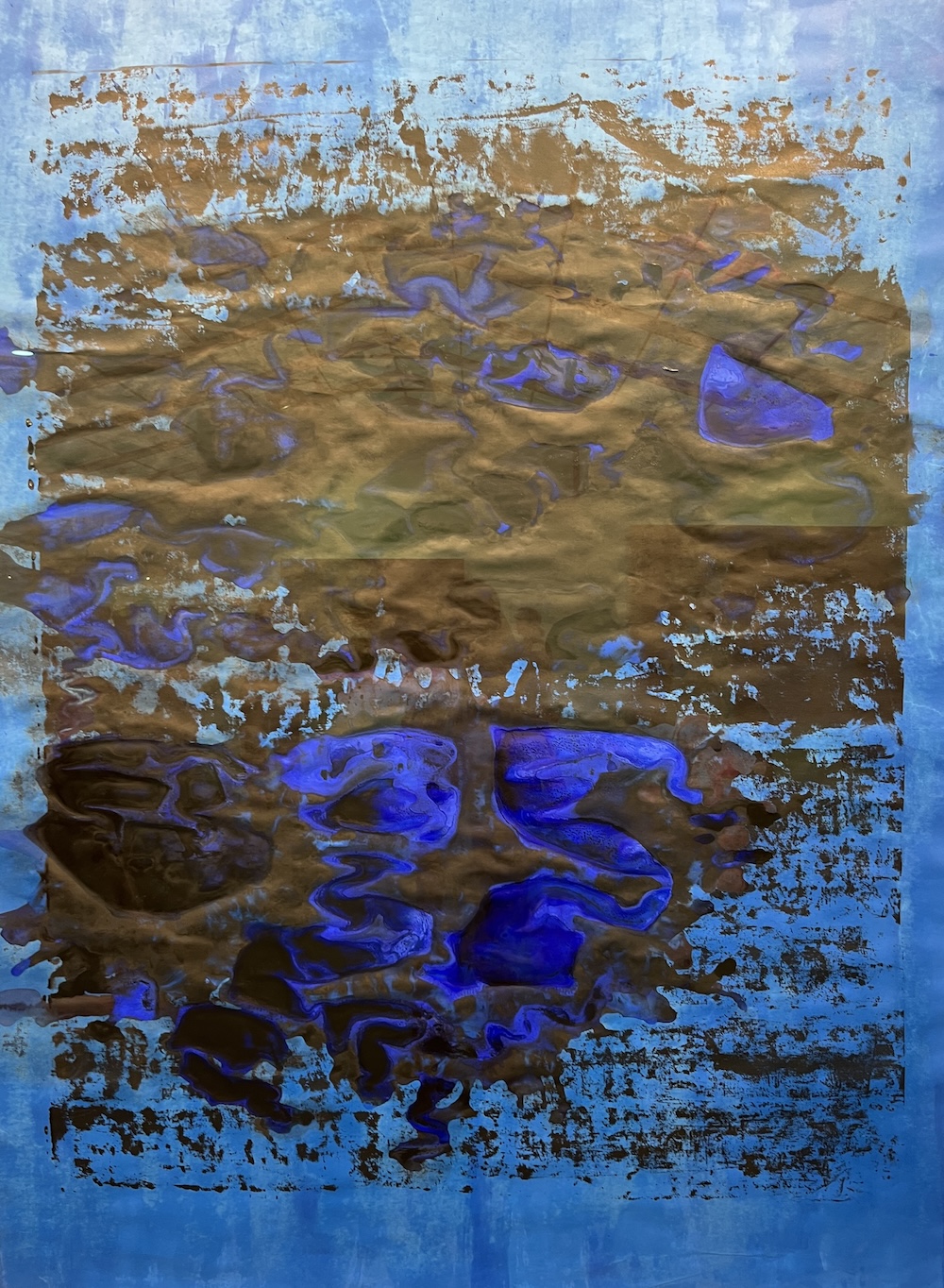
Glenn Ligon’s Blue (for JB) #21, 2026, Thomas Dane Gallery
So, among the relentless miles of art, here are a few of my picks to look out for. At one of the prestigious entrance spaces, the Thomas Dane Gallery is showing Works on Paper. 1965─ that includes Glenn Ligon’s Blue (for JB) #21, 2026, a deeply rich blue carbon ink and acrylic work on torinoko paper, a lyrical, expressionistic piece that explores different media.
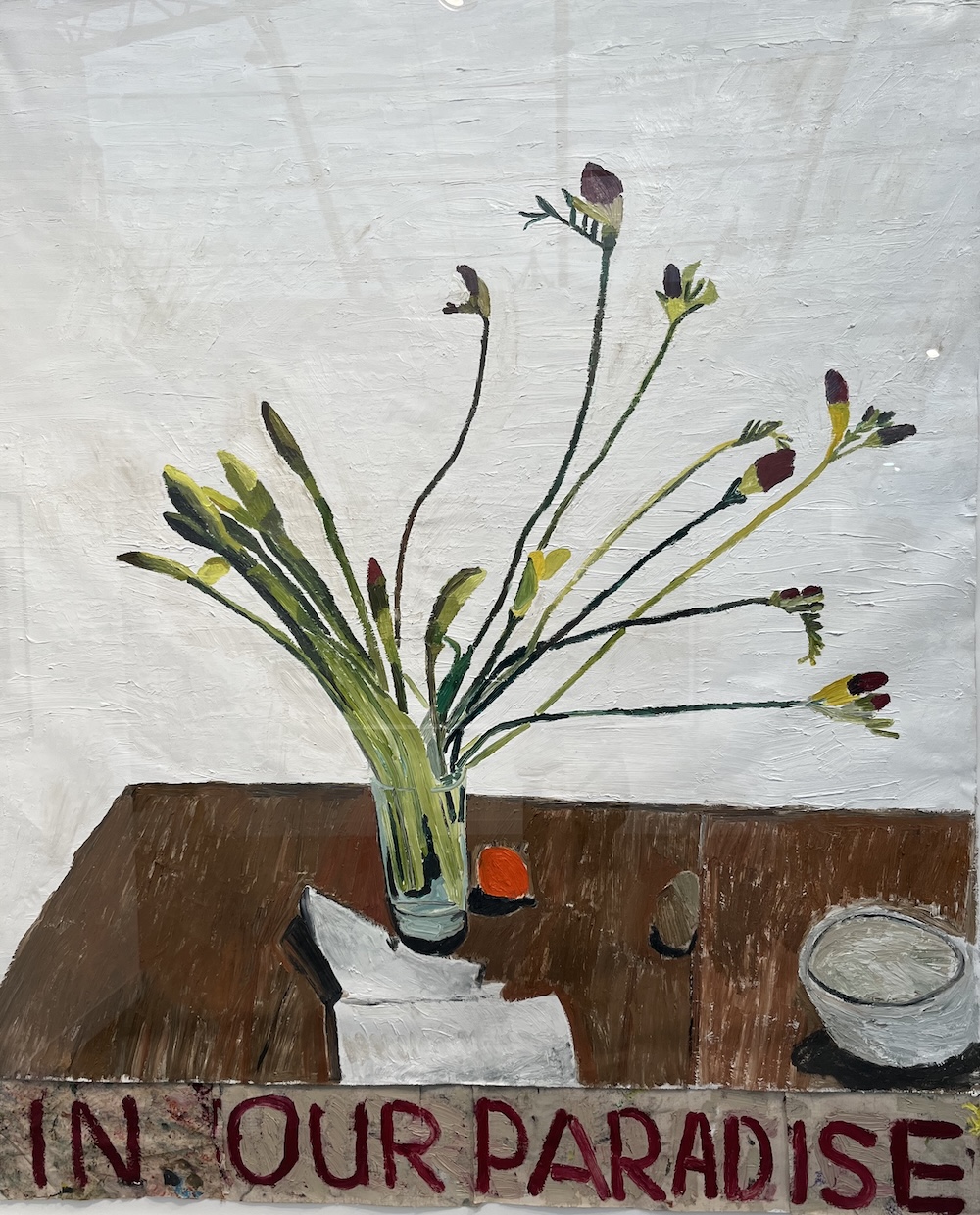
Sophie Barber, Alison Jacques
Round the corner at Alison Jacques is an arresting work by the Hastings-based artist, Sophie Barber, a monumental, heavily textured canvas depicting a vase of tightly furled daffodils and freesias on a wooden table, set above the words IN OUR PARADISE painted in large red letters, to create a surreal folk-arty sort of composition.
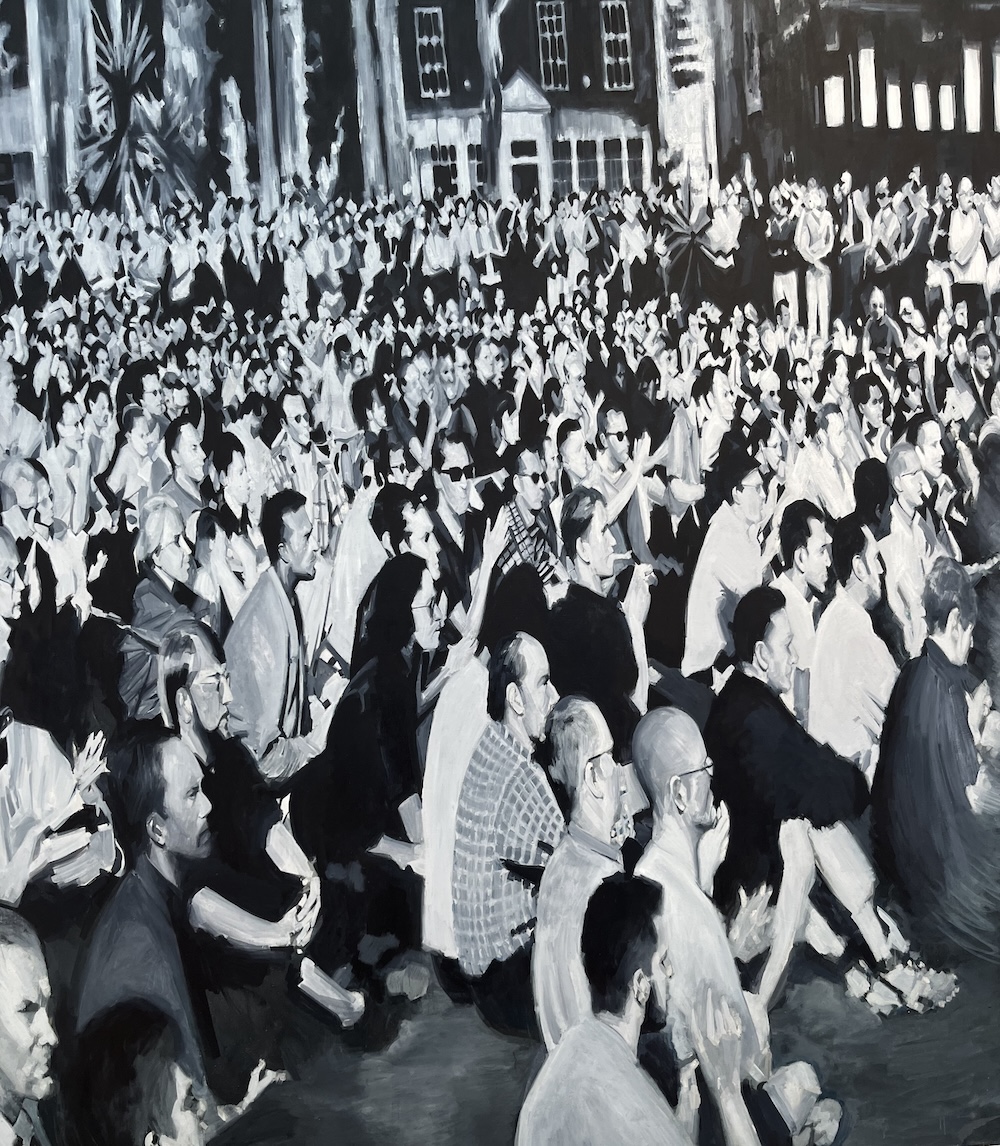
Laurie Smith, Wschód, Warsaw
Wschód, Warsaw, which runs experimental pop-up spaces, residencies, and curatorial projects globally, is showing work by Laurie Smith (also showing at the Whitechapel). A graduate of Goldsmiths, he creates figurative, oil-based works that meld fantasy autobiography with queer culture. His arresting black and white photo-like painting of a crowd sitting vigil after the carnage of the bombing of the gay pub The Admiral Duncan in April 1999 has been acquired by the Arts Council Collection Frieze Acquisition Fund. He has said of his work that ‘I want the images to prompt a second look, to create a feeling that something is familiar but not entirely accessible’.
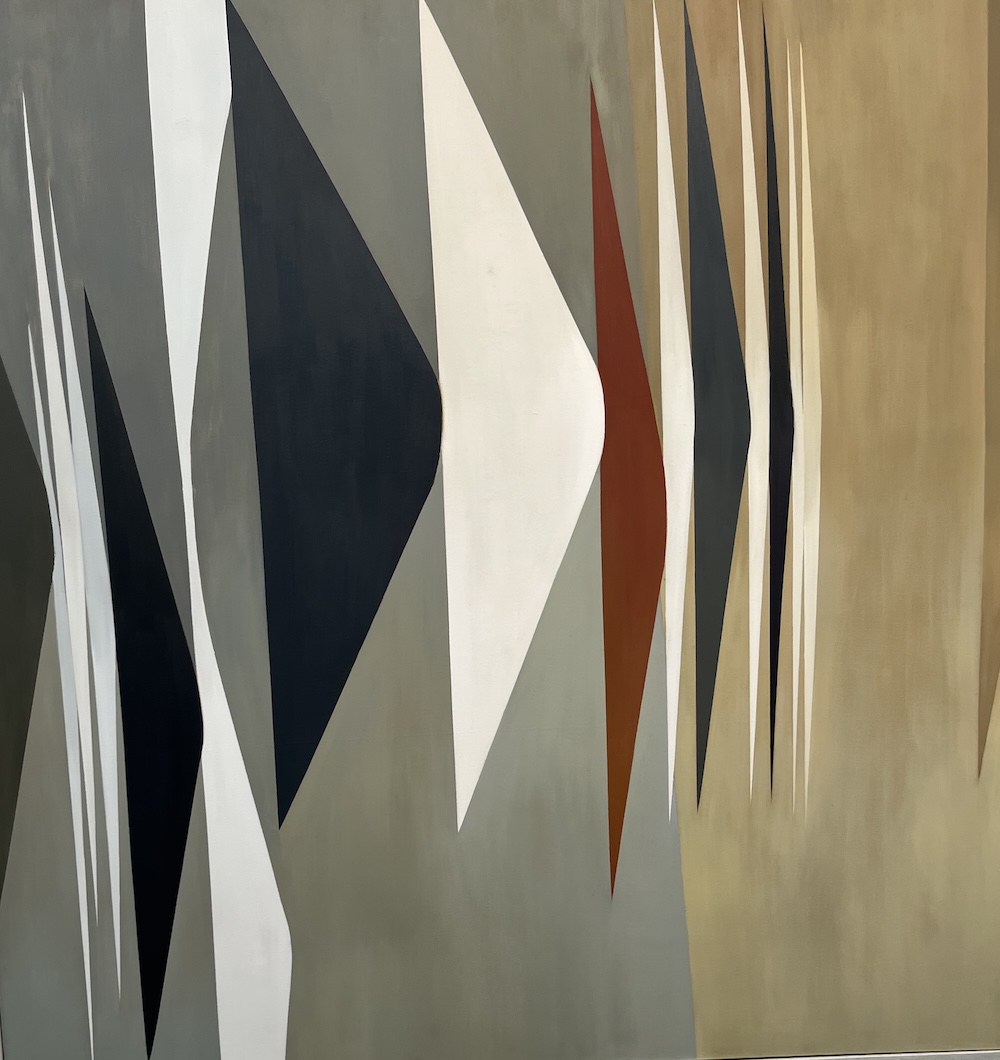
Wilhelmina Barns-Graham, Sea Sand 10, 1981 , Hales Gallery
At Hales, there are some gems of British art, including Wilhelmina Barns-Graham’s Sea Sand 10, 1981 – a semi-abstract, mixed-media piece on card showing a row of black, white, and ochre chevrons abutting a rectangle of sand-coloured paint.
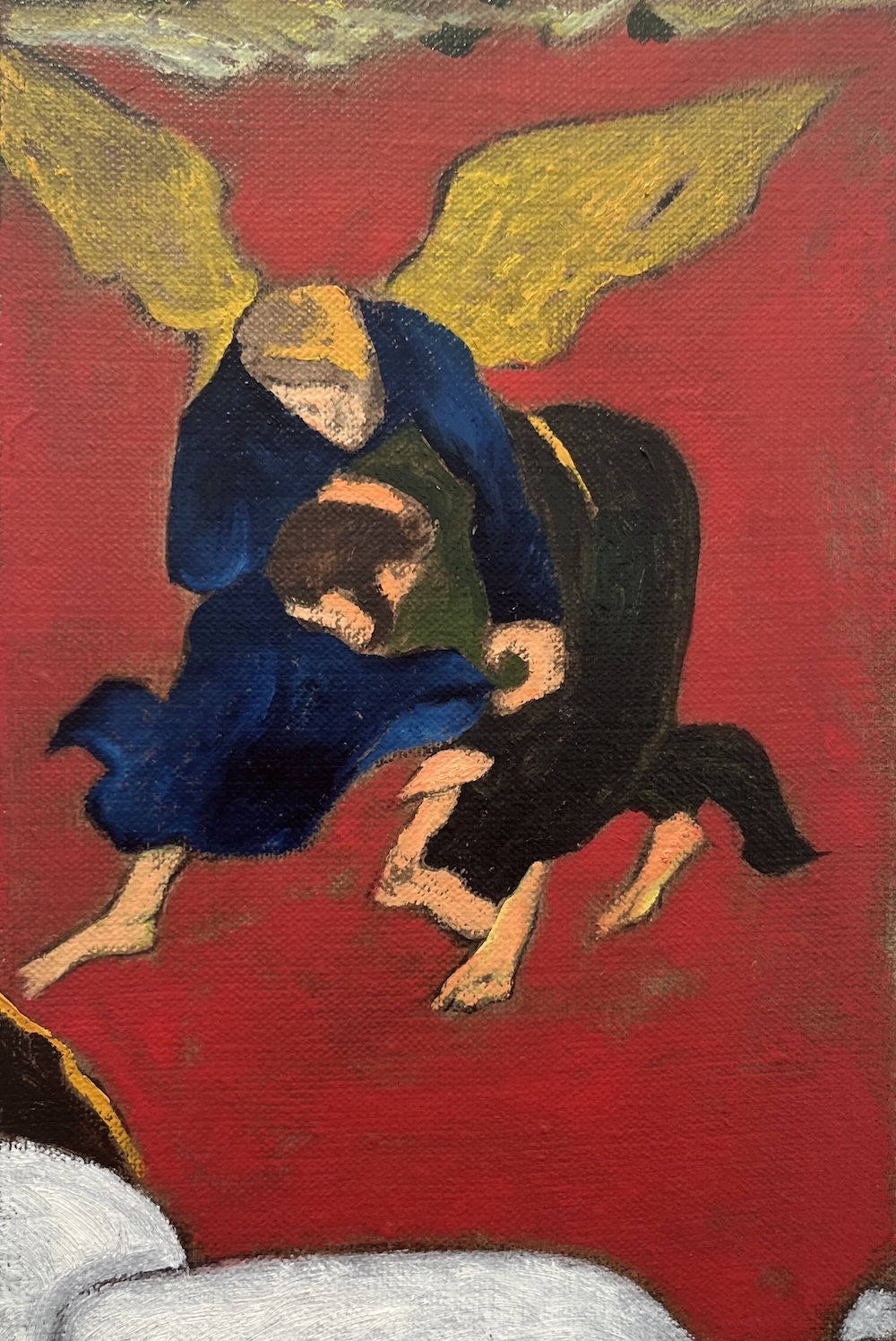
Alex Macedo, Gianni Manhattan
In contrast, Gianni Manhattan, supported by Kultur I Ix – Arts Council Luxembourg, is showing paintings by the young Portuguese artist Alex Macedo who lives and works between Vienna and Luxembourg. These small, intense canvases unfold with a quiet intensity that reflects his Catholic-Portuguese upbringing. A wrought-iron handle might be read as a crucifix, whilst two wrestling angels pay homage to Gauguin’s Vision of the Sermon (Jacob Wrestling with the Angel).
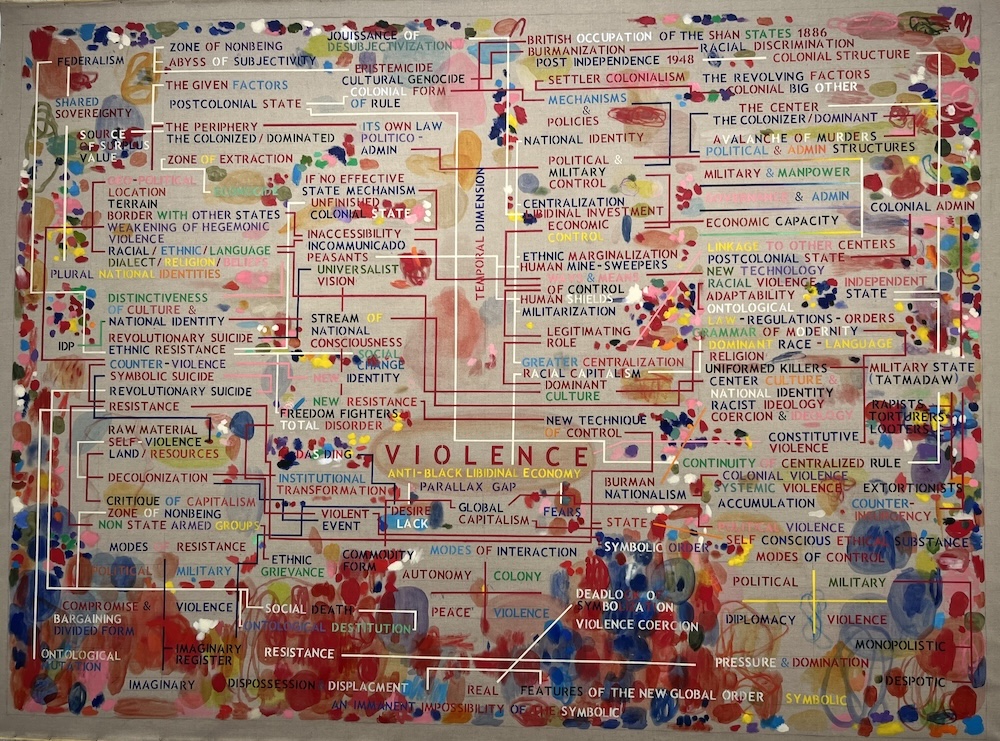
Sawangwongse Yawnghwe, Jane Lombard Gallery, New York
At the Jane Lombard Gallery NY, there is a change of tone with a painting by Sawangwongse Yawnghwe, who was born in Burma in 1971. As a member of the royal family of Shan, Yawnghwe draws on his personal history and political and historical narratives to construct a visual language that questions the veracity of official archives. His vibrant word maps trace the complex relationships between political power and ethnic conflict.
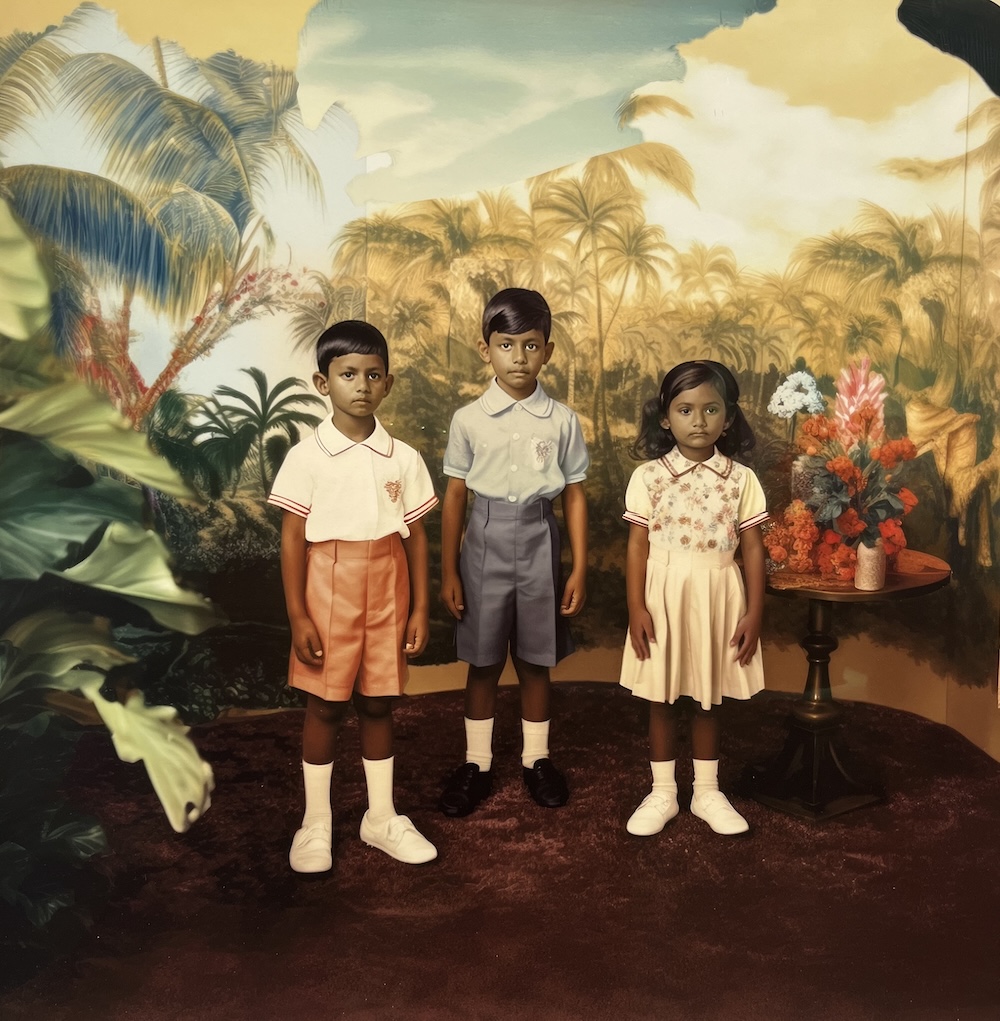
Sabrina Tirvengadum, Jhaveri Contemporary, Mumbai
Over at Jhaveri Contemporary from Mumbai, they are showing Souvenir by the deaf British Mauritian artist Sabrina Tirvengadum. Combining personal archival photography with AI and painting, she reconstructs in her small, intense works the lost histories of her Mauritian ancestors.
South Parade, London has a solo presentation by Tom Hardwick-Allan, a graduate of the Slade and member of the bands Gentle Stranger and Shovel Dance Collective, who is about to take up a postgraduate programme at the Royal Academy Schools. His Engine of Sickness and Light explores how systems of knowledge are formed and sustained. His cross-section of a tree has carved layers resembling age rings and incorporates imagery drawn from embryonic development, numerology, and augury.
Linseed, Shanghai is participating in Frieze London for the first time and presenting Asami Shoji’s solo project Familiar Strangers. Her translucent, spirit-like bodies and solid skeletons seem to be perpetually suspended between disappearance and existence. Allowing the paint to flow across the canvas, she builds up four or five layers until features emerge, just as a face may appear in the mind.
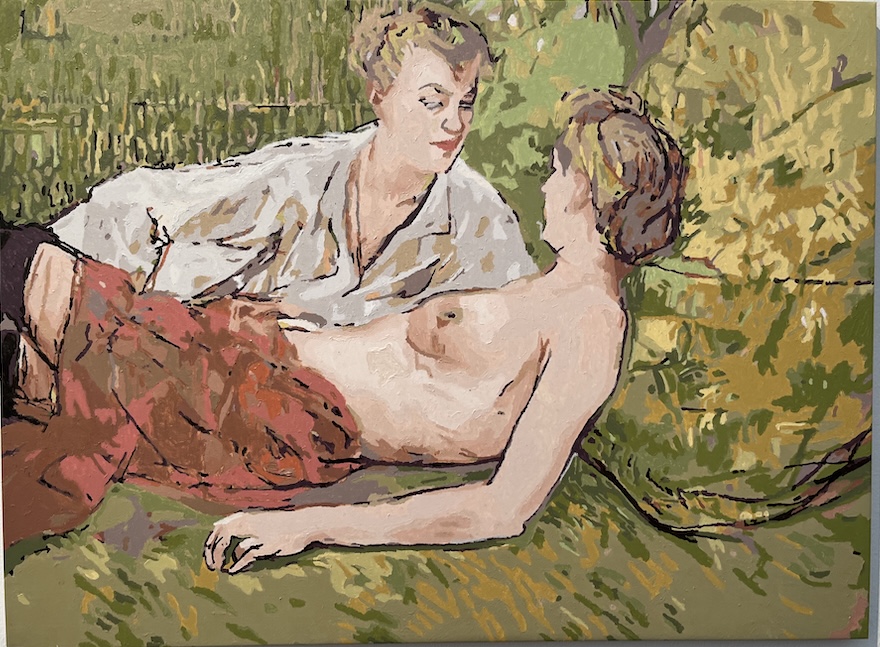
Reba Maybury, Company Gallery, New York
In marked contrast, Company Gallery from NY is showing a series of paintings with intriguing titles, such as Francis Bacon, 29, German Junior Art Advisor, London, by the British-Pakistani artist and political dominatrix Reba Maybury, that subvert patriarchal and capitalist power dynamics. Working under the professional alias Mistress Rebecca Maybury, instead of executing her paintings herself, she hires her submissive male clients to act as her ‘artist tools’ and complete the physical labour. Gifted a monograph by the painter Francis Bacon published by the Royal Academy, Maybury nicknamed the young German art advisor, Oxford graduate, and submissive who gave it to her, Francis Bacon, and commissioned him to execute the painting-by-numbers style canvas reproductions of historical artwork.
Of course, it would have been possible to choose quite differently, but these are among the varied works that caught my attention, not just from artists I already knew, but from those completely new to me. After years of Frieze often feeling pointlessly glitzy and market-led, this year serious painting seems to be back on the agenda; painting that addresses not only what can be done with the medium but which asks questions about identity, and how a painting can explore not only our internal landscapes but our place in contemporary culture and history.
Frieze London, 14-18 October 2026
Visit Here
Sue Hubbard is an award-winning poet, novelist and freelance critic. Her fourth novel Flatlands, from Pushkin Press can be bought here: Her latest poetry collection God’s Little Artist: poems on the life of Gwen John here