

___________________
e-studio Luanda: African Industrial Revolution @ Tiwani Contemporary, 16 Little Portland StreetTo 15 Aug: www.tiwani.co.uk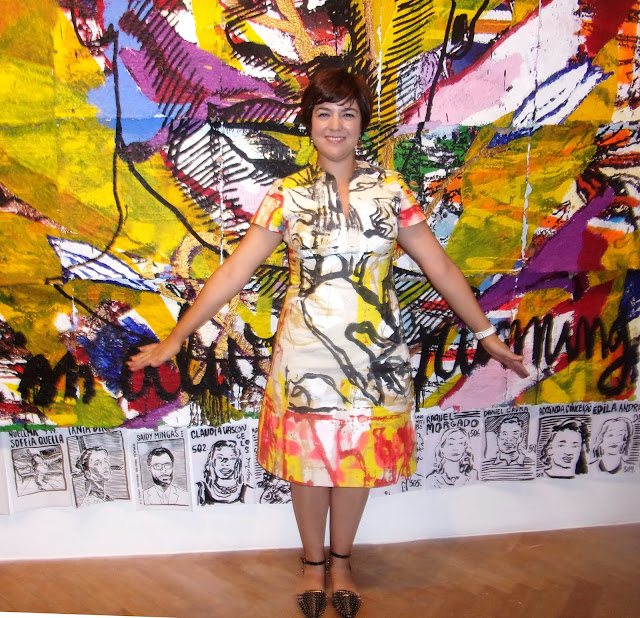 The show’s curator, Rita GT, has designed her clothes from Francisco Vidal’s paintings
We’re getting some African weather, so why not check out this feelgood slice of Angola, actually a version of the national pavilion currently at Venice. That in itself reflects transportable nature of the concept: it’s an open studio set up by artists collective e-studio Luanda. The means of production are unpacked from the U.topia Machine, aka a plywood box on the floor. Painter Fancisco Vidal is holding the most prominent court, covering the walls with intensely colourful abstractly-patterned faces on handmade paper and rapidly sketching all-comers: my wall portrait was number 552. The idea, in a neat reversal, is to produce, distribute and share by traditional means a version of online experience.
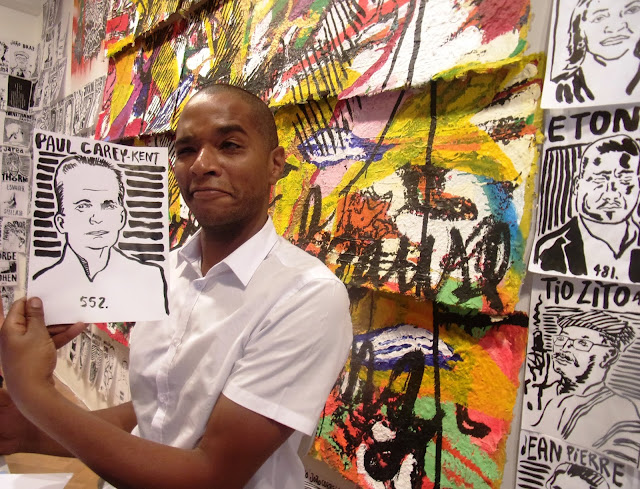 Francisco Vidal with one of his portrait drawings. I should add that they’re not meant to be realistic…
___________________
Emily Young: Call and Response: London @ The Fine Art Society, 148 New Bond St
To 29 Aug: www.faslondon.com/fine_art_society_contemporary/exhibitions
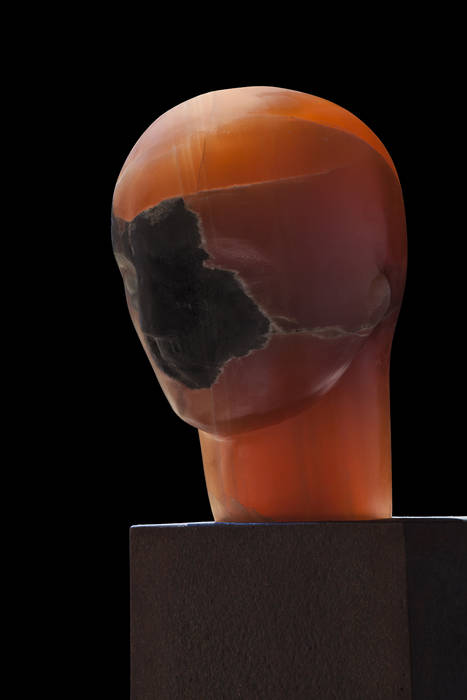
Emily Young, though born in London was partly raised in Rome and recently returned to live in Italy, where she works with the most traditional of means– free carving in the manner of Michelangelo. Yet there’s a 60s counterculture feel to how she sees her conversation with stone as being ‘small part of mankind’s most serious, most elemental conversation, that with Earth’. So it makes some sense that in her youthful days experimenting with drugs she was the Emily in Pink Floyd’s ‘See Emily Play’. Here, in the London half of a show shared with Venice, she shows an ability to release faces from a huge variety of minerals – typically discards from defunct quarries, which she prefers for their characterful imperfections.
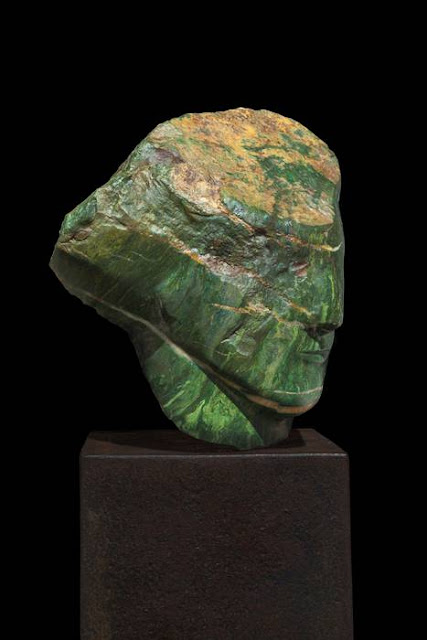 Verdite Forest Head, 2015Verdite 23 x 23 x 20 cm
___________________
Tomoko Yoneda: Beyond Memory @ Grimaldi Gavin, 27 Albemarle Street – Mayfair
To 7 August: www.grimaldigavin.com
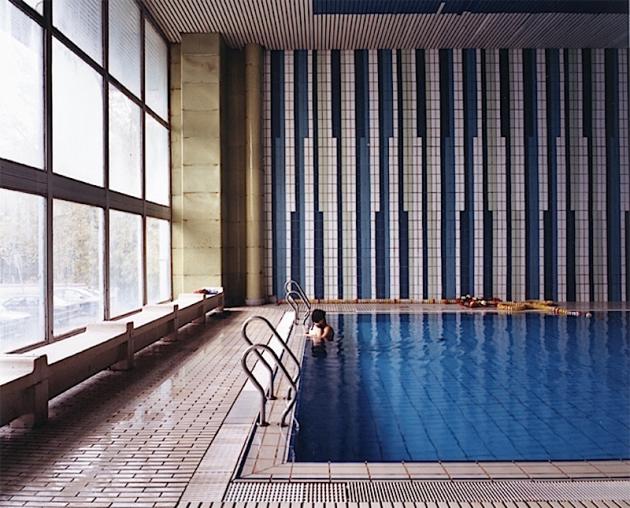
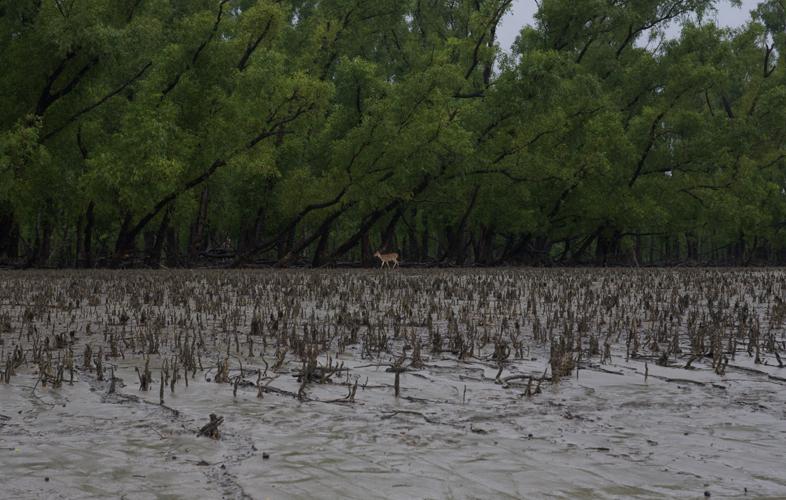 Lone Deer, Sanderbands, Bangldesh, 2008The London-based Japanese Tomoko Yaneda shows images from 2003 onwards to deal with the not infrequent trope of apparently innocuous photographs which turn out to be of sites freighted with historical and emotional resonance: a means, if you will, of magnifying the innate memorialising tendency of photography* . Among Yoneda’s subjects are homes built in the capital of Taiwan during a period of Japanese occupation (1895 to 1945); the most frequently flooded Delta in Bangladesh; and Stalin City in Hungary. Apart from being somewhat ahead of that curve, what distinguishes her treatment is the sheer poised allure of her pictures, which quietly raises the impact of the contradictions involved, and her ability to fix on some what TS Eliot might have called an objective correlative for the emotions felt, from a lone deer to peeling walls to a semi-submerged couple.
* Zarina Bhimji does something related in film, and I’d also commend her newest,Jangbar, at Nottingham New Art Exchange, 16 July – 27 Sept
Top PhotoLovers, Dunaújváros, Hungary , 2004
Isa Genzken: Basic Research Paintings & fig-2 26/50: Anne Hardy @ the ICATo 6 Sept (Genzken) / 5 July (Hardy)
 Isa Genzken, Basic Research, 1989, oil on canvas, 90 x 75 cm. Courtesy the artist and Galerie Buchholz, Berlin/Cologne
For just this week the ICA offers a striking pairing of artists presenting the studio in the gallery as a means of moving from one medium to another. The main space has Isa Genzken’s seminal late 60’s Basic Research paintings, which are frottages made by applying paint to canvas laid on the studio floor – appropriate for someone seen mainly as a sculptor. The textures picked up oscillate between aerial landscape, dusty close-up and plain abstraction. In the crazy turnover of fig-2, this week is Anne Hardy’s turn: having made her reputation with photographs of meticulously constructed studio scenarios, Hardy expanded into showing the set-ups themselves, and has now ditched the putative link to photography to make a sculptural environment linked to a 15 minute soundtrack of its own making in the studio, and its installation across various other locations. The sound of tape being peeled away proves particularly evocative.
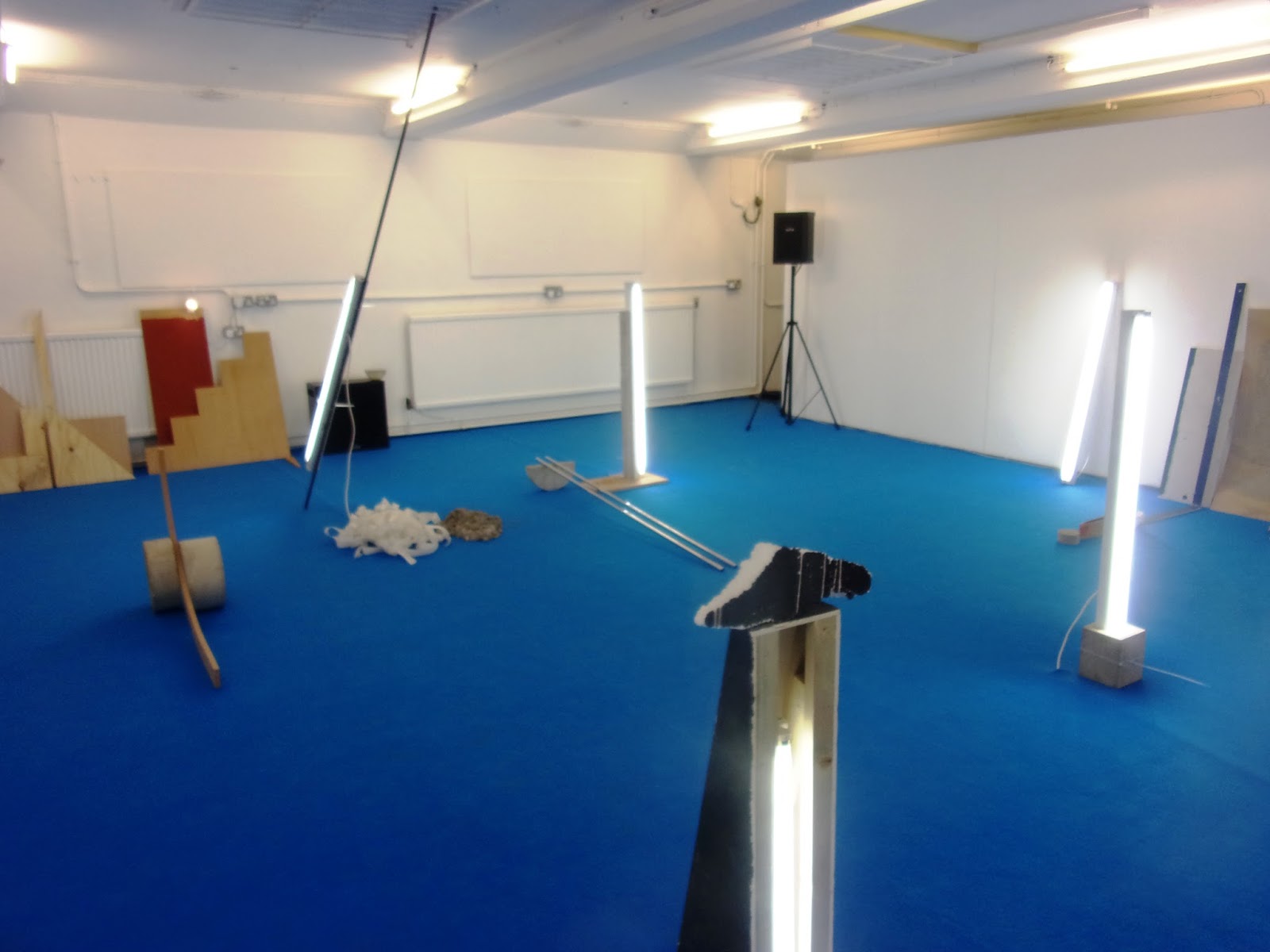 Anne Hardy at fig-2
The Shape of Things @ The Dot Project, 94 Fulham Rd – Chelsea
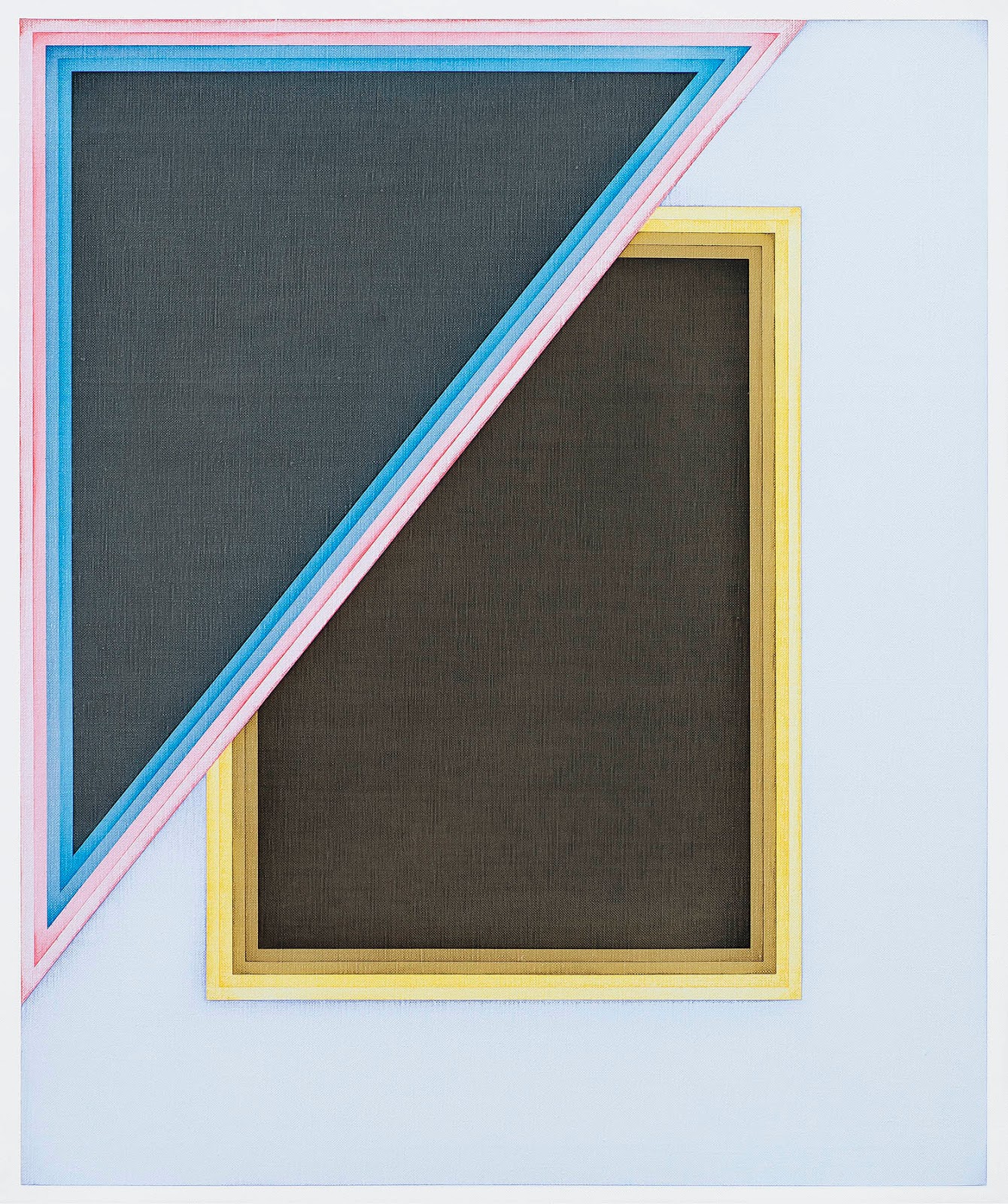
You might think, a hundred years on from Malevich, that all the possibilities for geometric abstraction would have been played out. Sure, you can batter it, stick on odd surfaces, play it off against sculpture; complicate the space with mirroring, emphasise the sides of the surface; use surprising shapes of canvas, explore sequences, subtly undermine apparent regularity; or adopt a meta-painting strategy as if you’re depicting geometric paintings, not geometry straight. But those are all moves I’ve seen before. And yet, I haven’t seen them made in the same ways as by this well-chosen quartet of Tim Ellis, Jane , Kritina and Selma Parlour. Turns out you might as well say you’ve seen paintings of people before. True, the hang could be more sympathetic to the subtlety of the work, especially Parlour’s, but it’s good to see this second adventurous show from a new gallery off the usual track.
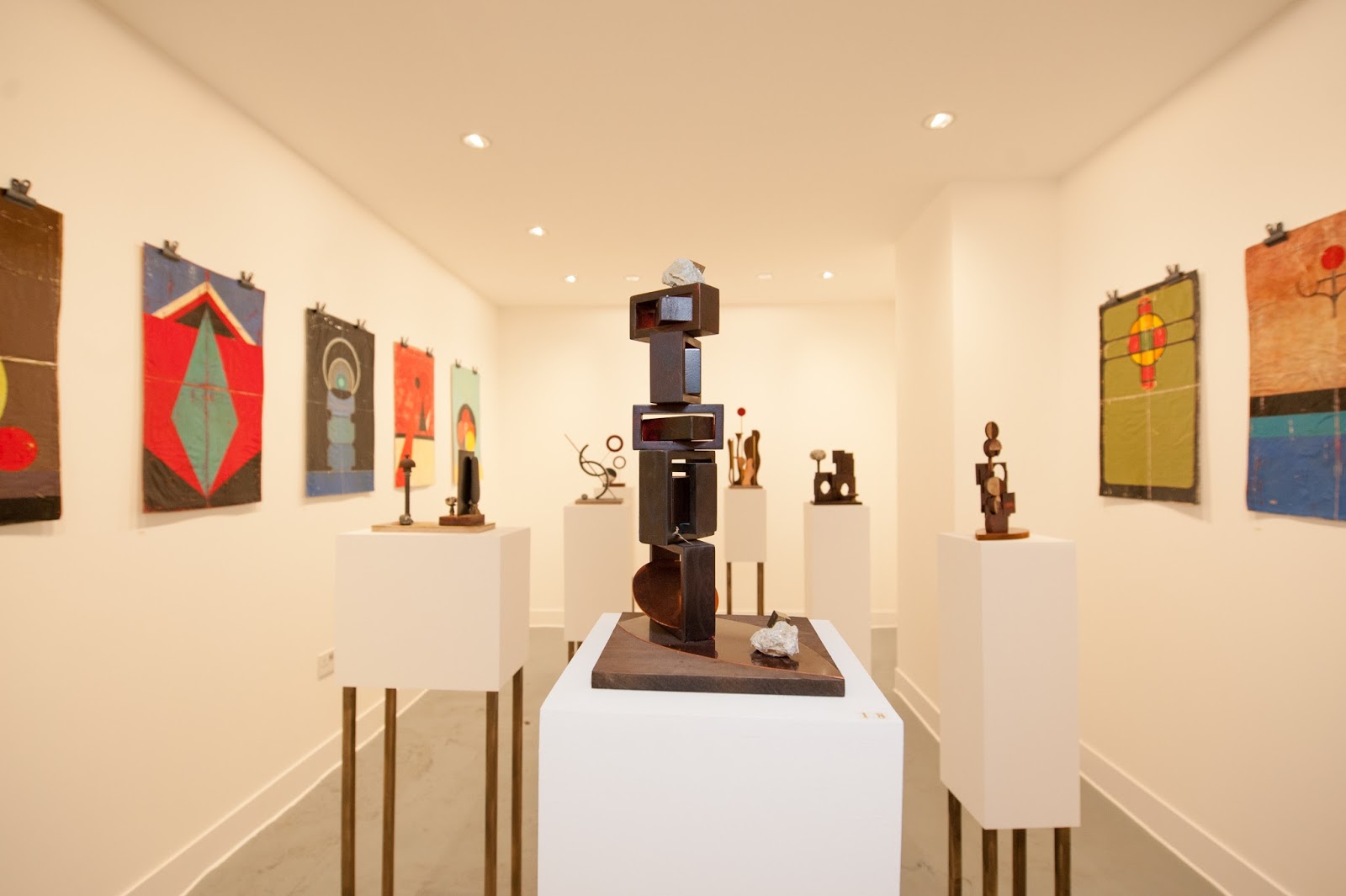 Time Ellis installation shot___________________
Justin Hibbs: Alias_Re_Covered @ Carroll / Fletcher, 56 – 57 Eastcastle St – Fitzrovia
To 12 Sep: www.carrollfletcher.com
 Installation view
Justin Hibbs’ first solo show at Carroll / Fletcher is something of a multi-dimensional juggling act. It’s simplest to start with his version of Joseph Albers’ album cover for Mussorgsky’s’Pictures at an Exhibition’. That connects with music and design, and is made with a pin-striping machine on linen, causing glitches which link to the humanising acceptance of errors in even the most computerised of future imaginings. The music cues the show’s ambient soundpiece, and the glitches anticipate the crashed computer screen as a generator of sleek abstractions which set off a dance of two and three dimensions as paintings fold out into sculptures. It’s too complex to describe quickly, but preliminary ideas form a sort of brain in the central room, and some domestically coloured walls offset the industrial aspect of what proves a seamlessly holistic show. Given that Hibbs embraces the fault, I’m tempted to complain, does his show itself have enough?
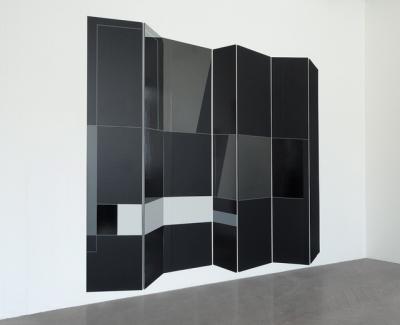 Alias Re_Versioned, 2015
___________________
Emma Bennett: Several Small Fires @ Charlie Smith, 336 Old Street, 2nd Floor – Shoreditch
To 25 July: charliesmithlondon.com
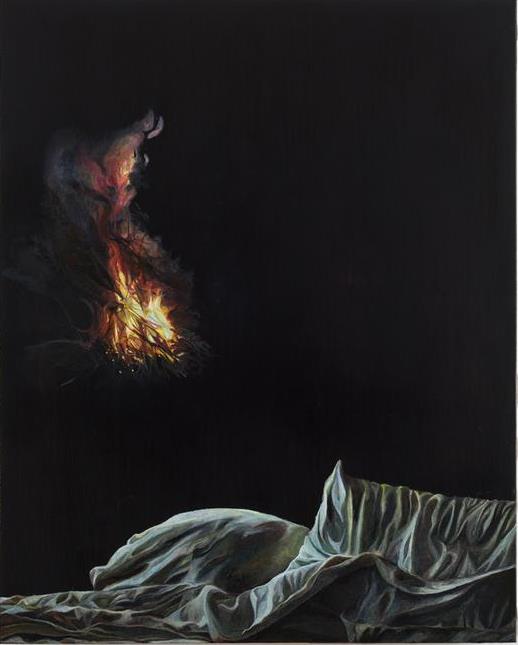 Haunts, 2015 – oil on oak, 25 x 20 cm
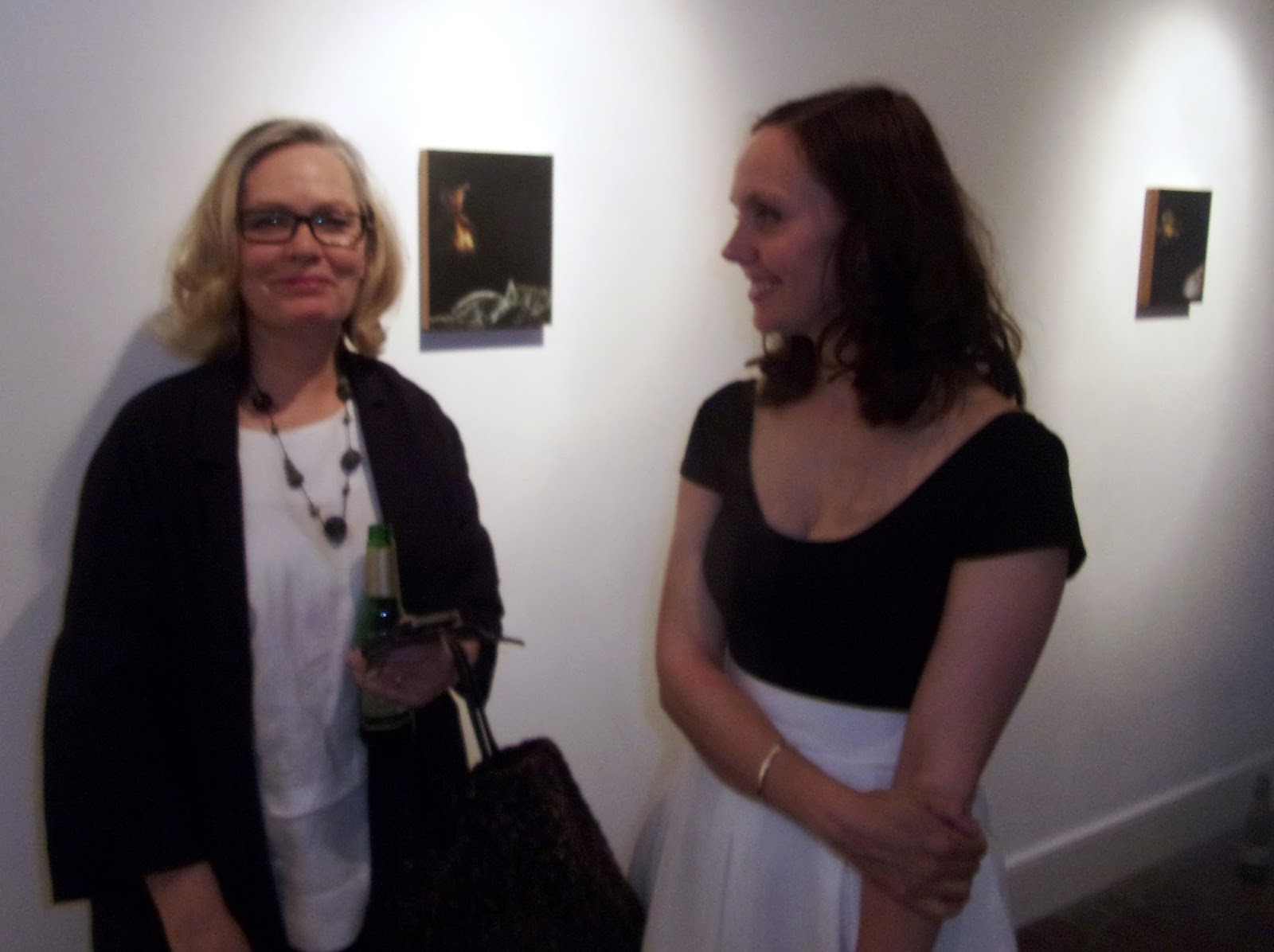 Painter Marguerite Horner (left), who’s on a campaign to be photographed with artists, looks pleased to have added Emma Bennett to her recent co-starring appearances with Tuymans, Hockney, and Borremans
___________________
Sterling Ruby & Mike Kelley: Spray, Memory @ Inigo Philbrick, 22 Davies St and
Richard Prince: New Portraits @ Gagosian Gallery, 17-19 Davies St – near Bond Street
To 31 July (Philbrick) / 1 Aug (Gagosian)
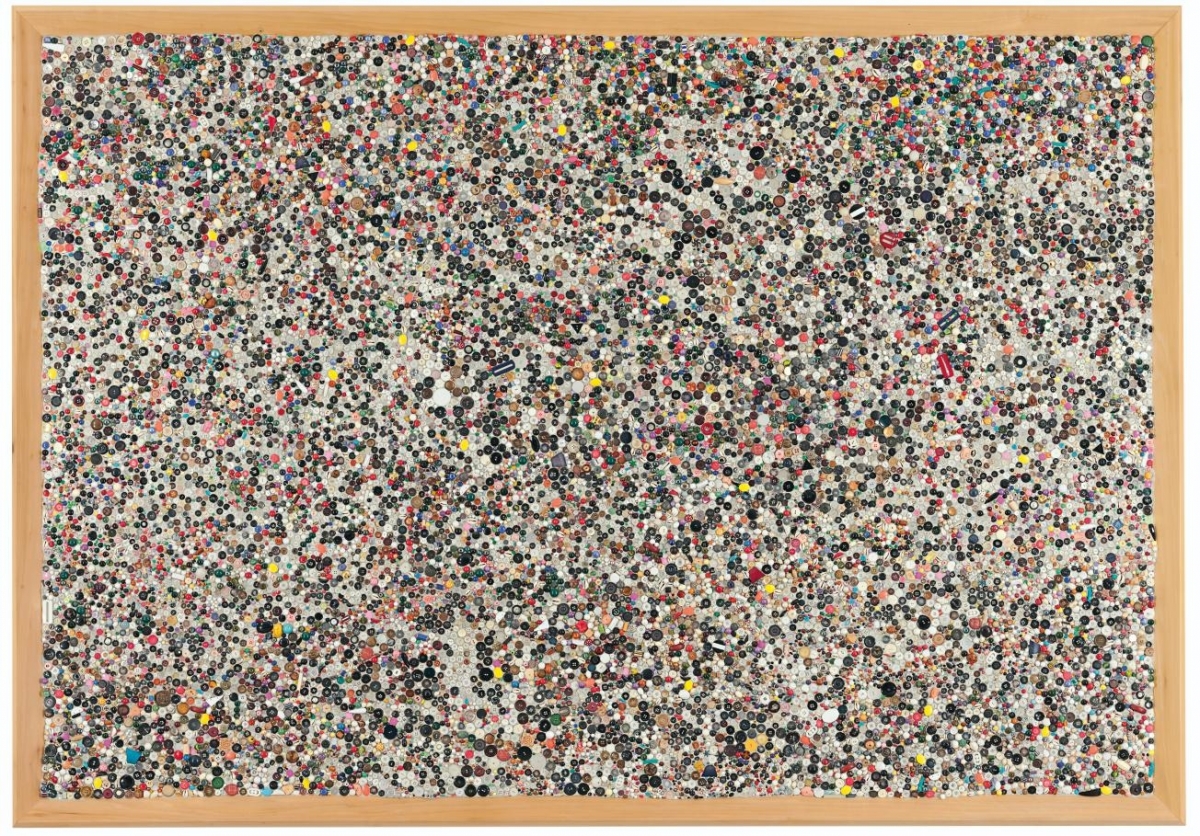
Mike Kelley: Memory Ware Flat No. 15, 2001 – Plastic and metal buttons and marbles, assorted other plastic and metal objects, sea shells and epoxy resin on wooden panel in wooden artist’s frame 180 x 256 cm
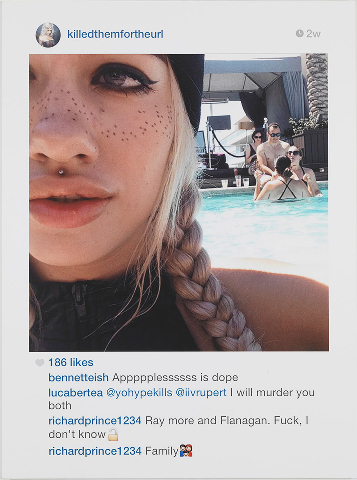
Richard Prince: Untitled (portrait), 2015 – Inkjet on canvas, 167 × 124 cm
 Emma Hart: Hair ceramics, 2015
 Installation shot
Michaël Borremans: Black Mould @ David Zwirner, 24 Grafton St – Mayfair
To 14 Aug: www.davidzwirner.com
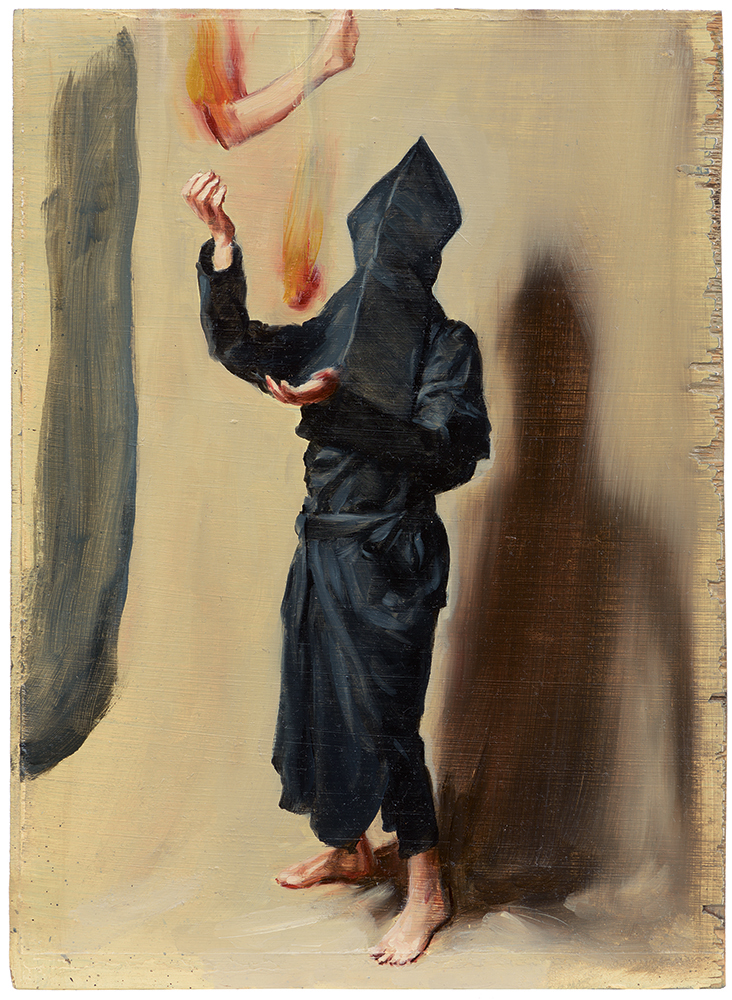 Black Mould / Juggling with Fiery Limbs II, 2015 – oil on wood, 34 x 28 cmJust when you thought the dead good of Guston (Timothy Taylor to 11 June) would overshadow any living painter, up steps Michaël Borremans with a tour de force of dark and sepulchrally presented ritual. Goya, Abu Ghraib, and Japanese theatre meet dance to the implied sound of Black Mold, a chunk of the Jon Spencer Blues Explosion’s alternative rock. Downstairs Pogo is one fifteen part work isolating black-robed figures as a prelude to their full-scale interaction above, where robes are lifted, a severed hand used as a tool and the mood ambiguated by the introduction of a badger, whose song we can only imagine as his score is a blank sheet of paper. Surely it’s not from ‘The Wind in the Willows’?
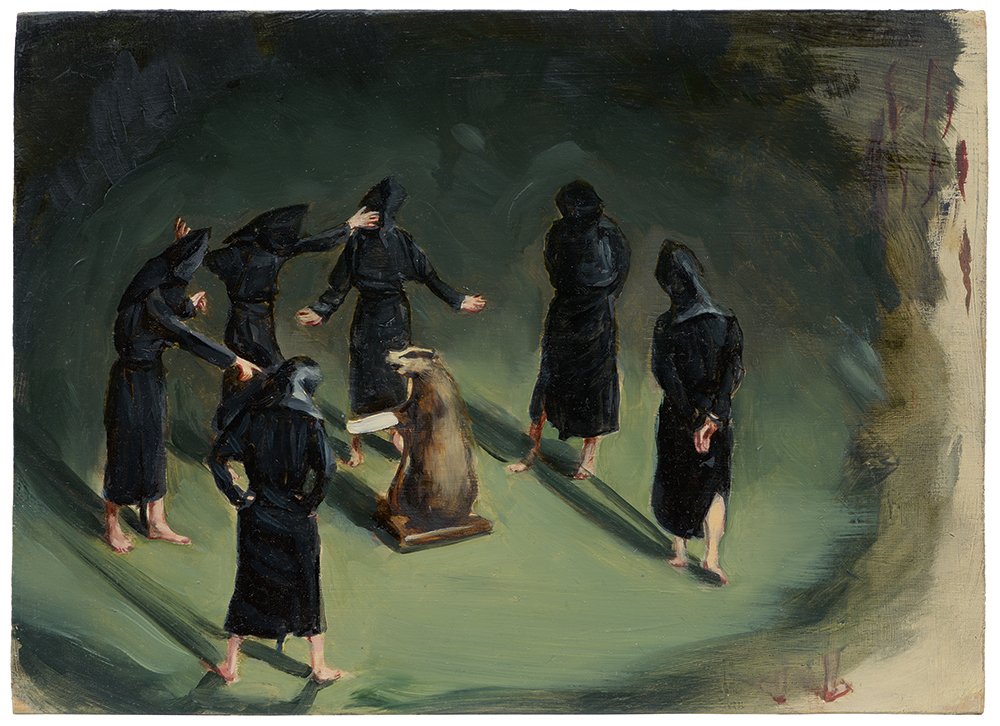 Black Mould / The Badger’s Song, 2015 – oil on wood, 22 x 31 cm
PREVIOUS CHOICES STILL ON
___________________
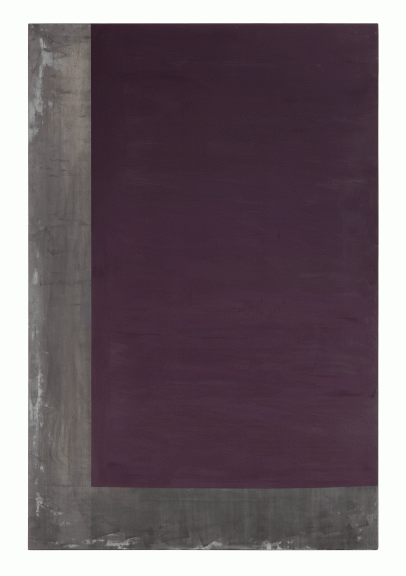 Untitled, 1996 – acrylic on lead laid down on panel 90 x 50 x 3.2 cm
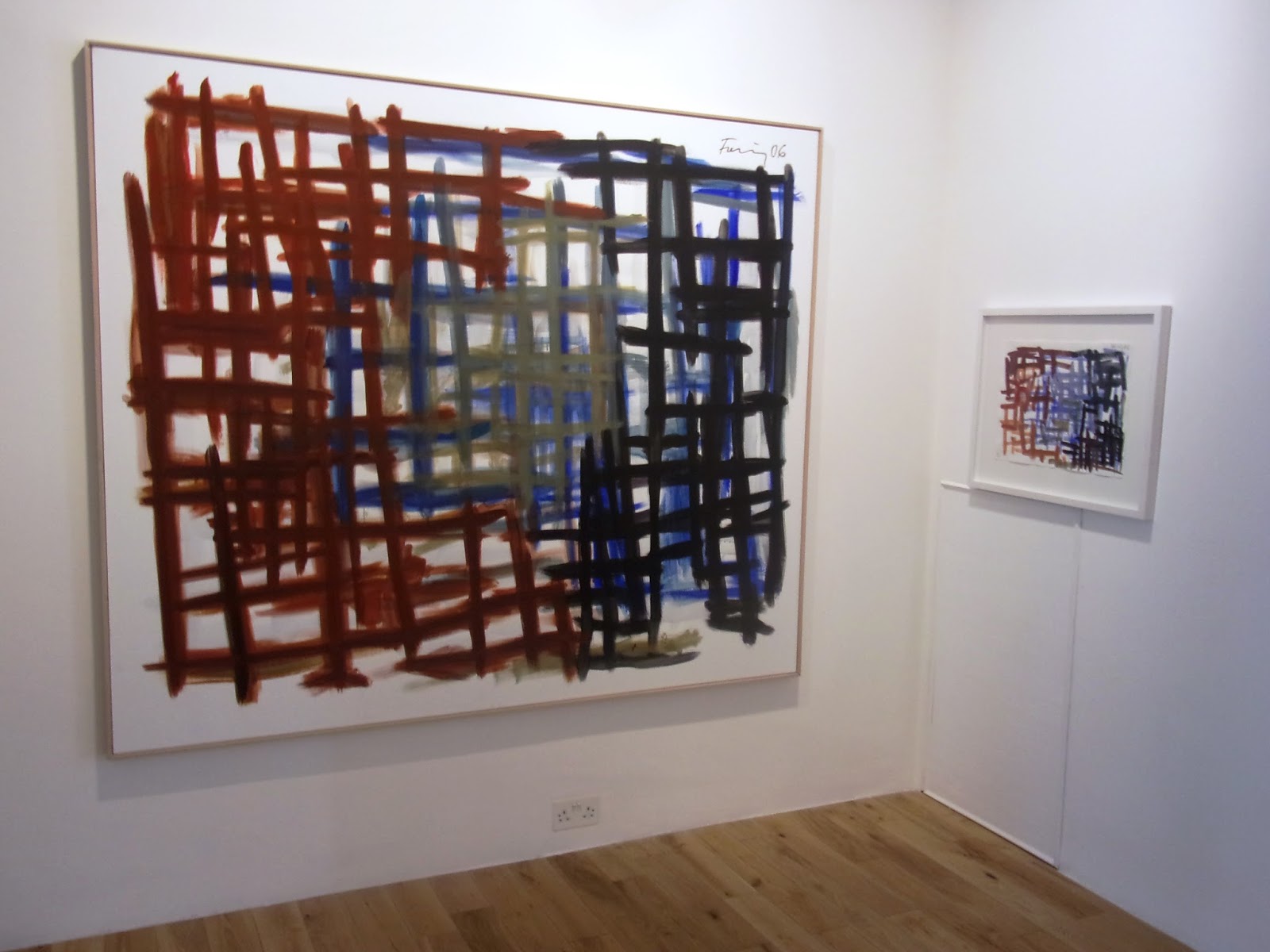 Installation at Almine Rech
St Ives Connections and Dolly Thompsett: The Secret Life & Other Stories @ Art First, 32 Eastcastle St – Fitzrovia
To 14 Aug: www.artfirst.co.uk
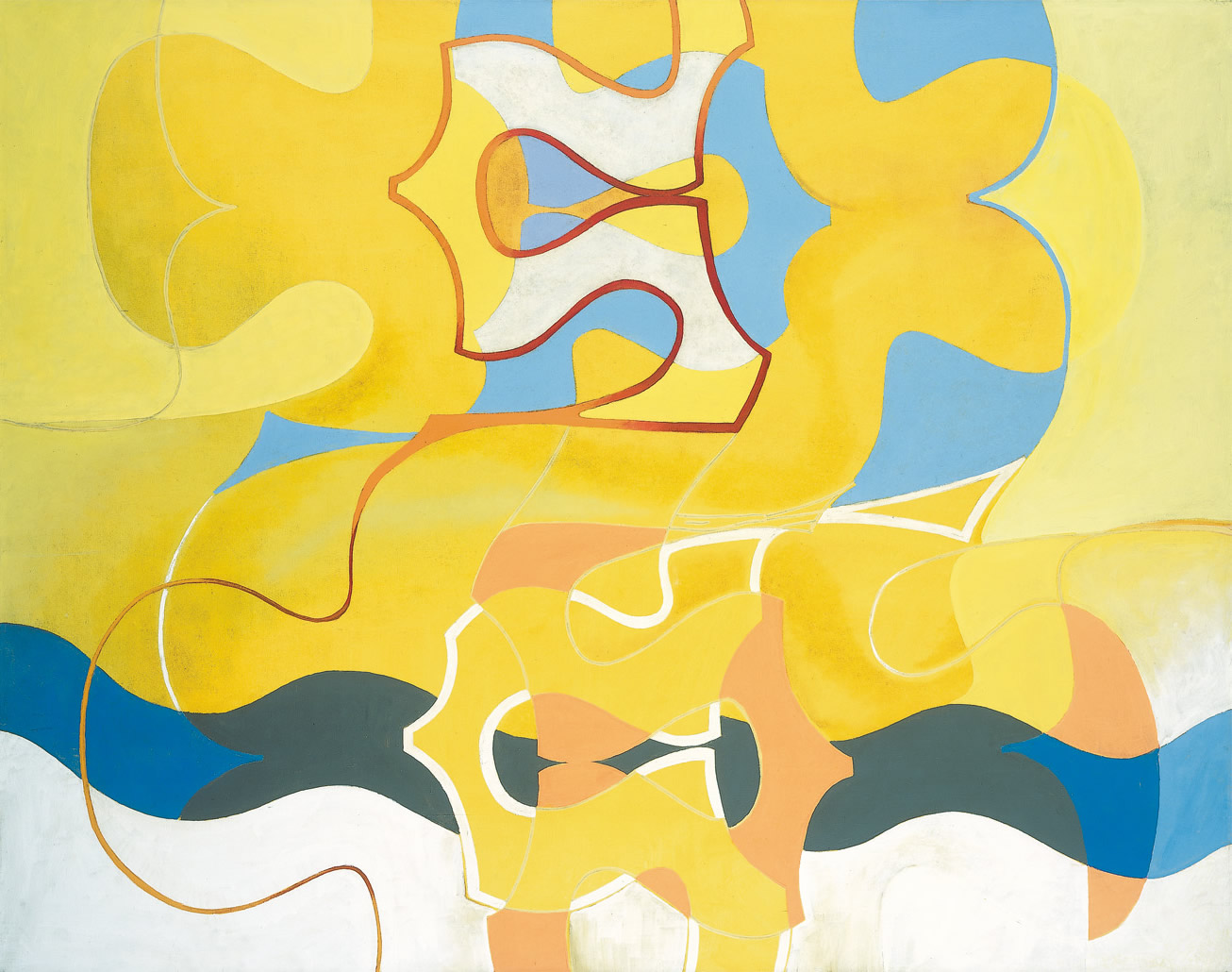 Bryan Wynter: Meander III, 1971-4 – oil on canvas, 111.7 x 141.1 cm
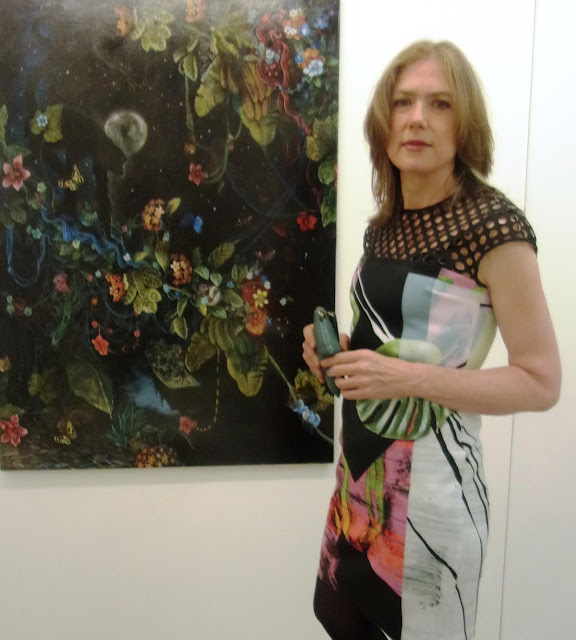 Dolly Thompsett with Huddle, 2014 – oil and mixed media on printed fabric and canvas 131.5 x 95.5cm
7 Royalty Mews – Soho
 Installation view with the tagged palette Untitled (Palette, Cushing, Meadowlark Singing, 10.1.14), 2014
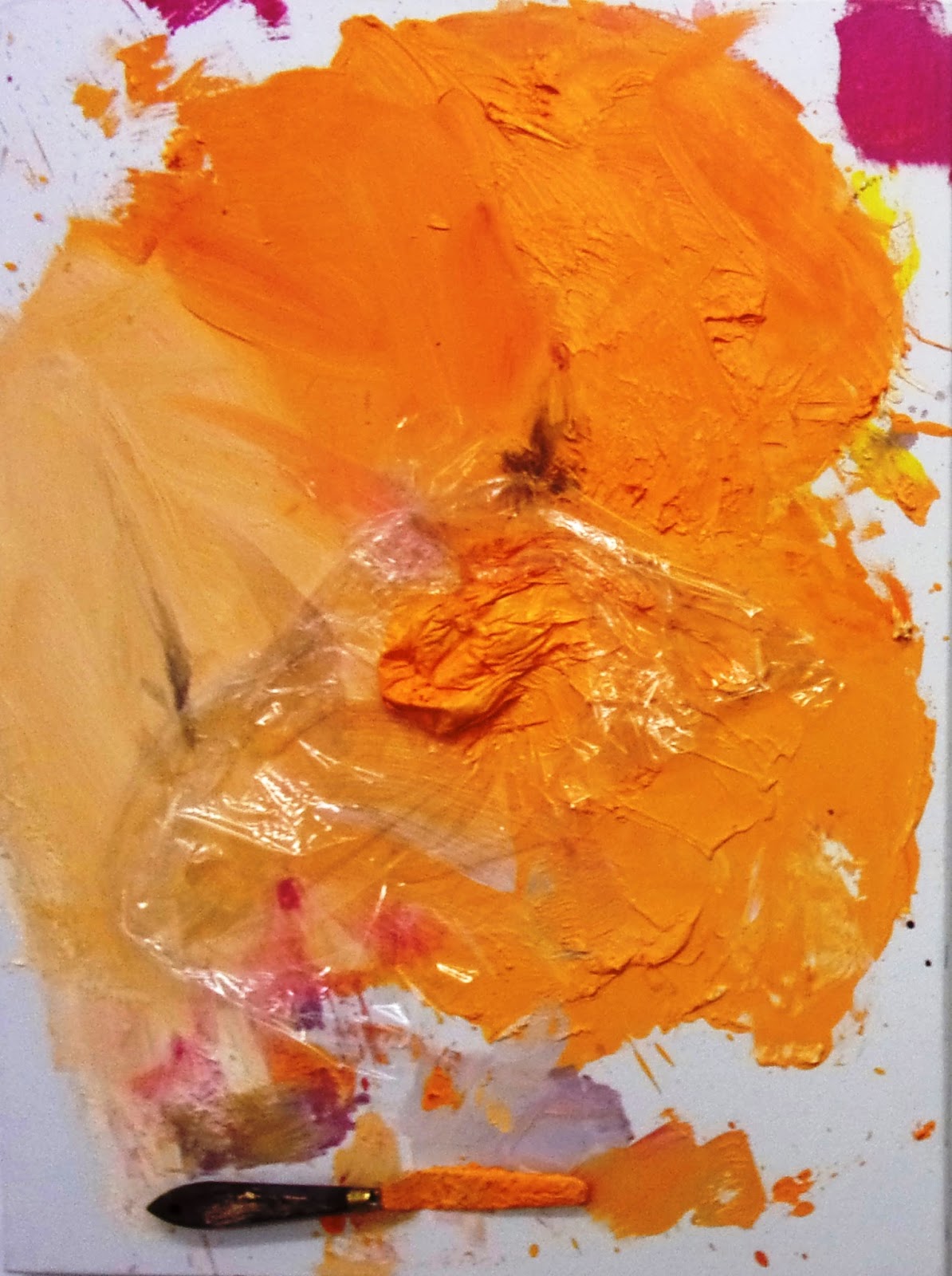 Untitled (Palette, NYC, Moon Halo, Last Night, 11-04-13), 2013 incorporates both knife and plastic applied to keep the paint from drying
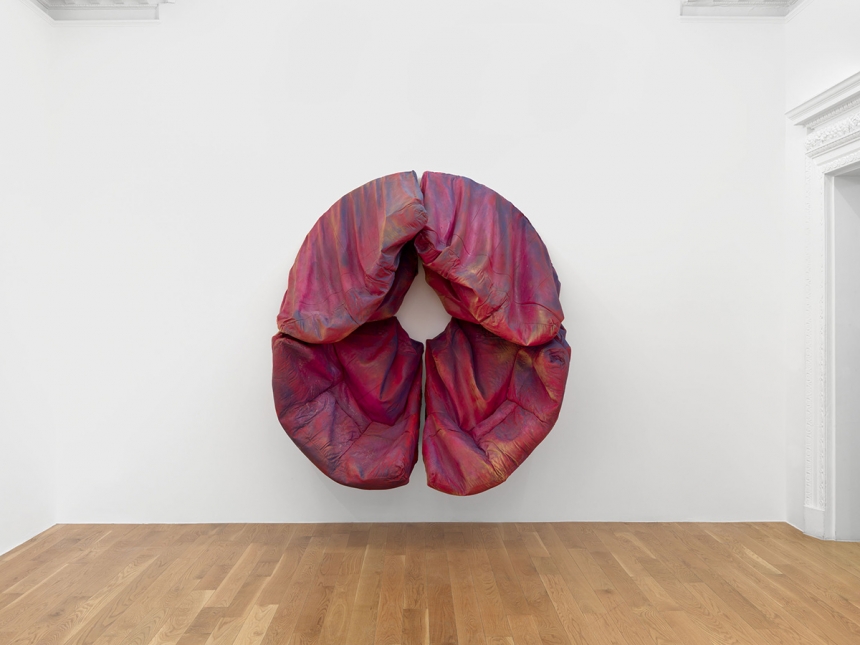 Who’s Afraid of Red, Yellow and Blue, 2014 – Urethane, pigment and aluminium, 217 x 198 x 78 cm
 Lower Floor Room III Installation view
Ben Woodeson: obstacle @ BERLONI, 63 Margaret St – Fitzrovia
To 1 Aug: www.berlonigallery.com
 Point Taken, 2015 – found table and sheet glass
Here Ben Woodeson kicks rather refreshingly through health and safety concerns: panes of glass are left to bend where you can walk into them; rat traps look set to snap shut and shatter an intricate network of neon; 99 billiard balls are held up just by a glass rod which could easily be kicked away; and shiny floor plates in tribute to Carl Andre prove ‘hot’ in that they are electrified – you can and should generate a satisfying crackle by spreading your fingers across two plates. Nor is this mere shock art: Woodeson’s explorations of how to make materials behave dangerously also carry an aesthetic charge.
 I love you, I want you, I need you… (Hot for Carl), 2015: sheet brass, glass and electric fence power supply
Et Mon Droit @ Copperfield Gallery, 6 Copperfield Street – Borough / Southwark
to 11 July: www.copperfieldgallery.com
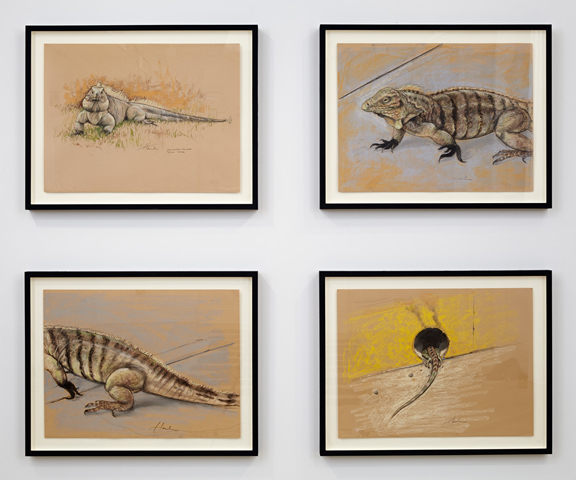 David Birkin, Cyclura Nubila (2014), Comissioned Sketches by courtroom artist Janet Hamlin, 19×25″ legal paper
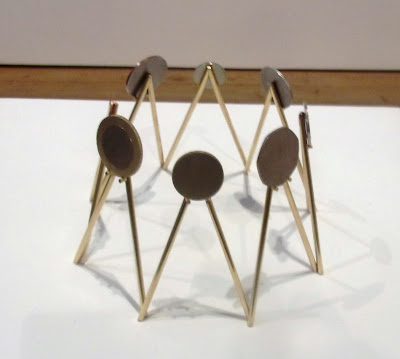 Marco Godoy, Who Makes Europe (2013), altered coins and armature
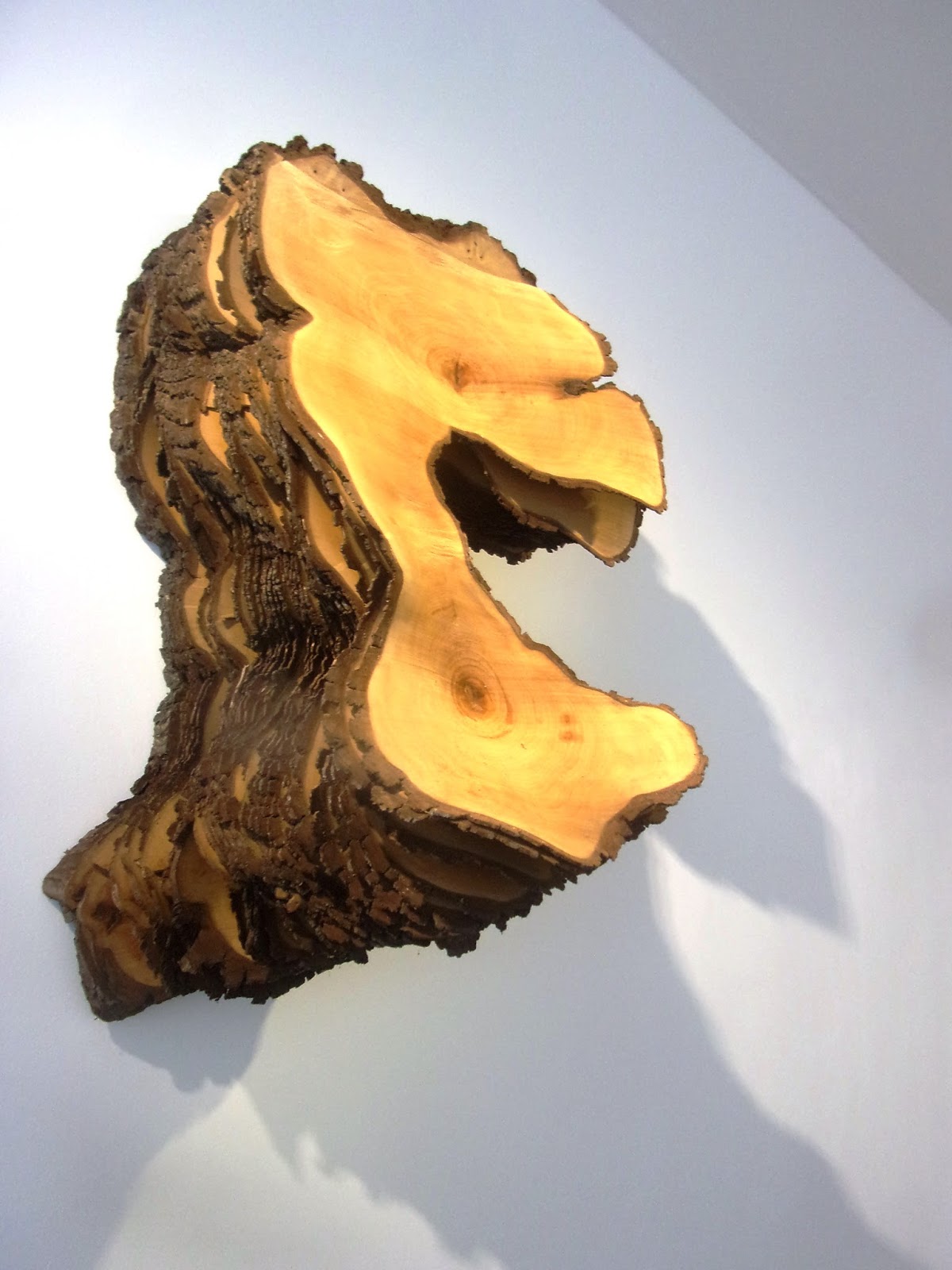 Untitled, 2014 / 15 – pear wood

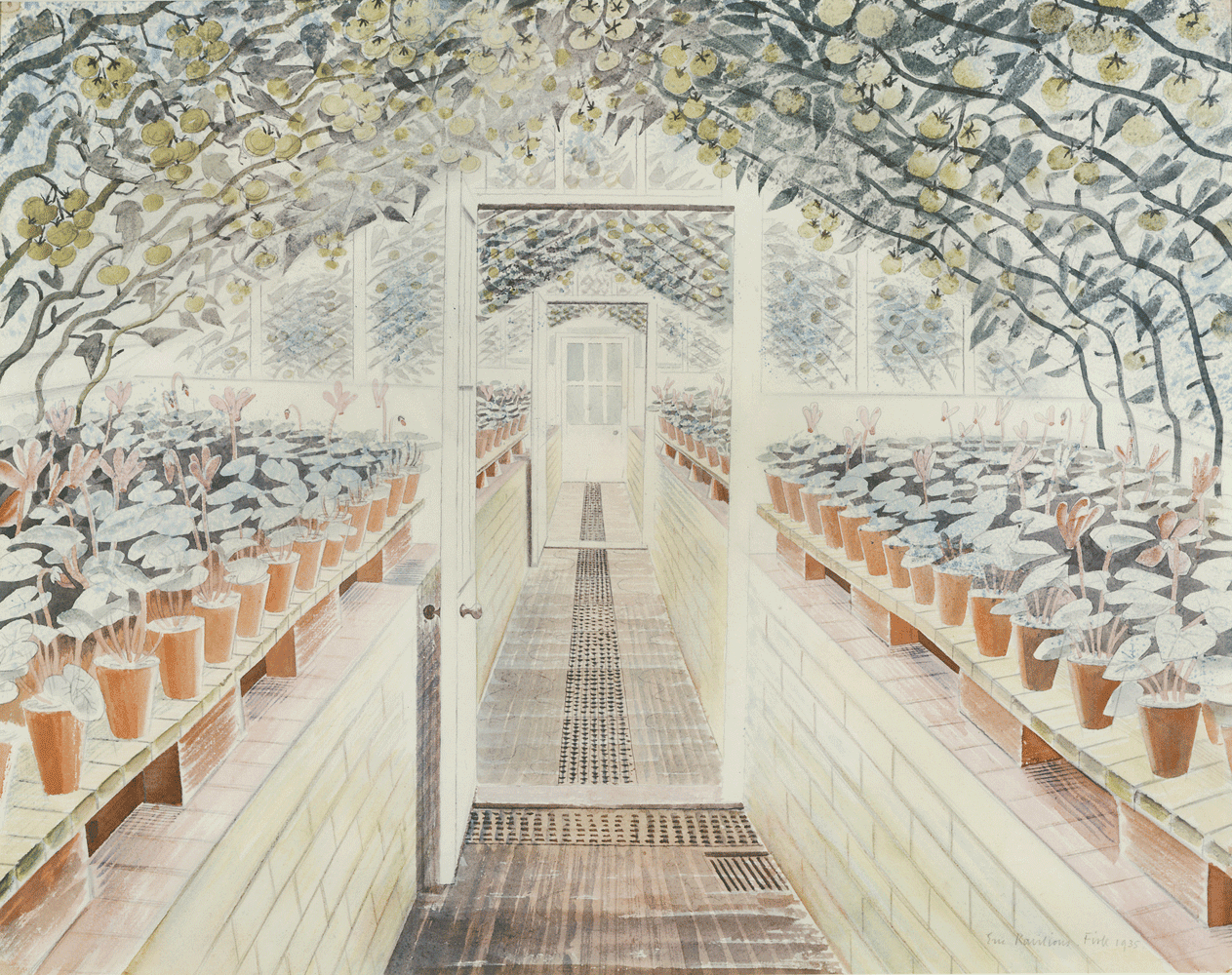 The Greenhouse, cyclamen and tomatoes, 1935
It isn’t hard to work out why Ravilious’s paintings appeal: his quirky eye for the objects and landscapes of the decade to his death in 1942 plays in to nostalgia tinged by the war to come or in progress; his apparently straightforward depictions are seeded with an almost vertiginous sense of underlying strangeness; he has a remarkable sense of how to build up a persuasive whole from detailed patterning of grass, sea, wallpaper or repeated flower pots, largely achieved by importing experience of making woodcuts into his watercolour production; and he has the most amazing watercolour technique, lighting clarity from within through the blazing white of the paper. Art history has taken little notice, but these 80-odd paintings are your best-ever chance to enjoy a ravishing achievement.
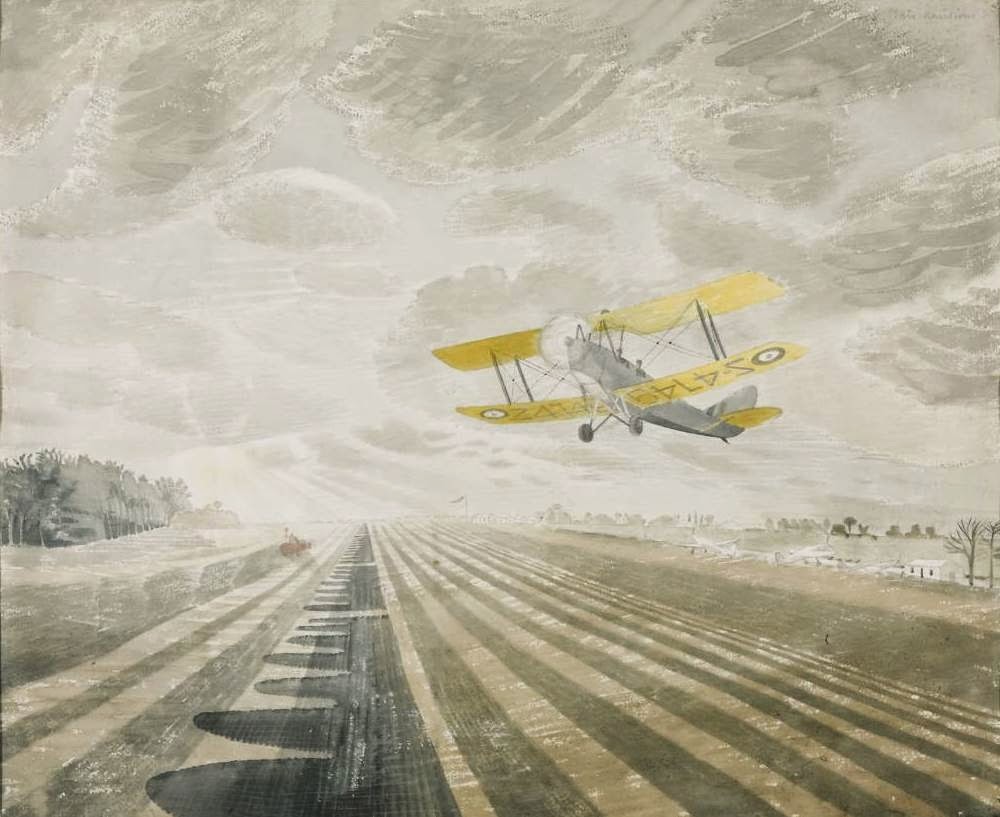 Tiger Moth, 1942