Theming the Sainsbury Centre’s exhibition programme, as has been the case since 2023, around life’s big questions has proved to be a stimulating and endlessly fruitful decision. Leading up to the current big question, ‘What is the Meaning of Life?’, there have been exhibitions examining questions such as: ‘How do we adapt to a Transforming World?’ ‘What is truth?’ ‘Why do people take drugs?’ and ‘Can humans stop killing each other?’
When I interviewed Jago Cooper, Executive Director of Sainsbury Centre, about the impact of these themes, he said: “What I have loved most of all about this season is how it is attracting a new audience to our museum. People who are fascinated by the question and our approach, rather than just traditional museum-goers who always enjoy seeing incredible art …
What we have learnt is that despite the enormity of these questions around climate change and truth, people really enjoy having a museum that lets them explore these challenging topics with inspiration, hope and information provided by the artists and exhibitions we have created.” ‘What is the Meaning of Life?’ seems likely to have a similar impact.
Cooper and Tania Moore (Head of Exhibitions, Sainsbury Centre) have explained that this exhibition series ‘reflects the arc of life itself, beginning with childhood notions of playful exploration – of a world where life offers boundless opportunity – and ending with questions about what exists when life is taken away’.
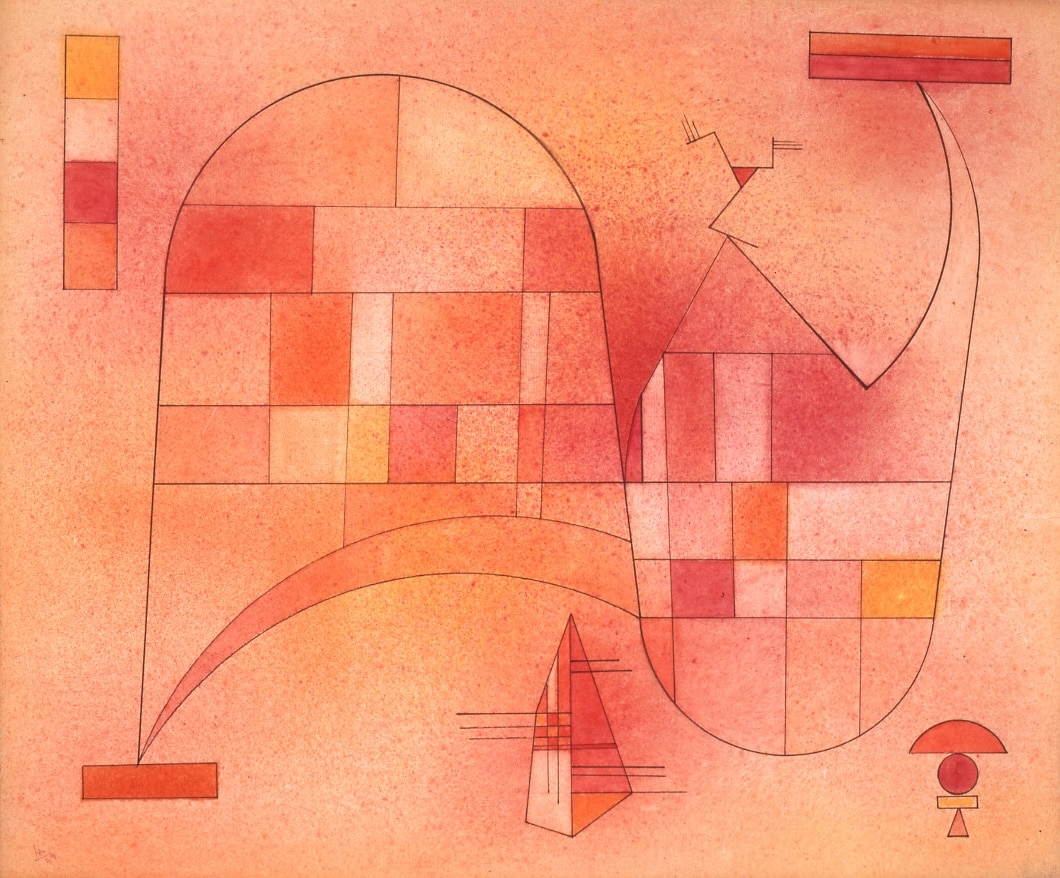
Wassily Kandinsky, Yellow Pink, 1929, watercolour with pen and ink on paper. Private collection
The series begins with ‘Play Power’, which presents a rich reflection on how play structures human societies, reflecting social rules and modelling power. The 70 objects featured in the exhibition span a thousand years of human playfulness, including works by artists Eileen Agar, André Breton, Lygia Clark, L.S. Lowry, Yoko Ono and Germaine Richier, to trace play’s significance from childhood learning to adult life in politics, war, and risk-based games like gambling. ‘Play Power’ considers play not as trivial or escapist, but as a fundamental, universal and cross-cultural means by which humanity creates understanding.
The exhibition considers how childhood experiences of play impact adult practices and inspirations. Wassily Kandinsky and Paul Klee were educated as young children in Friedrich Fröbel’s kindergartens, learning through his ‘Gifts’ – small geometric objects, which may have influenced the development of their pioneering abstract art. This story is explored through an interactive installation by Eamon O’Kane, while works on display by Kandinsky, Klee, and Lyonel Feininger resonate with the simple geometric forms and block-colour palette of Fröbel’s ‘Gifts’. Subconscious or unconscious inspirations are also explored, principally through works by prominent figures of Surrealism. This strand is exemplified in the popular ‘Exquisite Corpse’ drawing game, with examples by Breton and Agar on display.
Across many cultures, games have formed part of political, economic, and ceremonial life, offering ways to manage conflict and to imagine the distribution of authority and wealth. One fascinating object shown is the Scottish edition of ‘The Landlord’s Game’, a long-forgotten precursor to ‘Monopoly’. Patented in 1904, it showed the dangers of land monopoly and, unlike the version that became popular, allowed escape from the system it criticised.
In some of the modern artworks included, games subvert the same societal rules they otherwise reflect. Power is rendered precarious in a work by Richier, where her painted plaster and metal chess pieces are perched unsettlingly on pedestals, suggesting the possibility that power can be toppled at any moment. Ono’s work, ‘Chess set for playing as long as you can remember where all your pieces are’, is an all-white chess set that reflects the artist’s pacifist sympathies by breaking down differences between opposing sides, rendering chess essentially inoperable.
Cooper says, “I think play is how people learn the rules in the game of life. From childhood to old age, playfulness in all its forms lets us probe human psychology, judge risk, and see the game within the game. Ultimately, play helps us develop the strategies we all need to navigate the complexities of life” Moore notes that: “Play is not just for children. As this exhibition demonstrates, play is integrated across societies and cultures in ways that we may not realise. If we played more freely, would we find more meaning in our lives?”
The impact of and our differing approaches to rules are also explored in Living by the Rule: Contemporary Meets Medieval. In line with the Sainsbury Centre’s Living Art approach and, as one of the first museums in the world to display art from all time periods equally and collectively, the exhibition looks beyond a chronological model of art history, finding unexpected resonances between recent works and much earlier objects and texts.
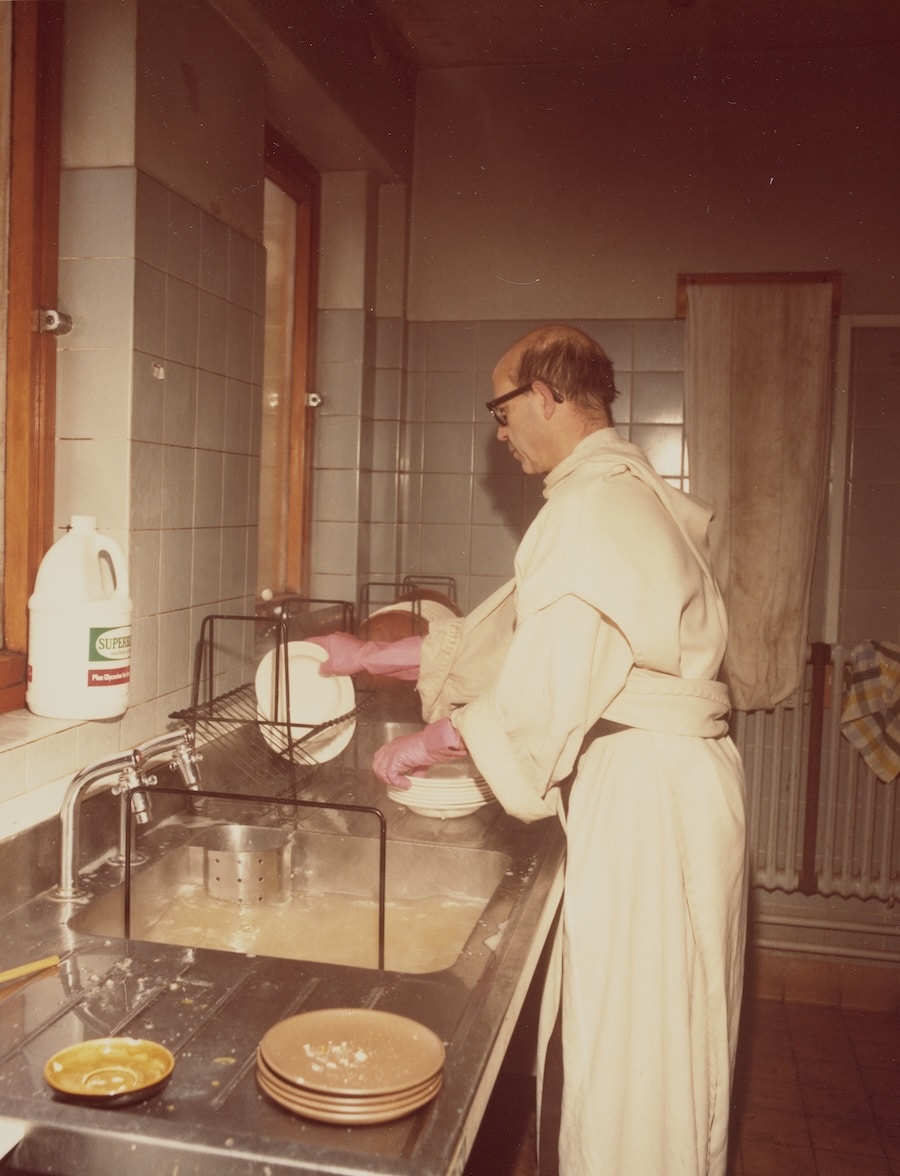
Anonymous, Photograph of Dom Sylvester Houédard standing in his cream robes washing up at a sink, undated. 16.2 x 12.6 cm. Image courtesy of Dom Sylvester Houédard Archive, John Rylands Research Institute and Library, University of Manchester. © Prinknash Abbey Trustees
Although the experience of the medieval monastery is far removed from our contemporary situation – and one that is mediated in this country through fragments left after the dissolution of the monasteries – the attempt of medieval monasticism to imagine and live out a different form of life that flies in the face of shared habits, assumptions, and priorities enables this exhibition to stage a dialogue between medieval and contemporary art that asks us, what rules do we live by today, and how might we imagine a different way of life? Curators, Jessica Barker and Ed Krčma, state: “We hope that this strange collision between two very different worlds will open up new perspectives on how we live now, and fresh ideas about how we might craft more balanced and meaningful lives in the future.”
Historical objects on display include some of the most important Benedictine objects in the world, such as the ‘Hatton Codex’, the oldest surviving copy of the ‘Rule of St. Benedict’ (c. 700 AD), and the ‘Eadwine Psalter’, one of the earliest architectural plans in Europe. The Ormesby and Macclesfield Psalters, which are among the most important illuminated manuscripts of 14th-century England, surround prayer texts with ‘marginalia’ of wrestling, defecating, and monstrous figures. Together with the ‘Stowe Breviary’ – all three having been made in Norwich – they are being exhibited for the first time as a group, in what marks their first return to the city since the Reformation. The ‘Etheldreda Panels’ – which survived the Reformation only because they were re-used as cupboard doors in a cottage in Ely – have been newly conserved for the exhibition and are on display for the first time outside of London. The ‘San Zeno Wheel’ – a unique fifteenth-century timekeeping device from a monastery in Italy – is on public display in the UK for the first time.
Many contemporary works directly interact with aspects of and fragments of medieval monasticism. Elizabeth Price’s groundbreaking digital video and sound installation, ‘THE WOOLWORTHS CHOIR OF 1979’, for which she won the Turner Prize in 2012, layers imagery of church quires with internet clips of female pop performances and eye witness and survivor accounts from a devastating fire that killed ten people at the Woolworths department store in Manchester in 1979. In this way, the work enables a dialogue between events in recent social history and systems of ideology, consumerism and architecture. A similar dialogue can be found in Andrea Büttner’s double-channel video ‘What is so terrible about craft?’ which contrasts Groß St Martin, home to a monastic community in Cologne, with Manufactum, a large store next door selling hand-made local goods at a premium.
Vivienne Asya Koorland’s ‘Vive Maman’ saw the artist reproducing a drawing originally made by Jacques Benguigui for his mother shortly before he was murdered at Auschwitz. This painting was made on pasted pages from an early twentieth-century book about medieval architecture, a comment on the dangers of seeing the medieval past as a time of cultural purity. Danh Vo’s ‘Untitled’ (2020) brings together a broken sculpture of the crucified Christ and dried flowers harvested from a local Benedictine Abbey to meditate on suffering and renewal. Two exquisite new ‘Exercises’ drawings by Alison Turnbull were made, through their colours, to be in dialogue with the Eadwine Psalter, with which they are displayed. Turnbull’s ‘Monastery’ painting, based on an engraving of a Benedictine convent in Chester that did not survive the Reformation, suggests the quietness of the original building through gently worked paint and subtle colours.
In ‘Life in the Multiverse’, Libby Heaney engages with Sainsbury Centre’s living collection through a series of physical encounters, experiencing works through bodily sensations including touch, smell and sight, as well as dreams. ‘Tree of Life: Seyi Adelekun’ will be a tactile and immersive installation that invites visitors to move in and around the tree’s central hollow trunk. Drawing on multiple traditions, this tree will emerge as a universal symbol of the interconnectedness of all life, personal growth, and the cyclical nature of existence, while acting as a bridge between physical and spiritual realms. The work holds space for reflection, remembrance and reconnection with the forces that sustain life. A further intervention in this season’s ‘CATKINS FOREVER: Ruth Ewan’, sees the artist working with people to unearth their personal stories relating to plants and trees.
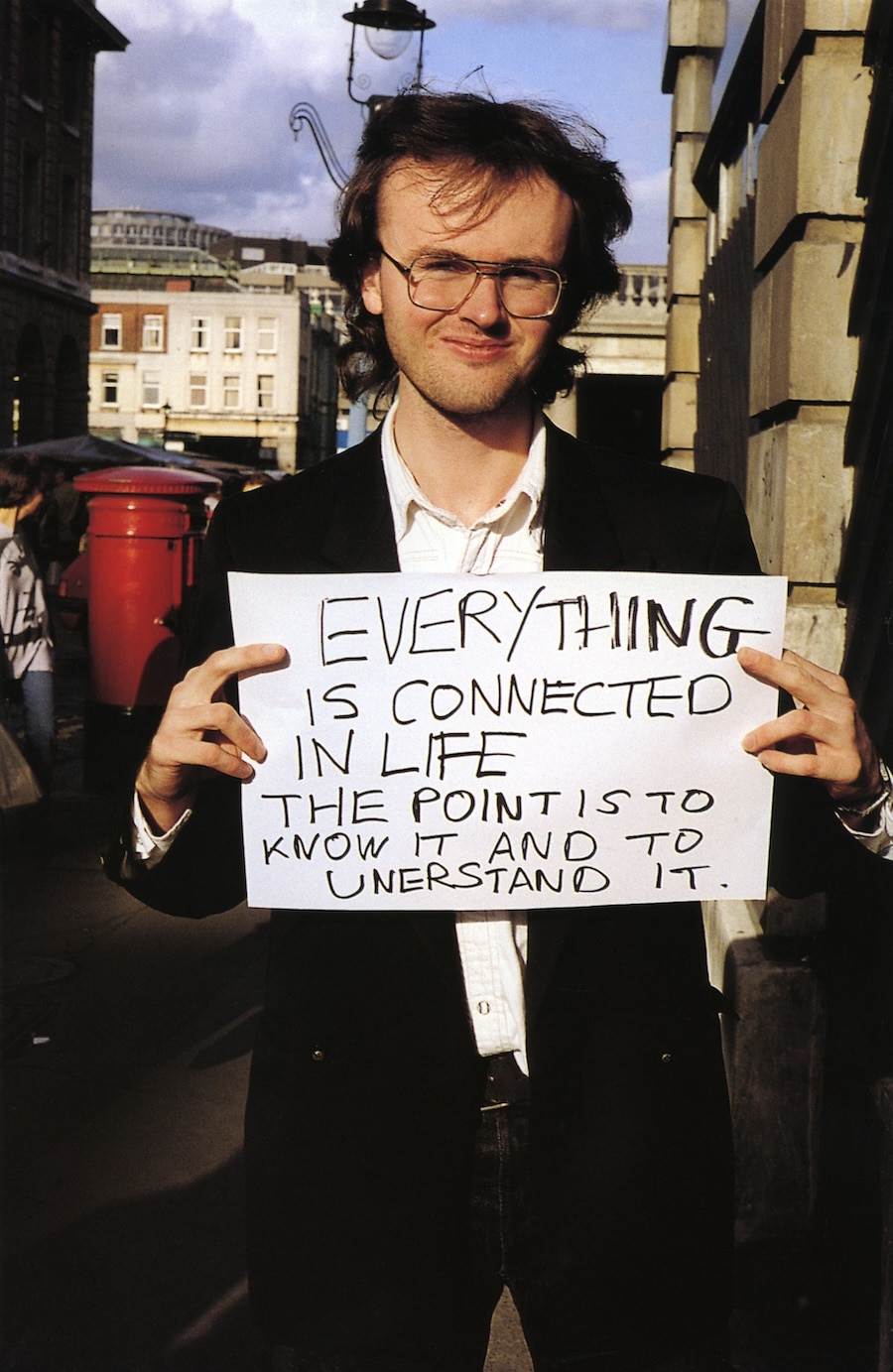
Gillian Wearing, Signs that say what you want them to say and not Signs that say what someone else wants you to say. Sign reads ‘EVERYTHING IS CONNECTED IN LIFETHE POINT IS TO KNOW IT AND TOUNDERSTAND IT.’, 1992-1993, c-type print on aluminium. © Gillian Wearing, courtesy Maureen Paley, London
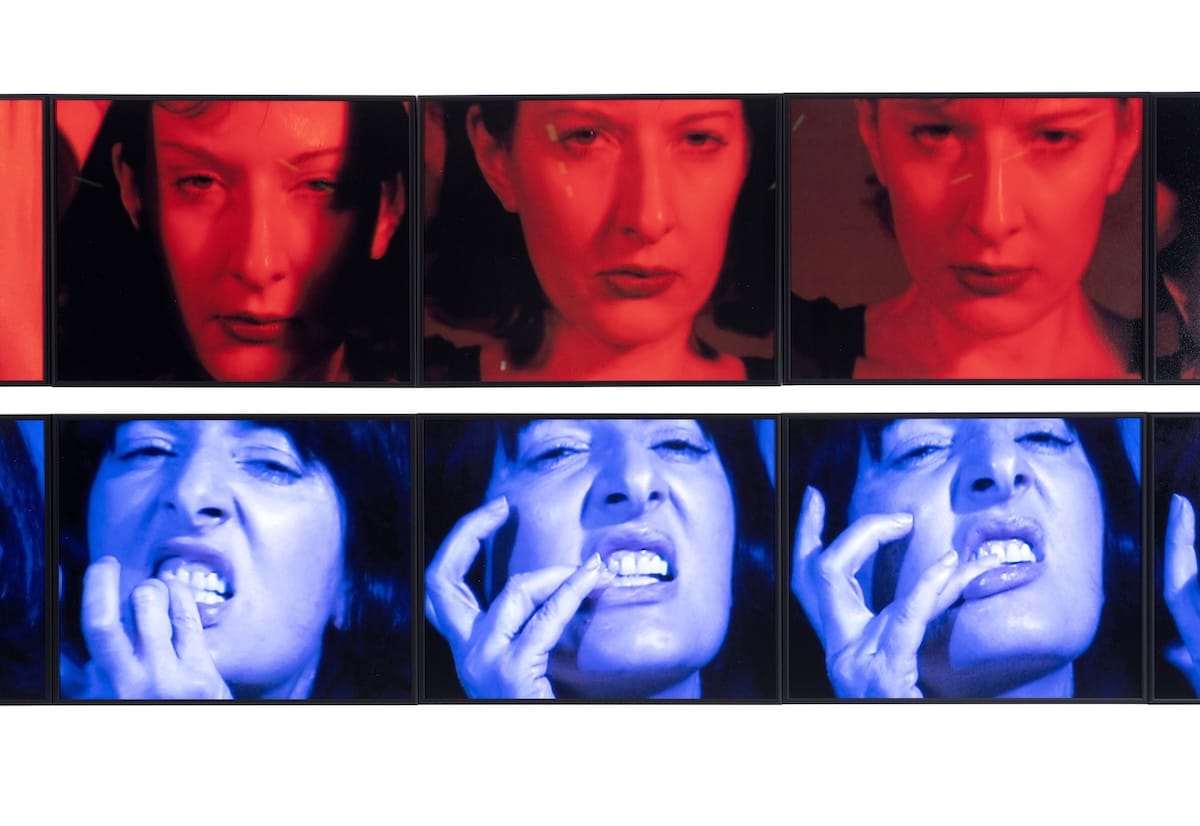
Finally, ‘Joy Like Time’ will bring together work by artists Kalliopi Lemos, Marina Abramović and Gillian Wearing to consider how repetition, ritual, and the passage of time shape meaning in human life. The exhibition will look to the long-standing artistic practices of these artists, asking how their work deploys time as a means of thinking, feeling, and making, and foregrounding how individual artworks hold more than one time at once: the moment of making and the moment of encounter; the culture it was created in and the meaning it attains later.
In response to the question ‘what is the meaning of life?’, Lemos says: “Life is a passage / we enter it translucent / we exit it multi coloured / giving and receiving/getting enriched / our purpose to become / and honour its beauty.”
Cooper has expressed a similar understanding in relation to the concept of Living Art. He has spoken of “creating quite a radical framework in which we understand our collection as being alive, that great artists have an ability to channel that unique essence of human lifeforce and materialise it, building on this concept, we have created a series of ways for visitors to more actively and emotionally engage with our collection.”
The belief at the Sainsbury Centre is that art encompasses the broad spectrum of human experience, allowing us to explore meaning from across time and space. This exhibition season, ‘What is the Meaning of Life?’, explores how art can help us uncover what it means to be human, from how we structure our lives to how play and games can reinforce or subvert our societal expectations, to finding meaning through creativity or after loss.
Concurrent exhibitions and interventions at the Sainsbury Centre ask ‘What is the Meaning of Life?’, featuring:
● ‘Living by the Rule: Contemporary meets Medieval’, 16 May – 4 October 2026
● ‘Play Power’, 16 May – 4 October 2026
● ‘Joy Like Time’, 20 June – 15 November 2026
● ‘Life in the Multiverse: Libby Heaney’, 16 May – 4 October 2026
● ‘CATKINS FOREVER: Ruth Ewan’, 20 June – 15 November 2026
● ‘Tree of Life: Seyi Adelekun’, 20 June 2026 – 30 May 2027
Visit Here
Lead image: Marina Abramović, Red Period/Blue Period, single channel video, 1998-2025. © Marina Abramović. Courtesy of the Marina Abramović Archives